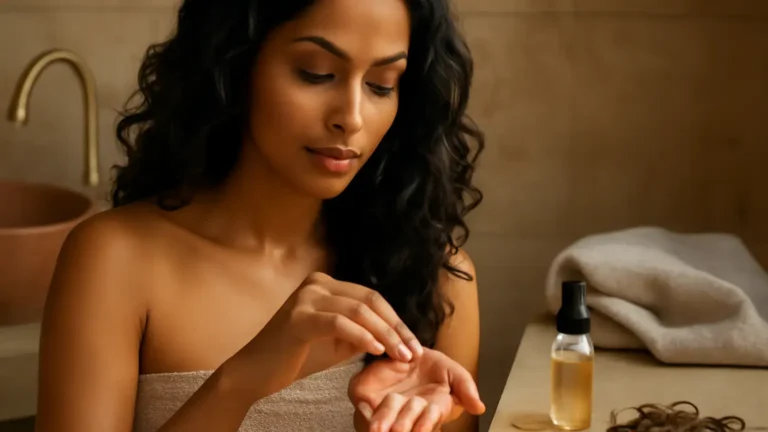
Seasonal hair care for October weddings is easiest when you stop experimenting close to the event: wash according to your scalp, deep-condition early, trim only when needed and limit heat before styling day. This plan is for wedding guests, bridesmaids and brides managing Indian October humidity, pollution or dry indoor air. It helps you reach the function with a comfortable scalp, flexible lengths and hair that is easier to style, pin, braid and gently release afterwards.
Why October needs a slightly different hair plan
October can be unpredictable across India. Some cities remain humid after the monsoon, while others become drier, dustier or more exposed to air-conditioning. That shift can leave the scalp sweaty and the lengths frizzy, dull or static-prone. Your ideal routine therefore depends on two things: how quickly your scalp becomes oily and what hairstyle you plan to wear.
A sleek bun, for example, may need clean, light hair with controlled flyaways. A braid or soft open hairstyle may hold better when the hair has a little natural grip. Do not assume that freshly washed hair is always best. The goal is clean, comfortable and manageable hair—not maximum softness at any cost.
If your hair is chemically treated, very dry, curly or prone to breakage, use products you already know rather than starting a new multi-step routine during wedding week.
Day 5: Decide the style, wash pattern and trim
Start with the bridal hairstyle trial
If you are the bride or part of the main wedding party, schedule a bridal hairstyle trial as early as practical. Take a reference photo, but also tell the stylist whether your scalp becomes oily, whether you will travel, and how long the hair must stay pinned. A trial can reveal whether you need more texture, fewer accessories or a different parting.
For hair trimming before wedding day, keep the decision conservative. A small dusting can tidy visibly split ends, but a major cut, fringe change or dramatic layer should not be left to the final five days. If you are unsure, preserve length and ask for a minimal shape refresh from a stylist who understands your usual styling needs.
Also identify the likely climate at the venue. An outdoor October function may call for a humidity-resistant hairstyle, while an air-conditioned indoor venue may make loose hair feel drier and more static-prone.
Day 4: Plan your pre-wedding hair wash
The best pre-wedding hair wash is based on your normal oil cycle, not a fixed rule. If your scalp looks oily within a day, wash the day before styling or follow your stylist’s timing. If your hair is thick, curly or naturally dry, washing two days before may give it better grip and shape.
Use a familiar shampoo on the scalp and let the lather rinse through the lengths rather than scrubbing the ends. Follow with conditioner from mid-length to tips. Rinse thoroughly; leftover product can make roots look flat and may irritate a sensitive scalp.
Wash after heavy sweating, a dusty commute or a styling trial if your scalp feels uncomfortable. Conversely, do not wash repeatedly simply to make the hair “extra clean”. Over-cleansing can make dry lengths rough and can encourage more handling before the event.
Day 3: Condition without making the roots heavy
Day 3 is a useful point for a deep conditioning treatment, especially if the lengths feel dry from sun, frequent shampooing or previous heat styling. Apply a familiar mask mainly to the mid-lengths and ends, leave it on only as directed, and rinse well. Fine hair may need a shorter application or a lighter conditioner.
Use this day to observe how your hair responds. If it becomes limp, reduce the amount next time. If it still feels rough after rinsing, avoid piling on several leave-in products at once; a small amount of leave-in conditioner may be more useful than repeated layers.
What about hair oiling before shampoo?
Hair oiling before shampoo can suit dry, coarse or curly lengths when it is already part of your routine. Use a modest amount on the lengths and wash it out thoroughly. It is not essential for everyone, and leaving oil on the scalp for too long can feel uncomfortable, especially in warm weather. Skip it if your scalp is irritated, unusually greasy or sensitive to fragranced oils.
Day 2: Keep the scalp calm and reduce friction
Scalp care should be gentle. If you normally use scalp exfoliation, this can be the final suitable day—but only with a familiar, mild product and a light touch. Do not scrub aggressively, use sharp tools or try a new acid-based product before a major function. A comfortable scalp matters more than a temporary feeling of extra cleanliness.
On this day, avoid tight ponytails, wet sleeping and rough towel drying. Detangle from the ends upwards with a wide-tooth comb or a flexible brush suited to your hair type. This gentle detangling method reduces unnecessary pulling, particularly when the hair is damp.
Protect the lengths from dust while travelling with a loose braid or low ponytail. Avoid tying wet hair tightly, as that can increase stretching and make the scalp feel tender under a formal hairstyle.
Day 1: Prepare for styling, not a product experiment
Keep the final day simple. If your wash schedule says to shampoo today, use your regular products and dry the hair fully before sleeping. If you washed the previous day, brush lightly and leave the hair alone. Do not apply a thick oil, heavy mask or unfamiliar anti-frizz cream immediately before a stylist appointment.
Pack a small emergency kit: a comb, spare pins, a few hair ties, tissues for perspiration and the products your stylist has approved. For October humidity hair care, a small amount of anti-frizz hair serum may help smooth the surface, but apply it mainly to the ends and avoid the roots. Too much serum can make curls fall or reduce grip for pins.
Sleep with hair loosely tied only if that is comfortable for you. A smooth pillowcase can reduce friction, but it will not replace proper handling or eliminate frizz in humid weather.
Function day: Set sensible limits on heat styling
Heat should be used strategically, not repeatedly. If your stylist uses a dryer, straightener or curling iron, ask for a heat protectant spray suited to your hair and the styling method. Heat protection lowers avoidable stress, but it does not make unlimited high heat safe.
- Start with completely dry hair unless the tool is specifically designed for damp use.
- Use the lowest effective temperature for your texture and condition.
- Limit repeated passes over the same section.
- Let each curl or wave cool before brushing or pinning it.
- Keep hot tools away from the scalp and ears, and ask for breaks if the heat feels uncomfortable.
For a humid outdoor event, a pinned bun, braid or controlled half-up style may be more reliable than constantly touching loose hair. For fine hair, too much smoothing product can flatten the shape; for curly hair, excessive brushing can disturb definition. Let the planned finish—not a generic idea of “sleek” or “soft”—guide the products.
After the event: Hairstyle takedown matters
Hairstyle takedown should begin when you are home and have enough time to work slowly. Remove visible accessories first. Then take out pins one by one rather than pulling a cluster of them through the hair. If a pin is caught, loosen the surrounding strands with your fingers instead of tugging.
For gentle detangling, separate large sections with your fingers, start at the ends and move upwards. Do not force a comb through heavily sprayed or knotted areas. A little conditioner or a suitable detangling product can add slip before the next wash, but avoid saturating the scalp unnecessarily.
Once the accessories and major product residue are removed, shampoo according to your scalp’s needs. Two mild washes may be more comfortable than one aggressive scrub, but there is no need to wash repeatedly if the hair is already clean. Condition the lengths and allow them to dry naturally where possible.
Common mistakes to avoid during October wedding week
- Trying a new treatment: A new colour, smoothing service, strong exfoliant or unfamiliar fragrance can create an unexpected reaction or texture change.
- Over-oiling: Excess oil may require repeated shampooing and can make styling difficult, particularly for fine hair.
- Cutting too much: A last-minute dramatic haircut can change the planned hairstyle and is difficult to correct quickly.
- Ignoring the scalp: Itching, soreness or unusual flaking should not be covered with more styling product.
- Sleeping in a tight style: Pins, elastics and tension should be removed before bed unless a professional has given specific instructions for a temporary style.
If persistent itching, pain, marked shedding, sores or severe flaking concerns you, speak with a dermatologist rather than repeatedly changing cosmetic products. For a known scalp or hair condition, follow your clinician’s existing advice.
Quick takeaway
Good seasonal hair care for October weddings is a sequence, not a last-minute rescue: decide the style and trim conservatively on Day 5, schedule the pre-wedding hair wash around your scalp on Day 4, condition without heaviness on Day 3, keep the scalp calm on Day 2, simplify products on Day 1, then use heat protection and remove the hairstyle slowly. Familiar products and gentle handling usually matter more than an elaborate new routine.
Products that may help with this routine
Choose only what fits your skin, hair or personal needs. Use the links below to view current options on Amazon India.
Frequently Asked Questions
When should I wash my hair before an October wedding?
Wash according to your normal oil pattern and planned hairstyle. Oily scalps often suit a wash the day before styling, while dry, thick or curly hair may hold better when washed two days before. Follow your stylist’s advice if you have a specific updo or braid planned.
Should I trim my hair five days before a wedding?
A small dusting may be appropriate if your ends are visibly split, but avoid a major cut, new fringe or dramatic layers five days before the event. Keep the trim conservative so the planned hairstyle remains possible.
What is the best hair care routine for an October wedding?
Use a five-day sequence: decide the hairstyle and trim early, schedule a familiar wash, deep-condition the lengths, keep scalp care gentle, limit heat and use a suitable heat protectant on styling day. Remove pins and product slowly after the function.
How can I protect my hair from heat before wedding styling?
Use a familiar heat protectant spray, style only fully dry hair unless the tool allows damp use, choose the lowest effective temperature and avoid repeated passes over one section. Heat protection reduces avoidable stress but does not make unlimited heat safe.
How do I remove a bridal hairstyle without breaking hair?
Remove accessories and pins individually, loosen knots with your fingers, start detangling at the ends and move upwards, and use a little conditioner or detangler for slip when needed. Avoid pulling a tangled pin cluster through the hair.