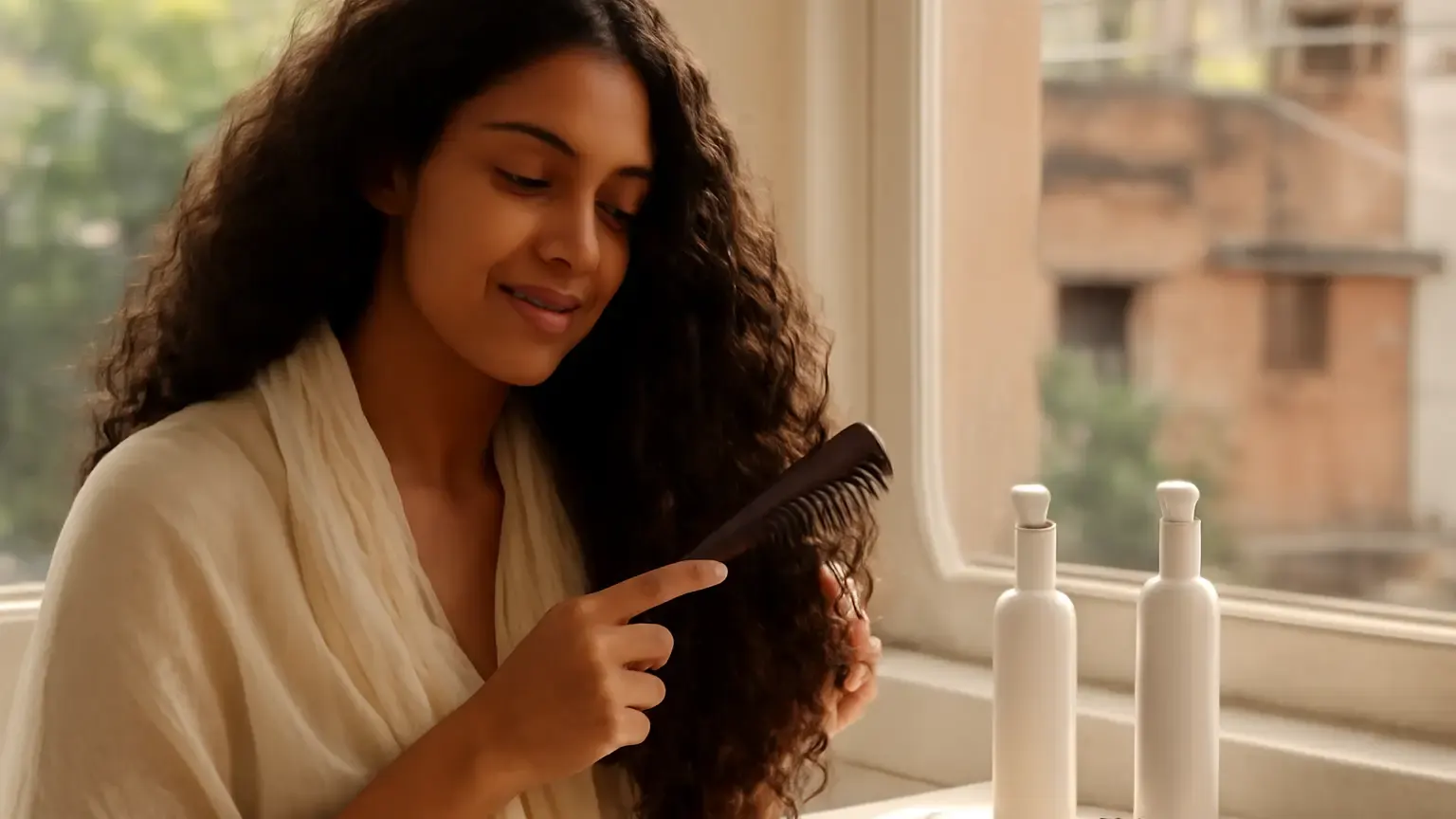
Seasonal hair care for October works best when you respond to your local weather, not a fixed calendar rule. If you live in humid coastal India, wash sweat and buildup more often; in drier northern or inland areas, prioritise gentle cleansing and richer conditioning. This guide is for anyone dealing with October heat, dust, frizz or dryness, and explains how to adjust washing, scalp care, leave-in products and heat styling for cleaner, softer, more manageable hair.
Why October can unsettle your hair
October is a transition month across India. The monsoon may be retreating, but humidity can remain high in coastal and eastern regions. Inland and northern areas may begin feeling drier, while cities can still bring heat, dust, traffic pollution and sweat. Some homes also use hard water, which can leave hair feeling rough or coated.
These conditions create different problems. A humid scalp may become oily more quickly, while the lengths feel frizzy. After repeated washing or outdoor exposure, the ends may feel dry. Festival visits, blow-drying, straightening and tight hairstyles can add further stress. The practical answer is not to buy a large collection of products. It is to adjust four things: hair wash frequency, scalp cleansing, moisture and styling protection.
Start with your region and scalp behaviour
Use your scalp as the main decision-maker. Climate is useful context, but it does not determine one perfect routine for everyone.
- Humid coastal or eastern areas: Sweat and oil may return quickly. A regular wash with a gentle shampoo can be more comfortable, especially after commuting or exercising. Keep conditioner mainly on the mid-lengths and ends.
- Dry northern, western or inland areas: Avoid increasing washes simply because it is October. Choose a mild cleanser, use a lightweight conditioner generously on the lengths and consider a small amount of leave-in conditioner.
- Dusty urban environments: Rinse or cleanse after heavy exposure rather than allowing particles, sweat and styling residue to remain on the scalp for several days.
- Curly, coily or very dry hair: Focus on preserving moisture and reducing friction. You may need less frequent full cleansing, but the scalp still needs regular, comfortable cleaning.
A useful rule is simple: an itchy, greasy or visibly sweaty scalp may need cleansing sooner; a tight, rough or increasingly frizzy scalp and hair may need a gentler approach and more conditioning.
Build an October hair wash routine
Choose frequency by need
There is no universal number of washes for October. Some people are comfortable washing every day or every other day, while others prefer two or three washes weekly. Your oily scalp routine can include more frequent cleansing if sweat and sebum build up quickly. If your scalp is comfortable and your hair is dry, extend the interval without forcing a wash schedule.
Before shampooing, detangle gently with your fingers or a wide-tooth comb if your hair knots easily. Wet the scalp thoroughly, dilute a small amount of shampoo in your palms and massage with fingertips rather than nails. Let the lather move through the lengths as you rinse; vigorous scrubbing of the ends can increase roughness.
When a clarifying shampoo makes sense
A clarifying shampoo can be useful occasionally when hair feels coated after heavy styling, oiling, sweat or repeated exposure to dust and hard water. It is not automatically better for everyday use. Overuse may leave some hair types feeling dry or stripped. Select a gentle or sulfate-free shampoo for regular cleansing if that suits your scalp and hair, then use a stronger cleansing product only when buildup is the actual concern and the label directions support it.
Condition without making the scalp heavy
Conditioner helps reduce friction during detangling and can make dry, frizzy lengths easier to manage. Apply a lightweight conditioner from around ear level downwards, rather than rubbing it into an oily scalp. Leave it on for the time recommended on the product, then rinse thoroughly.
In dry regions or on coarse, curly and chemically treated hair, a richer conditioner may be more comfortable. In humid regions or on fine hair, use less product and rinse well. A weekly deep-conditioning session may help if the lengths feel persistently rough, but it should not replace sensible scalp cleansing.
After washing, squeeze out water with a soft towel or cotton T-shirt instead of twisting the hair tightly. While the hair is damp, apply a small quantity of leave-in conditioner to the lengths if they tangle or feel dry. Start with less than you think you need; too much can make fine hair look flat or greasy.
Manage heat, dust and outdoor exposure
Practical dust protection for hair
For two-wheeler rides, long commutes or visibly dusty routes, cover the hair with a clean, breathable scarf or use a helmet liner that is washed regularly. Do not tie wet hair tightly under a covering, because trapped moisture and friction can make the scalp uncomfortable. Once home, shake out the covering, allow the scalp to cool and cleanse when sweat or dirt has accumulated.
Dust protection for hair is also about reducing product buildup. Avoid layering oil, dry shampoo, wax and serum simply to make outdoor hair look polished. If you use styling products for a festival or event, plan a gentle wash afterwards rather than repeatedly adding more product.
Use heat tools strategically
Let hair become mostly dry before using a blow-dryer and choose a lower or medium setting where possible. Keep the tool moving rather than concentrating heat on one section. A heat protectant spray is a sensible addition before blow-drying, curling or straightening, but it does not make high heat harmless. Follow the product directions, use a light even layer and avoid applying a hot tool to damp hair unless it is specifically designed for that use.
For everyday styling, loose braids, low ponytails and soft clips can reduce repeated heat exposure. Avoid pulling the same hairline area tightly for long hours, particularly during festival events or travel.
Control frizz and dryness without overloading the lengths
October frizz is often caused by changing humidity, rough towel drying, porous ends and friction—not simply a lack of oil. On dry hair, smooth a tiny amount of anti-frizz hair serum over the mid-lengths and ends. Keep it away from the scalp unless the product is specifically intended for scalp use. A leave-in conditioner may be enough for curls or dry hair, while fine straight hair may prefer a lighter serum.
Protect the ends by detangling from the bottom upwards, trimming split ends when needed and sleeping on a smooth pillowcase if friction is a recurring issue. Do not brush curly or coily hair aggressively when dry; refresh it with water or a suitable leave-in product and use a gentle detangling method instead.
For dry scalp care, begin by avoiding very hot water and harsh scrubbing. Use a gentle cleanser and rinse completely. Do not apply kitchen ingredients, essential oils or undiluted concentrated oils to a sensitive or irritated scalp. Persistent flaking, intense itching, pain, sores or sudden hair shedding deserves advice from a dermatologist rather than repeated product experimentation.
A simple regional October routine
| Situation | Wash and care approach | Styling choice |
|---|---|---|
| Humid, sweaty scalp | Cleanse when oily or sweaty; use light conditioner on lengths. | Keep roots light and avoid layering heavy oils. |
| Dry, dusty climate | Use a gentle shampoo, condition well and rinse after substantial dust exposure. | Use a leave-in product on ends and cover hair outdoors. |
| Frequent festival heat styling | Remove styling residue with a suitable wash after the event. | Use heat protection and lower tool temperatures. |
| Curly or very dry lengths | Cleanse according to scalp comfort; condition consistently. | Use low-friction styles and avoid dry brushing. |
Keep the routine stable for at least a couple of weeks before making several changes at once. That makes it easier to identify whether the issue is wash frequency, product weight, climate or styling friction.
Common October hair-care mistakes
- Following a fixed wash calendar: A humid coastal scalp and a dry inland scalp may need different schedules.
- Skipping conditioner because of humidity: Humid air can increase frizz; it does not mean the lengths need no conditioning.
- Using clarifying shampoo too often: Occasional buildup removal is different from everyday cleansing.
- Applying serum to the roots: This can make an already oily scalp feel heavier.
- Using very hot water: Warm or comfortably lukewarm water is usually a gentler choice.
- Rubbing hair dry: Rough towel friction can worsen tangling and breakage.
Takeaway: make the routine responsive
The best seasonal hair care for October is responsive rather than rigid. Cleanse according to scalp sweat, oil and dust; condition according to the dryness of your lengths; add leave-in care when needed and protect hair before heat styling. Regional weather, texture, density and chemical treatment history all matter. If a new or severe scalp or hair concern persists, seek personalised advice from a dermatologist.
Products that may help with this routine
Choose only what fits your skin, hair or personal needs. Use the links below to view current options on Amazon India.
Frequently Asked Questions
How often should I wash my hair in October in India?
Wash according to scalp sweat, oil and outdoor exposure rather than a fixed October schedule. Humid or oily scalps may need washing every day or every other day, while dry scalps and textured hair may be comfortable with fewer full washes.
What is the best hair care routine for October weather?
Use a gentle shampoo at a frequency that suits your scalp, apply conditioner to the lengths, add leave-in care for dry ends and use heat protection before styling. Adjust the routine for local humidity, dust and temperature.
How do I protect my hair from dust and heat in October?
Cover hair with a clean breathable scarf or helmet liner during dusty travel, cleanse after heavy sweat or exposure and apply a heat protectant before blow-drying or using hot tools. Keep hairstyles loose enough to reduce tension and friction.
Should I use conditioner in humid October weather?
Yes. Humidity can increase frizz, and conditioner helps reduce friction. Choose a lightweight formula, apply it mainly from the mid-lengths to the ends and rinse thoroughly if your hair becomes weighed down.
How can I care for a dry scalp in October?
Use comfortably lukewarm water, a gentle cleanser and avoid harsh scrubbing or undiluted home remedies. If itching, flaking, pain or irritation persists, consult a dermatologist for personalised guidance.
Is a clarifying shampoo good for post-monsoon hair care?
It can help occasionally when hair feels coated from styling products, oil, sweat or hard water. It is not necessary for every wash, and frequent use may feel drying, so follow the label and return to a gentler cleanser for regular washing.