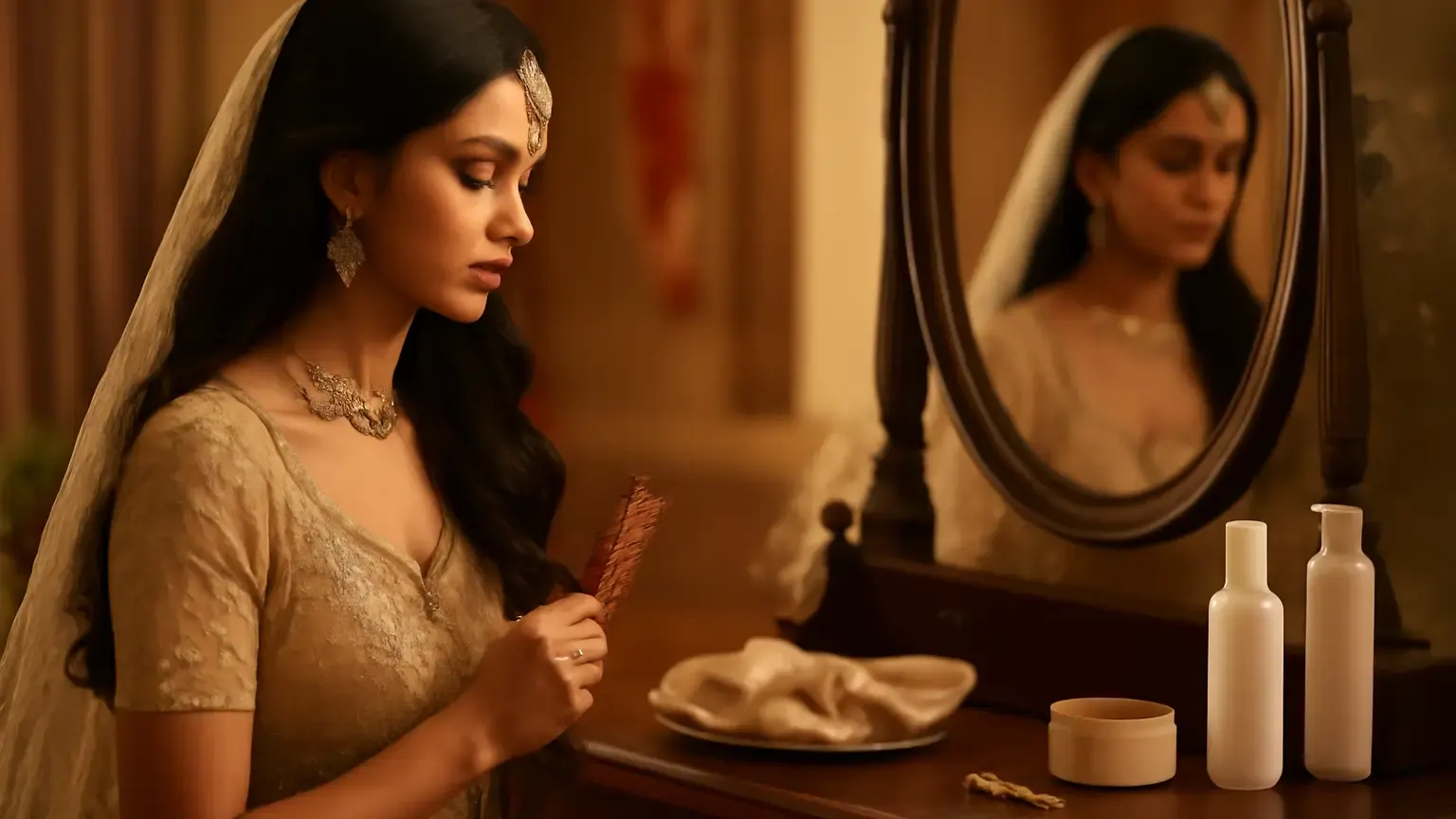
Seasonal hair care for wedding season works best when you start 14 days before the first celebration, not the night before. This plan is for guests, bridesmaids and anyone attending multiple Indian wedding events who wants cleaner roots, softer lengths and a style that holds without excessive heat. It maps wash days, conditioning, trimming, styling trials and touch-ups so you can adjust for dry winter air, humid weather or a busy event calendar.
How to plan seasonal hair care for wedding season
A two-week window is long enough to improve manageability, but short enough to avoid dramatic experiments. The aim is not to change your hair texture or force it into an unfamiliar look. Instead, build a predictable routine that keeps the scalp comfortable, the lengths conditioned and the final hairstyle compatible with your natural hair.
Before starting, note three factors: your usual wash frequency, the weather at the wedding venue and the type of styling planned. A sleek bun may need clean, smooth lengths, while curls often hold better when the hair is not freshly washed. If you have several functions, plan each wash around the next event rather than following a rigid calendar.
Days 14 to 10: reset, assess and book the basics
Start with a gentle scalp cleanse
Begin your pre-wedding hair routine with a normal wash suited to your scalp. Focus shampoo on the roots and let the lather rinse through the lengths. If there is visible oil, heavy product residue or dust from travel, a second light cleanse may be useful. Avoid aggressive scrubbing, very hot water and trying a strong clarifying shampoo for the first time just before an event.
Your hair wash schedule should reflect your own pattern. An oily scalp may need washing every day or every other day in hot, humid conditions, while a dry or curly hair type may be comfortable with fewer washes. The goal is a fresh scalp without leaving the lengths rough or overly stripped.
Decide whether you need a trim
A small split end trim 10 to 14 days before the first event can make the ends look neater and help a blow-dry or braid sit more smoothly. Ask for a maintenance trim rather than a new haircut if you are uncertain about the final hairstyle. Avoid a major colour, chemical treatment or dramatic fringe change during this period unless it has been planned well in advance and carried out by a professional you already trust.
Take clear photos of your preferred look and discuss hair length, density, accessories and the number of hours you will wear it. This is the practical start of bridal hairstyle preparation for brides and also helps guests communicate with a salon stylist.
Days 9 to 6: condition without creating buildup
Use one targeted conditioning session
Apply a deep conditioning treatment once during this part of the plan, especially if your ends feel dry after regular heat styling. A hair mask for dry hair can soften the lengths, but use a moderate amount and rinse thoroughly. Heavy oils, rich masks and multiple layers of leave-in products may flatten fine hair or make an updo slide out.
Keep the product away from the scalp unless its directions specifically support scalp use. Hair that feels coated is not necessarily healthier; it may simply have more residue. If your hair is fine, choose a lightweight conditioner. If it is thick, coarse or curly, spend more time detangling from the ends upwards and use a wide-tooth comb while the conditioner is in place.
Practise before the pressure begins
Schedule a hairstyle trial at least several days before the main function if the look is unfamiliar. Wear the style for a few hours and check comfort around the pins, parting and hairline. Test whether your dupatta, saree pallu, jewellery or hair accessories catch in the style. A trial is also the right time to learn how much volume, texture or grip your hair needs.
Do not judge a style only from a front-facing photograph. Turn your head, sit down and walk around. A beautiful look that causes scalp tension or requires constant adjustment is not a practical event hairstyle.
Days 5 to 3: protect the hair you will style
Make heat protection non-negotiable
When using a dryer, curler or straightener, apply a heat protectant spray according to the product instructions and distribute it evenly. Let the hair dry sufficiently before using a hot tool; damp hair and direct high heat can increase breakage. Use the lowest temperature that gives the result you need, keep the tool moving and avoid repeated passes over one section.
Heat protection reduces styling stress but does not make unlimited heat safe. If possible, air-dry partway before blow-drying and use rollers, braids or a low-heat setting to create shape. Leave at least one lower-heat day between intensive styling sessions when your event schedule allows.
Adapt your frizz plan to the weather
Frizz control for humid weather should be light and strategic. Smooth a small amount of serum or cream over the mid-lengths and ends, rather than repeatedly adding product to the roots. In monsoon or coastal conditions, avoid brushing dry textured hair aggressively. Use a clean, soft brush or fingers to refine the surface after the shape is set.
In dry winter weather, a leave-in conditioner may help with static and roughness. In hot weather, scalp cleansing and a lighter conditioner may matter more than layering oils. Humidity can also affect how long curls and waves hold, so ask the stylist for a finish suited to the venue rather than copying a look designed for a different climate.
Days 2 to 1: choose the right wash timing
There is no universal rule that hair must be freshly washed or deliberately dirty for a wedding. The best timing depends on your scalp and hairstyle:
- For oily roots or a sleek style: wash close enough to the event for the scalp to feel fresh, while allowing enough drying time before styling.
- For curls, waves or an updo: hair washed the previous day may offer useful grip, but it should not feel greasy or visibly coated.
- For dry, curly or textured hair: follow your normal wash pattern and refresh with water, leave-in conditioner or a light styling product only if you already know it works for you.
- For multiple events: use a gentle refresh between functions instead of repeatedly shampooing and applying high heat.
Do not test a new shampoo, oil, colour product or strong styling gel on the eve of the celebration. Unexpected residue, irritation or stiffness is harder to correct when your schedule is full.
Protect your hair overnight
Overnight hair protection is simple: detangle gently, avoid sleeping with wet hair and use a loose braid or low ponytail if that suits your texture. A satin or smooth scarf can reduce friction, but do not tie it tightly around the hairline. If your hair is styled for the next morning, loosely wrap it only after it is fully dry and follow the stylist’s instructions.
Event day: create a small touch-up system
Keep event-day hair touch-ups minimal so you do not disturb the structure of the hairstyle. Pack a compact comb or clean brush, a few matching pins, a small elastic, a travel-size anti-frizz product and tissues for perspiration. If the look includes extensions, flowers or decorative pins, carry only the spare pieces your stylist recommends.
Before leaving, check the hairline, parting and nape in natural light. Press flyaways into place with clean fingers rather than spraying a large amount of product over the whole head. If a curl loosens, reshape that section instead of applying heat everywhere. For a bun or braid, secure a slipping pin with a fresh one rather than tightening every pin, which can create unnecessary scalp pressure.
After the event, remove pins slowly, starting at the outermost pieces. Do not pull accessories through knots. Detangle from the ends upwards and wash when your scalp feels uncomfortable or product buildup is obvious.
Common mistakes to avoid before wedding styling
- Over-washing: shampooing repeatedly to make hair “extra clean” can leave the lengths dry and harder to style.
- Over-conditioning: too much mask or oil can make fine hair limp and reduce grip.
- Last-minute changes: a new haircut, colour, chemical service or unfamiliar product may not behave as expected.
- Skipping a heat protectant: frequent blow-drying and hot-tool work should be planned, not treated as harmless preparation.
- Ignoring comfort: a tight style worn for hours may cause tenderness even if it looks secure in photographs.
- Copying someone else’s routine: wash frequency and product weight should match your scalp, texture and local weather.
Two-week wedding hair plan: concise takeaway
Start 14 days out with a gentle cleanse, a maintenance trim if needed and a realistic style discussion. Use one conditioning session, complete a hairstyle trial, protect hair from heat and adjust your wash timing to your scalp and the planned finish. On the day, carry a few targeted tools instead of repeatedly adding products. This balanced approach to seasonal hair care for wedding season supports polished styling while keeping comfort and hair condition in view.
If you develop persistent itching, marked flaking, sudden shedding, scalp soreness or another concerning change, seek advice from a dermatologist rather than adding more cosmetic products. General styling guidance cannot assess an ongoing scalp or hair concern.
Products that may help with this routine
Choose only what fits your skin, hair or personal needs. Use the links below to view current options on Amazon India.
Frequently Asked Questions
How do I prepare my hair two weeks before a wedding?
Start with your normal scalp cleanse, assess whether you need a small trim, use one suitable conditioning treatment, schedule a hairstyle trial and reduce unnecessary heat. Avoid major haircut, colour or product experiments close to the event.
How often should I wash my hair before a wedding?
Follow your usual scalp needs rather than forcing a new schedule. Oily scalps may need a wash close to the event, while dry, curly or textured hair may be more manageable after washing the previous day. The hair should feel clean, dry and free from heavy residue.
When should I trim my hair before a wedding?
A small split end trim is usually best around 10 to 14 days before the first event. This leaves time for the ends to settle while avoiding the risk of an unwanted last-minute haircut.
What should I do to protect my hair from wedding styling heat?
Use a heat protectant spray, dry the hair fully before hot tools, select the lowest effective temperature and limit repeated passes. Air-drying partway or using rollers and braids can reduce total heat exposure.
How do I control frizz for a wedding in humid weather?
Use a lightweight smoothing product on the mid-lengths and ends, avoid aggressive dry brushing and choose a hairstyle designed for the venue’s humidity. Keep a small amount of the same product for controlled touch-ups instead of layering several products.
What should I pack for wedding day hair touch-ups?
Carry a compact comb or brush, a few matching pins, a spare elastic, tissues and a small anti-frizz or finishing product that you have already tested. Add spare accessories only if your stylist recommends them.