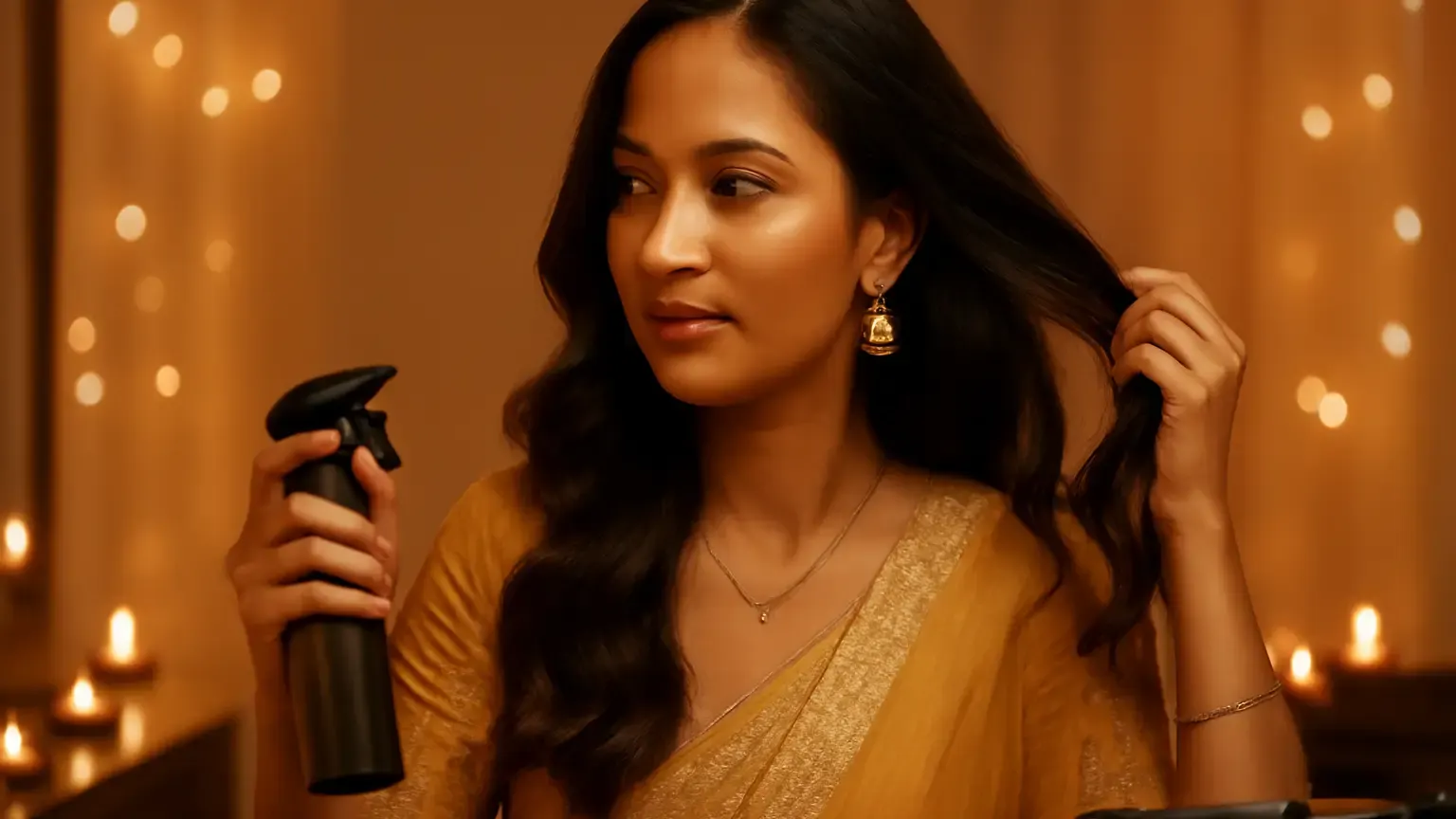
Seasonal hair care for Diwali styling is easiest when you prepare before reaching for a hot tool. This checklist is for anyone creating curls, sleek straight hair, braids or an updo during India’s festive season. Wash at the right time, condition without flattening the roots, apply heat protection, choose a moderate temperature and remove hairspray or pins gently afterwards—the practical combination that helps hair look polished while reducing avoidable dryness and breakage.
Diwali hairstyles often involve more than one stressor: a wash and blow-dry, a straightener or curling iron, firm hold products, tight pins, humidity, sweat and hours spent outdoors. The goal is not to avoid styling altogether. It is to make each decision in the right order so hair is clean enough to style, conditioned enough to move, and protected enough to handle controlled heat.
1. Start with a realistic festive hairstyle plan
Before washing your hair, decide whether you are creating soft curls, a sleek finish, a braid, or an updo. Different styles need different levels of grip and smoothness.
- Soft curls or waves: Hair should be fully dry, detangled and lightly conditioned. Too much oil or a heavy mask can make curls fall quickly.
- Sleek straight hair: Focus on even drying, a heat protectant for hair and small sections. Frizz control should not mean coating the hair in several heavy products.
- Braids: Slight texture can help the braid hold. Freshly washed, very slippery hair may need a small amount of mousse or texturising product.
- An updo: The hair needs enough grip for pins, but the roots should not feel stiff or overloaded. Keep the style secure without pulling tightly at the hairline.
This first decision prevents a common mistake: using a rich conditioning treatment, oil, serum and strong hairspray when the style only needs one or two targeted products.
2. Get the hair wash timing right
Hair wash timing before styling depends on your scalp, hair texture and the finish you want. For most people, washing the night before or several hours before the event gives the hair time to dry completely and settle. If your scalp becomes oily quickly, washing on the same day may provide a cleaner base. If your hair is very dry, curly or prone to frizz, a previous-evening wash can be more comfortable.
Choose the wash schedule by hair behaviour
- Fine or oily hair: Wash on the day of styling if possible, using a lightweight conditioner only from mid-length to ends.
- Dry, coarse or curly hair: Wash the night before and use a moderate amount of conditioner. Avoid rough towel rubbing while the hair is still wet.
- Hair that loses volume easily: Keep rich masks and leave-in products away from the roots. Dry the roots fully before styling.
- Hair that tangles: Detangle with conditioner in the lengths, beginning at the ends and moving upwards with a wide-tooth comb.
Clean hair is not automatically better hair for every style. The useful standard is a comfortable scalp and clean lengths without a squeaky, stripped feeling. Do not apply a hot tool to damp hair unless the tool is specifically designed for that purpose; sizzling is a warning sign of excess moisture and heat stress.
3. Condition for slip without losing hold
Deep conditioning for dry hair can be helpful before a high-heat event, but timing and quantity matter. Use a mask one or two washes before the occasion if your strands are very dry, rather than applying a large amount immediately before a voluminous updo. A heavy treatment can leave the hair too soft, oily or difficult to pin.
For a regular pre-styling hair routine, apply conditioner mainly to the mid-lengths and ends. Rinse thoroughly, then gently squeeze out water with a soft towel or cotton T-shirt. If the ends still feel rough after drying, use a small amount of leave-in conditioner or a lightweight hair serum for shine. These are finishing aids, not substitutes for heat protection.
People with fine hair should use less product than people with thick, porous or curly hair. Hair porosity, previous colouring and environmental dryness all affect how much moisture the strands can hold. When in doubt, start with a small amount and add only if the ends need it.
4. Apply heat protection in the correct order
A heat protectant for hair should be applied before the blow-dryer, straightener or curling iron. It helps reduce the impact of thermal exposure, but it does not make unlimited or very high heat safe. Choose a product intended for heat styling and follow its label directions.
- Blot excess water without rubbing.
- Apply the protectant evenly through the areas that will meet heat, especially the mid-lengths and ends.
- Comb or brush gently to distribute it, if the product directions allow.
- Dry the hair completely using a manageable airflow and moderate heat.
- Apply more product only if the label permits reapplication before a second hot-tool pass.
Do not confuse a glossy oil with a dedicated thermal protectant. Some oils and serums may be suitable before heat, while others are designed for finishing. Check the packaging rather than assuming that shine equals protection. If the hair looks wet after application, wait until it is dry before using a straightener or curling iron.
5. Select a safer tool temperature
Hair straightener temperature and curling iron safety depend on the condition and texture of the hair. Use the lowest setting that creates the desired result, and make one slow, controlled pass rather than repeatedly clamping the same section.
| Hair situation | Practical approach |
|---|---|
| Fine, fragile, lightened or coloured hair | Begin at a low setting and test a hidden section. Avoid repeated passes. |
| Normal, medium-textured hair | Use a moderate setting, small sections and a single deliberate pass. |
| Thick, coarse or highly textured hair | Section carefully and dry fully first; increase temperature cautiously only if lower heat cannot shape the hair. |
These are decision principles, not a universal temperature prescription. Tool displays vary, and damaged or chemically treated hair may need more caution. Keep the iron moving, avoid clamping over damp product, and never leave a hot tool in one position. Give the hair a short cooling period before brushing or pinning so the shape sets with less force.
6. Match products to the Diwali hairstyle
Anti-frizz hair products are useful in humid weather, but using several layers can make hair sticky and encourage more brushing. Build the style with the lightest effective combination.
- For soft curls: Use heat protectant first, then a light styling mousse or flexible-hold product if needed. Curl small sections and allow them to cool before loosening.
- For straight hair: Use a smoothing protectant and a tiny amount of hair serum for shine on the ends. Avoid applying serum to the roots.
- For braids: Use a small amount of mousse or texturising spray for grip. Pull the braid gently rather than tugging individual strands.
- For an updo: Place pins strategically, use flexible hairspray in short bursts, and leave enough room for normal head movement.
Hairspray is a finishing product, not a replacement for a secure hairstyle. If you need a very firm hold, spray from the distance stated on the label and avoid soaking one small area. Keep spray away from the eyes and do not use it near an open flame or a hot surface.
7. Protect the style during the event
Heat styling is only part of festive hair care. Sweat, dust, smoke and humidity can change the finish during a long celebration. Carry a few bobby pins, a small comb and a travel-sized finishing product rather than repeatedly brushing the whole style.
Do not keep tightening a ponytail or bun if the scalp begins to feel sore. A style that causes persistent pulling is not worth preserving for photographs. Loosen or reposition pins when practical, especially around the temples and hairline. If you are attending an outdoor celebration, protect the hairstyle from unnecessary friction caused by frequent touching, tight dupattas or rough fabric.
8. Remove styling products gently after the event
Post-event hair wash is important when you have used hairspray, mousse, wax, dry shampoo or several layers of serum. First remove pins and accessories slowly, supporting the hair near the base instead of pulling from the ends. If a pin catches, open it fully rather than dragging it through a knot.
- Loosen the hairstyle with your fingers before brushing.
- Detangle the ends first, then work towards the roots.
- Use lukewarm water and a scalp-friendly hair cleansing method.
- Massage shampoo onto the scalp with fingertips, not nails; allow the lather to pass through the lengths as you rinse.
- Repeat only if significant product remains or the product instructions suggest it.
- Condition the lengths and rinse thoroughly.
If the hair feels dry after cleansing, use a simple conditioner or a suitable mask on the lengths at the next wash. Avoid aggressive scrubbing to remove every trace of product. Hair breakage prevention depends as much on gentle handling and detangling as on the styling product itself.
Common mistakes to avoid
- Using a straightener or curling iron on damp hair.
- Applying oil immediately before high heat without checking whether it is designed for that use.
- Choosing the highest tool temperature because the event is time-sensitive.
- Layering dry shampoo, serum, mousse and hairspray without considering the final texture.
- Brushing hard through a stiff style or removing pins by force.
- Sleeping in a heavily sprayed, pinned hairstyle without loosening it first.
- Ignoring ongoing scalp burning, unusual shedding or significant breakage.
Who should take extra care?
Use a more conservative routine if your hair is bleached, recently coloured, chemically straightened, very dry, or already breaking. Reduce hot-tool passes and consider a heat-free style such as a braid or low bun. Anyone with persistent scalp irritation, painful sores, sudden marked shedding or severe breakage should seek advice from a qualified dermatologist rather than relying only on cosmetic products.
Quick takeaway
Good seasonal hair care for Diwali styling is a sequence: plan the hairstyle, time the wash, condition the lengths, apply a dedicated heat protectant, use the lowest effective tool setting, keep products purposeful and cleanse gently after the celebration. This approach supports a polished finish without treating heat, hold or tight styling as harmless.
Products that may help with this routine
Choose only what fits your skin, hair or personal needs. Use the links below to view current options on Amazon India.
Frequently Asked Questions
How do I prepare hair before Diwali heat styling?
Wash according to your scalp and texture, condition the lengths, dry the hair completely, apply a dedicated heat protectant and use the lowest tool temperature that creates the style. Work in small sections and avoid repeated passes.
When should I wash my hair before a festive hairstyle?
For many people, the night before or several hours before the event works well. Oily or fine hair may suit same-day washing, while dry, curly or frizz-prone hair may be easier to style after a previous-evening wash.
What temperature should I use for a hair straightener?
Use the lowest effective setting. Fine, fragile, lightened or chemically treated hair needs extra caution; thicker hair may require a moderate setting. Test a hidden section, keep the hair dry and avoid repeated passes.
Is heat protectant necessary before curling hair?
Yes, a product specifically labelled for heat styling is a sensible part of the routine. Apply it evenly as directed and let the hair dry fully before using a curling iron. It reduces avoidable exposure but does not make excessive heat safe.
How do I remove hairspray after a Diwali event?
Remove pins gently, loosen the style with your fingers, detangle from the ends upwards and wash with lukewarm water and a scalp-friendly cleanser. Condition the lengths and avoid forceful scrubbing or brushing through stiff sections.
What is the best pre-styling routine for dry hair?
Wash the night before, use conditioner or a suitable mask on the lengths, blot without rubbing, apply heat protection and dry completely. Use a moderate tool setting and finish with only a small amount of serum if the ends need it.