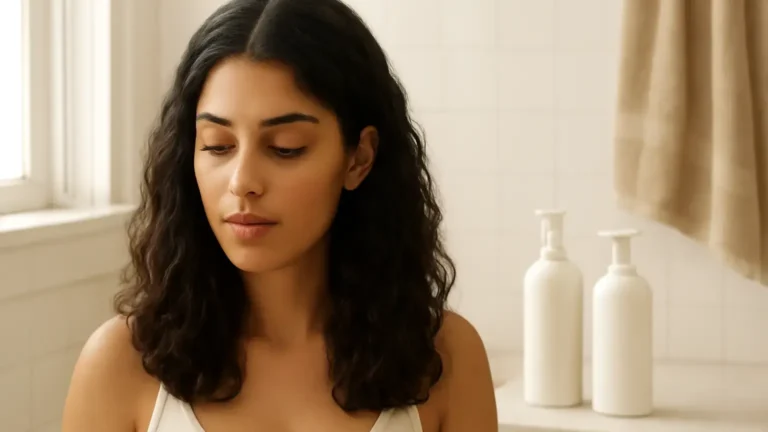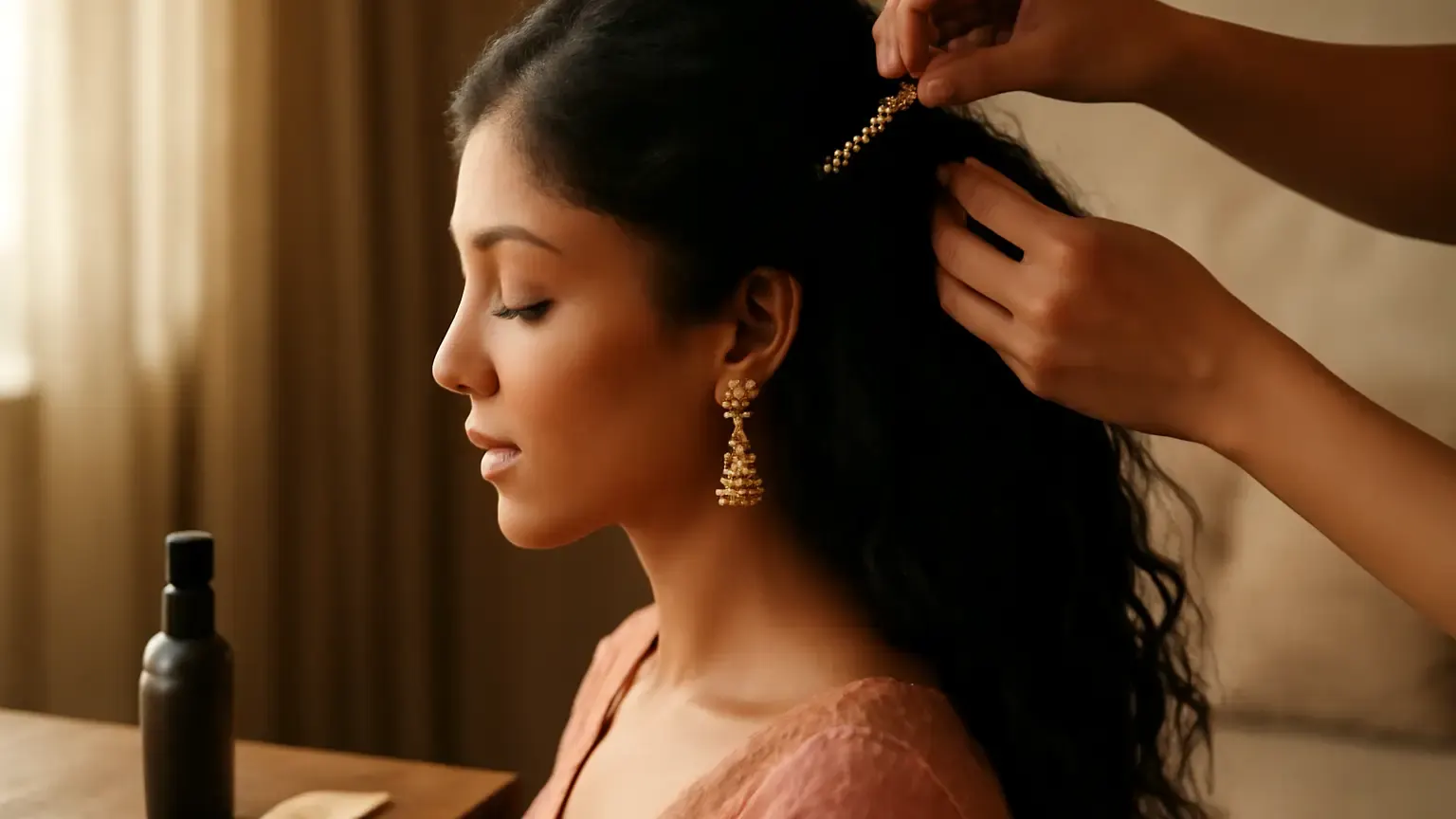
Seasonal hair care for October weddings works best when you prepare gradually, not with a last-minute oiling or salon treatment. This plan is for wedding guests, bridesmaids and brides in India managing heat, lingering humidity or changing weather. Over seven days, you will balance a clean scalp, conditioned lengths, a tested hairstyle, heat protection and low-effort event-day touch-ups—while adjusting the routine for straight, wavy, curly or textured hair.
Why October needs a slightly different hair plan
October weddings in India often fall between wet and dry weather. Some cities remain humid after the monsoon, while others become noticeably drier and dustier. That shift can leave the scalp sweaty or product-laden while the lengths feel rough. Wedding styling adds another variable: blow-drying, curling, backcombing, pins, hairspray and accessories can make hair look polished but stressed if the foundation is not prepared.
The aim is not perfectly “damage-proof” hair. It is predictable hair that is clean enough for styling, conditioned without becoming limp, and easy to refresh. Your texture, scalp oiliness, hairstyle and local weather should decide the routine—not a fixed rule about washing or oiling.
Your seven-day seasonal hair care plan
Day 7: Assess your hair and book the trial
Look at your scalp and lengths in daylight. Note whether your roots become oily within a day, whether your ends tangle, and whether humidity causes expansion or frizz. This is also the right time for a trial hairstyle, particularly if you plan to wear extensions, flowers, a maang tikka, juda pins or a dupatta.
Take reference photos from the front, side and back. Test the actual parting, accessory placement and approximate event timing. A trial can reveal whether a sleek bun feels too tight, whether curls hold on your hair, or whether your chosen style needs more pins. Do not schedule a major haircut, chemical service or unfamiliar colour close to the event.
Day 6: Begin with a balanced scalp cleansing routine
Use a shampoo suited to your scalp rather than scrubbing the lengths aggressively. A good scalp cleansing routine removes sweat, dust and styling residue while leaving the hair comfortable. Massage with fingertips, rinse thoroughly and repeat only if the first wash does not remove buildup. Keep very hot water away from both scalp and lengths.
If your scalp is oily or you have used substantial styling product, a gentle cleansing shampoo may be useful. If your hair is dry, curly or chemically processed, avoid frequent clarifying unless you already know your hair tolerates it. Persistent itching, marked flaking, pain or unusual shedding deserves advice from a dermatologist rather than repeated product changes.
Day 5: Condition for softness without heaviness
Apply a deep conditioning treatment from mid-length to ends, concentrating on porous or tangly areas. Follow the product directions; leaving a mask on for much longer does not automatically improve the result. Fine hair may need a lighter conditioner, while dense, curly or coarse hair can often handle richer conditioning.
Rinse well and detangle gently from the ends upwards. Detangling wet hair is safest when the hair is coated with conditioner and handled with a wide-tooth comb or suitable detangling brush. Do not pile wet hair on top of the head or rub it forcefully with a rough towel. Squeeze out water with a soft T-shirt or towel instead.
Day 4: Choose the finish according to texture and humidity
Straight or fine hair may need lightweight volume support so the style does not collapse. Wavy hair often benefits from flexible definition rather than heavy oils. Curly and coily hair usually needs moisture, careful sectioning and a style that respects its natural pattern. A curly hair wedding routine should include enough time for curls to dry fully before pinning or accessorising.
For humid venues, choose a humidity-resistant hairstyle with a realistic amount of hold. A low bun, textured braid or pinned half-up style may be more reliable than loose curls that must remain perfect for many hours. Humidity-resistant does not mean completely frizz-proof: the goal is graceful movement and controlled shape, not a rigid finish.
Day 3: Rehearse heat protection and overnight hair care
If your look requires a dryer, straightener or curling iron, practise the sequence now. Use a heat protectant spray according to its label and allow the hair to dry appropriately before using a hot tool. Work in manageable sections, use the lowest effective temperature and avoid repeatedly passing over the same strand. Heat protection reduces exposure risk but does not make unlimited heat harmless.
At night, use simple overnight hair care: make sure hair is fully dry, loosely braid or tie it with a soft scrunchie, and keep it away from rough pillow friction where possible. Very tight ponytails and sleeping in wet hair can increase tangling and discomfort. Curly hair may be loosely gathered on top of the head if that is already part of your routine; do not experiment with a new method the night before.
Day 2: Wash based on the hairstyle, not superstition
There is no universal answer to how many days before a wedding you should wash your hair. Hair that becomes oily quickly may style best when washed the same day or the previous day. Very clean, slippery hair can be harder to pin, but deliberately leaving greasy buildup can make the scalp uncomfortable and the finish dull. Ask your stylist what works for the planned style, then follow the timing you tested.
If you use hair oiling before the wedding, keep it familiar and moderate. Apply only if your scalp and hair already tolerate oil well, and wash it out thoroughly. Avoid a heavy oil treatment immediately before an elaborate style unless your stylist specifically recommends it. Product residue can interfere with grip, volume and clean sectioning.
Day 1: Pack a small, practical styling kit
Prepare your outfit, accessories and touch-up products together. A useful kit may include a compact comb, spare pins, a few elastics, tissues, a small amount of anti-frizz serum and the finishing spray recommended by your stylist. Carrying every product you own can lead to layering, stickiness and loss of shape, so choose only items you have already tested.
Keep the final wash and styling routine calm. Do not introduce a new mask, scalp scrub, colour product or strong fragrance. If you are travelling, protect the hairstyle from crushing by carrying accessories separately and avoiding a tight bag over the hair.
Event-day styling and touch-ups
Start with dry, comfortable hair unless the stylist has given different instructions. Tell the hairstylist about sensitivities, recent services, extensions and any areas that feel tender. A secure style should not create sharp pain, headache or persistent pulling. Ask for a few minutes to check the pins and accessory weight before leaving.
For wedding hair touch-ups, first press away moisture or sweat with tissue rather than brushing immediately. Smooth a tiny amount of serum over visible flyaways, then reshape only the areas that have moved. Add pins discreetly if required. Do not spray large amounts of hairspray over damp, sweaty hair; it may create a stiff or sticky surface without restoring the structure underneath.
If loose curls have softened, separate them gently with fingers instead of repeatedly using a brush. For a bun or braid, tuck stray ends under the existing structure. In a humid outdoor ceremony, prioritise comfort and neatness over maintaining the exact salon finish for every minute.
Common mistakes to avoid before an October wedding
- Trying several new products: A wedding week is a poor time to test unfamiliar oils, masks or styling creams.
- Overwashing or over-clarifying: Removing too much natural softness can make lengths feel rough and harder to style.
- Oiling without a wash plan: Heavy residue can reduce volume and make pinned styles slide.
- Using heat on damp hair: Dry hair properly before hot-tool styling and follow the tool or product instructions.
- Ignoring comfort: A style that causes pain, tightness or scalp irritation needs adjustment, even if it photographs well.
- Skipping the trial: The trial is where you test hold, accessory weight, timing and your response to the finish.
Quick decision guide for different hair types
Fine or oily hair: Choose a clean scalp, lightweight conditioner and controlled volume. Keep rich oils and heavy serum away from the roots.
Dry, coarse or textured hair: Prioritise conditioning, gentle detangling and adequate drying time. Use a defined, pinned shape instead of forcing a sleek finish that fights the natural texture.
Wavy or frizz-prone hair: Avoid brushing the finished waves repeatedly. Use light hold and a small amount of product on the surface, especially in humid venues.
Chemically treated hair: Be conservative with heat and new services. Use products already known to suit your hair and discuss the condition of the lengths with a professional stylist.
Takeaway
The most reliable seasonal hair care for October weddings is a seven-day sequence: assess and trial early, cleanse the scalp sensibly, condition the lengths, test heat protection, protect hair overnight and carry a small touch-up kit. Adjust wash timing, product weight and hairstyle structure for your texture and local humidity. Prepared hair does not need to look rigid—it needs to remain comfortable, manageable and camera-ready as the celebration unfolds.
Products that may help with this routine
Choose only what fits your skin, hair or personal needs. Use the links below to view current options on Amazon India.
Frequently Asked Questions
How do I prepare my hair for an October wedding?
Start seven days ahead with a hairstyle trial, then use a balanced scalp cleansing routine, condition the lengths, test heat protection and practise your overnight routine. Choose the final wash timing according to your scalp oiliness and the hairstyle’s grip needs.
What should I do to my hair the week before a wedding?
Avoid major changes and unfamiliar products. Schedule the trial early, cleanse buildup gently, use a suitable conditioning treatment, practise the hairstyle and prepare a small kit with pins, a comb and tested anti-frizz or finishing products.
What is the best heat protectant for wedding hair in humid weather?
The best option is a heat-protectant product labelled for your hair type and the tool you use, applied as directed. Choose a lightweight formula for fine hair and a more conditioning option for dry or textured hair, and remember that no product makes excessive heat risk-free.
How do I refresh wedding hair without washing it?
Blot sweat or moisture with tissue, then reshape only displaced sections with your fingers or a comb. Use a very small amount of anti-frizz serum on flyaways and add discreet pins. Avoid layering heavy products over damp hair.
What is a good hair care routine for curly hair before an Indian wedding?
Use familiar moisture-focused products, detangle gently with conditioner, allow curls to dry fully and test the complete style before the event. A defined braid, half-up style or pinned updo may handle movement and humidity better than repeatedly reworking loose curls.
How many days before a wedding should I wash my hair?
It depends on your scalp and hairstyle. Oily or fine hair may work best on the same day or previous day, while some styles hold better after a little time. Follow the timing tested during your trial rather than relying on a universal rule.