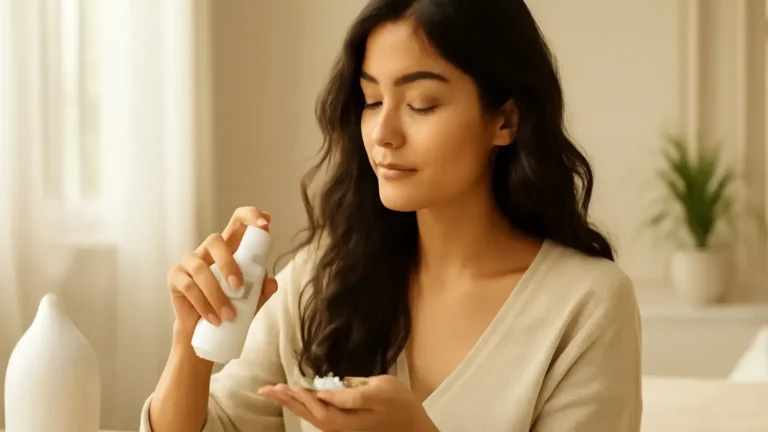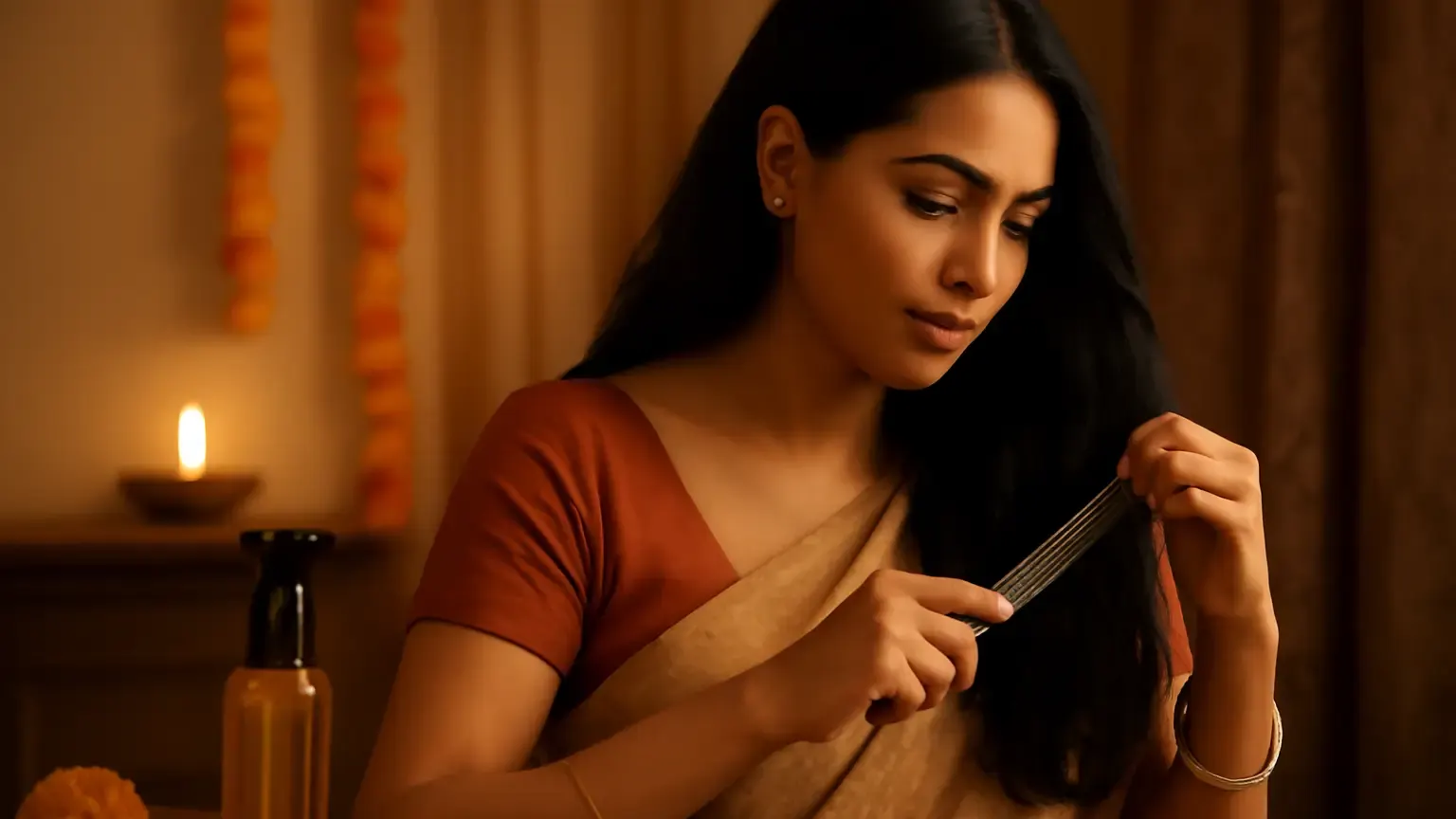
seasonal hair care for Diwali works best as a schedule, not a last-minute product layer. If you are attending pujas, family gatherings or several parties in India, wash according to your scalp, condition the lengths, apply heat protectant before every hot tool and give hair recovery time between events. This approach helps dry, coloured, curly and fine hair look polished while reducing avoidable heat damage, tangling and breakage from tight styles or decorative accessories.
Why a Diwali hair plan matters
Festive styling often combines several stressors: repeated washing, blow-drying, straightening or curling, strong-hold products, backcombing and accessories that pull on the roots. One event may not create a visible problem, but several styling sessions close together can leave hair rough, dull, tangled or more prone to snapping.
A practical plan separates four decisions: when to wash, how much conditioning your lengths need, which heat protection to use and how to undo the style gently. Your scalp condition, hair texture, colour treatment and the number of events should guide the routine. Hair that is fine or oily may need a lighter approach than thick, curly or dry hair.
Build your pre-event hair wash schedule
The best pre-event hair wash timing depends on how your hair behaves after washing. Hair that becomes fluffy when freshly washed may style more easily the day before, while an oily scalp may feel and look better with a wash on the event day. Avoid experimenting with a new shampoo, mask or salon service immediately before an important celebration.
One to two days before
- Wash with a cleanser suited to your scalp rather than scrubbing the lengths aggressively.
- If you have buildup from dry shampoo, oil or styling products, cleanse thoroughly but do not repeatedly shampoo just to make hair feel “squeaky”.
- Apply conditioner from mid-length to ends. Leave it on for the label-recommended time and rinse well.
- Allow hair to dry fully before tying it up or sleeping. Damp hair is more vulnerable to stretching and friction.
On the event day
Wash on the same day if your scalp gets oily quickly, or if sweat and outdoor pollution make your roots uncomfortable. Use a lightweight conditioner if the style needs volume. For dry or coarse hair, a richer hair conditioning routine the previous day may provide softness without making the roots limp.
Do not rely on oil as a substitute for washing. Hair oiling before shampoo can suit some dry lengths, but use a small amount, keep it mainly on the lengths and wash it out properly. Heavy oil left on the hair before a blow-dry or iron can make styling uneven and may increase the need for repeated heat.
Condition and protect before festive hair styling
Conditioning improves slip, which makes detangling and styling less rough on the hair shaft. It does not make hair immune to thermal damage, so conditioning and heat protection serve different purposes.
After towel-drying, apply a heat protectant for hair according to the product directions. Spread it evenly through the sections that will meet a dryer, straightener or curling wand. A spray may feel convenient for fine hair, while a cream or serum can be more comfortable for thick or very dry lengths. Avoid applying more and more product to compensate for excessive heat.
Wait until hair is mostly dry before using a flat iron or curling tool unless the tool is specifically designed for damp hair. Wet hair can steam under high heat. Keep the tool moving, use a moderate setting that achieves the look and avoid repeated passes over the same section. Heat protectant reduces exposure risk; it does not cancel it.
Choose a style based on your hair and schedule
Good festive hair styling is not only about the final look. It should also be realistic for the number of hours you will wear it and how many events follow.
- Fine or fragile hair: choose a low-tension ponytail, soft waves or a loose half-up style. Limit backcombing and avoid placing pins repeatedly in one area.
- Curly or wavy hair: preserve your natural pattern with a compatible leave-in product and diffuse or air-dry where practical. Brushing dry curls repeatedly can create frizz and breakage.
- Dry, coarse or chemically treated hair: use sectioning, lower heat and a nourishing conditioner. A smooth bun may be less stressful than several rounds of hot-tool styling.
- Oily scalp: keep heavy serums and oils away from the roots. If you use dry shampoo, apply only as directed and remove buildup during the next proper wash.
For anti-frizz hair care, prioritise complete drying, a small amount of smoothing product on the ends and protection from unnecessary humidity. In humid parts of India, an elaborate style may need more product, but piling on layers can make hair sticky and difficult to cleanse later. Test hold and texture before the main event when possible.
Between events: a simple recovery reset
Do not treat every festive day as a reason to restyle from scratch. If the scalp is comfortable and the hair is clean, refresh the parting, smooth the surface with clean hands and change the accessory rather than adding more heat.
- Remove visible pins and elastic bands first. Do not pull a knot while accessories are still attached.
- Loosen the shape with your fingers. Separate sections gently before using a comb.
- Cleanse when there is sweat, heavy product or scalp discomfort. Otherwise, a careful brush-out and a rest day may be enough.
- Condition the next wash. Concentrate on the ends, where friction and heat are usually most noticeable.
- Let hair dry naturally when feasible. This gives the strands a break before the next styled look.
Post-styling hair recovery is about reducing additional stress, not trying to reverse damage overnight. A leave-in conditioner can improve manageability, while a hair mask may be useful occasionally for dry lengths if it suits your routine. No product can repair a split end permanently; trimming is the reliable way to remove one.
Remove festive accessories without breakage
Jewellery, hair chains, decorative clips and tightly wrapped elastics can catch on individual strands. Hair accessory removal should be slow, especially after a long event when hair has become tangled.
Start with your hands in good light. Open clips before sliding them out, and unwind chains rather than dragging them through the style. If an accessory is caught, add a little conditioner or detangling product to the area and work from the outer edge of the knot. Use gentle detangling: hold the hair above the knot for support and move a wide-tooth comb from the ends upwards in small sections.
Choose covered elastics, fabric scrunchies or smooth pins for future events. Avoid sleeping in a tight style, particularly if the scalp feels tender. Repeated pulling in the same location can increase mechanical breakage and discomfort.
Common mistakes to avoid during Diwali
- Using high heat because the style is taking time: lower the temperature and work in smaller, fully dry sections instead.
- Applying oil immediately before an iron: oiling may be part of a pre-shampoo routine, but freshly oiled hair is not a reason to increase direct heat.
- Layering multiple fragranced products: this can create buildup and make the scalp feel uncomfortable, especially in hot weather.
- Brushing aggressively after hairspray: loosen the style with fingers first and cleanse when product is heavy.
- Wearing a tight accessory for hours: choose secure but comfortable placement and change it between events if possible.
- Trying a chemical service at the last minute: colour, smoothing or other salon treatments deserve planning and professional advice suited to your hair.
A practical three-stage Diwali routine
Before the first event: wash based on your scalp, condition the lengths, detangle only after adding slip, and dry completely. Apply heat protection before any hot tool and select one style that does not require repeated retouching.
Between events: remove pins and elastics carefully, assess whether the scalp actually needs washing, and avoid restyling clean hair merely for a minor change. Use a light refresh rather than adding several layers of product.
After the final event: remove accessories before bed, cleanse away strong-hold products when needed, condition the ends and give hair a low-heat or no-heat day. If your hair feels unusually brittle, simplify the routine and avoid repeated thermal styling.
Takeaway
Effective seasonal hair care for Diwali is a sequence of small protective choices: wash at the right time for your scalp, condition for slip, use heat protectant before styling, pause between events and remove accessories without pulling. Choose the lowest heat and tension that can achieve your look, then give your hair recovery time after the celebrations.
Products that may help with this routine
Choose only what fits your skin, hair or personal needs. Use the links below to view current options on Amazon India.
Frequently Asked Questions
When should I wash my hair before Diwali?
Wash one to two days before the event if freshly washed hair becomes fluffy or difficult to style. Wash on the day if your scalp becomes oily quickly or you need to remove sweat and buildup. Condition the lengths and dry the hair fully before styling.
How can I protect my hair before Diwali heat styling?
Start with clean, conditioned and completely dry hair, then apply a suitable heat protectant evenly before using a dryer, straightener or curling tool. Use the lowest effective temperature, avoid repeated passes and never treat protectant as permission for unlimited heat.
What is the best Diwali hair care routine for dry hair?
Use a gentle scalp cleanse, a richer conditioner on the lengths and a small amount of leave-in product if needed. Pre-shampoo oiling may suit some dry hair, but wash it out fully and do not use heavy oil as a replacement for heat protection.
How do I remove hair accessories without breakage?
Open clips and unwind chains instead of pulling them through the hair. Loosen knots with your fingers, add conditioner or detangler if necessary, support the section above the knot and comb from the ends upward with a wide-tooth comb.
How can I recover hair after festive styling?
Remove accessories gently, cleanse when there is sweat or heavy product, condition the lengths and choose a no-heat or low-heat day. Reduce tight styles and repeated hot-tool passes. Persistent breakage, scalp pain or concerning hair loss should be discussed with a dermatologist.