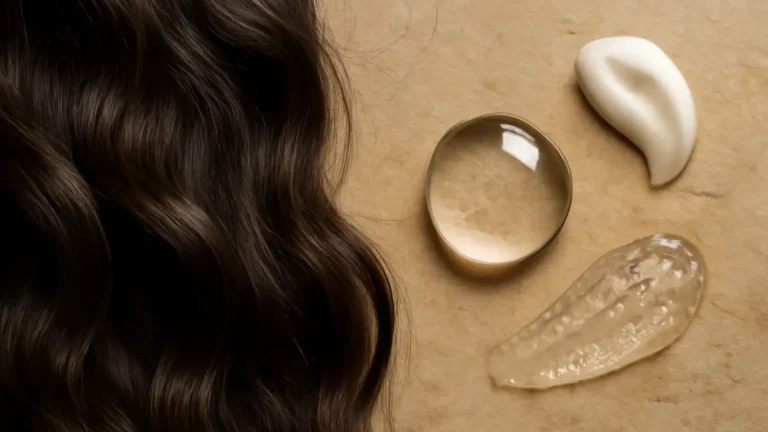
Seasonal hair care for static starts with three quick changes: add a small amount of water-based moisture, detangle with less friction and protect hair from rubbing against winter fabrics. These steps can settle flyaways without flattening fine hair or disturbing curls. This guide explains why dry air creates static and shows how to choose six lightweight fixes for straight, wavy, curly, thick and fine hair.
Why hair becomes static in dry weather
Static hair happens when strands develop an electrical charge and repel one another. In cooler or air-conditioned weather, the air holds less moisture, so the hair surface becomes less flexible and more prone to charge build-up. Low humidity is a major reason for dry hair and static, but rubbing hair against sweaters, scarves, coats, towels and pillowcases can transfer charge as well.
Over-cleansing can make the problem more noticeable. Shampooing too frequently, using very hot water or choosing a strongly clarifying formula when it is not needed may remove too much surface oil. Hair that is already porous, bleached, heat-styled or naturally coarse can then feel rougher, catch on fabric and lift away from the head.
The practical goal is balance. Add a small amount of water-based moisture, smooth the hair cuticle gently and reduce rubbing. Heavy layers of butter or oil are not automatically better; they can flatten fine hair, make roots look greasy or disturb curls. The most useful static hair remedies are usually small routine changes rather than a single intensive treatment.
Six lightweight fixes for flyaways
1. Use a small amount of leave-in conditioner
A lightweight leave-in conditioner can help soften the hair surface and make strands less likely to separate. Apply it to damp, towel-blotted lengths rather than directly to the scalp. Start with a pea-sized amount for short or fine hair and add only if the ends still feel rough.
Fine and straight hair usually does best with a mist, milk or fluid formula. Thick, wavy and curly hair can take a creamier lightweight leave-in conditioner, but apply it in sections from the mid-lengths down. If your hair loses volume easily, keep the product below the ears and avoid layering it with several styling creams. These are useful anti-static hair products because they add slip without requiring a heavy coating.
2. Change the way you detangle
Tool choice affects both static and breakage. A wide-tooth comb with smooth, rounded teeth is a useful option for wet or damp curls and waves because it separates larger sections without repeatedly dragging across the hair. For straighter hair, a well-finished wooden comb for hair or a brush designed to reduce snagging can help limit friction.
If you are deciding on the best brush for static hair, look first for smooth, flexible or well-finished surfaces that do not snag. There is no universal winner: a suitable brush for straight hair may not suit dense curls. Detangle from the ends upwards, holding the section above the knot so you do not pull at the roots. Do not aggressively brush completely dry curls; it can expand the shape and create more frizz.
3. Smooth the final flyaways with damp hands
For a quick static hair remedy, lightly dampen your palms, rub them together and skim over the surface of the finished style. You can use a tiny amount of leave-in conditioner or a light styling cream between your hands if plain water is not enough. Keep the motion gentle and focus on the crown and ends.
This method suits fine hair because it uses very little product. It also works for straight and wavy hair before a meeting or commute. Avoid wetting the hair heavily; too much water can disturb a blow-dry, loosen a wave pattern or leave the surface uneven as it dries. For last-minute flyaway hair control, damp hands are often more reliable than adding another rich product.
4. Dry hair with less friction
Rough towel-drying can lift the outer layer of the hair and create unnecessary rubbing. Instead, squeeze out excess water with your hands, then wrap the hair briefly in a soft microfibre towel or smooth cotton T-shirt. Press rather than scrub. This simple approach is one form of hair friction reduction that works for most textures.
When using a hair dryer, direct airflow down the length of the hair and use a moderate heat setting. Finish with a short cool-air pass if it helps the style settle. Keep the dryer moving and use heat protection when heat styling. Hair that is fine or fragile may need less heat and a shorter drying time, while dense curly hair benefits from slow, controlled drying with a diffuser rather than forceful airflow.
5. Reduce fabric friction and synthetic contact
Fabrics can be an overlooked source of flyaways. Acrylic, polyester and some fleece materials may create more friction and static than smoother natural fibres. If you are wondering what fabrics cause static in hair, start by observing which scarf, sweater or coat collar creates the most rubbing. You do not need to replace your entire winter wardrobe: a smooth scarf lining, a loosely worn hood or a less abrasive layer between your hair and coat can help.
A silk pillowcase for hair may reduce overnight rubbing for some people, particularly if their hair tangles easily. Satin can offer a similar smoother surface, although results vary. Neither option replaces conditioning or prevents every static episode. Tie long hair loosely with a smooth, snag-free accessory before sleep; tight elastics can cause their own tension and breakage.
6. Adjust cleansing and moisture through the season
A consistent hydrating hair routine is more useful than an emergency oil application. Cleanse according to your scalp’s needs, concentrate shampoo at the scalp and let the lather rinse through the lengths instead of scrubbing them. Follow with conditioner on the mid-lengths and ends every time the hair is washed.
If your hair feels coated, limp or difficult to style, reduce the amount of leave-in before adding a stronger cleanser. If it feels squeaky, rough or unusually tangled after washing, consider a gentler routine and more careful conditioning. Clarifying can be useful occasionally when there is genuine build-up, but frequent clarifying may worsen dry hair and static for some hair types.
Match the fix to your hair type
Fine or straight hair
Choose a spray leave-in conditioner, a light detangling mist or a small amount of smoothing cream on the ends. These are more likely to provide fine hair volume-friendly products than rich masks used as leave-ins. Use a smooth comb or light brush, avoid applying oil at the roots and use damp hands for last-minute flyaway control. If you specifically want a hair oil for flyaways, use only a pin-sized amount on the very ends and warm it between your palms first.
Thick or coarse hair
Thicker hair often needs more conditioning, but distribute it in sections so the outside is not coated while the inside remains dry. A lightweight cream leave-in, followed by a small amount of serum on the ends, may be more practical than repeatedly adding oil. Reduce friction during drying and detangle patiently from the ends upward.
Wavy or curly hair
Preserve the natural pattern by detangling when wet or well-conditioned, then scrunching rather than brushing once dry. A leave-in can support curl definition, while a small amount of gel or cream can hold the shape and stop individual strands from lifting. If the hair looks fluffy, refresh with water and a little leave-in instead of dry-brushing it. This approach helps answer how to fix static in curly hair without disrupting the curl groups.
How to build a five-minute anti-static routine
- Blot, do not rub, after washing.
- Apply a small amount of leave-in to damp lengths and ends.
- Detangle with a smooth comb or suitable brush, starting at the ends.
- Dry with controlled airflow and minimal handling.
- Before leaving home, smooth the surface with damp hands and check whether your scarf or collar is rubbing the hair.
Keep one travel-size mist or a small amount of your leave-in available for commuting. Reapply sparingly; repeated layering can turn a static problem into product build-up. If your hair is very fine, water alone may be the best first step. This restrained approach is also useful when testing the best lightweight products for fine hair static, because you can identify whether moisture or product weight is the real issue.
Common mistakes that make static worse
- Using too much oil: Oil can add slip, but it does not replace water-based moisture and may flatten fine hair.
- Brushing curls when dry: This can disrupt curl groups and increase visible frizz.
- Scrubbing with a towel: Friction can roughen the surface and encourage tangles.
- Washing with very hot water: Hot water may leave lengths feeling drier and less comfortable.
- Ignoring the fabric source: A sweater, scarf or coat collar may be repeatedly creating friction after styling.
- Changing every product at once: Try one adjustment for several washes so you can tell what actually helps.
When static may not be the whole problem
Occasional flyaways in dry weather are common. However, persistent severe dryness, sudden changes in texture, significant breakage, scalp discomfort or unusual shedding deserve individual advice from a dermatologist or other qualified healthcare professional. General anti-static steps cannot identify or treat an underlying scalp or hair concern.
Takeaway
The most reliable seasonal hair care for static combines modest moisture with less friction. Start with a lightweight leave-in, a gentler detangling method and fabric adjustments, then tailor the amount and texture of product to your hair type. Fine hair usually needs mist and restraint; thick, wavy and curly hair may need more conditioning and careful sectioning. Small changes are often enough to keep flyaways controlled without weighing down the style.
Products that may help with this routine
Choose only what fits your skin, hair or personal needs. Use the links below to view current options on Amazon India.
Frequently Asked Questions
How to prevent static in hair in winter?
Use a lightweight leave-in on damp lengths, reduce towel and fabric friction, detangle with a smooth comb or suitable brush, and avoid over-cleansing. A satin or silk pillowcase may also reduce overnight rubbing.
What is the best brush for static hair?
There is no single best brush for everyone. Choose a smooth, well-finished brush that does not snag; a wooden comb can suit straight hair, while a wide-tooth comb is often more practical for damp waves and curls.
Does leave-in conditioner help static hair?
Yes, a small amount of lightweight leave-in conditioner can add surface moisture and slip, making strands less likely to separate. Apply it to damp mid-lengths and ends, not the scalp.
How do you fix static in curly hair?
Detangle curls while wet or well-conditioned, use a small amount of leave-in, and refresh dry hair with water instead of brushing it. Scrunching can preserve curl groups and reduce puffiness.
How do you stop flyaways without weighing hair down?
Begin with damp hands or a fine mist leave-in and smooth only the surface and ends. Avoid applying rich oils or creams at the roots, especially if your hair is fine or straight.