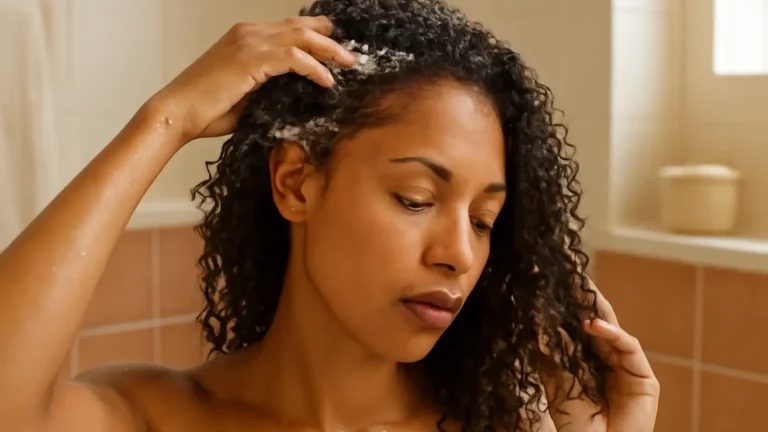
Curly wavy hair and hair oil can work well together, but the best method depends on whether your strands need softness, your ends need protection or your scalp simply feels comfortable without oil. This guide is for wavy, curly and coily-haired readers choosing between pre-shampoo oiling, a post-wash finish and skipping oil altogether. The practical answer: use a small amount mainly on lengths before washing; fine waves and buildup-prone curls may need only an occasional finish—or none at all.
Oil is neither an essential step nor a universal solution for textured hair. It can reduce the rough feel of dry lengths, help limit friction before shampooing and add a polished finish to a finished style. However, too much oil can flatten waves, make curls look stringy and leave the scalp uncomfortable or difficult to cleanse.
The useful question is not “Should everyone oil their hair?” It is “Where, when and how much oil suits my pattern and routine?” A loose 2A wave in humid Mumbai may need a completely different approach from a dense 3C curl with dry ends. Your shampoo frequency, styling products, climate and scalp sensitivity matter as much as your curl pattern.
Pre-shampoo oiling: the safest starting point for dry lengths
Pre-shampoo oiling, sometimes called pre-pooing, means applying oil to the mid-lengths and ends before washing. It is usually the most practical option for dry curly hair because the oil is removed rather than left on the finished style. This can be useful if your hair feels rough after shampooing, tangles easily or loses softness between wash days.
Apply a small amount to dry or slightly damp lengths 30 minutes to two hours before washing. There is no need to drench the hair or leave oil on overnight. Long contact times may be inconvenient for sensitive scalps and do not automatically produce better results.
- Fine or short waves: begin with one or two drops rubbed between your palms, then touch only the ends.
- Medium-density curls: try three to six drops, spread in sections from the ears downward.
- Thick, long or very dry curls: use a little more if needed, but add it gradually rather than coating the entire head.
Keep the roots mostly clean unless you have a specific reason to apply oil there. Before shampooing, gently loosen tangles with your fingers and avoid aggressive brushing, which can increase breakage and disturb the curl pattern.
Post-wash hair oil: a finishing step, not a moisturiser
Post-wash hair oil is applied after cleansing and conditioning, usually when the hair is fully dry or nearly dry. It can soften the feel of crunchy styling product, add shine and help separate a few frizzy strands. It does not hydrate hair by itself; water-based leave-in products and conditioner provide the moisture step, while oil mainly helps with slip and surface feel.
For a controlled finish, place one drop in your palms, rub until evenly spread and lightly glaze over the ends. Scrunching a tiny amount into the lower lengths can work for curls, while smoothing it over the outside of the hair may suit stretched waves. Avoid repeatedly adding oil throughout the day. If the hair still looks dull, first check whether it needs water, conditioner or a lighter styling routine.
When a finish works well
- Defined curls feel dry at the ends but do not look coated.
- Waves need a small amount of frizz control after drying.
- You use a lightweight hair oil and can wash it out comfortably.
Skip this step if your hair is already limp, greasy-looking or coated with several layers of gel, cream and leave-in conditioner. An oil-free curly hair routine can create better volume and definition for many fine textures.
Scalp oiling: optional, not a requirement
Scalp oiling is separate from applying oil to the hair shaft. A scalp may feel more comfortable with no added oil, particularly if it becomes oily quickly, feels itchy after heavy products or is prone to visible residue. Massage should also be gentle; vigorous rubbing can cause unnecessary friction.
If you choose to try it, use a small quantity on the scalp before shampooing, leave it for a short period and cleanse thoroughly. Do not use oil on broken or irritated skin. Anyone with a sensitive scalp should patch test a new product on a small area and stop if burning, redness or persistent discomfort occurs.
Scalp oiling is not a substitute for professional advice when symptoms are severe, recurring or accompanied by sores, marked scaling or unusual hair shedding. A dermatologist can assess persistent scalp concerns more appropriately than a cosmetic oil routine.
Choose by pattern, density and porosity
Fine wavy hair
Fine wavy hair is easily weighed down, so oil is best used sparingly or skipped. If your waves collapse after wash day, try pre-shampoo oiling only on the last few centimetres of the ends once every week or two. Avoid heavy layering with rich masks, thick creams and oil at the same time.
Medium to thick curls
Medium and thick curls may tolerate pre-shampoo oiling more easily, especially when the ends feel dry or the hair is exposed to frequent washing. Still, density does not determine the correct amount by itself. Start small, observe the next wash and adjust based on softness, definition and ease of cleansing.
High-porosity or very dry lengths
Hair that loses moisture quickly may benefit from oil after a water-based conditioner or leave-in product. Use it as a light sealing layer on the ends rather than treating the whole head. Hair porosity labels are only a guide; your actual response to products is more useful than a quiz result.
Buildup-prone curls
Buildup-prone curls often do better with occasional pre-shampoo use than daily finishing oil. If curls feel waxy, dull, sticky or unusually difficult to wet, pause extra oil and review all stylers in the routine. A clarifying shampoo used periodically according to the product directions may help remove accumulated products, but over-cleansing can leave textured hair dry.
How to use oil on wavy hair without losing volume
- Start with clean hands and a tiny amount. One or two drops is enough for many shoulder-length waves.
- Warm the oil between your palms. This spreads it thinly and reduces the chance of one greasy patch.
- Target the ends first. Add any remaining product to the mid-lengths, not the roots.
- Use it on dry hair for finishing. On wet hair, it can make it harder to judge how much product is already present.
- Wait and assess. If the wave pattern becomes flat or separated into strands, use less next time or reserve oil for pre-wash use.
In humid Indian weather, oil may make hair feel coated when combined with leave-in conditioner and styling cream. For volume, apply fewer products overall rather than trying to correct heaviness with more water or more oil.
Removing oil without rough handling
The best way to remove oil from curly hair is to cleanse the scalp and let the lather travel through the lengths as you rinse. You generally do not need to scrub the ends. If one shampoo leaves a clear oily film, repeat with a moderate amount rather than using very hot water or vigorous friction.
Follow with conditioner on the mid-lengths and ends, then detangle gently while the hair is slippery. If you regularly need several rounds of shampoo to remove oil, the product amount is probably too high or the oil is not a good fit for your wash routine. A lighter oil or shorter pre-wash period may be more comfortable.
Common mistakes with curly wavy hair and hair oil
- Applying oil to soaking-wet hair: excess water can make the quantity difficult to judge.
- Oiling the scalp by default: the scalp does not require oil simply because the lengths are curly.
- Using oil to fix dryness caused by missing conditioner: oil changes surface feel but does not replace conditioning.
- Leaving a heavy layer overnight: this can transfer onto pillowcases and may be uncomfortable for sensitive scalps.
- Adding oil before every styling product: multiple rich layers can reduce curl definition and volume.
- Ignoring the next wash: greasy roots, slow drying and limp curls are useful signs to reduce or stop oil.
Pre-wash, finish or skip: a quick decision guide
Choose pre-shampoo oiling if your ends are dry, rough or prone to tangling and you are comfortable cleansing afterwards. Choose a post-wash finish if your curls are already clean and defined but the ends need a small amount of polish. Skip oil if your waves are fine, your curls accumulate product quickly, your scalp dislikes residue or your current routine already gives enough softness and shine.
Try one method at a time for two or three wash cycles. Compare softness, curl definition, volume, scalp comfort and how easily the oil comes out. This simple test is more reliable than assuming that a particular oil or technique suits every curl pattern.
Takeaway
There is no single rule for curly wavy hair and hair oil. Pre-shampoo use is generally the most forgiving choice for dry lengths; a post-wash finish suits already-clean hair that needs minimal polish; and skipping oil is often best for fine waves, buildup-prone curls or sensitive scalps. Keep the amount small, focus on the lengths and let your hair’s response guide the routine.
Products that may help with this routine
Choose only what fits your skin, hair or personal needs. Use the links below to view current options on Amazon India.
Frequently Asked Questions
Is hair oil good for curly wavy hair?
It can be useful for dry lengths, pre-shampoo protection or a very light finish, but it is not essential. Fine waves, buildup-prone curls and sensitive scalps may do better with little or no oil.
How often should you oil curly hair?
Start with occasional use, such as once every one or two weeks for pre-shampoo oiling, then adjust according to softness, buildup, definition and how easily the product washes out. A post-wash finish may be used less often and in a smaller amount.
How to use oil on wavy hair without weighing it down?
Use one or two drops, warm it between your palms and apply it mainly to the dry ends. Avoid the roots, use oil as the only finishing product at first and reduce the amount if waves become flat or stringy.
Should you oil fine wavy hair before washing?
You can test a very small amount on the ends for a short pre-wash period, but it is optional. If your waves lose volume or require repeated shampooing, skip oil or use it only occasionally.
Can hair oil cause buildup on curly hair?
Yes, especially when it is layered with leave-in products, creams and gels or applied frequently. Waxy feel, dullness, limp curls and difficulty cleansing are signs to pause oil and review the routine.
What is the best way to remove oil from curly hair?
Apply shampoo to the scalp, massage gently and allow the lather to move through the lengths while rinsing. Repeat moderately if needed, then condition the mid-lengths and ends without scrubbing them.