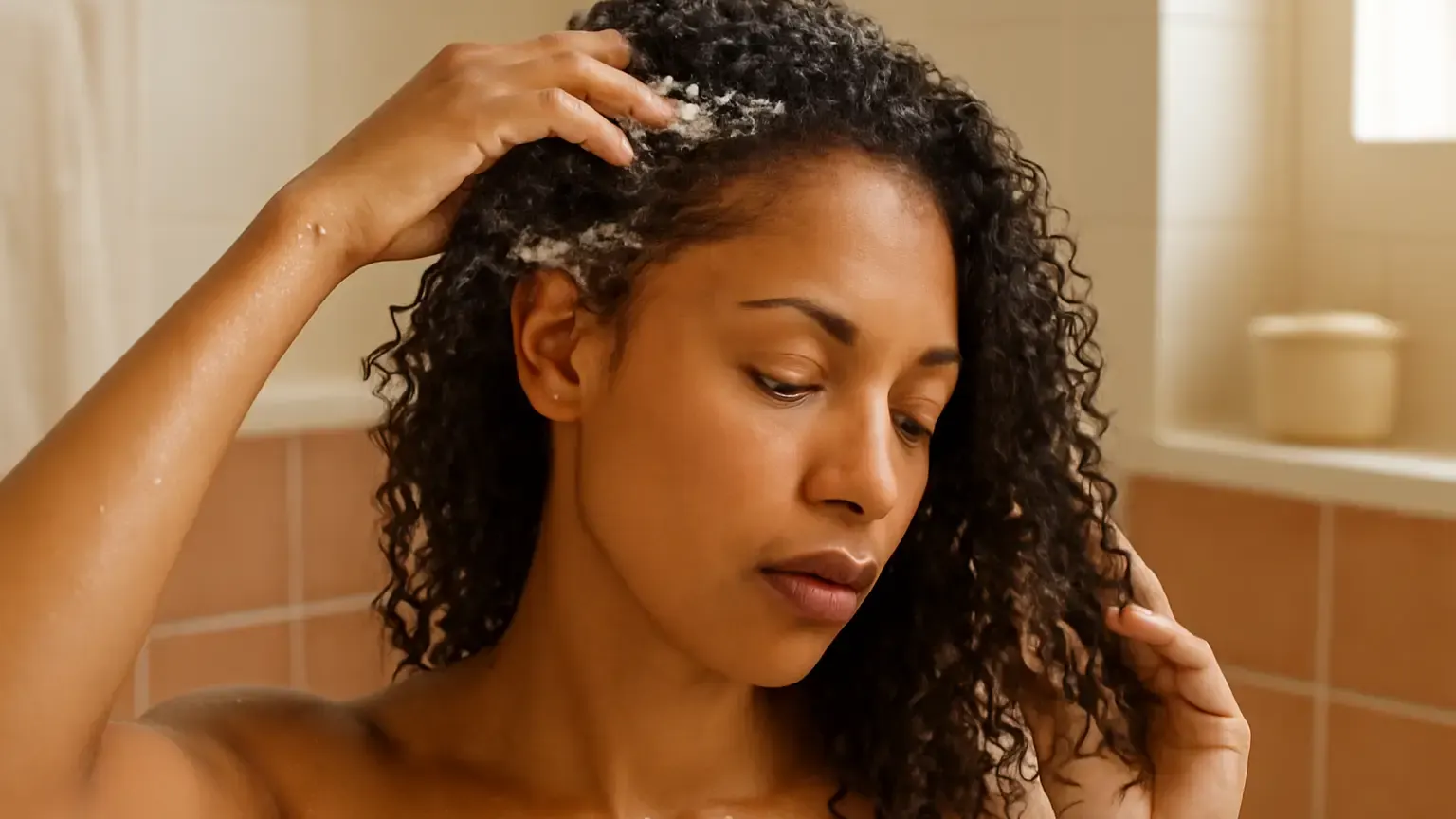
Curly wavy hair and co-washing can work well when your lengths need gentle cleansing but your scalp is comfortable between washes. It is usually most helpful for dry, coarse, dense curls; it can be less suitable for fine waves, oily scalps, low-porosity hair or heavy stylers. The practical answer is to test a co-wash for two to three wash days, keep the scalp massage thorough, and retain regular shampoo or clarifying washes when hair feels coated or the scalp feels unclean.
Curly wavy hair and co-washing: the quick answer
Co-washing means washing the hair with a cleansing conditioner or a dedicated co-wash cleanser instead of using shampoo at every wash. These formulas generally contain mild cleansing agents alongside conditioning ingredients, so they can remove light sweat, dust and some oil while leaving the lengths softer.
It is not automatically better than shampoo. Co-washing is a technique, not a rule for every curl pattern. The right choice depends on your scalp’s oiliness, hair density, porosity, styling products, climate and how quickly your roots lose freshness.
- Often suitable: dry, coarse, dense or tightly curled hair that becomes rough after frequent shampooing.
- Use more cautiously: fine wavy hair, low porosity hair, oily roots and hair that is easily flattened.
- Usually unsuitable as the only cleanser: anyone who regularly uses waxes, oils, strong-hold gels, dry shampoo or silicone-rich layering without periodic shampooing.
Who may benefit from co-washing curly wavy hair?
The main benefit is reduced stripping. A traditional shampoo, particularly one used too often or paired with very hot water, may leave already-dry lengths feeling squeaky, tangled or frizzy. A well-rinsed co-wash can help preserve softness and make detangling easier.
People with thick curls may also find that co-washing supports moisture balance between more thorough cleansing days. This can be useful if your hair takes a long time to dry, has a visibly dry halo, or feels rough even when the scalp is not oily.
It may suit you if:
- your curls are medium to coarse and need conditioning at almost every wash;
- your scalp remains comfortable and fresh for several days;
- you use light styling products rather than heavy oils, waxes or layers of butter;
- your hair becomes frizzy or brittle with frequent shampooing; and
- you are prepared to massage and rinse carefully instead of treating co-wash like a quick conditioner step.
Co-washing does not change your natural curl pattern. It may improve slip and reduce friction, which can make existing curl definition look more organised, but it cannot repair damaged hair or guarantee a particular shape.
Who should use regular shampoo instead?
Regular shampoo is the safer default when the scalp produces oil quickly, feels sweaty or becomes itchy and uncomfortable between washes. A co-wash may soften the hair while failing to remove enough sebum, pollution, sweat and styling residue from the scalp.
Be especially cautious if you have fine wavy hair. Fine strands have less room for conditioning residue before they look limp, greasy or stringy. Waves may lose lift at the roots even though the ends feel soft. In that case, alternating a mild sulfate-free shampoo with occasional co-washing may be more practical than replacing shampoo completely.
People with low porosity hair may also notice that rich co-washes sit on the surface rather than making the hair feel moisturised. Signs include dullness, slow drying, a waxy finish and strands that feel coated soon after washing. These signs call for a lighter formula and better cleansing—not necessarily more conditioner.
Keep regular shampoo in your routine if you use:
- oils, pomades, waxes or heavy creams;
- silicone-rich styling products that accumulate over time;
- dry shampoo or scalp powders;
- strong-hold gels applied repeatedly without a full wash; or
- frequent swimming, workouts or exposure to dust and pollution.
If your scalp has persistent redness, soreness, scaling, unusual odour or intense itching, seek advice from a dermatologist rather than trying to manage the concern through co-washing alone.
How to test a co-wash without committing to it
A short trial is more useful than judging the first wash. Try the method for two or three wash days while keeping your styling products and water temperature broadly similar. This makes it easier to identify whether the cleanser—not a change in every part of your routine—is affecting your hair.
- Brush out only if appropriate for your texture. Detangle gently with wet hair and conditioner if dry brushing causes breakage or frizz.
- Soak the hair fully. Dense curls can repel water at the roots, so spend enough time saturating the scalp and lengths.
- Apply the co-wash mainly to the scalp. Use enough product to create slip, then divide thick hair into sections if needed.
- Massage with fingertips for at least 60 seconds. Move across the hairline, crown, sides and nape. Do not scratch with nails.
- Rinse thoroughly. Let the water reach the scalp while gently moving the hair so residue does not remain at the roots.
- Condition only where needed. If the co-wash already feels rich, apply a small amount of lightweight conditioner to the ends—or skip this step.
- Style with a modest amount of product. Heavy layering can make a successful trial look like a cleansing failure.
After drying, assess root lift, softness, scalp comfort, odour, frizz and how long the style stays fresh. A good result is not simply very soft hair; it is hair that feels clean enough without becoming dry or flat.
A practical co-wash routine for waves and curls
For many people, the most balanced approach is alternating cleansing methods. A sample wash day routine could include co-washing once, using a mild shampoo on the next wash, and using a deeper cleanse only when buildup is evident. The exact timing may be once a week, every few days or less often depending on your scalp and climate.
For dry, dense curls
Co-wash on a regular wash day, massage the scalp carefully and follow with conditioner only if the lengths still need slip. Use shampoo when the roots feel oily, the curl clumps stop forming or products begin to sit on the hair.
For waves or fine curls
Use a small amount of co-wash, concentrate it at the scalp and rinse longer than you think necessary. Keep conditioner below the ears and choose light, water-based styling products. If volume drops, shorten the co-wash trial or switch to a gentle shampoo more often.
For active or humid lifestyles
Sweat, dust and humidity can make the scalp feel dirty sooner. You may prefer shampoo after sweaty workouts and co-wash only on lighter days. In India’s warmer or more humid regions, freshness and scalp comfort can matter more than following a curl method rigidly.
How to avoid flattening waves or leaving curls coated
Most co-wash problems come from too much product, insufficient water or using a formula that is too rich for the hair. These adjustments can help:
- Apply product in sections so the scalp receives even coverage rather than a thick layer in one area.
- Use fingertips to move the cleanser around the scalp; do not rely only on rubbing the lengths together.
- Rinse until the hair feels clean and flexible, not slippery with a film.
- Keep rich conditioners, oils and creams away from the roots.
- Use less styling product on the trial days so you can judge the cleanser fairly.
- Dry the roots with gentle lifting or diffusing if air-drying leaves waves pressed against the scalp.
If hair feels heavy, dull or greasy, do not solve the problem by adding more conditioner. Reduce layers first and consider a clarifying shampoo when normal shampoo does not restore movement.
Product buildup: when to clarify
Product buildup can appear as dullness, sticky or waxy strands, curls that will not clump, a coated scalp or hair that feels dirty immediately after washing. It can develop with co-washing because conditioning ingredients are intentionally left behind in small amounts.
Use a clarifying wash occasionally when buildup is clear, following the product’s directions and conditioning the lengths afterwards if they feel dry. Do not clarify automatically every week if your hair does not need it; over-cleansing can make dry curls rough. A balanced routine uses enough shampoo to keep the scalp and hair free from residue without turning every wash into a harsh reset.
The decision guide: co-wash, shampoo or alternate?
| What you notice | Most sensible next step |
|---|---|
| Dry lengths, comfortable scalp, dense curls | Trial co-washing and monitor softness and freshness |
| Flat roots, fine waves, oily scalp | Use mild shampoo more often; co-wash occasionally if desired |
| Waxy feel, dullness or poor curl clumping | Reduce product layers and use clarifying shampoo when needed |
| Sweat, pollution or frequent workouts | Prioritise scalp cleansing; co-wash on lighter days only |
| Persistent irritation or scaling | Pause experimentation and ask a dermatologist for guidance |
The best routine may change with the season, hair length, exercise habits and styling choices. Co-washing is not a test of whether you are following a particular curl philosophy. It is simply one cleansing option.
Takeaway
Curly wavy hair and co-washing can be a useful match when your lengths are dry and your scalp does not need frequent deep cleansing. It is less convincing for fine waves, oily roots, low-porosity hair or routines packed with heavy stylers. Start with a short trial, massage the scalp, rinse thoroughly and alternate with regular or clarifying shampoo whenever hair loses movement or the scalp no longer feels fresh.
Products that may help with this routine
Choose only what fits your skin, hair or personal needs. Use the links below to view current options on Amazon India.
Frequently Asked Questions
Is co-washing good for curly wavy hair?
It can be good for dry, coarse or dense curls when the scalp stays comfortable between washes. It may not suit oily scalps, fine waves, low-porosity hair or routines with heavy product buildup.
How often should you co-wash curly hair?
There is no universal schedule. Some people co-wash every few days, while others do it once weekly or only between shampoo washes. Follow your scalp comfort, root freshness and how coated the lengths feel.
Can co-washing weigh down wavy hair?
Yes. Rich formulas, excess product, incomplete rinsing and fine strands can leave waves flat or stringy. Use less product, keep conditioner away from the roots and alternate with a mild shampoo if volume drops.
What is the best co-wash routine for waves and curls?
Saturate the hair, apply co-wash to the scalp, massage with fingertips for about a minute, rinse thoroughly and condition only the ends if needed. Adjust the routine according to hair density and scalp oiliness.
Who should avoid co-washing?
People with persistently oily or uncomfortable scalps, heavy styling-product buildup, fine hair that becomes flat, or ongoing scalp symptoms may need regular shampoo and professional advice where appropriate.
How do you remove product buildup from curly hair?
Reduce heavy product layering and use a clarifying shampoo occasionally according to its directions. Follow with suitable conditioning on the lengths, and avoid clarifying more often than your hair needs.


