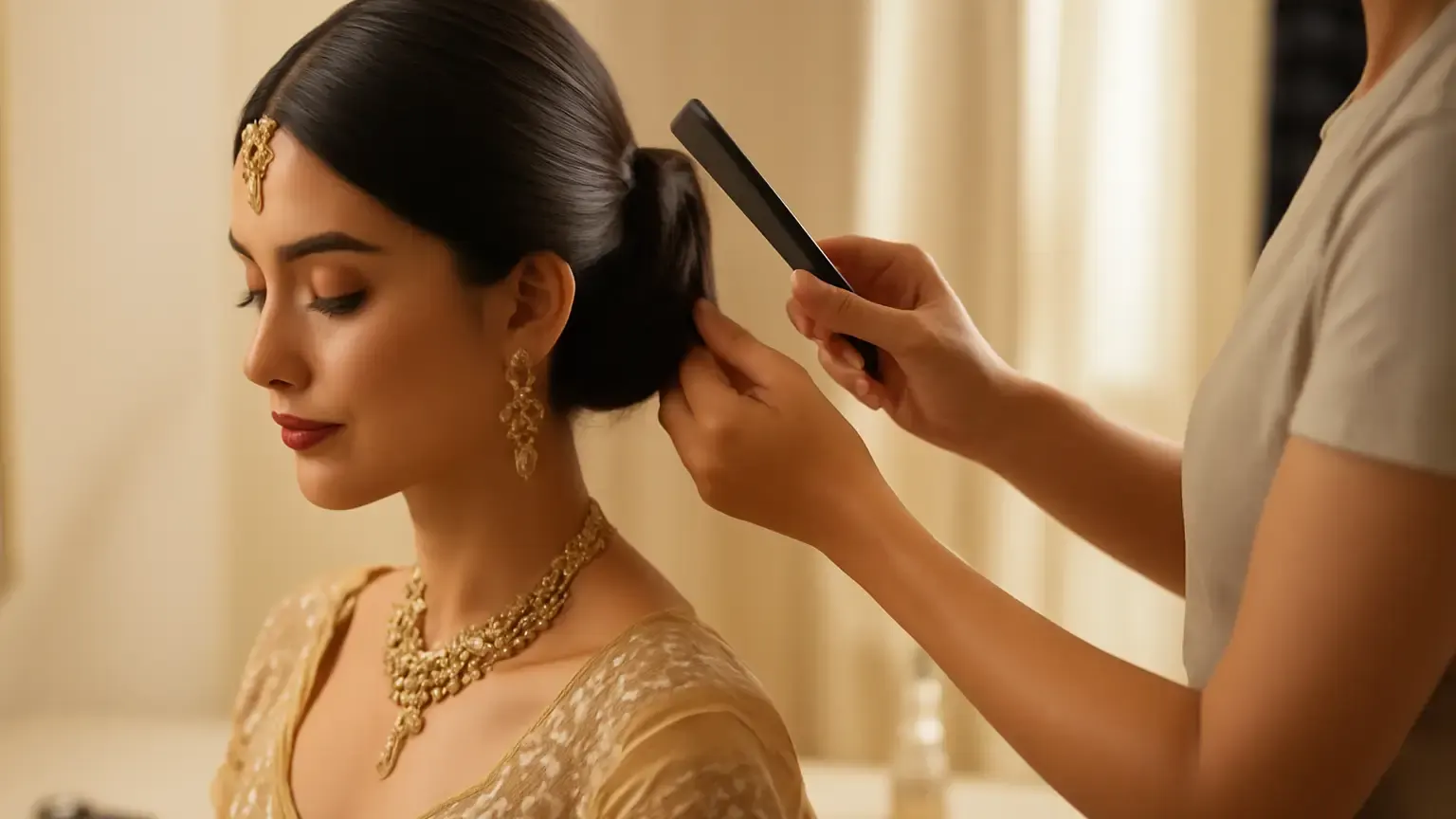
These hair care tips for wedding updos are for brides, bridesmaids and anyone styling formal hair for a long Indian wedding day. Wash according to your hair’s oiliness and the planned style, keep conditioner away from the roots, detangle gently, add only the texture your updo needs, and protect hair before heat styling. Freshly washed hair can suit sleek looks, while second-day or lightly textured hair often grips better for buns, braids and soft chignons.
A wedding updo has to do more than look polished in photographs. It may need to withstand humidity, movement, dancing, a dupatta or veil, jewellery, long ceremonies and several hours of celebration. Good preparation makes the stylist’s work easier and reduces the need for heavy product on the event day.
Start with the hairstyle, not a fixed wash rule
There is no universal answer to whether hair should be freshly washed. The right choice depends on the updo, your scalp, your hair texture and the products used during styling. Ask your hairstylist during the bridal hair trial whether they prefer clean, second-day or lightly textured hair, then repeat the successful routine before the wedding.
- Freshly washed hair: Often suits sleek buns, smooth ponytails and sculpted styles where shine and clean movement matter. Very silky hair may need texture spray or gentle backcombing for grip.
- Second-day hair: Can work well for braided buns, chignons and soft, pinned-up styles because natural oils and existing texture may help pins hold.
- Lightly textured hair: Useful when the style needs waves, volume or flexible grip. Texture should mean controlled body, not dry, tangled or visibly coated hair.
Hair that is visibly greasy, sweaty, smoky or coated with several styling products is not a helpful base. It can look dull and make sections difficult to shape. Conversely, freshly shampooed hair that is extremely slippery may need a professional to create grip without making it feel rough.
Day-before hair wash and conditioning checklist
Your day-before hair wash should leave the scalp comfortable and the lengths manageable. Use a familiar shampoo rather than experimenting with a new formula before an important event. Cleanse the scalp thoroughly, but avoid aggressive scrubbing that could leave it tight or irritated.
Where conditioner belongs
Apply conditioner mainly from the mid-lengths to the ends, especially if your roots become oily quickly. This placement gives the hair enough slip for detangling hair before an updo without making the crown flat or difficult to grip. If your hair is very dry or curly, a little more conditioner may be appropriate through the lengths, but rinse well.
Deep conditioning before styling can be useful for coarse, dehydrated lengths, but timing matters. Do it several days earlier if you have not used the mask before. A rich mask the night before may leave hair too soft, heavy or slippery for pins. On the day before, a regular conditioner that suits your hair is usually the safer choice.
Dry hair completely
Do not sleep with damp hair if you plan to create a precise updo the following day. Dampness can flatten the roots, alter the hair’s natural pattern and make sections harder to control. Blow-dry on a moderate setting if needed, directing the air along the hair shaft. If you use heat, apply a heat protectant for bridal hair before drying or using hot tools.
How to prep hair for an updo on the event day
The morning routine should be simple and predictable. Brush or comb only as much as needed, because excessive brushing can create static and frizz. If you are styling at home, divide the hair into clean sections and keep the products within reach before you begin.
- Inspect the base: Check whether the roots need refreshing or whether the hair is already clean and workable.
- Detangle from the ends: Use a wide-tooth comb or suitable brush, working upward in small sections. Hold the hair above a knot to reduce pulling at the scalp.
- Build the desired texture: Add a small amount of mousse, grip spray or texture product only where the style needs support.
- Shape before pinning: Curl or wave sections consistently if the updo needs movement. Allow hot sections to cool briefly so the shape has time to set.
- Secure strategically: Cross bobby pins where possible and anchor them into a stable base rather than placing many pins randomly.
- Finish lightly: Use hairspray from an appropriate distance, concentrating on the outside and vulnerable areas instead of saturating the whole head.
If your hair is naturally smooth, a little hair texture for updos can improve hold. A texture spray, lightweight mousse or controlled backcombing may help. Use less product than you think you need; additional grip can be added later, while excessive powder or spray is difficult to remove once the style is pinned.
Heat protection and styling-product decisions
Heat tools can help form curls, bends and smooth sections, but repeated passes can make the hair feel dry and less flexible. Apply a heat protectant according to its label, use the lowest effective temperature and avoid clamping the same section repeatedly. Never apply an oil or styling product to hot hair unless its instructions specifically support heat use.
Choose products by function:
- For fine, slippery hair: A lightweight volumising or grip product may create body without an oily finish.
- For thick or coarse hair: A smoothing cream on the lengths can reduce bulk, followed by a firm but flexible setting spray.
- For curly or wavy hair: Preserve the natural pattern where it supports the design instead of brushing it completely smooth.
- For humid venues: An anti-frizz hair product and humidity-resistant hairspray can help manage surface frizz, but neither can replace a secure foundation.
Keep styling products away from the eyes and avoid anything that causes stinging, rash or scalp discomfort. If a familiar product has previously irritated you, do not rely on it for the wedding. Persistent itching, painful scalp changes or significant hair breakage should be discussed with a dermatologist rather than managed only with styling products.
Flyaway control without flattening the updo
Flyaway control for updos is easiest when you separate loose surface hairs from structural problems. A few wisps around the hairline may look soft and intentional. Hair escaping from the bun or pins loosening usually means the foundation needs adjustment.
For small flyaways, use a clean spoolie, a tiny amount of lightweight gel or a small dab of smoothing product. You can also mist hairspray onto a toothbrush or narrow styling brush and press it gently over the surface. Avoid spraying directly into the face, and do not repeatedly brush the same area, as that can create more static.
For a South Asian wedding, pack a compact emergency bridal hair kit with extra bobby pins, small elastics, a tail comb, mini hairspray, a few hair ties, a clean spoolie and tissues. If you wear a veil, dupatta or heavy hair jewellery, ask the stylist to check the attachment points before leaving the salon.
Quick decision guide: which base suits your updo?
| Planned look | Often suitable | What to watch |
|---|---|---|
| Sleek low bun or ponytail | Freshly washed or clean, smooth hair | Too much conditioner can reduce grip |
| Soft chignon | Second-day or lightly textured hair | Refresh oily roots without coating the lengths |
| Braided updo | Clean hair with moderate texture | Detangle carefully so the braid stays neat |
| Curly pinned-up style | Defined natural texture or prepared waves | Protect the pattern and avoid over-brushing |
| Heavy jewellery or veil | Any workable base with strong anchoring | Test comfort and pin placement at the trial |
Common preparation mistakes to avoid
- Changing shampoo, colour or treatments immediately before the event: A new product can alter texture or cause irritation.
- Applying conditioner to the roots: This may make a voluminous or pinned style slide.
- Using too much dry shampoo or texture powder: Excess can make the scalp look dusty and the hair feel stiff.
- Arriving with wet hair without checking first: Some stylists may need extra time, while others prefer a particular blow-dried base.
- Trying to hide every wisp: Overworking the surface can make the finish rigid and unnatural.
- Ignoring comfort: Pins that hurt during the trial may become very uncomfortable during a full wedding day.
Final day-before checklist
Confirm the wash timing with your stylist, wash with familiar products, condition the lengths, dry the hair fully and place your tools and emergency kit together. Take a reference photograph from the trial, including the profile if the updo has a distinctive shape. On the event day, keep the routine calm: detangle gently, create only the texture required, use heat protection and secure the style before making small surface corrections.
The most reliable hair care tips for wedding updos are simple: prepare a clean, comfortable and appropriately textured base, use product with restraint, and match the preparation to the hairstyle rather than following a blanket “dirty hair” rule.
Products that may help with this routine
Choose only what fits your skin, hair or personal needs. Use the links below to view current options on Amazon India.
Frequently Asked Questions
Should I wash my hair the day before a wedding updo?
Usually, yes if your stylist prefers clean hair, but the best timing depends on your scalp and the planned style. Freshly washed hair can suit sleek looks, while second-day hair may give soft buns and chignons better grip. Confirm the preference during your hair trial.
How do I prep hair for a wedding updo?
Use familiar shampoo and conditioner, keep conditioner mainly on the mid-lengths and ends, dry the hair completely, detangle from the ends upward, add only the texture the style needs, and apply heat protectant before hot tools.
Is second-day hair better for an updo?
It can be better for styles that need grip, including braids, chignons and relaxed buns. It is not automatically better if the roots are oily, the hair smells smoky or the lengths are coated with product.
What should I put in my hair before a bridal updo?
Use products chosen for your hair and the style, such as lightweight mousse, grip spray or a small amount of smoothing cream. Avoid heavy masks, unfamiliar products and excessive oil immediately before styling.
How can I control flyaways on my wedding day?
Use a clean spoolie or narrow brush with a tiny amount of gel or smoothing product. Hairspray misted onto the brush can press down small flyaways without saturating the whole updo. Keep extra pins and mini hairspray in an emergency kit.