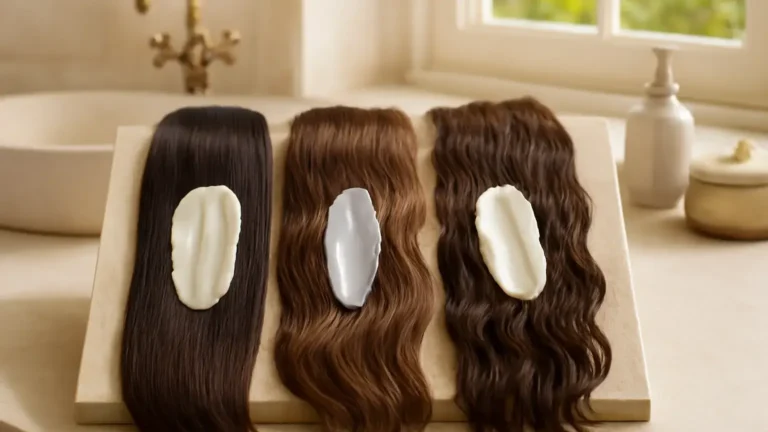
Hair care tips for oily roots and dry ends work best when you treat your scalp and lengths as two different zones. Shampoo belongs mainly at the roots, while conditioner, masks and leave-in products belong from the mid-lengths to the ends. This guide is for anyone whose scalp becomes greasy quickly but whose hair feels rough, frizzy or brittle below the ears. The goal is a clean scalp without repeatedly stripping already-dry lengths.
Oily roots and dry ends are a common combination, especially when hair is washed frequently, exposed to heat, or left to deal with sweat, pollution and humidity. It does not mean every part of the hair needs the same product or the same amount of cleansing.
The simplest principle is cleanse the scalp and condition the lengths. Hair products should follow that division rather than being spread evenly from the hairline to the tips. Once placement is right, you can adjust wash frequency, water temperature and styling habits without making one zone worse while trying to help the other.
Why roots get oily while ends feel dry
Sebum is produced at the scalp and can make the roots look flat or greasy. The ends are older hair that has travelled through repeated washing, combing, sun exposure and styling. They have no oil-producing glands of their own, so natural oils may not reach them easily, particularly on long, curly or thick hair.
That creates a practical imbalance: the scalp may need regular cleansing, while the ends need gentler handling and more slip. Over-washing the lengths, using hot water, brushing aggressively or applying strong products all over can increase dryness and frizz. Conversely, applying rich conditioner, oil or a mask near the scalp can make roots appear heavy sooner.
Where each hair product belongs
Shampoo: mainly the scalp and roots
Use a scalp shampoo at the roots, hairline and the areas that become sweaty or oily. Wet the hair thoroughly, place a modest amount of shampoo in your palms, and massage the scalp with fingertips rather than scratching with nails. Let the lather run through the lengths as you rinse; that is usually enough cleansing for dry ends.
If the scalp is very oily, a second small cleanse may be more useful than vigorously scrubbing once. Keep the focus on the scalp. A clarifying shampoo can occasionally help with stubborn buildup from styling products, hard water or frequent dry shampoo, but it should not automatically become an everyday product. Follow its label and reduce use if the lengths feel rough.
Conditioner: mid-lengths to ends
Apply a hydrating conditioner from around the ears or lower mid-lengths down to the tips. The correct starting point depends on your hair length and how quickly your roots become oily. Keep the product away from the scalp unless its instructions specifically say otherwise.
Leave it on for the recommended time, then rinse thoroughly. Fine hair may need a lighter layer, while thick, curly or highly textured hair may need more coverage. If the ends still feel dry, increase application on the last few centimetres rather than adding conditioner to the roots.
Hair masks and leave-in products: targeted moisture
A hair mask for dry ends belongs on the lower lengths, not as a scalp treatment by default. Use it once a week or according to the product directions, replacing—not necessarily adding to—your normal conditioner. On fine hair, begin with a short contact time and a small amount.
Leave-in conditioner should also be applied sparingly from the mid-lengths to the ends, especially after towel-drying. It can improve detangling and help reduce friction, but too much may leave hair limp or make it look oily. A lightweight formula is usually easier to control on hair with oily roots.
A practical routine for oily scalp and dry ends
This routine for oily scalp dry ends can be adjusted for hair density, texture, climate and activity level:
- Before washing: Detangle gently from the ends upwards. If you use pre-shampoo oiling, keep a small amount on the lengths and ends, and avoid the scalp if it already becomes greasy quickly. Oiling is optional, not a requirement for healthy hair.
- During washing: Use lukewarm water and fully wet the scalp. Shampoo the roots, massage gently, and rinse until the water runs clear. Repeat only if the first cleanse did not remove sweat, oil or product residue.
- After shampooing: Press out excess water before applying conditioner. This helps the product stay on the hair instead of sliding off immediately.
- For extra dryness: Use a mask on the lengths when needed. Rinse well, then apply a small amount of leave-in conditioner to damp ends.
- When styling: Use heat styling protection before a blow-dryer, straightener or curling tool. Keep direct heat moving and avoid repeatedly passing over the same section.
How often should you wash oily roots and dry ends?
Wash frequency should be guided by the scalp, not by a fixed rule. If the roots feel greasy, sweaty, itchy from product residue or visibly weighed down, washing may be appropriate. Some people need to wash daily, while others are comfortable every second or third day. Hair texture, exercise, weather and scalp oil production all affect the decision.
When frequent washing is necessary, make the process gentler rather than forcing a longer gap. Use shampoo mainly on the scalp, protect the dry lengths with conditioner, and avoid very hot water. If the hair ends become dry, add moisture to those ends instead of leaving an oily scalp uncleaned.
Dry shampoo can temporarily improve the look of oily roots, but it does not replace cleansing. Use it sparingly, avoid layering it repeatedly for several days, and wash the scalp when possible. Persistent flakes, soreness, intense itching, unusual hair shedding or sudden changes in oiliness deserve advice from a dermatologist or doctor.
Water temperature and washing technique matter
Lukewarm water for hair is a sensible middle ground. Very hot water can increase the feeling of dryness and make a sensitive scalp uncomfortable, while cold water is not required to remove oil effectively. Use comfortably warm water to wet and rinse, and finish with a cooler rinse only if it feels pleasant—not because it is a guaranteed repair treatment.
Massage with the pads of your fingers using small, gentle movements. Avoid piling long hair on top of the head and rubbing it together, which can increase tangles and mechanical damage. When drying, squeeze or press hair with a soft towel or cotton T-shirt instead of twisting it tightly.
Common mistakes that worsen the imbalance
- Shampooing the entire hair length: This can remove more surface oil from already-dry ends without solving the cause of oily roots.
- Applying conditioner at the scalp: Rich formulas close to the roots can make fine or oily hair look flat sooner.
- Using a strong cleanser too often: A clarifying shampoo is a tool for buildup, not automatically the best daily choice.
- Skipping conditioner because the scalp is oily: The lengths can still need slip and protection even when the roots need cleansing.
- Rubbing wet hair: Hair is more vulnerable when wet, so rough towel drying and forceful brushing may contribute to breakage.
- Using heavy oil on the scalp by default: Pre-shampoo oiling may suit some dry lengths, but it can feel uncomfortable or difficult to remove from an oily scalp.
How to adjust the routine for different hair types
Fine, straight hair: Choose a lightweight conditioner and apply it lower on the hair. Wash when the roots look oily rather than adding multiple layers of dry shampoo or leave-in product.
Thick, wavy or curly hair: Spread shampoo carefully over the scalp and use enough conditioner to support hair detangling. You may not need to wash the lengths directly every time, but the scalp still needs regular cleansing based on sweat and oil.
Coloured, bleached or heat-styled hair: Keep shampoo at the roots, use a suitable conditioner or mask on the lengths, and limit high heat. If the ends feel rough, reduce friction and consider a trim for visibly split tips; products can improve feel but cannot permanently mend a split end.
Quick decision guide
| What you notice | What to try |
|---|---|
| Roots look greasy but ends feel comfortable | Wash the scalp as needed and keep conditioner below the roots. |
| Roots are oily and ends feel rough | Use a gentle scalp cleanse, then add conditioner or a mask only to the lengths. |
| Hair feels coated and dull | Review styling buildup and consider occasional clarifying shampoo according to the label. |
| Hair looks limp after conditioning | Use less product, start lower down and rinse more thoroughly. |
| Ends tangle after washing | Condition the ends, detangle gently while damp and use a small amount of leave-in conditioner. |
Takeaway
The most useful hair care tips for oily roots and dry ends are about placement and moderation: shampoo the scalp, condition the lower lengths, use masks and leave-ins only where dryness occurs, and wash according to scalp needs. Lukewarm water, gentle handling and heat protection help preserve the ends while keeping the roots fresh. Treating the two zones differently is usually more effective than searching for one product to solve both problems.
Products that may help with this routine
Choose only what fits your skin, hair or personal needs. Use the links below to view current options on Amazon India.
Frequently Asked Questions
How often should you wash oily roots and dry ends?
Wash according to how quickly your scalp becomes oily or sweaty. Daily washing can be suitable for some people, while others may prefer every second or third day. Keep shampoo mainly at the roots and condition the lengths each time they need slip.
How to wash oily roots and dry lengths?
Wet the hair fully, massage shampoo into the scalp, and let the lather rinse through the lengths without scrubbing them. Apply conditioner from the mid-lengths to the ends, then rinse thoroughly with lukewarm water.
What products belong on oily roots and dry ends?
Scalp shampoo belongs at the roots. Hydrating conditioner, a hair mask and leave-in conditioner generally belong from the mid-lengths to the ends. Use clarifying shampoo only when buildup is an issue and follow the product directions.
Can conditioner make oily roots worse?
It can make roots look heavier when a rich formula is applied close to the scalp or not rinsed thoroughly. Apply conditioner lower down, use less product on fine hair and adjust the starting point based on how quickly your roots become oily.
What water temperature is best for oily scalp and dry hair?
Comfortably lukewarm water is generally the most practical choice. It can cleanse oil without the excessive heat that may leave the scalp or lengths feeling more uncomfortable or dry.