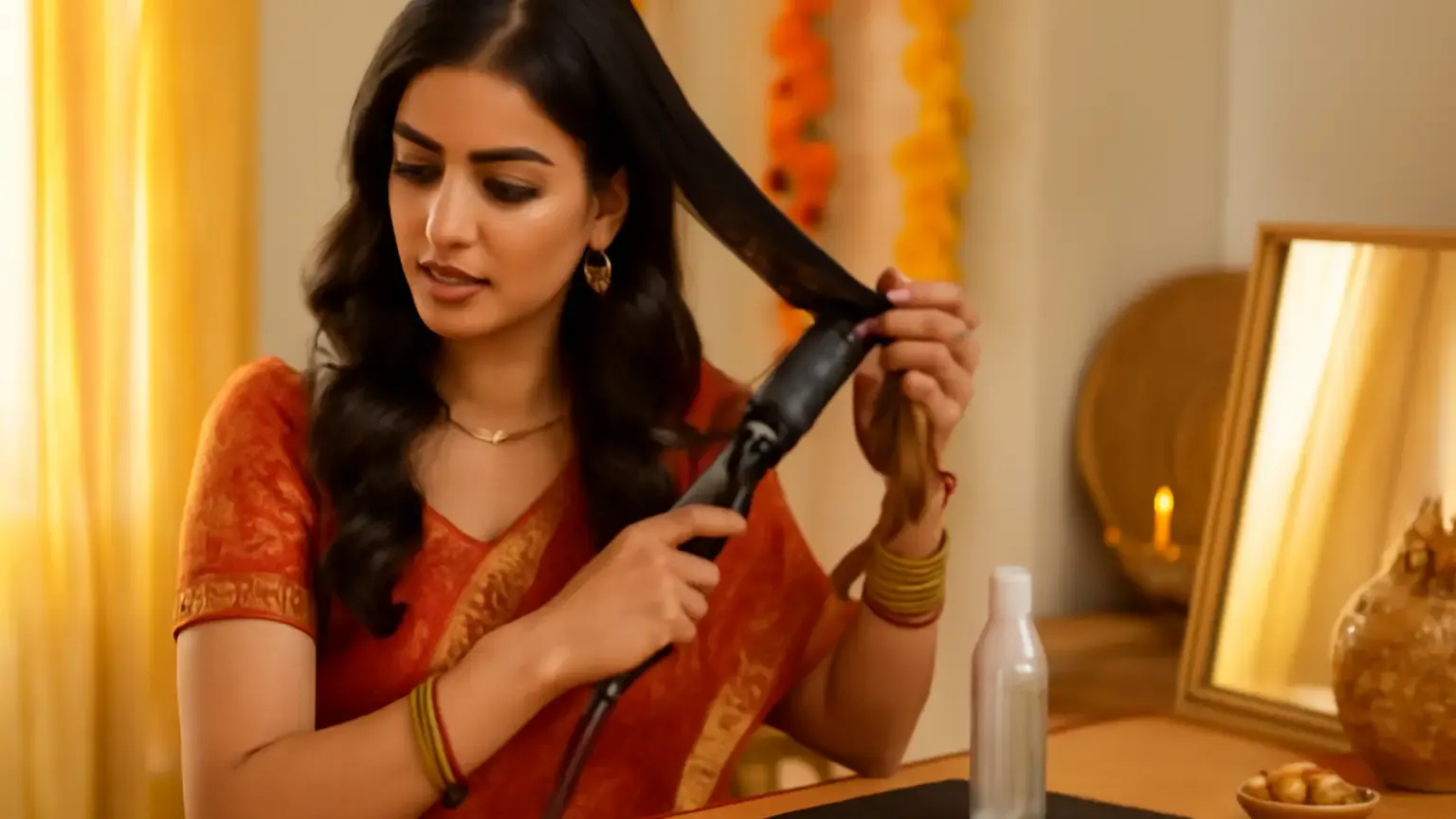
These hair care tips for heat styling are for anyone creating a festive hairstyle with a blow-dryer, straightener or curling tool, especially in India’s heat and humidity. The safest approach is simple: apply even thermal protection, style only completely dry hair, choose the lowest effective temperature, work in small sections and give strands a recovery routine afterwards. Together, these decisions can reduce unnecessary moisture loss, snagging and repeated passes without cancelling your celebration plans.
Festive styling often means using more than one heated tool in a short period: a blow-dryer for smoothness, a straightener for polish or a curling wand for shape. Heat does not automatically ruin hair, but high temperatures, damp strands, repeated passes and poor preparation can make the cuticle feel rough and increase the risk of dryness and breakage.
The goal is not to avoid styling forever. It is to control the amount of heat your hair receives and make every pass more deliberate. These five practices work for occasional wedding, Diwali, party or holiday styling, as well as for anyone who uses hot tools more regularly.
1. Apply heat protection evenly, not just on the top layer
A heat protectant spray or cream creates a more consistent buffer between the hair fibre and a hot tool. It cannot make hair heat-proof, and it does not cancel out excessive temperature or repeated passes. Its value comes from even application combined with sensible technique.
How to apply it
- Start with clean, towel-dried hair if you are blow-drying, or fully dry hair if you are using a straightener or curler.
- Divide thick hair into two or four broad zones so the product reaches underneath layers.
- Mist a heat protectant spray from a reasonable distance, then comb through with a wide-tooth comb or clean fingers.
- Use a lighter amount near the roots and focus more on the mid-lengths and ends, which are older and usually more fragile.
- Allow a wet-feeling product to settle before placing a hot tool on the hair.
For very dry or coarse hair, a leave-in conditioner may provide softness before the thermal protectant, but avoid layering so many products that the hair stays wet or sticky. Check the product label for whether it is designed for damp styling, dry styling or both.
2. Make sure hair is completely dry before direct heat
One of the most important rules in heat styling is simple: do not clamp, curl or straighten damp hair. Water left inside the strand can heat rapidly when pressed by a hot plate or wrapped around a wand. That can make the hair feel rough and cause more stress than styling clean, dry strands.
If you are blow-drying, remove excess water gently with a soft towel or cotton T-shirt instead of rubbing. Use the dryer on a moderate setting until the hair is around 80–90% dry, then finish with a brush only when you can control the section without tugging. Before using a flat iron or curling tool, check the roots, underneath layers and ends. If any area feels cool, damp or tacky from product, keep drying it.
This is also where product choice matters. A formula intended for damp hair may help with blow-drying, while a dry-hair thermal spray is better suited to a later touch-up. Using a damp-hair product immediately before a hot plate can create excess steam and uneven movement.
3. Choose the lowest effective hair styling temperature
Higher heat is not a shortcut to a better festive hairstyle. It can make a curl form faster, but it also gives the hair less room for error. Begin with a lower setting and increase it only if the shape will not hold after one controlled pass.
| Hair situation | Safer starting decision |
|---|---|
| Fine, highlighted or fragile-feeling hair | Use low heat, small sections and one slow pass. |
| Normal, medium-density hair | Start in the middle range and adjust only when necessary. |
| Thick or coarse hair | Use manageable sections rather than immediately choosing the highest setting. |
| Hair with extensions or chemically processed areas | Follow the care guidance for the extensions or service and use extra caution. |
There is no universal “safe” temperature because tool calibration, hair condition, section size and contact time differ. Use low heat styling whenever it can achieve the result. Keep the tool moving, avoid clamping one spot for too long and let a section cool before reshaping it. If you notice a sizzling sound, burnt smell or sudden roughness, stop and reassess rather than adding more heat.
4. Use clean sectioning to prevent repeated passes
Sectioning hair for heat styling is a damage-prevention technique, not just a salon habit. Large, uneven sections force you to go over missed strands repeatedly. Very tiny sections can also take too long and expose the same hair to unnecessary heat.
A practical festive styling setup
- Detangle gently from the ends upwards before dividing the hair.
- Separate the hair into two lower sections and two upper sections, adjusting for density.
- Take a section roughly as wide as the tool can heat evenly.
- Comb through once, place the tool, and complete one controlled pass or curl.
- Pin or leave the finished shape to cool before brushing or arranging it.
Keep the tool away from the scalp and ears, and use a heat-resistant mat on the dressing table. Do not use a straightener or curler on hair that has been sprayed with a product containing alcohol unless its directions specifically allow dry-tool use. Never leave a hot tool unattended, particularly around children, pets or loose fabrics.
5. Give hair a post-style recovery routine
After the event, remove styling products gently rather than sleeping in a stiff, heavily sprayed style whenever possible. Detangle with your fingers or a wide-tooth comb, cleanse according to how much product you used and apply conditioner mainly through the lengths. Hair that feels dry can benefit from a weekly deep conditioning treatment, but use the product instructions and avoid treating it as a permanent fix for ongoing damage.
The next day, choose a low-manipulation style and avoid immediately restyling every wave that has dropped. A small amount of leave-in conditioner on the mid-lengths and ends can improve manageability, while a light serum may help reduce the feeling of roughness. These products do not repair split ends; trimming is the practical way to remove visibly split tips. If hair becomes persistently brittle, breaks easily or the scalp feels sore after styling, pause the hot tools and seek advice from a qualified dermatologist or doctor.
Common mistakes that increase festive damage
- Using protection only on the crown: Under-layers and ends still need even coverage.
- Styling hair that is still damp: Dry the entire section before direct heat.
- Choosing maximum heat by default: Start lower and test one section.
- Repeating passes to chase perfection: Improve sectioning and tension first.
- Adding oil before a hot tool without checking the label: A product may not be made for thermal styling.
- Touching up every day after the celebration: Give the hair a break and use a recovery routine.
A simple decision guide before your next style
If your hair is fine, coloured, highlighted or already feels rough, choose low heat, a small number of passes and a lightweight thermal protectant. If it is thick and healthy-feeling, sectioning and complete drying still matter more than simply raising the temperature. If you are creating a complex festive hairstyle, consider having the main shape done professionally rather than repeatedly correcting it at home.
The best results come from matching the routine to the condition of your hair, not from copying someone else’s tool setting. Heat protection, dry-hair preparation, controlled temperature, accurate sectioning and recovery care work together.
Takeaway
These hair care tips for heat styling make festive preparation more measured: protect the lengths evenly, dry hair fully, use the lowest effective heat, work in organised sections and recover gently afterwards. The aim is not a promise of damage-free styling; it is fewer unnecessary stressors each time you create a polished look.
Products that may help with this routine
Choose only what fits your skin, hair or personal needs. Use the links below to view current options on Amazon India.
Frequently Asked Questions
How do you protect hair from heat styling?
Apply a suitable heat protectant evenly through the mid-lengths and ends, style only completely dry hair, use the lowest effective temperature and limit each section to a controlled pass. Post-style conditioning and rest days also help reduce repeated stress.
What temperature should I use for heat styling hair?
Start with the lowest setting that can create the result. Fine, highlighted or fragile-feeling hair generally needs lower heat, while thick hair may need a moderate setting. There is no universal safe temperature, so avoid maximum heat and repeated passes.
Can I heat style damp hair?
Do not use a straightener, curling wand or similar direct-heat tool on damp hair. Dry every section completely first. Blow-drying is different, but the hair should still be towel-dried gently and protected with a product suited to damp styling.
How often should I use heat styling tools?
Use them as infrequently as your routine allows, particularly if your hair feels dry, rough or brittle. Avoid daily touch-ups after a festive event, use low heat and give your hair rest days with gentle, low-manipulation styling.
What should I put on hair after heat styling?
After cleansing, use conditioner through the lengths. If the hair feels dry, a suitable deep conditioning treatment or a small amount of leave-in conditioner may improve softness and manageability. Products cannot reverse split ends, so visibly split tips may need trimming.


