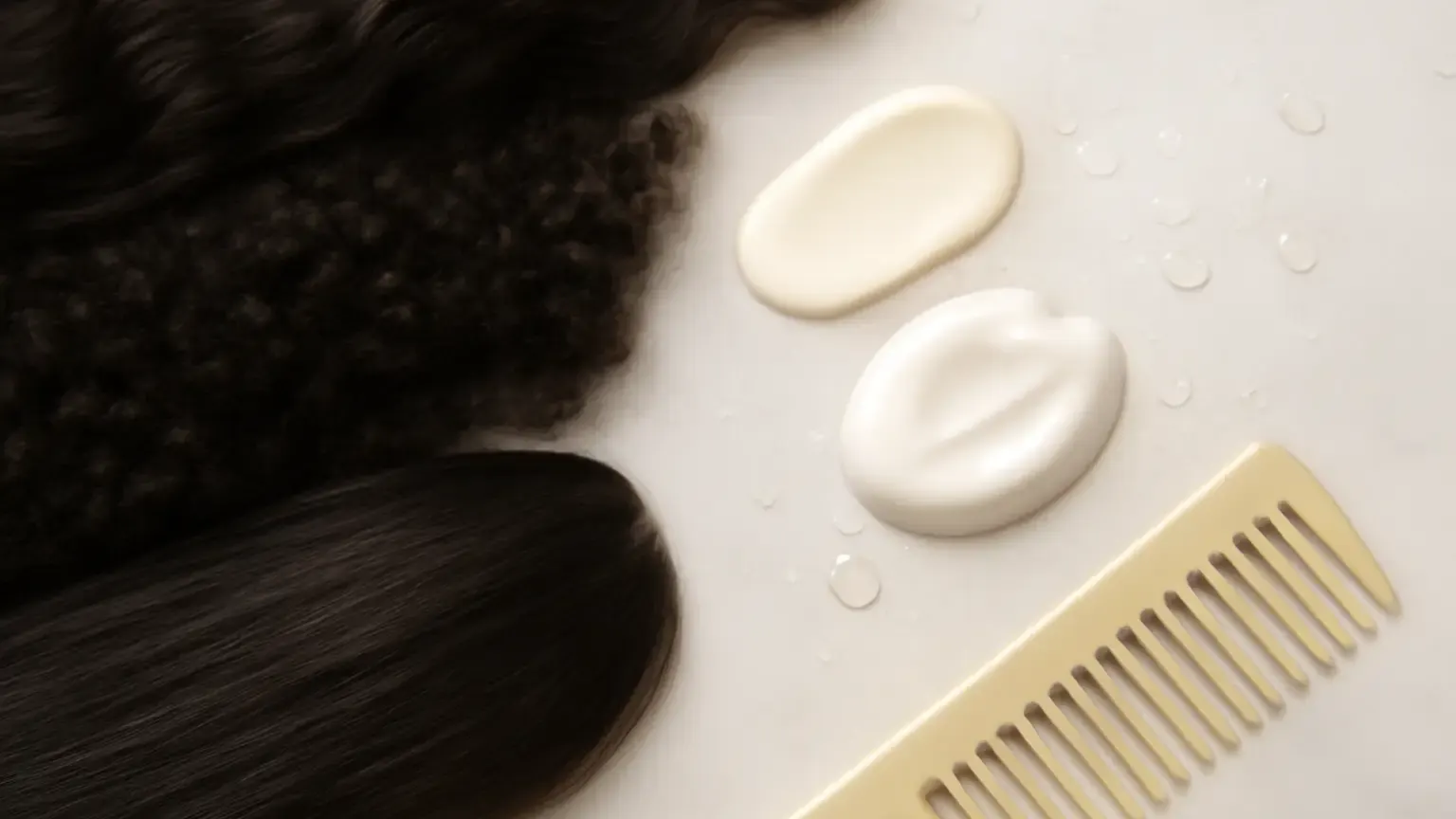
Hair Porosity and Conditioners choices are easiest when you match texture to how your strands absorb and hold water. Low-porosity hair often prefers a lightweight conditioner that rinses clean, while high-porosity hair may need a richer formula or occasional deep conditioning. Medium-porosity hair usually sits between the two. This guide is for anyone comparing formulas, and its practical goal is simple: better slip, easier rinsing and conditioning without limpness, roughness or unnecessary buildup.
Conditioner should make hair feel more manageable, but the ideal formula is not identical for everyone. Hair porosity describes how readily the cuticle allows water and conditioning ingredients in, and how easily moisture escapes afterwards. It is only one decision factor; strand thickness, curl pattern, damage, climate and styling habits matter too.
In India, humidity, hard water, frequent washing and heat styling can all change how a conditioner feels from one wash to the next. A formula that works during a dry winter in Delhi may feel heavy during a humid monsoon in Mumbai or Kolkata. Treat porosity as a useful starting point rather than a permanent label.
What hair porosity means for conditioner choice
The outer cuticle of the hair shaft acts a little like overlapping tiles. With low porosity, the cuticle tends to lie relatively flat, so water and products may take longer to penetrate. High-porosity hair has a more raised or weathered cuticle and can absorb water quickly but lose it just as quickly. Medium-porosity hair generally absorbs and retains moisture with fewer extremes.
Porosity can be influenced by natural structure, bleaching, colouring, chemical services, repeated heat and friction. Two people with the same curl pattern may therefore need different formulas. Also, the popular “float test” is not a reliable standalone diagnosis because residue, strand thickness and surface tension can affect the result. Your hair’s behaviour after washing is more useful than one test.
- Low porosity: hair may take time to become fully wet, resist absorbing products and become coated easily.
- Medium porosity: hair usually wets and dries at a moderate pace and responds to a broad range of conditioners.
- High porosity: hair may wet very quickly, feel dry soon after washing, tangle readily or show more frizz and breakage, especially when damaged.
Low-porosity hair: when lightweight is usually better
A good low porosity hair conditioner is generally fluid or lotion-like rather than waxy and extremely rich. It should provide enough lubrication for detangling without leaving a film that makes the hair flat, sticky or dull. Lightweight conditioner formulas may suit fine strands particularly well, but “lightweight” does not mean ineffective.
Look for a smooth formula that spreads easily with a small amount. Humectants and light conditioning agents can help hair feel soft, while excessive oils, butters and heavy occlusives may be harder to rinse from some low-porosity hair. This is not a rule that every low-porosity head must avoid oils; it is a reminder to assess the finish.
Signs your low-porosity hair needs less product
- Roots or lengths look limp soon after washing.
- Hair feels coated, waxy or greasy rather than soft.
- Curls lose bounce and take longer to dry.
- You need frequent washing to remove conditioner residue.
Apply conditioner mainly from the mid-lengths to the ends, then add only what remains on your hands near the upper lengths. Gentle warmth from a normal shower can help the product spread, but there is no need for intense heat. If buildup persists, an occasional clarifying shampoo for buildup may be useful, provided it does not leave your hair uncomfortably dry.
Medium-porosity hair: balance texture with the season
Medium-porosity hair care is often about adjustment rather than strict rules. A medium-weight conditioner may be enough for regular washing, while a richer product can be reserved for dry weather, longer hair or periods of increased heat styling. If your hair is fine, choose a lighter texture even when the porosity is medium; if it is coarse or curly, more slip may be helpful.
Medium porosity hair can usually tolerate more formula variety, but that flexibility can still lead to over-conditioning. Rotate based on performance rather than buying several products at once. If the hair is soft but lacks shape, reduce the amount or choose a lighter formula. If it feels rough while wet and catches during detangling, increase the conditioner slightly or select one with better slip.
For the question “can medium porosity hair use rich conditioner?”, the answer is yes, when the hair is genuinely dry, damaged or difficult to detangle. Use it as needed rather than automatically at every wash.
High-porosity hair: richer formulas can support moisture retention
A useful high porosity hair conditioner often has a creamier texture and more cushioning ingredients. High-porosity strands may benefit from emollients and conditioning agents that smooth the cuticle and reduce the rough feel that makes hair tangle. A rich conditioner is not a repair treatment, however, and no product can permanently seal a damaged cuticle.
For a practical approach to deep conditioning for high porosity hair, use a richer mask or deep conditioner periodically, follow its label directions and rinse thoroughly. Frequency depends on damage, texture and wash routine. Weekly use may suit very dry or chemically processed hair, while less frequent use may be enough for healthier hair. Watch the result instead of following a rigid schedule.
Signs a high-porosity formula is still not enough
- Hair feels rough again soon after conditioning.
- Ends tangle quickly or look visibly frayed.
- Hair loses softness rapidly after air-drying.
- Humidity causes persistent puffiness despite careful styling.
If a rich product helps briefly but leaves the hair greasy or heavy, reduce the quantity and concentrate it on the driest areas. A leave-in product or a small amount of a compatible styling cream may help some routines, but adding layers without adjusting wash frequency can create buildup.
How to judge conditioner slip, weight and rinse-out performance
Conditioner slip is the smooth, low-friction feel that helps fingers or a wide-tooth comb move through wet hair. It is especially important for curls, coils, long hair and strands that tangle easily. More slip is not always better if it comes from a coating that leaves the hair limp, but poor slip can encourage rough handling and breakage during detangling.
Use this simple check during washing:
- After shampooing, gently squeeze out excess water so the conditioner is not diluted immediately.
- Apply a small amount to the mid-lengths and ends, adding more only if the hair still feels resistant.
- Spread it with flat palms, then detangle from the ends upwards if your hair tolerates combing while wet.
- Leave it on for the time stated on the label; longer is not automatically more effective.
- Rinse until the hair feels conditioned and flexible, not coated or squeaky.
This rinse-out conditioner technique is a better test than judging the bottle’s texture alone. Some thick formulas rinse clean, while some runny formulas can still leave residue. Hard water may also make hair feel coated, so consider whether the issue appears with several products rather than blaming one conditioner immediately.
Conditioner frequency: a practical starting point
Most people can condition after shampooing, but the right frequency depends on how often the hair is washed and how quickly it becomes dry or weighed down. Conditioner frequency for curly hair may be higher because curls experience more friction and can be harder to distribute natural scalp oils through. Fine, low-porosity hair may need a smaller amount each time rather than fewer conditioning sessions.
| Porosity tendency | Starting texture | Adjust when you notice |
|---|---|---|
| Low | Lightweight conditioner | Use less if coated; add a little more if ends remain rough |
| Medium | Medium-weight conditioner | Move lighter or richer with season, styling and hair feel |
| High | Rich conditioner or occasional mask | Add conditioning for dryness; reduce layers if greasy or limp |
Condition after every shampoo if your hair needs it, but do not assume every wash requires a deep mask. A rinse-out product is usually sufficient for routine softness. Use a deep conditioner when the hair feels unusually dry, rough or tangled, and reassess after a few uses.
When protein-free conditioner may or may not be right
Protein-free conditioner can be a useful option when hair feels stiff, brittle or unusually hard after products containing hydrolysed proteins. However, stiffness can also result from buildup, dryness or too much styling product. Conversely, some damaged hair benefits from occasional formulas containing hydrolysed proteins because they can improve the temporary feel and strength of the fibre.
Do not choose solely from the word “protein” on the label. Compare how your hair behaves after several washes. If softness improves without limpness, the formula is probably fitting your routine. If hair becomes straw-like or rigid, reduce use and return to a simpler moisturising conditioner for a while.
A buying checklist for the best conditioner for hair porosity
Before purchasing, ask five questions:
- How does my hair feel after washing? Coated hair points towards less product or a lighter formula; rough hair points towards more lubrication.
- Are my strands fine, medium or coarse? Strand thickness often changes the answer as much as porosity.
- Is the hair damaged? Bleached or heat-stressed lengths may need richer care even if the roots are low porosity.
- Will I rinse it fully? A rich product needs thorough distribution and rinsing, especially in humid weather.
- What will I use alongside it? Shampoo, masks, leave-ins and styling creams all contribute to total product weight.
When comparing a conditioner for low and high porosity hair, remember that a single household may need different application methods rather than separate bottles. For example, low-porosity roots may need little product, while high-porosity ends may need more. Apply by section and let the driest area guide the amount.
Common mistakes that make conditioner seem ineffective
- Applying too much: More product can hide the hair’s real response and increase residue.
- Conditioning the scalp by default: This may make some hair look oily or flat, though label directions and personal needs vary.
- Rinsing immediately: Some formulas need brief contact time to spread and soften properly.
- Leaving every mask on for hours: Extended wear is not always better and may irritate the scalp or make hair difficult to rinse.
- Ignoring damage: Porosity can vary along the same strand, particularly after colour or heat styling.
- Changing products too quickly: Test a reasonable routine over several washes unless there is irritation or a clearly unpleasant reaction.
Concise takeaway
Hair Porosity and Conditioners work best as a matching exercise, not a strict low-versus-high rule. Start with lightweight conditioner for hair that becomes coated easily, a balanced texture for medium-porosity strands and a richer conditioner or occasional mask for porous, dry or damaged lengths. Prioritise conditioner slip, use a measured amount, rinse thoroughly and adjust by season, strand thickness and hair feel. If persistent scalp discomfort, sudden hair loss or severe breakage concerns you, speak with a dermatologist rather than relying only on cosmetic changes.
Products that may help with this routine
Choose only what fits your skin, hair or personal needs. Use the links below to view current options on Amazon India.
Frequently Asked Questions
What is the best conditioner for low porosity hair?
The best conditioner for low porosity hair is usually a lightweight, easily spread formula that provides slip without leaving a waxy or greasy coating. Apply a small amount to the lengths, allow brief contact time and rinse thoroughly. Fine hair may need even less product.
How do you choose a conditioner for high porosity hair?
To choose a conditioner for high porosity hair, look for a creamier formula with good slip and enough conditioning for dry, rough or tangle-prone lengths. Use a richer mask periodically if needed, but reduce the quantity if the hair feels greasy, limp or coated.
Can medium porosity hair use rich conditioner?
Yes. Medium-porosity hair can use rich conditioner when it is dry, coarse, long, chemically treated or difficult to detangle. For regular washing, a medium-weight formula may be enough. Use the richer option less often if hair loses volume or feels coated.
How often should you condition porous hair?
You can condition porous hair after most shampoo washes, adjusting the amount to dryness and strand thickness. Use a deep conditioner when the lengths feel unusually rough or tangled rather than following a rigid weekly schedule. Rinse well and reduce extra layers if buildup appears.
Is lightweight conditioner better for low porosity hair?
Often, yes. Is lightweight conditioner better for low porosity hair? It can be, especially when hair becomes limp or coated easily. However, the formula still needs enough slip for detangling, and damaged ends may require more conditioning than healthier roots.
What does conditioner slip mean for hair?
Conditioner slip is the smooth, low-friction feel that helps fingers or a comb move through wet hair. Good slip can make detangling easier and reduce rough handling, but excessive slip from a heavy coating may leave some hair flat or difficult to cleanse.


