Hair Care Routines for Wedding Morning work best when they follow your hair’s texture, the weather and your chosen hairstyle—not a rigid rule about washing. This guide is for brides, bridesmaids and family members planning a wedding-day look, with clear timelines for straight, wavy, curly and thick hair. You’ll learn when to wash, how to dry and detangle safely, how to prepare texture for hold, and what to keep in an emergency kit.
Your wedding morning hair plan should reduce decisions, not add another complicated beauty schedule. Start by confirming three details: whether your stylist prefers clean or slightly lived-in hair, whether your ceremony is indoors or outdoors, and how long your hair normally takes to dry. A sleek bun, soft waves and a natural curly style each need a different preparation window.
Build the timeline around your hairstyle
The ideal timeline is usually decided at your hair trial. Ask your stylist whether the final look needs freshly washed hair, second-day texture, pre-set curls or completely dry roots. Fine hair may need a light wash for lift, while very silky hair can sometimes hold pins better with a little natural grip. Avoid changing your shampoo, oil or styling routine immediately before the event.
For a morning ceremony, work backwards from the time you must leave. Add time for washing if needed, complete drying, dressing, jewellery and a small buffer. As a practical guide, allow 60–90 minutes for a simple blow-dry or open style and longer for thick hair, extensions, elaborate braids or an updo. Confirm the final estimate with your stylist rather than relying only on a generic schedule.
Decide when to wash your hair
Should you wash your hair on the morning of your wedding? Only if that suits your usual routine and your stylist’s instructions. Freshly washed hair can feel clean and comfortable, but very clean, slippery strands may be harder to pin or curl. On the other hand, waiting too long can leave the scalp oily, uncomfortable or visibly flaky. Wedding hair wash timing should be based on your hair’s behaviour, not a universal “one-day-old hair” rule.
- Wash the night before: This often suits straight, fine or moderately oily hair when a full morning wash would create time pressure.
- Wash on the morning: Consider this for a scalp that feels oily quickly, a hot or humid venue, or a style that needs clean roots.
- Wash earlier: Thick, curly or high-density hair may need several hours to dry fully, so washing the previous afternoon or evening can be more practical.
Use a familiar shampoo and rinse thoroughly. Apply conditioner mainly from the mid-lengths to the ends unless your stylist specifically recommends root conditioning. Heavy masks, excess oil and new scalp products can flatten the roots or create residue.
What to do the night before
Overnight hair preparation should make the morning predictable. If you wash, gently squeeze out water, wrap the hair in a soft microfibre towel and let it become mostly dry before sleeping. Do not go to bed with very wet hair, especially if your hair is long or dense, because it can dry unevenly and become more tangled.
- Detangle from the ends upwards using a wide-tooth comb or a suitable detangling brush.
- Use a small amount of leave-in conditioner only if it is already part of your routine.
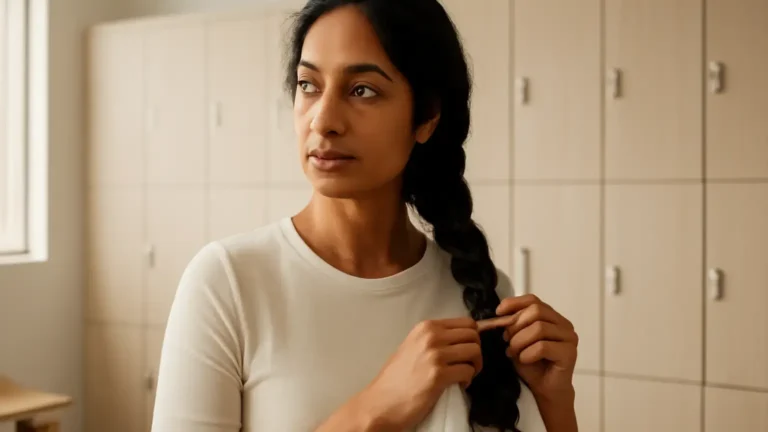
- Sleep with loose hair, a low loose plait or another style approved during your trial.
- Use a clean, smooth pillowcase and avoid tight elastics that leave a strong crease.
- Keep your veil, clips, pins and hair accessories together so the stylist can check placement early.
If your plan includes heat styling the next day, do not apply several layers of oil or styling cream the night before. Product buildup can make curls drop and may interfere with a blow-dry technique.
Prepare each hair texture differently
Straight or fine hair
Prioritise clean, fully dry roots and lightweight layering. A volumising mousse or root product may support a lifted style, but use less than you think you need. Apply a heat protectant spray before a blow-dryer, iron or hot rollers, and allow each section to cool before brushing it out. For bridal hairstyle hold, your stylist may use texture spray or pins rather than heavy creams that make fine strands flat.
Wavy hair
Decide whether the finished look will enhance your natural wave or smooth it into a more polished shape. For natural waves, avoid aggressive brushing once the pattern has formed. Apply familiar leave-in product to damp lengths, scrunch gently and dry with low airflow. For a smooth style, detangle carefully, stretch the hair while drying and use humidity protection at the end.
Curly hair
How do I prepare curly hair for wedding morning? Preserve the curl pattern instead of trying to create it from scratch under time pressure. Wash according to your normal schedule, condition well and detangle wet hair while the conditioner provides slip. Use a known curl cream or gel, then air-dry or diffuse on low heat until completely dry. Do not brush dry curls unless the planned hairstyle specifically requires stretched volume. Carry a few familiar products for refreshing individual sections.
Thick or high-density hair
Best wedding morning hair routine for thick hair planning starts with drying time. Wash earlier if possible, divide the hair into sections and dry the roots fully before working on the lengths. A stylist may prefer hair that is smooth but not overloaded with conditioner. Keep heat moderate, move the dryer continuously and use a heat protectant spray. If the style is an updo, ask whether your hair should be pre-smoothed or lightly textured for secure pinning.
Dry, detangle and protect without rushing
Detangling wet hair is safest when you begin at the ends and work upward in small sections. Do not pull a brush from roots to ends through a knot. Use your fingers first for stubborn tangles, then a wide-tooth comb. Hair is more vulnerable when wet, so rough towel rubbing and tight hair ties can create unnecessary breakage.
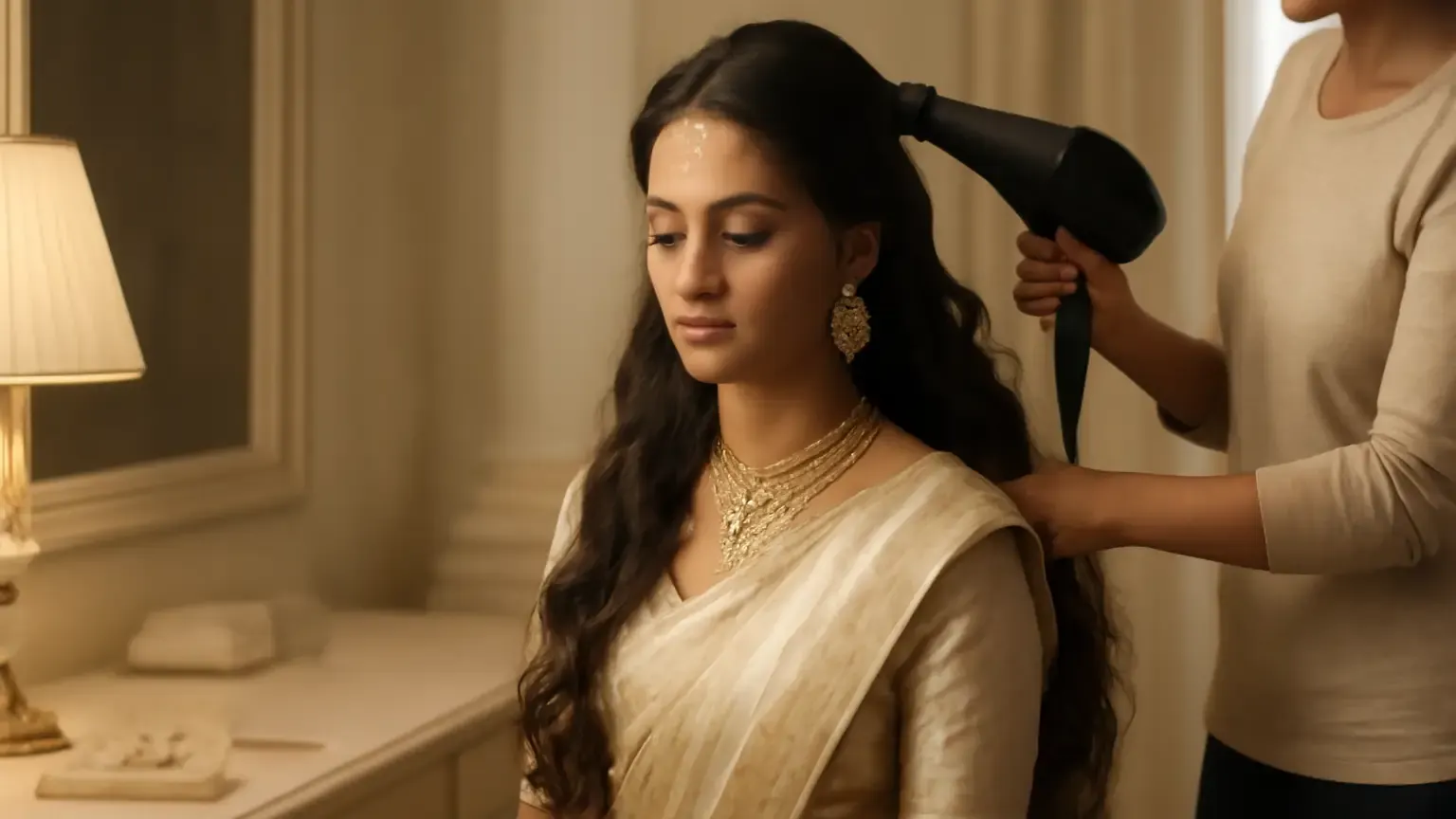
For heat styling, apply protection evenly rather than concentrating product on the front pieces. Follow the product label and your stylist’s instructions, and never repeatedly pass a hot tool over damp hair. A controlled blow-dry technique—sectioning, directing airflow down the hair shaft and finishing only when the section is dry—usually creates a smoother base than excessive high heat.
Plan for frizz, humidity and hair accessories
Humidity protection matters particularly for outdoor Indian weddings, coastal cities, monsoon weather and long ceremonies. Use a familiar anti-frizz hair product sparingly on the surface and ends. Too much silicone-rich serum or oil can make curls separate, reduce volume or leave veils and pins slippery. A style with some movement is often more realistic than trying to eliminate every flyaway.
Ask the stylist to place hair accessories after the main shape is secure. Veils, maang tikka, gajra, clips and decorative pins can add weight, so the attachment points need support. Bring the exact accessories to the trial when possible. Never rely on a new adhesive, tight comb or unfamiliar clip on the wedding day if it has not been tested for comfort.
Pack a simple emergency hair kit
A compact emergency hair kit should support small corrections, not become a second styling station. Pack bobby pins that match your hair, a few snag-free elastics, a small comb, travel-size anti-frizz product, blotting tissue for a sweaty hairline, a mini hairspray if your stylist approves it, and a few spare accessories. Curly or wavy hair can also benefit from a small amount of the usual curl product and a spray bottle of water.
If a curl drops, reshape that section only after it is dry and cool. If a pin loosens, do not repeatedly push it into the scalp; ask the stylist or a trusted helper to reset it. For scalp discomfort, remove pressure from the offending accessory and speak to your stylist. Persistent itching, pain, swelling or unusual scalp changes should be discussed with a dermatologist or doctor rather than covered with more product.
Common mistakes to avoid
- Trying a new haircut, colour, oil or intensive treatment in the final few days.
- Arriving with damp hair when the appointment was planned for dry styling.
- Using dry shampoo, serum or hairspray heavily without confirming it suits the style.
- Ignoring the time needed for thick or curly hair to dry completely.
- Wearing a tight hairstyle overnight that creates a difficult crease or scalp soreness.
- Forgetting to tell the stylist about extensions, a sensitive scalp or a heavy veil.
Quick takeaway
The most reliable Hair Care Routines for Wedding Morning are trial-led, texture-specific and built around complete drying. Wash when your scalp and style need it, prepare thick or curly hair earlier, protect hair before heat, and keep products familiar. A realistic buffer, tested accessories and a small emergency kit will do more for a calm finish than adding extra steps at the last minute.
Products that may help with this routine
Choose only what fits your skin, hair or personal needs. Use the links below to view current options on Amazon India.
Frequently Asked Questions
What should I do to my hair the night before my wedding?
Wash it only if that matches your usual routine or your stylist’s advice, detangle gently, let it become mostly dry, use minimal familiar product and sleep with hair loose or in a loose style. Avoid heavy oils, new treatments and tight elastics.
Should I wash my hair on the morning of my wedding?
Wash it on the morning only when your scalp becomes oily quickly, the venue is hot or your stylist wants clean roots. Otherwise, washing the night before may provide enough time for complete drying and easier styling.
How do I prepare curly hair for wedding morning?
Condition and detangle curly hair while wet, apply a familiar curl product, then air-dry or diffuse on low heat until fully dry. Avoid brushing dry curls unless your planned hairstyle requires stretched volume.
What is the best wedding morning hair routine for thick hair?
Start earlier than other hair types, section the hair, dry the roots completely and use moderate heat with protection. Keep conditioner and finishing products light enough for the planned updo or textured style.
How can I stop bridal hair from frizzing in humidity?
Begin with completely dry hair, use a familiar humidity-protective or anti-frizz product sparingly and choose a style that allows some natural movement. Avoid repeatedly touching or brushing the finished hair.