Hair porosity and festive styling work best when your products match how quickly your strands absorb and lose moisture. For anyone getting ready for a Diwali party, wedding or reception, low-porosity hair usually needs light layers and flexible hold; medium porosity can take balanced prep; high-porosity hair benefits from richer conditioning and stronger, humidity-aware support. This approach helps your hairstyle last without making it greasy, stiff or coated by the time the celebrations end.
Why porosity changes your festive hair plan
Hair porosity describes how easily the cuticle layer allows water and products in, and how well the strand holds on to that moisture. It is influenced by natural texture, heat styling, colouring, chemical services, sun exposure and everyday friction. Porosity is not the same as hair thickness: fine hair can be high porosity, while thick hair can be low porosity.
For an event, porosity affects three practical decisions: how much prep your hair can handle, which product textures are least likely to weigh it down, and how much hold you need in a humid or crowded venue. A hairstyle may look beautiful in the mirror but lose shape if the foundation is too heavy, too dry or overloaded with film-forming products.
| Hair porosity | What it often needs | Festive styling direction |
|---|---|---|
| Low | Light moisture, warmth and minimal layering | Airy volume, mousse or light gel, controlled spray |
| Medium | Balanced hydration and moderate hold | Most styles work with measured prep |
| High | Moisture retention, smoothing and reinforcement | Richer leave-in, cream or gel, stronger finishing hold |
Porosity tests at home are only rough guides. If your hair has mixed textures or a history of colour and heat damage, use the behaviour of your hair—drying time, frizz, product response and moisture retention—rather than a single test result.
Low-porosity hair: keep the base light
Low-porosity strands tend to resist water and product absorption. Heavy oils, dense masks and several layers of cream can sit on the surface, leaving hair flat or slow to dry. A sensible low porosity hair routine for a celebration starts with clean, well-rinsed hair rather than an elaborate pre-style cocktail.
Prep and product weight
- Wash according to your normal schedule, especially if your roots become oily quickly.
- Use a light conditioner mainly from the mid-lengths to the ends, and rinse thoroughly.
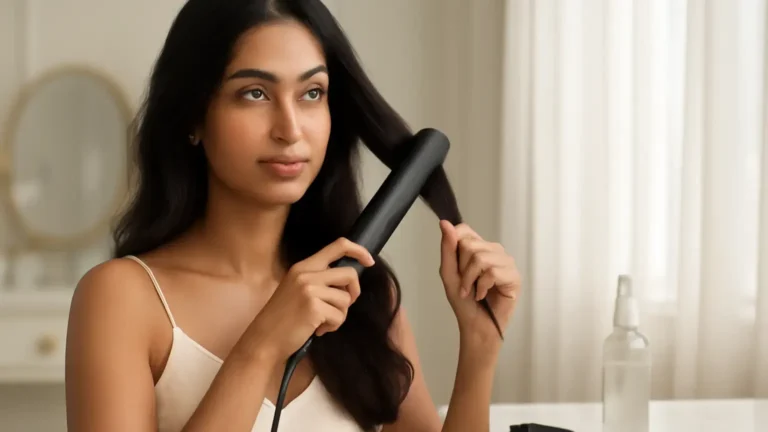
- Apply a small amount of heat protectant for hair before blow-drying or using hot tools.
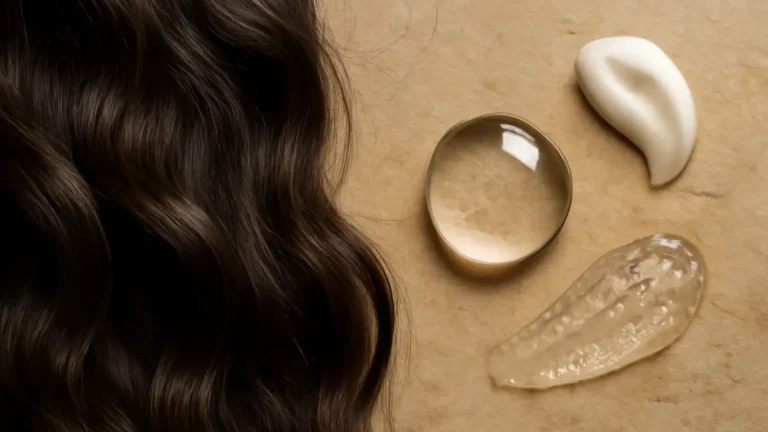
- Choose lightweight styling products such as a volumising mousse, airy foam or thin gel instead of several rich creams.
If your hair feels coated, adding more moisture will not improve the style. Work in small amounts and allow each layer to settle before deciding whether you need more. For curls or waves, a light gel can provide definition without the waxy feel that some low-porosity hair develops after repeated layering.
Hold for parties and weddings
Low-porosity hair can hold a smooth blowout or polished ponytail well when the base is clean, but a very soft style may collapse with sweat and humidity. Use a targeted mist of strong-hold hairspray on the finished shape rather than saturating the whole head. For volume, lift the roots while drying and pin sections to cool; this creates longer-lasting shape without relying only on product.
Medium-porosity hair: aim for balance
Medium-porosity hair is often the most adaptable. It usually accepts conditioner and styling products without immediate heaviness, while retaining enough moisture for flexibility. That does not mean every product will suit it: repeated heat, bleaching or frequent colouring can gradually make sections more porous.
For medium porosity hair products, look for a practical middle ground. A leave-in spray or light cream can smooth the lengths, while mousse, gel or a setting spray can provide the required hold. Select the texture according to the hairstyle: mousse for touchable volume, gel for curl definition, and a smoothing cream for a sleek bun or braid.
- Start with damp, towel-blotted hair rather than soaking-wet lengths.
- Use one conditioning product and one main hold product before heat styling.
- Allow curls, waves or a blowout to cool completely before brushing or pinning.
- Finish with humidity-resistant hair styling support when the event is outdoors or in a warm, damp venue.
The best test is movement. A good festive style should keep its structure while still allowing the hair to bend naturally. If it feels crunchy before the event begins, the issue may be excess product rather than insufficient hold.
High-porosity hair: protect moisture and reinforce hold
High-porosity hair usually absorbs water quickly but can lose it just as fast. Raised or weathered cuticles may contribute to frizz, tangling, rough ends and styles that expand in humidity. Heat damage and colour-treated sections often behave this way, even when the roots are less porous.
A useful high porosity hair care plan places moisture retention before styling. Apply a conditioning leave-in or a small amount of smoothing cream to damp lengths, then seal the shape with a compatible gel, mousse or styling cream. Avoid coating the hair with multiple oils if you still need volume; too much oil can make an updo slippery and difficult to pin.
For a wedding or long celebration, use a reliable hold product in thin layers. Define curls or smooth the surface first, then pin the style once the hair is nearly dry. A stronger gel or hairspray can be appropriate for flyaways and edges, but keep it away from the scalp if it feels tight or uncomfortable.
Protein and moisture are both relevant
High-porosity hair may benefit from occasional protein-containing products because they can make porous strands feel more supported. However, protein is not an automatic pre-event solution. Too much can leave some hair feeling rigid, rough or prone to tangling. Consider protein-moisture balance: use a conditioning routine when the hair feels dry and flexible-support products only when they suit your established routine. Do not try an unfamiliar intensive treatment immediately before an important event.
Match hold to the hairstyle, venue and weather
Porosity is only one decision factor. A loose braid, open waves, sleek bun and decorated updo have different hold requirements. Your outfit, jewellery and hair accessories also create friction, so a style that works at home may need more structure for several hours at a sangeet or reception.
A simple hold guide
- Open waves: use heat protection, shape small sections, cool them fully and finish with a flexible spray.
- Sleek bun or ponytail: smooth with a small amount of cream or gel, secure the base, then mist the surface rather than brushing in excess spray.
- Braids and embellished styles: use enough grip for pins and accessories, but avoid sticky buildup where the style will be touched repeatedly.
- Curls in humid weather: prioritise a gel or humidity-aware styler that supports definition before adding a finishing mist.
For festive hairstyles for Indian weddings, consider the full duration: getting ready, travel, dancing, photographs and the return home. High heat and monsoon-like humidity call for stronger moisture control, while a dry indoor venue may make a lighter finish more comfortable. A small trial on one section can reveal whether the product causes flaking, stiffness or loss of volume.
Pre-event hair prep without overloading the strands
Good pre-event hair prep begins one or two washes before the celebration, not with a last-minute pile of products. Keep the routine familiar and make changes gradually.
- Clean the foundation: remove sweat, oil and old styling residue with your usual shampoo. Do not scrub aggressively or wash repeatedly just to make hair feel squeaky.
- Condition according to porosity: use a lighter conditioner for low porosity, a balanced conditioner for medium porosity and a richer but well-rinsed conditioner for high porosity.
- Check the ends: if they feel dry, use a small amount of leave-in on damp lengths. Avoid applying a heavy mask immediately before a style that needs lift.
- Protect before heat: use a heat protectant as directed on its packaging and let the hair become mostly dry before prolonged hot-tool work.
- Build hold slowly: apply a measured amount, style, allow it to set and then add only what is needed.
Freshly washed hair is not always easiest to pin. If your hair is very soft after shampooing, styling it on the next day may provide more grip—but only if the scalp is comfortable and the hair is not oily or coated.
Post-event removal: prevent buildup the next day
Leaving hairspray, gel, dry shampoo and sweat on the hair overnight can make it feel rough or congested. A practical post-event hair wash routine starts with gentle detangling from the ends upward. Remove pins carefully instead of pulling through knots.
For light product use, one thorough shampoo followed by conditioner may be enough. If the hair still feels coated, a clarifying shampoo for buildup can be used occasionally according to the product directions. It is not necessary to clarify after every event, and frequent use may make dry or high-porosity lengths feel less comfortable. Focus shampoo on the scalp and let the lather pass through the lengths while rinsing.
After washing, condition the mid-lengths and ends, then let the hair dry without immediately applying more stylers. If residue, persistent scalp irritation or unusual shedding continues, seek advice from a dermatologist or qualified healthcare professional rather than repeatedly adding stronger cleansing products.
Common festive styling mistakes by porosity
- Low porosity: using a rich mask, oil and cream together, then blaming the hair when the style falls flat.
- Medium porosity: changing several products at once, making it impossible to identify what causes stiffness or frizz.
- High porosity: relying on hairspray alone while skipping conditioning and heat protection, which can leave the surface dry and puffy.
- All porosities: applying more product to hair that is already flaking, brushing a style before it cools, or sleeping in a tight, heavily pinned style.
Concise takeaway: hair porosity and festive styling are easiest to manage when low-porosity hair gets light layers, medium-porosity hair gets balanced prep, and high-porosity hair gets moisture retention plus structured hold. Match the finish to the venue, use heat protection, and remove styling residue gently after the celebration.
Products that may help with this routine
Choose only what fits your skin, hair or personal needs. Use the links below to view current options on Amazon India.
Frequently Asked Questions
What are the best products for low porosity hair festive styling?
Choose lightweight products such as a volumising mousse, airy foam or thin gel, plus a suitable heat protectant. Use small amounts and avoid layering rich oils, heavy masks and thick creams before a style that needs volume.
How do you style high porosity hair for a wedding?
Condition damp lengths with a leave-in or light smoothing cream, then add a compatible gel or cream for structure. Let the hair cool or dry fully before pinning, and finish with measured humidity-aware hold.
Is mousse good for low porosity hair?
Yes. A lightweight mousse can add volume and flexible hold without the surface weight that some creams and oils create. Apply it evenly to damp hair and adjust the amount according to density and length.
Should you use a protein treatment before festive styling?
Only if protein already suits your routine and your hair needs more support. Do not introduce an intensive protein treatment immediately before an important event; excess protein can make some hair feel rigid or rough.
How do you remove hairspray buildup after an event?
Detangle gently, shampoo thoroughly and condition the lengths. If the hair still feels coated, use an occasional clarifying shampoo according to its directions, concentrating cleansing on the scalp and rinsing well.
What is the best hair porosity and festive styling approach for humid weather?
Use lighter layers for low porosity, balanced products for medium porosity and moisture-retaining prep for high porosity. Add a suitable gel or humidity-resistant finishing product, and avoid touching the style repeatedly.