These hair care tips for heat styling are for anyone with straight, wavy, curly or coily Indian hair who wants a smoother finish without a brittle feel. The biggest gains come from applying heat protectant to fully dry, sectioned hair, choosing the lowest effective temperature, limiting passes and conditioning after styling. If your hair is fine, coloured, porous or already dry, use less heat and more moisture rather than trying to make one high-temperature session last longer.
Heat styling can make hair look polished quickly, but repeated high heat removes moisture from the hair shaft and can weaken the cuticle over time. Indian hair may also face extra stress from sun exposure, humidity, hard-water residue, frequent washing or long, dense lengths. The aim is not to avoid every styling tool; it is to control the amount of heat, contact and friction your hair receives.
A useful rule is simple: prepare the hair properly, dry it before using a hot tool, work in small sections and stop when the shape is achieved. The six steps below form a practical routine for straighteners, curling irons, hot brushes and blow-dryers.
1. Start with a heat protectant that suits your hair
A heat protectant spray, cream or serum creates a more even coating over the hair and helps reduce the direct effect of hot plates or concentrated airflow. It is not a licence to use unlimited heat, and it cannot reverse existing breakage. It is one part of thermal protection, alongside lower temperatures and fewer passes.
Choose the texture carefully
- Fine or easily weighed-down hair: Choose a lightweight mist and apply it mainly from the mid-lengths to the ends. Avoid saturating the roots.
- Thick, coarse or very dry hair: A lotion or cream can give more slip and reduce tugging during blow-drying.
- Wavy, curly or coily hair: Look for thermal protection for curly hair that offers slip without requiring excessive brushing. A leave-in conditioner for dry hair can be useful before the protectant if your strands need extra softness.
- Coloured or chemically treated hair: Keep the temperature conservative and combine protection with regular conditioning rather than relying on a styling product alone.
Apply the product according to its label, distribute it with a wide-tooth comb or clean fingers, and give it a moment to spread evenly. Too much product can make hair feel sticky, but too little or uneven application leaves exposed sections.
2. Never use a hot tool on wet or damp hair
Damp hair heat damage is a common reason for sudden roughness after straightening or curling. Water inside the hair can rapidly turn to steam when trapped between hot plates, increasing stress on the cuticle. Even a tool marketed as suitable for wet hair should be used only as directed, not as a shortcut for ordinary straightening.
After washing, gently squeeze out water with a microfibre towel or soft cotton T-shirt. Apply your leave-in product, detangle from the ends upwards and use a blow-dry technique that removes most moisture before a hot brush, iron or curler touches the hair. The final stage should feel dry to the touch, not cool, wet or clammy.
If you are short on time, postpone heat styling rather than increasing the temperature. Air-drying partway and finishing with controlled airflow is safer than clamping wet sections repeatedly.
3. Choose temperature according to hair condition, not just thickness
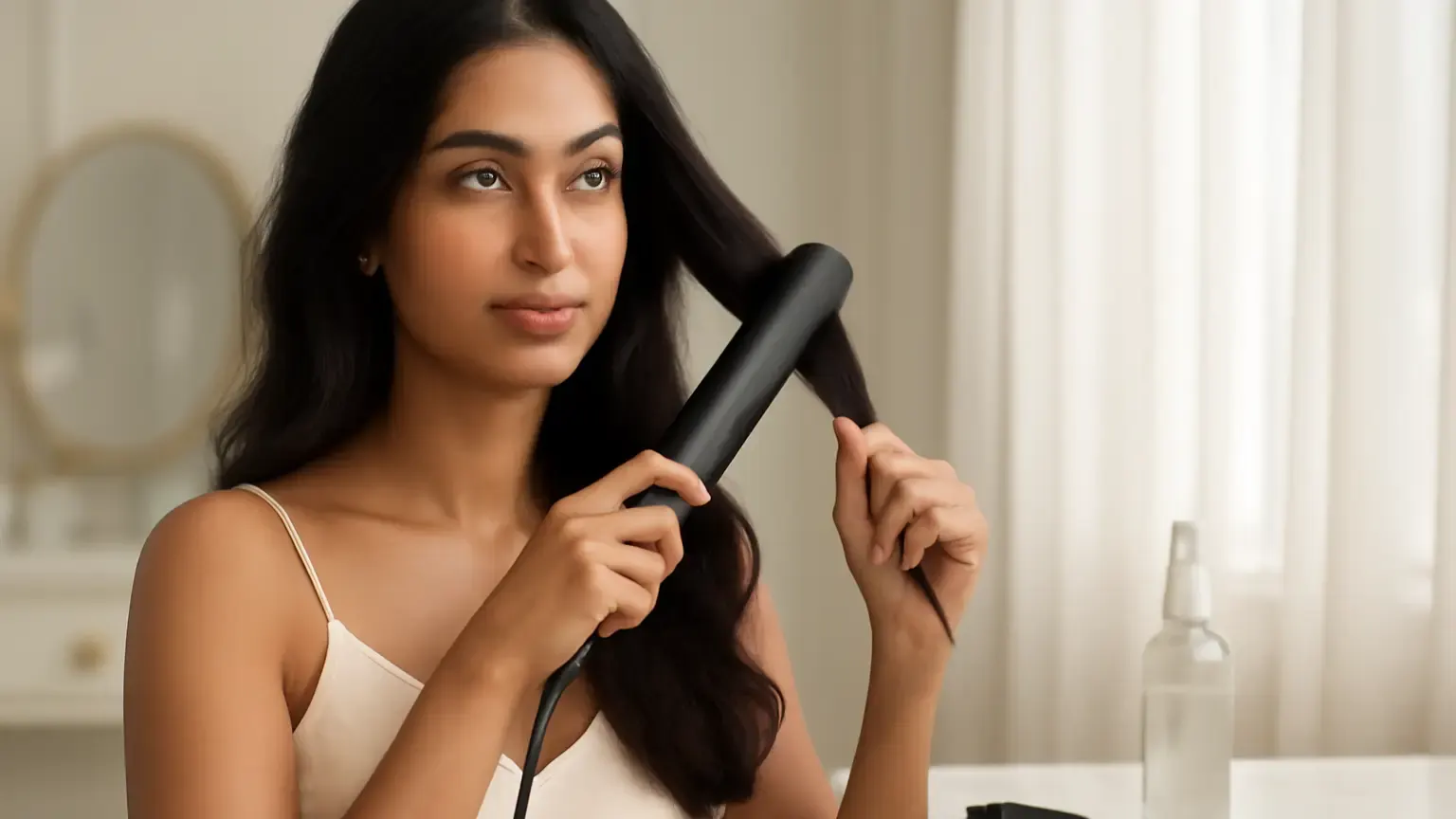
The right hair straightener temperature is the lowest setting that creates the result in one or two controlled passes. Higher is not automatically better, especially for fine, porous, bleached, coloured or naturally dry hair.
| Hair situation | Starting approach | What to watch for |
|---|---|---|
| Fine, fragile or coloured | Use a low setting and a small section | Smoke, sizzling, a sharp burnt smell or instant roughness |
| Healthy straight or wavy hair | Use a moderate setting and one slow pass | Repeated passes caused by oversized sections |
| Dense, coarse or curly hair | Use moderate heat with thorough pre-drying and tension control | Raising heat before improving section size or technique |
Exact temperature numbers vary by tool, hair condition and manufacturer guidance. Treat a digital setting as a starting point rather than a target. If you need several passes to change one section, reduce the section size, improve pre-drying or reconsider the tool before turning the heat up.
4. Work in small, even sections
Sectioning hair for styling helps heat reach the strands evenly. Large sections often lead to repeated passes on the outside while the inner hair remains unfinished. That combination increases total heat exposure and can leave dense Indian hair looking smooth on top but dry underneath.
- Divide the hair into two to four broad zones, depending on density and length.
- Clip away the upper layers and begin at the nape, where you can see the section clearly.
- Take a section narrow enough for the tool to glide through without squeezing hard.
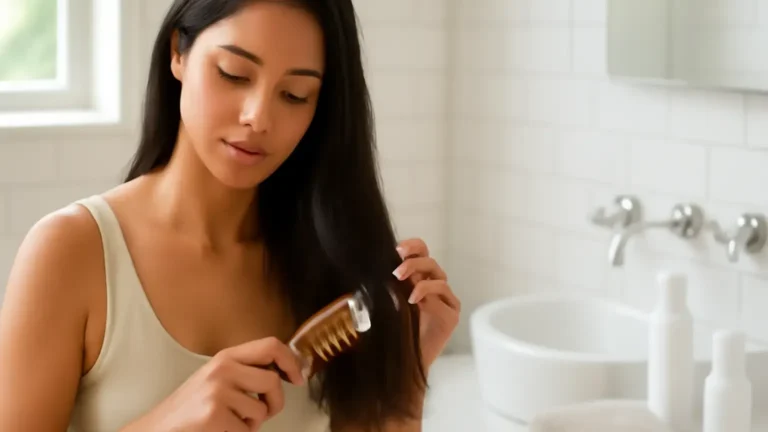
- Comb or brush gently ahead of the tool, keeping the movement steady rather than stopping in one spot.
- Release the next section only after the previous one is shaped, so you do not repeatedly reheat finished hair.
For curls or waves, preserve the natural pattern by using larger sections, lower tension and a diffuser on a low-to-moderate setting. For a sleek finish, smooth the hair with controlled tension instead of pulling forcefully. Excessive tension can contribute to breakage around the temples and hairline, where strands are often finer.
5. Reduce how often you use heat
Heat styling frequency matters more than one isolated session. If your hair is dry, porous or showing split ends, alternating heat-free styles with occasional thermal styling gives the hair more time without mechanical and thermal stress. A weekly blow-dry may be manageable for some people, while frequent straightening or curling on most days may leave others noticeably rough.
Plan the finish you need before switching on the tool. A smooth blow-dry may make a later straightener unnecessary. Likewise, overnight braids, rollers, a low bun or a carefully set heatless wave can create shape without another hot-tool session. Use a clean tool and remove residue from plates or barrels, because product build-up can make the tool drag and encourage extra passes.
Do not judge your routine only by how hair looks immediately after styling. Check how it feels after washing, whether the ends tangle more easily and whether the curl or wave pattern is becoming less defined. These are useful signals to reduce heat, increase conditioning and reassess technique.
6. Finish with post-heat hair care
Post-heat hair care should restore softness, limit friction and prevent you from restyling aggressively the next day. Once the hair has cooled, use a small amount of hair serum for frizz on the mid-lengths and ends if needed. Keep heavy oils away from a hot tool unless the product specifically states that it is suitable for thermal use; many oils can make hair feel coated and may not provide complete heat protection.
A simple recovery routine
- On the next wash, use a gentle cleanser suited to your scalp and follow with conditioner on the lengths.
- Use deep conditioning for dry hair once a week or as often as your hair needs, without applying a rich mask automatically to an oily scalp.
- Detangle with conditioner or a suitable leave-in product, starting at the ends.
- Blot rather than rub the hair dry, and allow some air-drying time before using a dryer.
- Sleep with loose hair or a low-friction style. A silk pillowcase for hair may reduce surface friction, but it cannot replace conditioning or careful handling.
Look for conditioning ingredients such as fatty alcohols, ceramides, glycerin or suitable silicones if your hair responds well to them. Ingredient performance depends on the full formula and your hair’s porosity, so focus on feel, manageability and reduced tangling rather than a single marketing claim.
How to build a heat styling hair care routine for Indian hair
Indian hair is not one texture. Straight, wavy, curly and coily patterns can all occur, and thickness can vary from fine to very dense. Climate also changes the decision: humid weather may increase frizz, while dry indoor air, sun and hard-water exposure may increase roughness. Use this adaptable routine:
- Wash and condition according to your scalp and lengths. Keep conditioner focused on the mid-lengths and ends if the roots become oily quickly.
- Remove excess water gently. Do not brush aggressively while the hair is dripping wet.
- Apply compatible leave-in and heat protectant. Use enough for even coverage, not enough to make the hair wet again.
- Pre-dry completely. Use moderate airflow and keep the dryer moving.
- Style in manageable sections. Match the section size to the density of your hair and the width of the tool.
- Cool and finish lightly. Let the style set before brushing or tying it tightly.
Common mistakes that increase dryness
Some routines fail because the main risk is not obvious. Applying a heat protectant only to the top layer leaves the underlayers unprotected. Straightening a large section saves time initially but often causes repeated passes. Holding a dryer too close concentrates heat, while keeping a straightener still on one spot can create a hot patch. Using a very high setting on a low-heat-tolerant hair type is also unnecessary.
Another mistake is layering several rich products and assuming more coating means more safety. If the hair becomes sticky or heavy, styling may take longer and friction may increase. Simplify the routine, use smaller amounts and follow product directions. If you notice persistent burning, scalp pain, extensive breakage or sudden changes in hair density, stop the styling session and seek advice from a dermatologist or doctor rather than attempting to correct the issue with more products.
Concise takeaway
The most effective hair care tips for heat styling are practical: protect the hair evenly, never clamp or curl it while damp, choose the lowest effective temperature, use small sections, reduce tool frequency and condition after styling. For Indian hair textures, adjust the routine to density, curl pattern, porosity, humidity and current hair condition rather than copying someone else’s settings. A smoother finish should not come at the cost of a brittle feel.
Products that may help with this routine
Choose only what fits your skin, hair or personal needs. Use the links below to view current options on Amazon India.
Frequently Asked Questions
How to protect hair from heat styling without making it greasy?
Use a lightweight mist on fine hair and a cream or lotion on thick, dry hair. Apply from the mid-lengths to the ends, distribute it evenly and avoid layering several heavy products. Heat protectant works best alongside fully dry hair, small sections and a low effective temperature.
What temperature should I use to straighten Indian hair?
Start with the lowest setting that can shape your hair in one or two passes. Fine, porous, coloured or fragile hair needs a lower setting, while dense or coarse hair may need moderate heat after thorough pre-drying. Follow your tool’s instructions and reduce the temperature if you see smoke, sizzling or sudden roughness.
Can you heat style damp hair?
Ordinary straighteners, curling irons and hot brushes should not be used on damp hair. Moisture can turn to steam between hot surfaces and increase cuticle stress. Dry the hair fully first, using controlled airflow, and use a tool designed for damp hair only according to its manufacturer instructions.
How often can I use heat styling tools on dry hair?
There is no single safe frequency for every hair type. Fine, porous, coloured or already dry hair generally benefits from fewer sessions and more heat-free styles. If your hair feels rougher, tangles more or develops more split ends, reduce heat frequency and improve conditioning and technique.
What should I put on my hair after heat styling?
After the hair cools, apply a small amount of a suitable anti-frizz serum to the mid-lengths and ends if needed. On the next wash, condition the lengths and use a weekly deep-conditioning treatment if your hair is dry. Do not use a heavy oil as a substitute for heat protectant.
How can I reduce dryness from hair straightening?
Reduce the temperature and number of passes, straighten only fully dry hair, use manageable sections and apply an appropriate heat protectant. Alternate straightening with heat-free styles, condition regularly and avoid tight hairstyles that add mechanical stress to already dry strands.