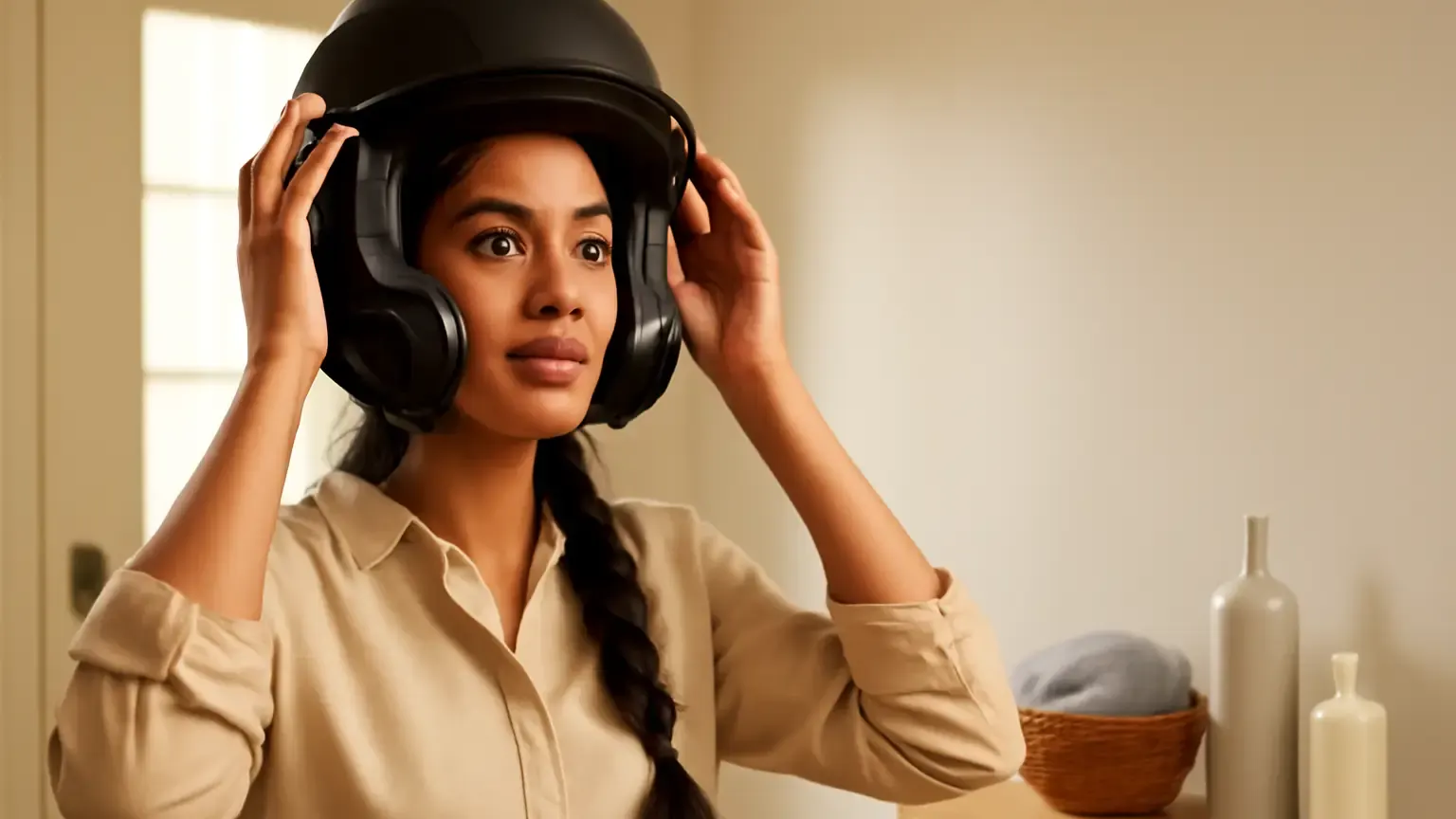
These hair care tips for helmet hair are for anyone who rides a two-wheeler to work, college or errands in India’s heat. Keep hair loosely secured, use a clean breathable liner, refresh the scalp after every ride and reserve dry shampoo for occasional use. Together, these choices reduce sweat build-up, frizz and flattened roots without rough teasing or over-washing your lengths.
Helmet hair usually means more than a few flattened roots. Heat trapped around the scalp, friction from the liner, humidity and sweat can leave hair limp, sticky, frizzy or difficult to style. The solution is not to skip a helmet or scrub your hair aggressively. A practical routine combines the right hairstyle, cleaner contact surfaces and gentle post-ride care.
1. Choose breathable hairstyles that do not create pressure points
The best helmet-friendly hairstyles are low, loose and positioned away from the areas where the helmet sits most firmly. A very tight ponytail or high bun can press against the shell, pull at the roots and leave a sharp crease once you remove the helmet.
Good options for daily rides
- Low loose ponytail: Secure it at the nape with a soft fabric tie rather than a tight elastic.
- Loose low braid: This helps contain long hair while limiting tangles and friction.
- Two relaxed braids: Useful for long, thick hair when one braid creates too much bulk.
- Short hair tucked naturally: Avoid forcing the hair into a stiff part before putting on the helmet.
If you have a fringe, part it lightly to one side or let it sit naturally instead of flattening it with heavy styling cream. A smooth silk or satin scrunchie can reduce pulling, but the main decision is fit: the hairstyle must not make the helmet tight or interfere with its secure position. Never loosen the helmet itself to accommodate a hairstyle.
2. Make helmet liner hygiene part of your routine
A liner absorbs sweat, scalp oil and styling residue. If it stays damp or dirty, it can transfer that build-up back onto freshly washed hair and may contribute to scalp discomfort. Helmet liner hygiene is therefore one of the most useful, and most overlooked, parts of a helmet hair care routine.
Check the manufacturer’s care instructions first. If the liner is removable, wash it regularly with a mild detergent, rinse it thoroughly and allow it to dry completely before reinstalling it. Do not put a wet liner back inside the helmet. If the liner cannot be removed, use a lightly damp cloth suitable for the material and give the helmet plenty of air-drying time.
Riders who commute daily in hot or humid weather may benefit from keeping a spare compatible liner or using a clean, breathable helmet liner designed for that helmet model. Do not add a thick cap, scarf or unapproved padding if it changes the fit. A liner should improve comfort without affecting protection.
3. Use a simple post-ride hair refresh
A post-ride hair refresh should remove sweat at the scalp without turning every commute into a full wash. As soon as you reach your destination, remove the helmet and let your hair cool for a few minutes. If possible, loosen the hairstyle and gently separate the roots with clean fingers.
- Blot the hairline and scalp with a clean towel; do not rub vigorously.
- Use a microfiber towel around the dampest areas because its soft texture can be gentler than rough terry cloth.
- Allow the scalp to air-dry before putting hair into another tight style.
- Use a cool hair-dryer setting at the roots if you need faster drying.
- Comb the lengths with a wide-tooth comb only after excess moisture has reduced.
This approach is especially useful for people who ride more than once a day. It helps you decide whether your hair needs a complete wash or only drying and reshaping. If sweat remains heavy, the scalp feels uncomfortable or the hair looks visibly soiled, washing is the better choice.
4. Treat dry shampoo as an occasional tool, not scalp sweat control
Dry shampoo for helmet hair can absorb some oil and make flat roots look fresher between washes, but it does not remove sweat, dust or product residue. It should be a convenience product, not a replacement for cleansing or a way to cover persistent scalp discomfort.
For occasional use, apply a small amount to dry roots from the recommended distance, wait briefly and massage or brush it through gently. Avoid repeatedly layering it over sweaty hair after every ride. That can leave the scalp feeling coated and may make the roots look dull or powdery. Choose a lightweight formula that suits your hair colour and stop using it if it causes itching or irritation.
In very humid weather, a clean rinse or wash is usually more useful than adding more powder. People with a naturally oily scalp may need a different wash-day routine from those with dry, curly or chemically treated hair, so judge by comfort and visible build-up rather than a fixed universal schedule.
5. Control frizz without making the roots greasy
Helmet friction can roughen the outer hair cuticle, while humidity makes already porous hair swell and look frizzy. The aim of frizz control products is to smooth the lengths lightly, not coat the scalp before a ride.
After washing, use conditioner mainly from the mid-lengths to the ends. On dry hair, place a tiny amount of an anti-frizz serum or lightweight leave-in product between your palms and smooth it over the surface. Keep heavier oils, waxes and creams away from the roots if sweat and flatness are already concerns. A small amount is easier to add than to remove.
Do not brush aggressively to chase away flyaways. Detangle from the ends upwards, and use a wide-tooth comb for wet or textured hair. If your hair is curly or wavy, scrunching a small amount of leave-in conditioner into the lengths after washing may preserve shape better than repeated dry brushing.
6. Restore hair volume after helmet use without rough teasing
Hair volume after helmet use can usually be restored with cooling, directional drying and a change of part rather than backcombing. Rough teasing may create short broken hairs and more visible frizz, especially when repeated every day.
Once the scalp is dry, flip your part to the opposite side for a few minutes or lift the roots gently with your fingertips. A cool-shot setting directed at the roots can help them settle in a less compressed position. For fine hair, a small amount of lightweight root-lifting spray may work better than a heavy mousse, but keep the product away from sweaty skin and wash it out according to your normal routine.
If the helmet leaves a strong line, dampen only that section with water, reshape it with your fingers and let it dry in the new direction. This local reset is often less drying than wetting the entire head. Avoid using high heat on damp, sweaty hair just to create instant lift.
How to build a practical helmet hair care routine
A useful routine should match how often you ride, how much you sweat and your hair texture. Here is a simple decision guide:
- Short, occasional rides: Loosen the hair after the ride, air-dry the scalp and reshape the roots.
- Daily commuting: Rotate clean liners, follow regular helmet liner hygiene and schedule washing based on sweat and build-up.
- Long rides in humid weather: Choose breathable hairstyles, carry a small clean towel and prioritise a post-ride rinse or wash when needed.
- Curly or textured hair: Use a loose style, minimise dry brushing and apply conditioning products to the lengths.
- Fine or oily hair: Keep styling products light and use dry shampoo sparingly rather than layering it over sweat.
- Dry, coarse or frizz-prone hair: Focus on conditioner, gentle detangling and a small amount of anti-frizz product on the ends.
Common mistakes that make helmet hair worse
- Putting a helmet over wet hair, which can leave the scalp damp for longer and flatten the roots.
- Wearing a tight high bun or ponytail under the shell.
- Using a dirty liner while trying to refresh clean hair with styling products.
- Applying dry shampoo directly to sweaty hair and repeating the application for several days.
- Rubbing the hairline with a rough towel or brushing hard to remove every kink.
- Adding thick oils or creams before riding in hot weather.
- Changing the helmet fit or adding bulky layers that may affect its protective performance.
When to pay attention to scalp discomfort
Occasional sweat and temporary flatness are common, but persistent itching, burning, redness, scaling, unusual tenderness or ongoing hair shedding deserves attention. Keep the liner clean, avoid products that appear to worsen the problem and speak with a dermatologist or doctor if symptoms continue or become severe. General grooming changes are not a substitute for professional advice about a persistent scalp concern.
Concise takeaway
The most effective hair care tips for helmet hair are simple: choose a loose, breathable style; keep the liner clean and dry; refresh sweat gently after riding; use dry shampoo only occasionally; smooth frizz on the lengths; and restore volume with cool air and gentle reshaping instead of teasing. These steps help you protect both everyday hair comfort and the secure helmet fit you need.
Products that may help with this routine
Choose only what fits your skin, hair or personal needs. Use the links below to view current options on Amazon India.
Frequently Asked Questions
How can I prevent helmet hair in humid weather?
Use a loose, low hairstyle, keep the liner clean and fully dry, and let the scalp cool and air-dry after riding. In humid conditions, a light rinse or wash is more effective than repeatedly adding dry shampoo to sweaty roots.
What hairstyle is best under a helmet?
A loose low ponytail, low braid or two relaxed braids usually works well for long hair. Avoid tight high buns and ponytails, and make sure the hairstyle does not change the helmet’s secure fit.
Can dry shampoo help with helmet hair?
It can temporarily reduce the look of oily, flat roots, but it does not remove sweat or dirt. Apply a small amount only to dry roots and wash the hair when there is visible build-up or significant sweat.
How do I refresh hair after wearing a helmet?
Remove the helmet, loosen the hairstyle, blot sweat with a clean microfiber towel and let the scalp air-dry. Reshape the roots with your fingers or cool air, then decide whether a rinse or full wash is needed.
How often should I wash a helmet liner?
Follow the helmet maker’s instructions, but wash a removable liner regularly and more often with frequent riding or heavy sweating. Always dry it completely before using it again.
How do I add volume back after helmet hair?
Let the roots cool and dry, change your part, lift the roots with your fingers and use a cool hair-dryer setting. Avoid rough teasing, which can increase breakage and frizz.