Hair Care Tips for Festive Hairstyles are especially useful if you wear buns, braids, curls or pinned-up styles for weddings, Diwali gatherings and other long events. The safest approach is simple: prepare gently, work in clean sections, use low-tension accessories, protect hair from heat and remove every pin before detangling. These steps help reduce avoidable pulling, friction and snapping without limiting the festive looks you enjoy.
Festive styling often asks more from your hair than an everyday ponytail. A hairstyle may involve backcombing, hot tools, several pins, decorative accessories and hours of tension. None of these automatically makes a style damaging, but the combination can leave hair rough, tangled or more likely to snap if preparation and removal are rushed.
Good festive hairstyle hair care is not about avoiding styling altogether. It is about controlling the three main sources of unnecessary stress: repeated heat, concentrated pulling and friction during sleep or detangling. The five steps below cover what to do before styling, while securing the look and after you return home.
1. Start with pre-wash hair care and realistic preparation
Hair that is very dry, coated with heavy oil or freshly washed and slippery can be harder to style safely. Plan your wash according to the event rather than treating every hair type the same way. Most people can wash the day before or several hours before styling, allowing the hair to become manageable without being soaking wet.
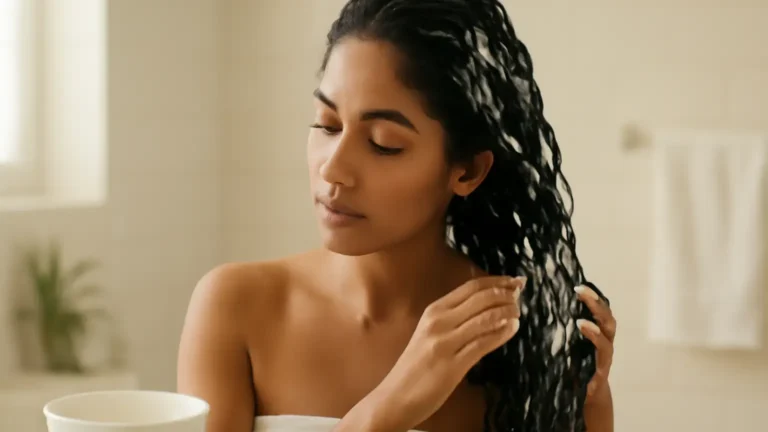
- Use a gentle shampoo on the scalp and apply conditioner mainly through the lengths and ends.
- Blot with a soft towel or cotton T-shirt instead of twisting wet hair tightly.
- Allow hair to become mostly dry before using a brush, pins or hot tools.
- If your ends feel rough, use a small amount of lightweight hair serum on the lower lengths, avoiding a greasy layer near the roots.
Wet hair stretches more easily, so aggressive brushing while it is saturated can increase snapping. On the other hand, do not use a large amount of oil as a substitute for conditioning before a heated style; excess residue may make the finished look limp and can affect how heat is distributed.
Choose the right starting point
Fine or fragile hair may benefit from a loose, low-tension base rather than firm teasing. Thick or textured hair may need careful sectioning and smaller amounts of product instead of repeated combing. If your scalp already feels sore, itchy or tender, choose a more relaxed design rather than covering discomfort with additional pins.
2. Use hair sectioning techniques instead of repeated pulling
Hair sectioning techniques make styling more controlled. They allow you to work with smaller areas, place accessories accurately and avoid dragging a brush through the entire head several times. Begin with a simple centre, side or crown division, then create sections that match the final style.
- Separate the hair with a wide-tooth comb or fingers, starting at the ends and moving gradually upward.
- Clip unused sections loosely rather than fastening them tightly against the scalp.
- Style one section at a time, keeping the direction of brushing close to the intended shape.
- Check the hairline, temples and area behind the ears, where tension can become concentrated.
For a bun or braid, distribute the weight across several sections instead of making one very tight anchor. A decorative piece should sit on a stable base, not be used to clamp loose hair into place. This is one of the most practical ways to improve hair breakage prevention during a long celebration.
3. Reduce heat and choose low-tension hairstyles
Heat can make hair temporarily easier to shape, but repeated passes over the same strand may leave it drier and more fragile. Apply a suitable heat protectant for hair to damp or dry hair according to the product directions, then divide the hair before blow-drying, curling or straightening. Use the lowest effective temperature and keep the tool moving rather than holding it in one spot.
When deciding between styles, consider duration and weight as carefully as appearance. Low-tension hairstyles such as a loose low bun, softly pinned braid or half-up style are often more comfortable for long events than a tightly pulled high ponytail. A style that feels painful at the start is unlikely to become safer with time.
| Styling choice | What to consider | Gentler adjustment |
|---|---|---|
| Tight high ponytail | Pull is concentrated at the crown and hairline | Try a lower placement with a softer base |
| Firm bun | Several pins may press into one area | Spread pins around the bun and loosen the anchor |
| Backcombed volume | Reverse combing can roughen the cuticle | Use controlled volume at the roots and minimal teasing |
| Heated curls | Multiple passes can increase dryness | Work on small sections with heat protection and fewer passes |
Heat styling is also a poor place to improvise with very high temperatures. If the hair smells scorched, feels unusually hot or becomes stiff, stop and allow it to cool before continuing.
4. Secure the look with less friction
Small accessory choices can make a noticeable difference. Choose seamless hair ties, smooth pins and silk or satin hair accessories where they suit the design. Avoid ties with exposed metal joins or rough fabric that catches strands. Accessories should hold the hair without requiring repeated tightening throughout the evening.
Place pins through a small, stable section and insert them in the direction that supports the style. Do not force a pin through a dense knot. If it does not slide easily, remove it, loosen the section and try again. Decorative clips and jewellery should be light enough that the hair does not sag or pull at one point.
A quick comfort check
After securing the style, move your head gently and check whether the scalp feels pinched, hot or tender. Ask yourself whether you could comfortably wear the look for several hours. Scalp comfort is a useful decision factor, not a sign that the style has failed. Loosening one or two anchors early is usually better than waiting until the hair is tired and tangled.
5. Follow a careful hairstyle removal routine
Post-hairstyle detangling is where many otherwise careful routines go wrong. Removing a festive style quickly, especially when hairspray or pins have created a compact knot, can cause avoidable breakage.
- Take out jewellery, flowers and decorative clips first.
- Remove pins one at a time in the opposite direction from insertion; never pull a cluster of pins together.
- Release the hair tie by stretching or cutting it carefully if it is snagged, rather than yanking it down the length.
- Separate large sections with your fingers before using a comb.
- Apply a little conditioner, detangling product or water to stiff areas if needed.
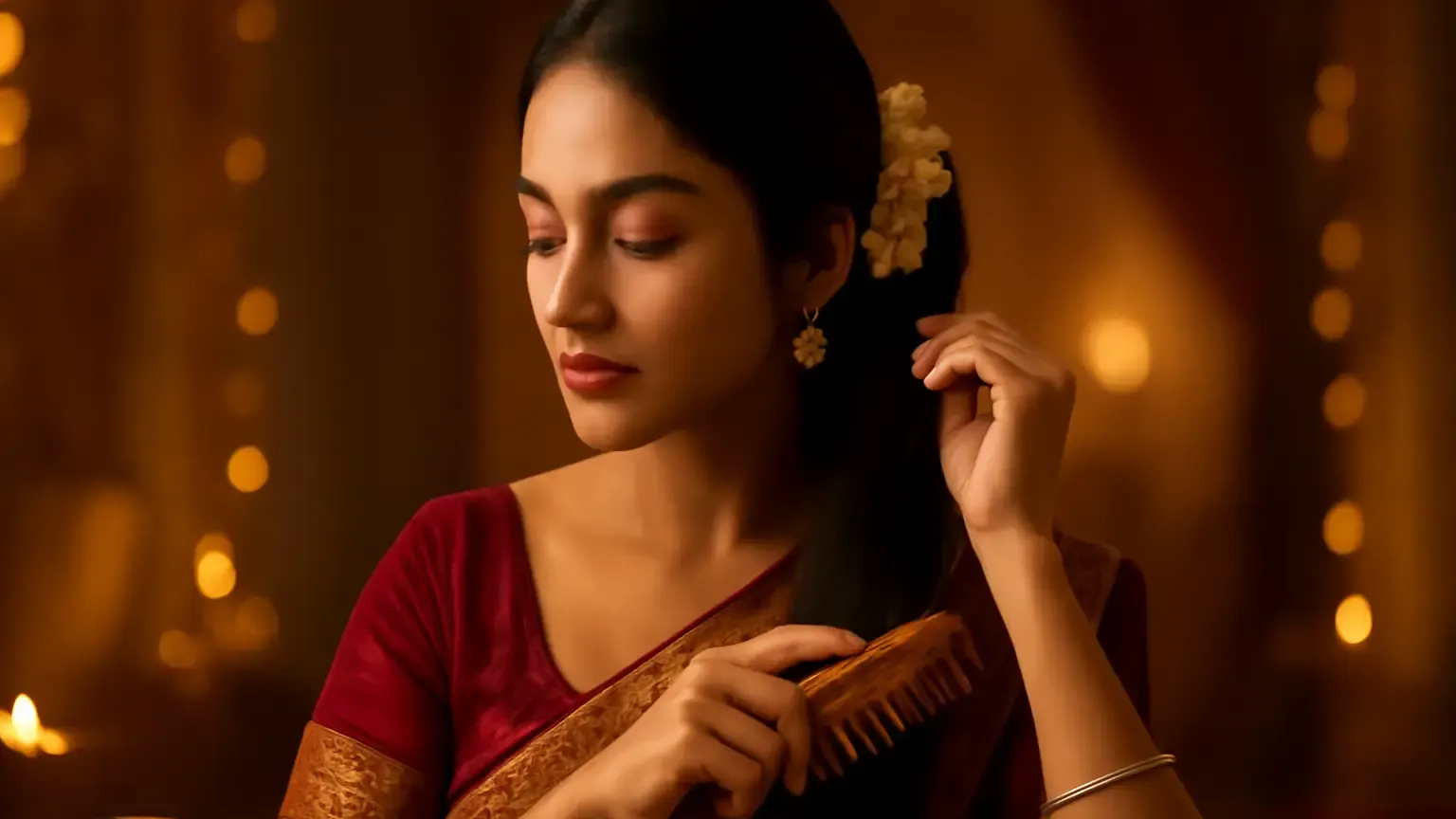
- Start at the ends with a wide-tooth comb and work upwards in short sections.
If you are tired after an event, it is better to remove the accessories and loosely gather the hair than to sleep in a tight, heavily pinned style. A satin or smooth pillowcase may reduce overnight friction, but it cannot compensate for a painful or overly tight hairstyle.
Common festive styling mistakes to avoid
- Styling soaking-wet hair: Wet strands are more vulnerable to stretching and rough handling.
- Using more product to fix a failing style: Heavy layers can make later detangling harder; correct the structure instead.
- Hiding scalp pain: Persistent pulling is a reason to loosen or redesign the style.
- Brushing from roots to ends: This pushes knots together and increases force on the lengths.
- Leaving pins in overnight: They can press against the scalp and catch strands as you move.
Who should take extra care?
Use a particularly gentle approach if your hair is bleached, chemically treated, heat-damaged, very fine or already prone to split ends. Keep the event style simpler and avoid combining tight traction with extensive heat. If a particular hairstyle repeatedly causes tenderness, visible thinning or persistent breakage, stop wearing that style and seek advice from a dermatologist or doctor, especially if symptoms continue outside styling days.
A simple festive hair checklist
Before leaving, ask: Is the hair mostly dry? Have I used heat protection if I used a hot tool? Are the pins and ties smooth? Does the scalp feel comfortable? Do I know how I will remove the style later? These four checks take less than a minute and can prevent hurried decisions at the end of a long function.
Takeaway: The most useful Hair Care Tips for Festive Hairstyles are gentle preparation, organised sections, controlled heat, smooth low-tension accessories and slow removal. Choose the style you can wear comfortably for the entire occasion, not merely the one that looks secure at the beginning.
Products that may help with this routine
Choose only what fits your skin, hair or personal needs. Use the links below to view current options on Amazon India.
Frequently Asked Questions
How can I prevent hair breakage from festive hairstyles?
Prepare hair with gentle washing and conditioning, use heat protection, work in sections, choose low-tension styles, use smooth accessories and remove every pin before detangling from the ends upward.
What is the best hair prep for festive hairstyles?
Wash according to your hair type, condition the lengths, blot instead of rubbing, allow hair to become mostly dry and apply a small amount of lightweight serum to rough ends if needed.
How do I remove a tight festive hairstyle safely?
Remove decorative pieces first, take out pins individually, loosen or carefully cut a snagged tie, separate the hair with your fingers and detangle from the ends with a wide-tooth comb.
Which hairstyles cause less hair breakage?
Loose low buns, softly pinned braids and relaxed half-up styles generally place less concentrated tension on the hairline than very tight ponytails or firmly pulled-up styles.
How do I detangle hair after a festive hairstyle?
Work in small sections, start at the ends and move upward. Use fingers first, then a wide-tooth comb, and add a little conditioner or detangling product to stiff, product-heavy areas.