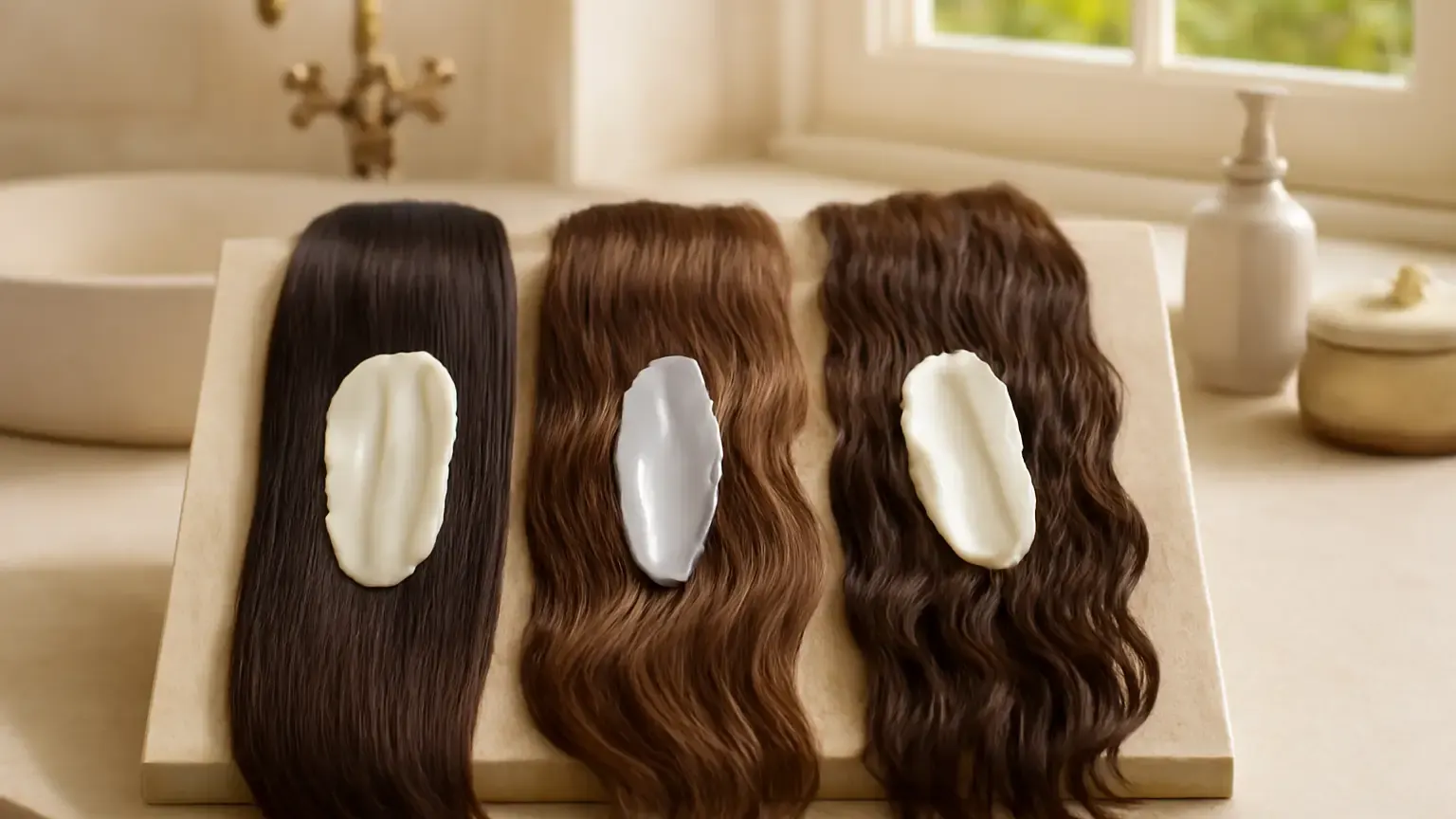
Hair porosity and hair masks are easiest to manage when you match the formula and timing to how your strands absorb and hold water. This guide is for anyone with fine, curly, straight, coloured or heat-styled hair who is unsure whether to use a light, rich or protein-focused mask. You will learn how to compare low, medium and high porosity tendencies, recognise over-conditioning, and adjust product quantity and processing time without weighing hair down.
What hair porosity changes about a mask
Hair porosity describes how readily the cuticle allows water and products to enter, and how well the strand holds on to that moisture. It is not a permanent label for your entire head. Porosity can vary between roots and ends, and may change after bleaching, colouring, frequent heat styling or mechanical damage.
For mask selection, think in terms of three practical tendencies:
- Low porosity: the cuticle is relatively compact, so rich formulas can sit on the surface and create heaviness or buildup.
- Medium porosity: the hair usually accepts conditioning fairly easily and often needs a balanced routine rather than extreme treatments.
- High porosity: the cuticle is more raised or irregular, so hair may absorb water quickly but lose it just as quickly. More cushioning and occasional strengthening can be useful.
These are tendencies, not diagnoses. The popular glass-of-water test is affected by product residue, strand thickness and surface tension, so do not use it alone. Observe how your hair behaves after washing, drying and styling over several routines.
Hair porosity and hair masks: compare the three tendencies
Low porosity hair
Low porosity hair may take time to become fully wet, feel coated after repeated conditioning, or look flat soon after a heavy mask. Fine strands can show these effects particularly quickly, although low porosity hair can also be thick or curly.
Choose a low porosity hair mask with a lighter cream or gel-cream texture. Apply it to thoroughly wet, freshly cleansed hair rather than layering it over oil and several styling products. Start with a small amount spread between your palms, concentrating on the mid-lengths and ends.
Gentle warmth can make application more comfortable and help the product spread, but it is not essential. A short steam treatment for hair may suit some routines; keep the heat mild, avoid very hot water, and stop if your scalp feels uncomfortable. Rinse thoroughly. If hair feels coated afterwards, simplify the next wash instead of adding another treatment.
Medium porosity hair
Medium porosity hair care is usually the most flexible. Hair may wet readily, retain a style reasonably well and respond to both lighter and richer masks depending on the season and its condition. A medium-weight mask once every week or two may be enough, especially if you already use a conditioner regularly.
Look for a balance of water-based conditioning ingredients, fatty alcohols and oils that suit your texture. If the ends are dry but the roots are comfortable, use the mask only from the mid-lengths down. If the hair is fine, choose a lighter layer; if it is coarse or highly textured, a richer formula may be appropriate without needing a large quantity.
High porosity hair
High porosity hair often feels dry soon after washing, frizzes in humid weather, tangles at the ends or becomes rough after chemical processing. A high porosity hair mask can be richer and more protective, particularly on bleached, coloured or heat-stressed lengths.
Use a mask containing conditioning agents and film-forming ingredients that help reduce friction. A protein-containing formula may be useful occasionally when hair feels weak or overly stretchy, but more is not automatically better. Alternate strengthening products with a moisture-focused mask and assess the result after each wash.
How to adjust richness, quantity and processing time
A useful hair mask application routine has three adjustable controls: formula richness, amount and time. Change one control at a time so you can tell what your hair prefers.
- Begin with clean, well-squeezed hair. Shampoo first when there is oil, styling residue or scalp buildup. Press out excess water with your hands so the mask does not slide off.
- Use less than you think you need. Start with a coin-sized amount for shorter or fine hair, then add a little more to dry ends. Longer, dense or very curly hair may need more, but saturation is not the same as using a thick layer.
- Distribute in sections. Smooth the mask from the mid-lengths to the ends, then detangle gently with fingers or a wide-tooth comb if your hair tolerates it. Avoid rubbing aggressively.
- Choose a short starting time. Leave a light mask on for around five to ten minutes and a richer treatment for around ten to fifteen minutes, unless the product label says otherwise. Extended time does not guarantee a better result.
- Rinse until the hair feels clean but flexible. If the strands still feel waxy, limp or coated, use less next time or select a lighter formula.
A weekly deep conditioning treatment may suit dry, high porosity or frequently processed hair, while low porosity hair may prefer a less frequent schedule. In hot, humid Indian weather, heavy masks can feel less comfortable than they do in a dry winter, so seasonal adjustment matters.
How to recognise over-conditioning
Over-conditioning means the hair has received more softening and coating than it can use comfortably. Common signs include limp roots, reduced volume, strands that feel overly smooth but weak, curls that lose definition, slow drying and a greasy or coated surface soon after washing.
These signs can also come from styling residue, hard-water deposits, excess oil or a product that does not suit your hair. Do not assume every softness problem is a need for protein. First, pause the mask for one wash, use your normal cleanser and reassess the clean, dry hair. If buildup seems likely, a suitable clarifying shampoo for buildup used occasionally may help; follow with a modest amount of conditioner because clarifying can leave the lengths feeling less comfortable.
To prevent over-conditioning:
- Do not use a rich mask after every wash unless your hair genuinely needs it.
- Keep heavy products away from the roots when your scalp becomes oily or your hair loses volume.
- Do not combine a mask, pre-wash oil, leave-in cream and thick serum automatically.
- Choose a protein-free hair mask when your main concern is softness and your hair does not need a strengthening step, but still watch for coating from oils and silicones.
- Reduce the amount before reducing the rinse time. Leaving residue behind is not a conditioning strategy.
Moisture, protein and product choices
The goal is a workable moisture-protein balance, not a rigid rotation of products. Moisturising masks generally improve slip and softness, while hydrolysed proteins can temporarily help hair feel more supported. Hair that becomes stiff, brittle-feeling or rough after a protein product may need a break from strengthening formulas and a gentler conditioning wash.
For high porosity or chemically processed hair, a mask with a small amount of protein may be useful from time to time. For hair that is already stiff or overloaded, choose a simple moisture-focused formula. Fine hair may prefer lightweight conditioners and silicone-free hair products if it dislikes coating, though silicones are not universally bad; they can reduce friction and help protect vulnerable lengths when properly cleansed.
Ingredients are only part of the decision. Consider strand thickness, curl pattern, current damage, climate, washing frequency and how your hair feels the day after masking. A rich product used sparingly can suit some high porosity fine hair, while a light product used generously can overwhelm low porosity fine hair.
A simple porosity-based hair mask routine
Use this four-week test rather than changing your entire shelf at once:
- Week one: note how quickly your hair wets, how long it takes to dry, and whether it feels dry, coated, stretchy or rough after your usual wash.
- Week two: select a light, medium or rich mask based on those observations. Apply a small amount for a short time and record the result.
- Week three: adjust one variable. Increase or decrease the amount, or add a few minutes of processing time. Do not change formula, frequency and styling products together.
- Week four: decide whether your hair needs more softness, more strength, less product or a more thorough cleanse. Keep the schedule that gives comfortable, manageable hair rather than chasing a porosity category.
A pre-poo treatment can be useful for very dry lengths, but it adds another layer to the routine. If you use one, reduce the mask amount or skip the mask on that wash. For hair breakage prevention, handle wet hair gently, detangle from the ends upwards and limit repeated high-heat styling; a mask cannot compensate for ongoing mechanical or thermal stress.
Quick decision guide
| Hair behaviour | Try first | Adjust if needed |
|---|---|---|
| Slow to wet, easily weighed down, coated after masks | Light mask, small amount, five to ten minutes | Use less often or clarify occasionally |
| Generally balanced with seasonal dryness | Medium mask every one to two weeks | Use only on ends or vary by weather |
| Dry, frizzy, porous-feeling or chemically processed | Richer mask, careful sectioning, ten to fifteen minutes | Alternate moisture with occasional protein |
Takeaway
The best match between hair porosity and hair masks comes from observing behaviour, not following a fixed label. Low porosity hair often needs lighter products and shorter timing; medium porosity hair benefits from flexible balance; high porosity hair may need richer conditioning and occasional strengthening. Start with less product, adjust one variable at a time, and treat persistent breakage, scalp irritation or sudden changes as reasons to seek advice from a dermatologist or qualified healthcare professional.
Products that may help with this routine
Choose only what fits your skin, hair or personal needs. Use the links below to view current options on Amazon India.
Frequently Asked Questions
How often should you use a hair mask for low porosity hair?
Many people with low porosity hair can start with a mask every two weeks, using a light formula and a small amount. If the hair remains coated or limp, reduce the frequency or choose a lighter conditioner instead.
What is the best hair mask for high porosity hair?
A conditioning mask with a richer texture and good slip may suit high porosity hair, especially when it is dry or chemically processed. Consider occasional protein, but alternate it with moisture-focused care if the hair feels stiff.
How long should I leave a hair mask on low porosity hair?
Start with about five to ten minutes unless the product label gives different directions. Longer processing is not automatically better, and low porosity hair can become weighed down by excess product.
Can hair masks cause over conditioning?
Yes. Frequent use or overly rich formulas can leave hair limp, coated, weak-feeling or lacking volume. Reduce the amount and frequency first, then clarify occasionally if product buildup is a likely cause.
How can I tell my hair porosity before using a mask?
Observe how quickly your hair wets, how fast it dries, whether it holds moisture and how it responds to products over several washes. Home tests such as the float test are only rough clues because residue and strand thickness affect results.
Should medium porosity hair use protein masks?
It can, particularly after chemical or heat stress, but protein is not required simply because hair is medium porosity. Use it occasionally if the hair feels weak, and return to moisture-focused conditioning if it becomes stiff or rough.