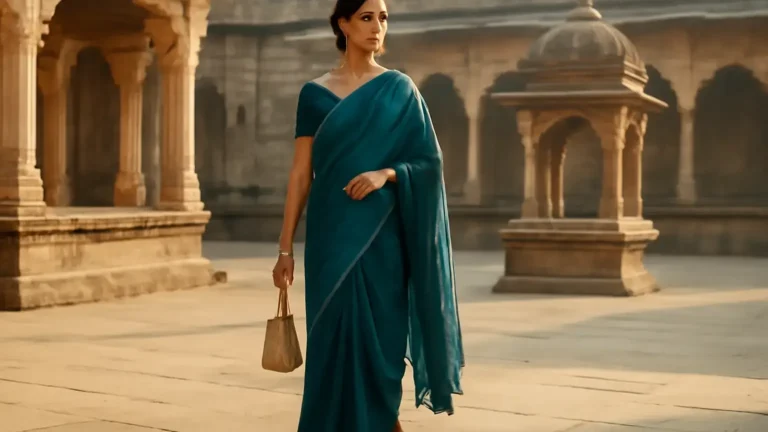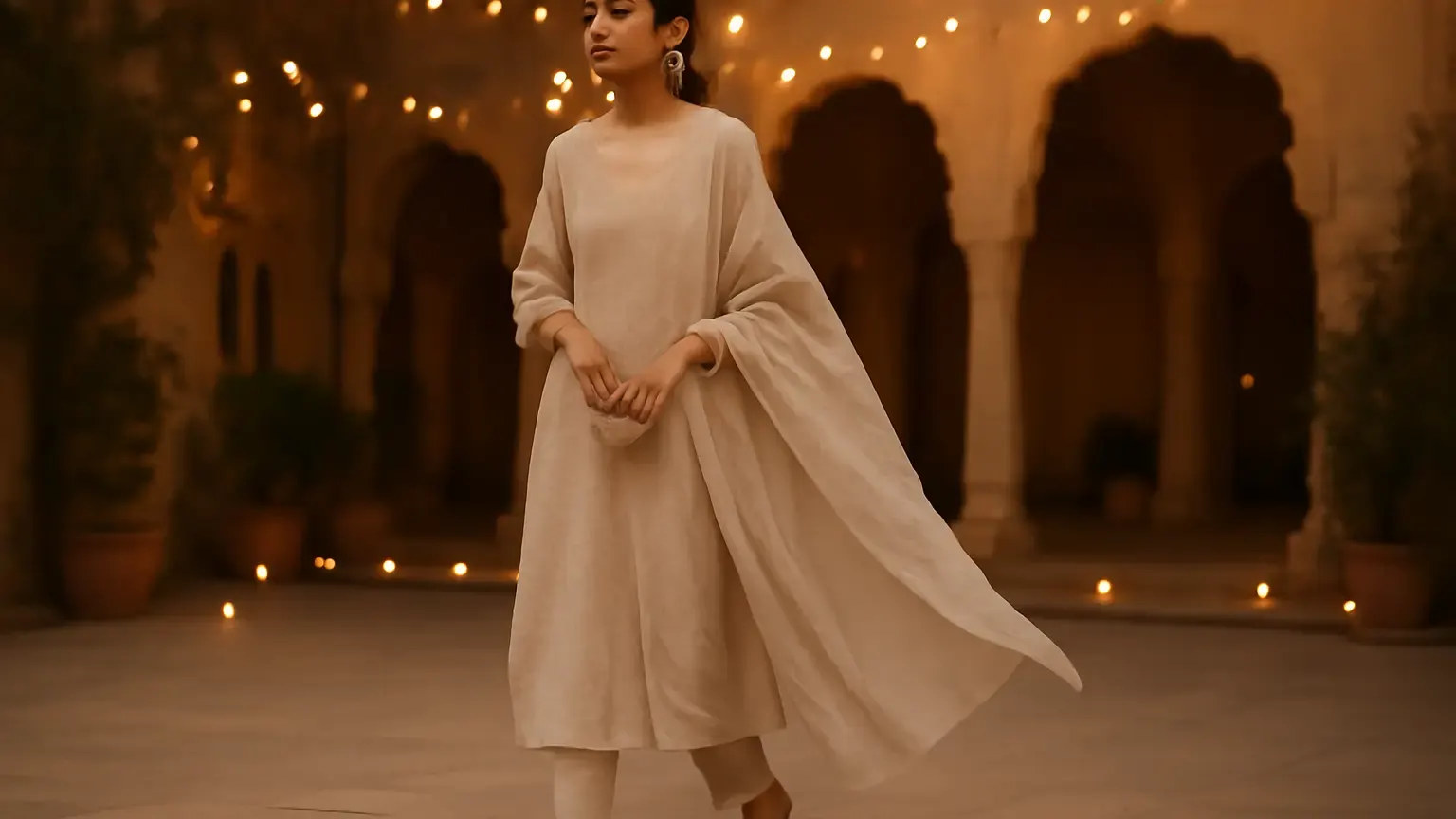
Festive fashion for humid evenings works best when you choose airy fabric, a little breathing room and supportive layers before adding sparkle. This guide is for anyone dressing for Indian weddings, pujas, Diwali gatherings or dinner celebrations in sticky weather. Start with cotton, linen blends or fluid drapes; keep innerwear smooth and secure; then use jewellery, a compact bag and comfortable footwear to make the look feel festive without trapping heat.
Humidity changes how festive clothing behaves. A fabric that feels elegant in an air-conditioned boutique can cling at the waist, show sweat at the back or become heavy after a short commute. The most reliable approach is to build an outfit around airflow and movement, then add polish through colour, texture and accessories.
Choose breathable festive fabrics first
For a warm Indian evening, fabric is a more important decision than the amount of embellishment. Look for materials that allow air to move and do not remain wet against the skin.
- Cotton and mulmul cotton: Soft, absorbent and easy to wear in kurta sets, sarees and relaxed co-ords. A lightly woven cotton can look celebratory with block prints, gota details, contrast borders or metallic earrings.
- Linen blends: A linen-cotton or linen-viscose blend gives a crisp, elevated finish with less stiffness than pure linen. Check the garment’s lining, since a heavy synthetic lining can cancel out the fabric’s advantage.
- Cotton silk: Useful when you want a more dressed-up surface without choosing a fully synthetic outfit. It may still need careful layering, especially if the weave is dense.
- Lightweight georgette or crepe: These can work for a fluid dupatta or draped skirt, but choose a breathable inner layer and avoid several overlapping panels.
Breathable festive fabrics should not be confused with any fabric labelled “lightweight”. Very thin polyester may feel cool at first but can hold perspiration close to the skin. Dense brocade, thick velvet and heavily layered net are better reserved for well-ventilated venues or shorter indoor events.
Build humid weather festive outfits around airflow
The best fluid festive silhouettes skim rather than grip. A straight kurta with side slits, an A-line kurta set, a relaxed sharara with a short kurti or a softly draped saree can provide movement without looking casual. An empire seam can also reduce pressure around the waist, provided the bust area feels secure.
For a saree, consider a breathable petticoat or underskirt with enough ease for walking. A pre-stitched or lightly pleated drape can reduce the need for constant adjustment. If you prefer an anarkali, choose a lighter skirt volume and avoid multiple stiff can-can layers unless the venue is cool.
For festive outfits for humid Indian weather, proportion matters. Pair a roomy lower half with a more defined blouse or kurta, rather than wearing volume everywhere. A cropped jacket can look striking, but keep it open and lightweight so it acts as a styling layer rather than a heat-trapping shell.
Use supportive underlayers, not bulky ones
Good underlayers should keep the outfit in place while reducing friction and visible lines. A seamless camisole can smooth the upper body beneath a sheer kurta or an open-front jacket. For a saree or fitted blouse, choose a well-fitting bra with straps and coverage suited to the neckline; support is more useful than simply selecting the thinnest option.
Moisture-wicking innerwear can be practical for long events, especially when you will travel, stand outdoors or dance. Look for soft, breathable panels and a comfortable waistband. Avoid wearing a new undergarment for the first time at an important function because pressure points often become noticeable only after several hours.
When skirts or dresses rub at the thighs, anti-chafing shorts can make walking easier. Choose a smooth pair that does not bunch under the outfit. An anti-chafing balm may help on areas prone to friction, but patch-test any new personal-care product and avoid applying it to broken or irritated skin.
Make the dupatta and drape work for the weather
A dupatta can finish a festive look, but wrapping it tightly around the neck and torso creates unnecessary warmth. Lightweight dupatta styling is more comfortable when one end is secured at the shoulder and the other falls freely, or when the dupatta is worn over one shoulder with a discreet pin.
Choose cotton voile, light chiffon, fine organza or a soft printed fabric instead of a heavily layered stole. Organza looks airy but can feel structured and may slip, so use small, concealed pins. For a saree, keep the pallu broad enough to look intentional but avoid repeated folds across the chest if you are likely to feel warm.
A belt can define a drape, but use it selectively. A narrow fabric belt or a soft tie is less restrictive than a stiff, embellished belt worn tightly around the waist.
Elevate the outfit with heat-friendly accessories
Accessories provide festive impact without adding another layer of clothing. Oversized earrings, a short necklace, a stack of slim bangles or a textured hair accessory can replace a heavy embroidered jacket. Choose one focal area so the look remains balanced.
For bags, a small structured potli, compact clutch or crossbody with a fine strap is easier to manage than a large shoulder bag that presses fabric against the body. Metallic finishes, beads and embroidered details add occasion-appropriate interest without affecting airflow.
Comfortable ethnic footwear should be part of the outfit plan, not an afterthought. Padded juttis, low block heels and dressy flat sandals are useful for uneven pavements, long standing periods and outdoor venues. Break them in before the event, and carry discreet blister plasters if you know your feet are sensitive to new shoes.
Finish with a humidity-aware beauty routine
Clothing feels more comfortable when the skin and hair routine is light. After bathing, apply a small amount of non-sticky body lotion to dry areas and allow it to settle before dressing. Avoid layering several rich, fragranced products under a fitted blouse or synthetic lining.
For a sweat-resistant makeup approach, begin with clean, moisturised skin, use thin layers and apply complexion product only where coverage is needed. A lightweight base, waterproof or long-wear eye product and a small amount of setting powder around the nose and forehead can be more comfortable than a heavy full-face layer. Carry blotting paper or a clean tissue rather than repeatedly adding powder over perspiration.
A humidity-proof hairstyle does not have to mean a stiff updo. A low bun, braided ponytail or half-up style keeps hair away from the neck while allowing some softness around the face. Use pins that hold securely and keep a small comb in your bag. If your scalp or skin remains unusually itchy, painful or irritated after an event, stop using the suspected product and consult a dermatologist if the concern persists.
A simple decision guide before you buy or dress
- Check the venue: For an open lawn or crowded home gathering, prioritise cotton, linen blends and a short, light dupatta. For air-conditioned halls, you can add a slightly denser blouse or decorative layer.
- Estimate movement: If you will commute, climb stairs or dance, select a hemline and footwear that allow a full stride. Test sitting, walking and lifting your arms before removing tags.
- Inspect the lining: Turn the garment inside out. A smooth, breathable lining is preferable to scratchy net or a large expanse of non-breathable polyester.
- Plan the support: Match the neckline and back to your undergarment before the event. Use fashion tape or discreet pins only on clean, dry fabric and follow the product instructions.
- Pack a small refresh kit: Include tissues, a comb, safety pins, blister protection, a compact deodorant if suitable for you and a spare hair tie. A thin cotton scarf can also protect the back of the neck during travel.
Common mistakes that make festive dressing hotter
Wearing a tight synthetic lining under a loose cotton outer layer is one of the most common errors: the silhouette looks airy, but the inner layer holds heat. Another is choosing excessive shimmer in the form of multiple stiff layers, which limits movement and makes touch-ups harder. Tight waistbands, untested footwear and a dupatta pinned across both arms can also turn a beautiful look into an uncomfortable one.
Do not assume that sleeveless automatically means cool. A close-fitting synthetic bodice can feel warmer than a loose cotton sleeve. Conversely, a lightweight long sleeve may offer more comfort in direct evening sun. Judge the complete outfit, including lining, undergarments and accessories.
Takeaway: polished style needs less, not more
Successful festive fashion for humid evenings starts with a breathable base, a fluid silhouette and supportive but unobtrusive inner layers. Let earrings, a refined bag, a practical drape and comfortable footwear supply the festive finish. When every layer has a purpose, you can look occasion-ready without cling, constant adjustments or unnecessary heat.
Products that may help with this routine
Choose only what fits your skin, hair or personal needs. Use the links below to view current options on Amazon India.
Frequently Asked Questions
What should I wear to a festive function in humid weather?
Choose a cotton, mulmul cotton or linen-blend kurta set, saree or relaxed co-ord with a breathable lining. Add supportive innerwear, a light dupatta and padded flats or low block heels.
What are the best fabrics for festive outfits in humid Indian weather?
Cotton, mulmul cotton, cotton-linen blends and some cotton-silk weaves are practical choices. Lightweight georgette or chiffon can work as a single draped layer, while dense brocade, velvet and heavy synthetic lining may feel warmer.
How should I style a dupatta in hot and humid weather?
Wear a lightweight dupatta over one shoulder, secure one end discreetly or let it fall from a single shoulder instead of wrapping it tightly around the neck and torso.
What innerwear should I wear under a festive outfit?
Select a well-fitting bra suited to the neckline and a smooth seamless camisole or moisture-wicking inner layer where appropriate. For skirts and dresses, anti-chafing shorts can reduce friction without adding bulky layers.
What is comfortable festive footwear for a humid evening?
Padded juttis, dressy flat sandals and low block heels are practical for long standing and outdoor movement. Break them in before the function and check that the sole remains stable on smooth floors.
How can I keep festive makeup fresh in humidity?
Use thin makeup layers, apply complexion product only where needed, set the areas that crease or become shiny, and carry tissues or blotting paper for gentle touch-ups rather than repeatedly adding powder.