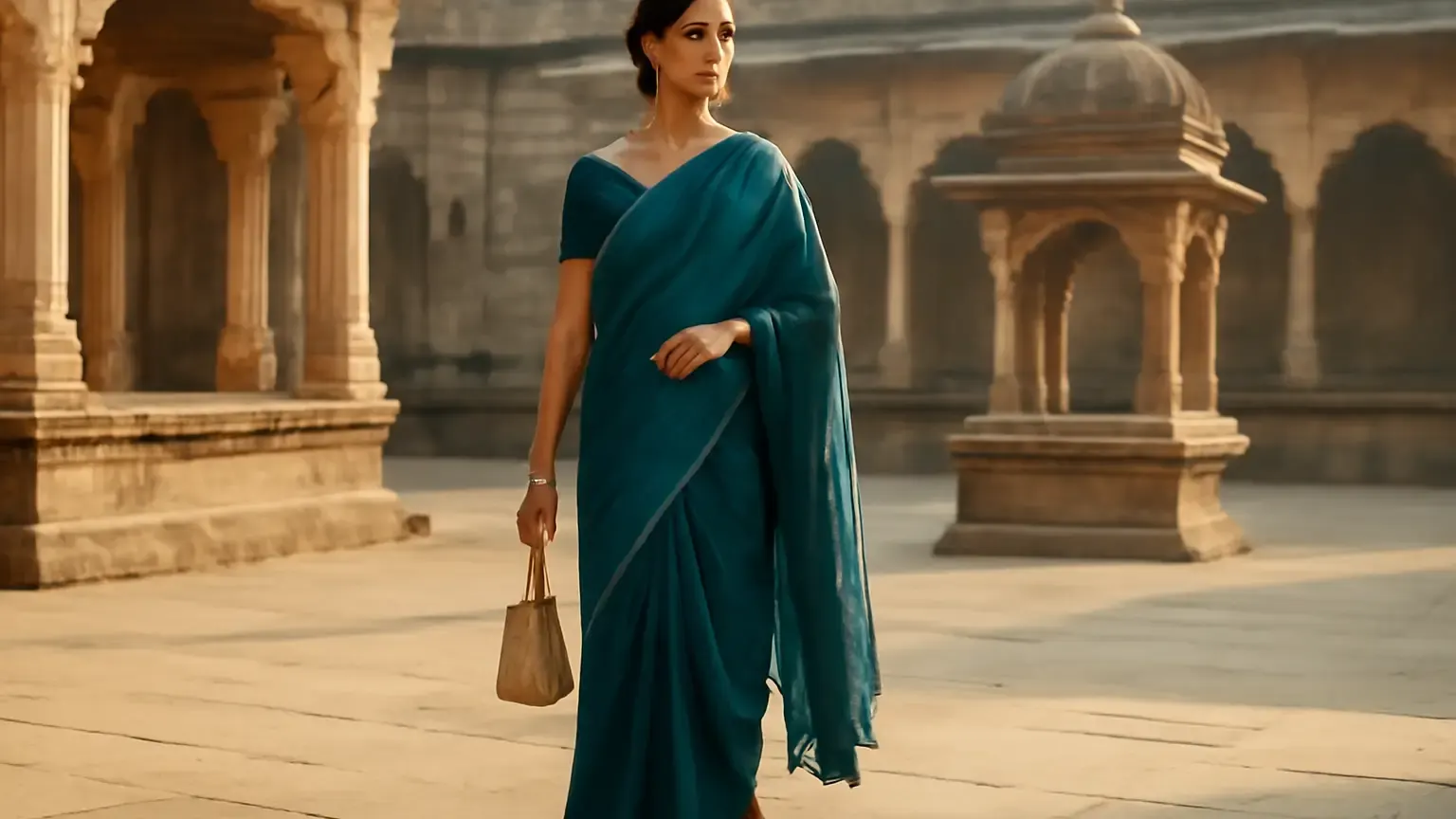
Festive fashion for temple visits should look celebratory without making a long queue, floor seating or warm weather uncomfortable. For women planning temple visits across India, the most reliable choice is a breathable saree or cotton kurta set, a secure modest dupatta, non-slip footwear and a small hands-free accessory. This guide helps you balance local etiquette, fabric comfort, easy movement and polished festive detail before choosing an outfit.
Start with temple-appropriate dressing, not just festive colour
Temple clothing does not have to be plain or overly formal. The practical aim is a respectful, well-finished outfit that covers comfortably, stays in place and allows you to walk, sit, stand and remove footwear without fuss. Customs differ between temples, so check any specific rules about shoulders, hemlines, head coverings, colours, stitched garments or entry areas before getting dressed.
For most occasions, choose a silhouette with comfortable coverage rather than a very deep neckline, high slit or trailing hem. Jewel tones, soft pastels, traditional prints, zari borders and embroidered details can all create a festive mood without relying on heavy embellishment. If you expect a long queue, prioritise soft fabrics and secure construction over a dramatic but difficult-to-manage look.
Choose the right saree for weather, movement and duration
Sarees work especially well when you want graceful festive fashion for temple visits, but the fabric and drape determine whether the outfit remains comfortable. Breathable cotton sarees are a dependable choice for warm, humid regions and daytime visits. Handloom cotton, cotton-silk and lightweight linen blends offer visual texture while allowing more airflow than dense synthetic fabric.
Lightweight silk sarees can suit festivals, weddings held near temples or more formal evening visits. Look for a manageable weave and a border that does not feel excessively heavy. Pure silk may be beautiful but can become warm during a crowded visit; a lighter silk blend can be more practical when you want festive polish with easier movement.
Simple saree draping tips for a long temple visit
- Secure the pleats firmly at the waist and use a comfortable petticoat or saree shapewear that does not restrict breathing.
- Pin the pallu at the shoulder if you will climb steps, sit on the floor or carry offerings.
- Keep the pallu length practical so it does not drag on wet floors or catch on railings.
- Wear a supportive blouse with a neckline and sleeve length that suit the temple’s expectations.
- Do a short test walk, sit-down and stair check at home before leaving.
A pre-pleated saree can save time, but confirm that its fit allows comfortable walking and that the fastening will not loosen during the day. For very hot conditions, a cotton saree with a breathable blouse is often more comfortable than a heavily layered drape.
Why cotton kurta sets are a dependable alternative
Cotton kurta sets are among the easiest temple visit outfits for women India shoppers can adapt for different seasons. A straight kurta with matching trousers, a gently flared set or a long A-line silhouette offers coverage without the adjustment required by a saree. Choose a fabric that is opaque enough for movement and check whether the trousers have a comfortable waistband.
For summer, select cotton, cotton voile or a soft cotton blend. During cooler evenings, a denser cotton weave or a lightweight layer over the kurta adds warmth without making the outfit bulky. In monsoon weather, avoid very long hems that can absorb water from temple courtyards and select colours or prints that are less vulnerable to visible splashes.
Festive appeal can come from a printed yoke, small embroidery, a woven border, pearl-like buttons or a coordinated dupatta. This approach is more versatile than buying a heavily embellished set that can only be worn once. If you prefer an anarkali, choose a moderate flare that will not sweep the floor or interfere with steps.
Use modest dupattas as both style and practical coverage
A modest dupatta can complete the outfit while offering useful shoulder and neckline coverage. Cotton, modal, Chanderi-style weaves and light voile are easier to wear for extended periods than a stiff, heavily sequinned scarf. A narrow border or small motif gives a festive finish without adding much weight.
Arrange the dupatta so it stays secure rather than requiring repeated adjustment. You can place both ends over the shoulders, use one discreet pin at the shoulder or choose a longer style that crosses the front comfortably. Avoid very slippery fabrics if you expect to carry a phone, water bottle or offering plate. A dupatta with a little surface texture usually stays in place better.
For modest festive outfits India shoppers can wear across many settings, coordinate the dupatta with either the kurta colour or one small accent in the saree border. Matching every element can look overly formal; one considered contrast often feels fresher and more wearable.
Build the outfit around comfortable ethnic footwear
Footwear deserves as much attention as the clothing because temple visits may involve walking from parking areas, standing in queues, climbing steps or moving across smooth stone. The best comfortable ethnic footwear is easy to remove, supportive and secure enough for outdoor walking.
Choose cushioned flats, simple juttis or low-profile sandals with a firm sole. Non-slip sandals are particularly useful during monsoon season or at temples with wet washing areas. Avoid a brand-new pair on the day of the visit; wear it at home first to identify rubbing points. Very delicate embellishment can also catch on saree hems or become uncomfortable when you sit.
If the temple requires footwear to be left outside, wear a pair that is easy to identify without choosing something precious or difficult to replace. A soft slip-on style can be more convenient than laces, while a back strap offers better security if you will walk a considerable distance. Carrying thin socks is an optional comfort measure for clean indoor areas where they are permitted, but always follow the temple’s instructions.
Keep festive layering and accessories deliberately light
Festive layering should respond to the weather rather than simply add decoration. In air-conditioned halls or cooler northern evenings, a lightweight shawl or cropped cotton jacket can provide warmth. In humid climates, one breathable layer is usually enough. Avoid a heavy stole over an already embellished saree if you will be outdoors for several hours.
Choose compact temple accessories that do not interfere with prayer, queues or handwashing. Small hoops, studs, a slim bangle, a watch and one delicate chain can look polished without feeling noisy or cumbersome. If you wear larger earrings, check that they are lightweight and secure. Hair can be tied in a low bun, braid or controlled ponytail; a small floral accent can add festivity without needing extensive styling.
A small crossbody bag or compact potli with a secure closure is more useful than a large handbag. Keep only essentials such as a phone, a little cash, identification, tissues, hand sanitiser and any personal items you may need. Some temples have restrictions on bags, leather goods, photography or electronics, so confirm these details beforehand.
A practical preparation routine before leaving home
- Check the temple guidance: Look for clothing, footwear, photography and bag rules, especially when visiting a new city or a historic shrine.
- Check the forecast: Pick weather-friendly festive wear for heat, humidity, rain or a cool evening rather than dressing only for photographs.
- Test movement: Walk, climb a few steps, sit and raise your arms. A comfortable outfit should not need constant pulling or re-tying.
- Secure the details: Pin a pallu or dupatta where appropriate, fasten jewellery and check that the footwear sole has enough grip.
- Pack minimally: Use a small washable pouch for essentials and avoid carrying loose accessories that could be misplaced when removing footwear.
Steam or press the outfit the day before, and keep a safety pin, a couple of hair ties and a small stain-removing wipe in your bag. These are simple safeguards for easy-care festive fabrics, particularly when travelling by public transport or visiting crowded areas.
Common mistakes to avoid
- Choosing appearance over airflow: Dense polyester, multiple lining layers and thick synthetic embellishment can feel uncomfortable in a crowded temple.
- Wearing untested footwear: Blisters can make the rest of the visit difficult, even when the outfit looks perfect.
- Using a very loose drape: An unsecured pallu or dupatta may drag, catch or need constant adjustment.
- Carrying too much: Large bags are inconvenient in queues and may not be permitted in certain areas.
- Ignoring the floor and route: Long hems and delicate shoes are poor choices for wet courtyards, uneven paths or many stairs.
A concise takeaway for graceful temple dressing
The strongest temple look combines breathable fabric, respectful coverage, secure draping and practical footwear. Choose a cotton saree when you want traditional elegance, a cotton kurta set when you value easy movement, and a light dupatta or shawl according to local etiquette and weather. Finish with compact accessories and a small secure bag. Thoughtful festive fashion for temple visits should help you stay present, comfortable and prepared throughout the visit.
Products that may help with this routine
Choose only what fits your skin, hair or personal needs. Use the links below to view current options on Amazon India.
Frequently Asked Questions
What is the best saree for a temple visit in hot weather?
A breathable cotton saree, lightweight cotton-silk saree or linen-cotton blend is usually more comfortable in hot weather than dense synthetic or heavily layered fabric. Pair it with a breathable blouse and secure the pallu for easier movement.
What footwear should you wear with a saree to a temple?
Choose supportive flats, simple juttis or low-profile non-slip sandals that are easy to remove. Break them in before the visit and avoid a new pair, high heels or soles with poor grip.
How do you style a kurta set for a temple visit?
Wear an opaque cotton or cotton-blend kurta set with comfortable trousers, a modest dupatta and minimal festive jewellery. Add a small border, woven detail or subtle embroidery for occasion-appropriate polish.
What is a modest festive outfit for women in India?
A cotton saree with a well-fitting blouse, or a long cotton kurta set with a secure dupatta, is a versatile modest festive outfit. Adjust sleeve length, neckline, hemline and layering to the temple’s local customs.
What should you carry for a comfortable temple visit?
Carry only essentials in a small secure bag: phone, cash, identification, tissues, hand sanitiser and any personal necessities. A safety pin and hair tie can also help with last-minute outfit adjustments.
Are heavy accessories suitable for temple visits?
Lightweight earrings, a slim bangle, a watch or a delicate chain are generally easier for long visits than heavy statement jewellery. Always consider comfort, security and any site-specific etiquette.