Festive fashion for family dinners works best when it balances polish with movement: an embellished kurta for hosting, a printed saree for a more dressed-up outing, or a relaxed sharara for long meals. This guide is for women choosing Indian family dinner outfits who want to look celebratory without managing a heavy dupatta, stiff waistband or impractical shoes. Use the setting, sitting time and amount of hosting as your quickest styling decisions.
A family dinner may be festive without being as formal as a wedding or reception. The most successful outfit is therefore not necessarily the most embellished one. It is the look that feels special at the door, stays comfortable during the meal and remains practical when you are carrying serving bowls, greeting relatives or travelling home.
Start with the dinner setting
Before choosing colour or jewellery, decide how much movement the evening requires. Your answer will narrow down the best festive dinner looks for women.
- Hosting at home: Choose a streamlined kurta set, a short or pinned dupatta and footwear that is easy to remove. Avoid long hems that can catch underfoot and very delicate embellishment around the sleeves if you will be cooking or serving.
- Sitting through a long dinner: Prioritise a soft waistband, breathable fabrics for dinner and a top that does not pull across the shoulders when you sit. A sharara or relaxed straight-fit kurta is often easier than a heavily structured lehenga.
- Going out: You can add more shine through a printed saree, richer fabric or statement earrings for festive wear. A low block heel and a compact potli bag create a dressed-up finish without compromising balance.
For anyone searching for the best Indian family dinner outfits for hosting at home, the simplest rule is useful: keep the base easy to move in, then add one deliberate festive detail.
Three reliable outfit formulas
1. Embellished kurta set with a controlled dupatta
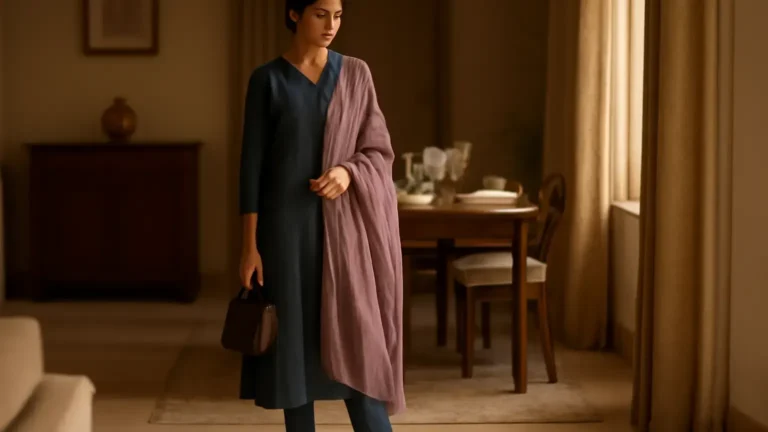
An embellished kurta set is the most adaptable option when you are unsure how formal the dinner will be. Look for delicate threadwork, small sequins, tonal beads or a decorative neckline rather than dense work across the entire garment. A straight kurta with tapered trousers or wide-leg pants gives you room to move while still looking composed.
For hosting-friendly outfits, style the dupatta over one shoulder and secure it discreetly near the shoulder seam, or choose a kurta with enough detail that you can skip the dupatta. Lightweight dupattas in chiffon, cotton voile or soft organza are easier to manage than heavily bordered fabrics. If the dinner is at a restaurant, a richer dupatta border or matching embellished flats can make the same set feel more occasion-ready.
Pair the look with understated jewellery: small jhumkas, a slim bangle stack or one delicate ring. This is especially effective when the kurta already has work at the neckline.
2. Printed saree with a simple blouse
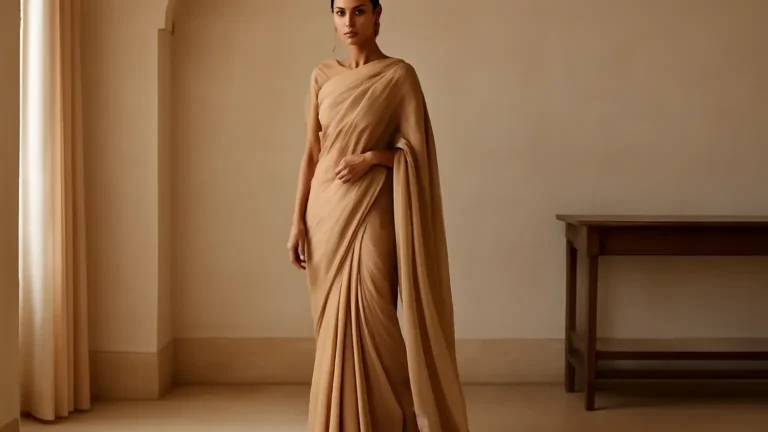
Printed sarees are a strong choice when you want traditional impact without relying on heavy embellishment. Floral prints, miniature motifs, hand-block-inspired patterns and soft geometric designs all work well for family dinners. Choose a fluid drape in a lightweight silk blend, cotton-silk, viscose or another fabric that does not feel rigid around the waist.
To understand how to style a saree for a family dinner, focus on the pleats and pallu before adding accessories. Pre-pleat the saree if you will be travelling, keep the pallu at a manageable length and use a secure but comfortable underskirt or petticoat. A plain blouse in a colour picked from the print allows the saree to remain the focal point.
For hosting, pin the pallu neatly and keep the blouse sleeves comfortable for reaching and lifting. For going out, add a slim metallic belt, a small potli bag or a pair of sculptural earrings. Keep the rest of the jewellery restrained so the printed fabric does not look crowded.
3. Sharara set with a shorter kurta
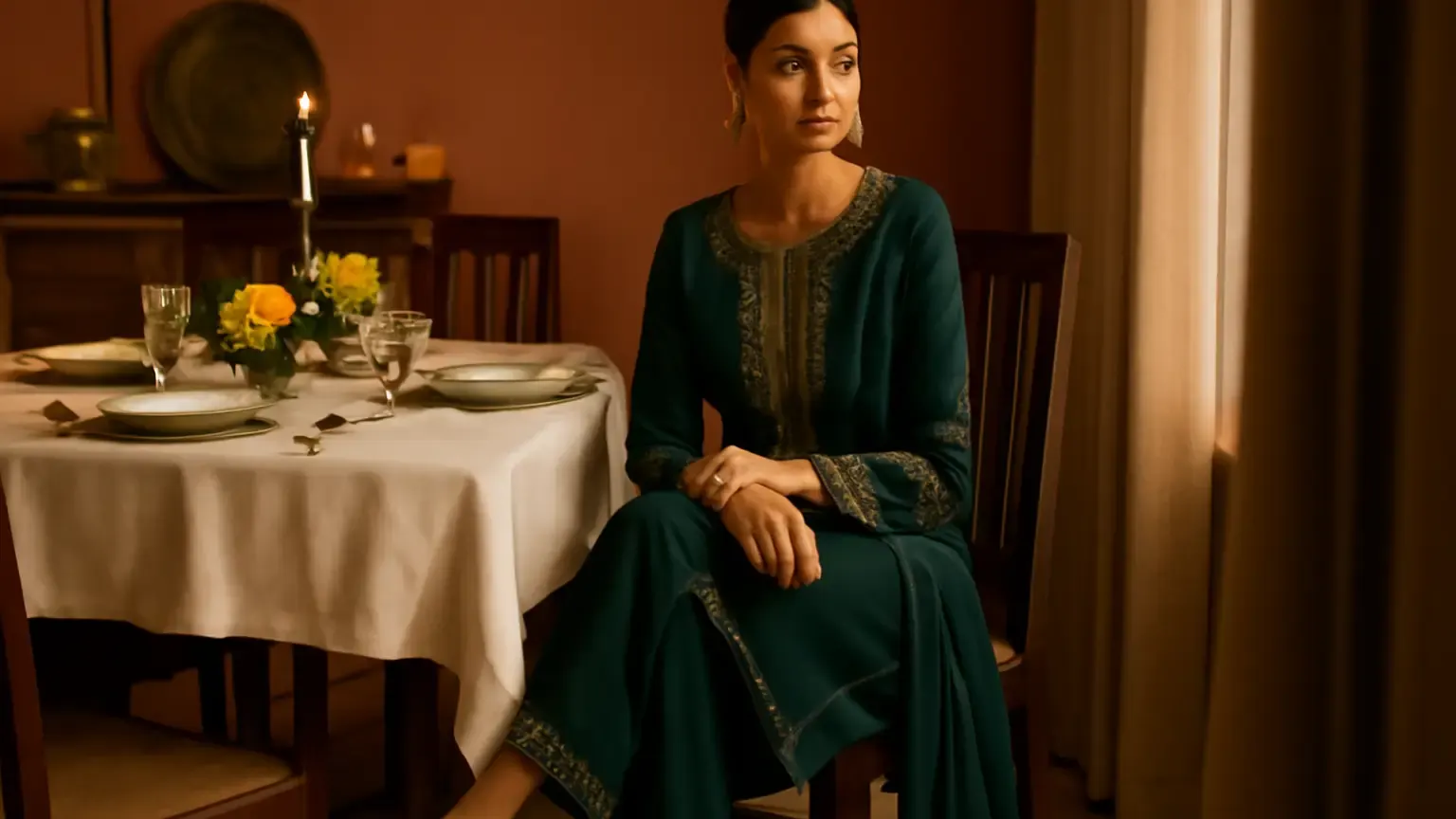
Sharara sets combine movement with a visibly festive silhouette. They are particularly useful when you want festive outfits that are easy to sit in, provided the waistband is soft and the flare does not drag on the floor. A shorter kurta balances the volume of the sharara; a longer, straighter top creates a more streamlined effect if you prefer extra coverage.
Choose a set in a matte satin, crepe, cotton-silk or light georgette rather than a very stiff brocade for a long meal. A narrow border, subtle mirror work or tonal embroidery is enough to make the outfit celebratory. If the set is ornate, wear understated jewellery and let the silhouette do the work. If it is relatively plain, add statement earrings for festive wear and a small embellished clutch.
Fabric, fit and comfort checks
Comfort does not mean choosing an ordinary outfit. It means checking the points that become noticeable after two hours. Breathable fabrics for dinner are helpful in warm or crowded homes, while silk blends and light brocades can add richness without the weight of a fully embellished garment.
- Check the waistband: Sit, bend slightly and take a few steps before leaving. The waistband should not dig in when you eat.
- Check sleeve movement: Raise both arms and reach forward. Tight armholes are particularly inconvenient when hosting.
- Check lining and seams: Scratchy sequins, rough zari or bulky seams can become irritating over a long evening.
- Check the hem: It should clear the floor with your chosen footwear. This matters more with shararas, palazzos and saree petticoats.
- Check opacity: Pale fabrics may need a full, breathable lining, especially under strong indoor lighting.
Easy-care ethnic wear is often the smarter choice for a home gathering. A washable or gently maintainable kurta can handle accidental splashes more easily than a delicate, heavily worked ensemble. Always follow the garment’s care label, particularly for zari, sequins and silk-based fabrics.
Footwear that supports the occasion
When deciding what footwear goes with festive Indian outfits, match the shoe to the amount of standing and walking rather than only to the colour of the outfit.
- For home hosting: Try embellished juttis, padded flats or low slip-on sandals. They are practical when you move between rooms or remove your shoes at the entrance.
- For a restaurant dinner: Choose a low block heel, dressy mule or cushioned sandal. These add height while remaining steadier than a narrow stiletto.
- For a saree: Put on the shoes before finalising the pleat length. The hem should skim the floor, not pool beneath it.
- For a sharara: A small heel or pointed flat can prevent the flare from sweeping the ground, but test that the hem does not catch while walking.
Wear new footwear around the house before the dinner. A beautiful shoe that pinches can affect your posture, your movement and your enjoyment of the evening.
Jewellery and layers: keep the finish intentional
Understated jewellery is useful when your clothing already includes print, embroidery or shine. Select one focal point: earrings with a plain kurta, a pendant with a simple saree, or bangles with a sleeveless or short-sleeved sharara kurta. Mixing many competing finishes can make a dinner outfit look busier than intended.
Festive layering ideas should also respond to the venue. Carry a cropped embroidered jacket, a soft silk stole or a lightweight shrug if the restaurant is air-conditioned. A jacket over a kurta set gives structure without requiring a heavy dupatta. With a saree, a neat shawl or stole is usually more comfortable than layering a long cardigan over the pallu. For warm weather, choose breathable layers and avoid trapping heat under dense synthetic fabrics.
How to adapt one outfit for different plans
A single base outfit can serve several invitations if you change the accessories and practical details.
- Begin with the base: Select the kurta, saree or sharara according to comfort and formality.
- Reduce the hosting risk: Pin loose drapes, shorten a trailing pallu and choose a bag that leaves both hands available.
- Add evening polish: Change flats to low heels, add a more decorative earring or introduce a metallic clutch for going out.
- Prepare for temperature changes: Carry a lightweight layer instead of committing to a heavy garment that may feel uncomfortable indoors.
- Finish with a restrained beauty look: Fresh skin, defined eyes or a festive lip can complement the clothes without competing with them.
This approach also helps when you are shopping. Rather than buying a complete look for one event, choose pieces that can be restyled with different dupattas, earrings, footwear and bags.
Common styling mistakes to avoid
The most frequent problem with family dinner dressing is over-prioritising visual drama and underestimating the practical setting.
- Do not pair a very ornate kurta with a heavily embellished dupatta, large earrings and a bright clutch unless the dinner is genuinely formal.
- Do not leave a saree or sharara hem untested with the final footwear.
- Do not choose a tight sleeve or rigid waistband because the garment looks sharper while standing.
- Do not carry a large, awkward handbag when you will be greeting guests or serving food.
- Do not ignore the weather. Heavy velvet, thick lining and dense synthetic layers can feel uncomfortable in a warm home.
A simple takeaway for festive dressing
The best festive fashion for family dinners is a balance of one celebratory element and several practical choices. Choose an embellished kurta when you need flexibility, a printed saree when you want graceful impact, or a sharara when sitting and movement matter most. Finish with comfortable festive footwear, a manageable layer and understated jewellery. The result should look intentional before dinner and still feel easy by dessert.
Products that may help with this routine
Choose only what fits your skin, hair or personal needs. Use the links below to view current options on Amazon India.
Frequently Asked Questions
What should I wear to a festive family dinner at home?
Choose an embellished kurta set, a relaxed sharara or a lightweight printed saree with the pallu securely pinned. Add comfortable flats or juttis, minimal jewellery and a short, manageable dupatta if needed.
What are the best Indian family dinner outfits for hosting at home?
A straight-fit embellished kurta with trousers is usually the easiest for hosting because it allows movement and avoids a trailing hem. A soft sharara set also works when the waistband and flare are comfortable.
What are comfortable festive dinner outfits for women?
Look for breathable fabrics, soft waistbands, non-scratchy linings and sleeves that allow movement. Relaxed kurtas, lightweight sarees and shararas with moderate volume are practical for long meals.
How do I style a saree for a family dinner?
Use a fluid, lightweight saree, pre-pleat it if travelling and secure the pallu at a comfortable length. Pair a printed saree with a plain blouse, understated jewellery and low block heels or dressy flats.
What footwear goes with festive Indian outfits?
Embellished juttis and padded flats suit home hosting, while low block heels, cushioned sandals and dressy mules work well for restaurants. Match the footwear to walking and standing time, not only to colour.
Which festive outfits are easy to sit in during a long dinner?
A relaxed straight kurta, a soft sharara set or a fluid saree is generally easier to sit in than a rigid lehenga or tight garment. Test the waistband, sleeves and hem before leaving.