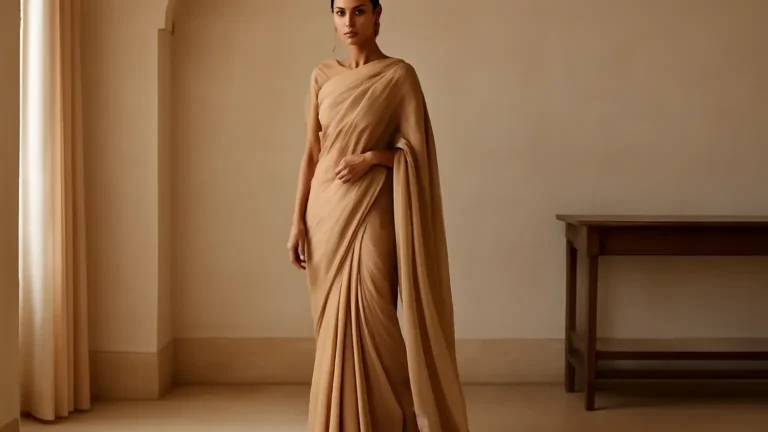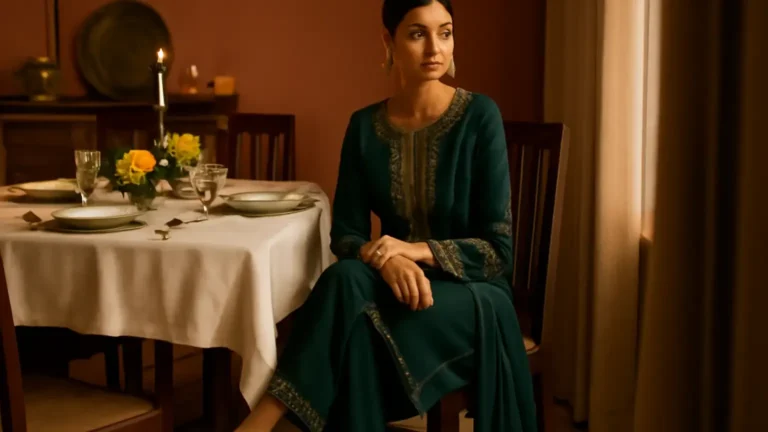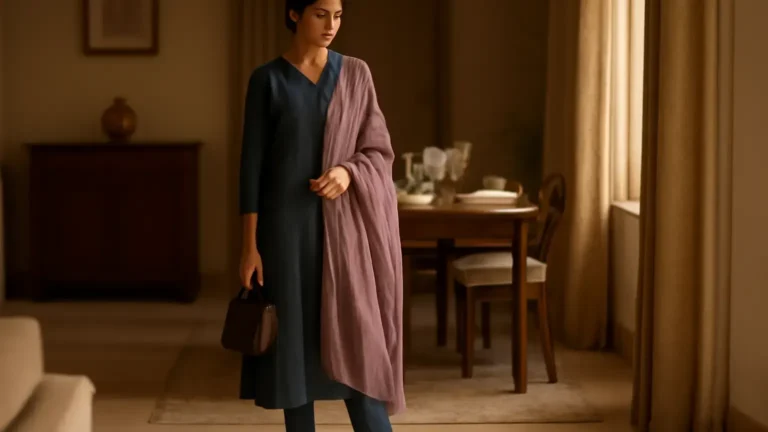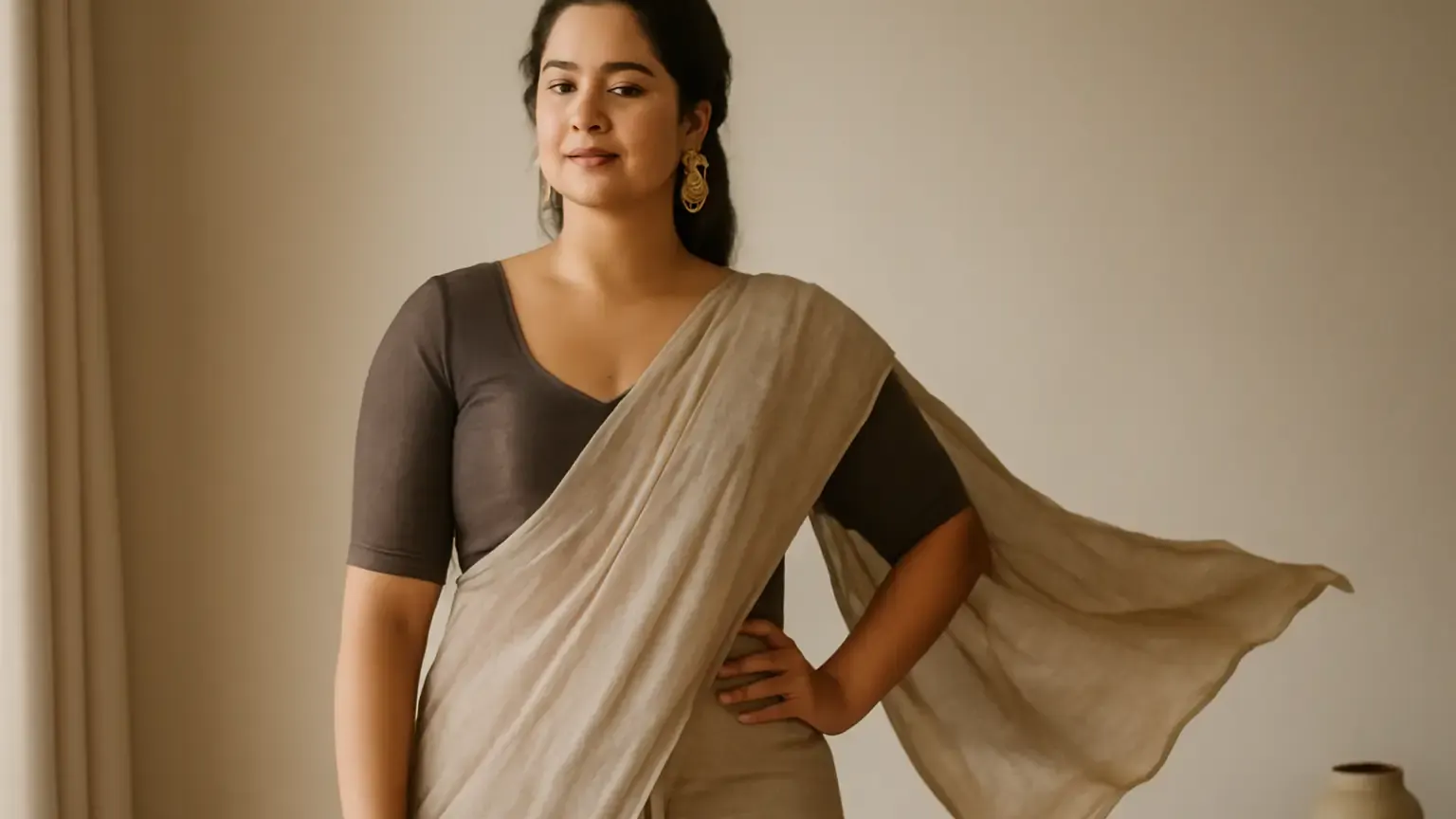
Saree styling for pear shaped body is about directing attention and creating proportion—not disguising your natural shape. If your hips are fuller than your shoulders, begin with a well-fitted, slightly structured blouse, keep pleats neat and vertical, and choose a pallu that adds movement near the upper body. These seven ideas help you decide what to emphasise for workwear, weddings or everyday dressing while keeping comfort and personal style at the centre.
A pear-shaped body typically has a narrower shoulder or bust line compared with the hips and thighs. It is a natural proportion, not a problem that needs correcting. Styling becomes useful when you want to distribute visual interest through colour, texture, volume and line.
The most adaptable approach is to balance the outfit rather than make one area look smaller. A little structure at the shoulder, clean vertical lines through the front and an intentional pallu can make the whole look feel composed. You can use one suggestion or combine several, depending on the saree, occasion and how much movement you want.
1. Choose a blouse that gives the upper body presence
The blouse is the strongest tool in saree styling for pear shaped body because it frames the shoulders and upper torso. Look for a fit that follows your body without pulling at the bust, armhole or back. Light structure—such as a firm fabric, shaped seams, a modest sleeve, or subtle shoulder detail—can create definition without adding bulk.
A saree blouse for pear shape does not have to be heavily embellished. A woven texture, contrast piping, embroidery concentrated near the neckline, or slightly fuller sleeves can provide enough visual weight. If you prefer a simple blouse, use an interesting colour or fabric rather than adding decoration everywhere.
How to select a blouse neckline
- Boat, square and softly rounded necklines can make the shoulder-to-neck area feel more open.
- A V-neck creates length and works well when you prefer a sharper, less embellished look.
- Medium-width straps or sleeves may feel more balanced than very thin straps, though comfort and personal preference matter most.
- Check the blouse from the side and back, not only in a front mirror. The shoulder seam should sit correctly and the armhole should allow movement.
There is no single best blouse design for every pear-shaped wearer. A fitted sleeveless blouse, a short-sleeved blouse and a high-neck blouse can all work when the cut, fabric and proportions suit you.
2. Keep the front pleats neat, vertical and comfortable
For many people, the most reliable saree draping tips begin at the centre front. In a classic Nivi-style drape, make even pleats and align them so they fall straight from the waist. Vertical lines guide the eye up and down and help the saree look polished without requiring a tight wrap.
Simple saree pleats placement routine
- Wear the petticoat or underskirt at the waist where you intend to secure the saree, not low on the hips by default.
- Make five to seven pleats of similar width, depending on the saree and your comfort.
- Hold the pleats together, check that the lower edges are even, and tuck them slightly to one side of the navel or at centre front.
- Pin only after walking, sitting and taking a few steps. This prevents the pleats from pulling when you move.
The goal is not to flatten the hip area. Over-tightening can create horizontal folds and make walking difficult. A well-fitted underskirt with enough ease usually gives a cleaner result than excessive pins or compression.
3. Use the pallu to add movement near the shoulders
Pallu styling changes where the eye notices colour, pattern and movement. For a more balanced look, try an open pallu that falls over one shoulder, a neatly pleated pallu with a visible border, or a soft front drape that adds interest above the waist. Secure it at the shoulder with a concealed pin so it stays in place without looking stiff.
When the saree has a heavy lower border, a lighter upper pallu can prevent the outfit from feeling visually weighted at the bottom. Conversely, if the saree is plain, a printed, textured or embellished pallu can bring focus upwards. A medium-width pallu often offers an easy middle ground: it has presence but does not overwhelm a petite frame.
Experiment with the side on which you wear the pallu. Choose the side that gives you better arm movement, suits your jewellery and feels natural in photographs. Styling rules should support your movement, not make you spend an event adjusting fabric.
4. Select fabric according to the effect you want
A practical saree fabric guide is more useful than labelling one material as universally flattering. Fabrics differ in weight, fall, shine and ease of draping, so choose according to the occasion and the silhouette you want.
| Fabric behaviour | What it can do | Useful styling choice |
|---|---|---|
| Fluid fabrics such as georgette or crepe | Fall close to the body and create movement | Use clean pleats and a structured blouse for contrast |
| Soft silk or satin blends | Add gentle sheen and an occasion-ready finish | Keep embellishment focused on the blouse or pallu |
| Cotton, linen or cotton-silk | Hold shape and give a more architectural drape | Use a crisp tuck and a well-placed border for definition |
| Organza or other crisp fabrics | Create volume and visible folds | Balance a fuller pallu with a simpler lower half |
If you are new to sarees, practise in a fabric that is neither too slippery nor too stiff. Comfort, breathability and the ability to sit easily are important decision factors, especially for long ceremonies.
5. Place colour, prints and borders with intention
Colour placement can create a balanced saree look without relying on body-concealing layers. A brighter blouse with a calmer saree, a contrasting pallu, or a print that becomes more visible around the upper drape can distribute attention across the outfit.
Vertical or scattered motifs tend to create a sense of length. Broad horizontal borders are not off-limits, but consider their position: a border at the pallu or blouse sleeve may bring the design closer to the upper body, while a very wide lower border creates a stronger base. Choose based on the visual story you want, rather than treating a border as a rule to avoid.
For a quieter look, keep the blouse and saree within a similar colour family and add contrast through earrings or the pallu. For festive saree styling, let one element lead—such as a jewel-toned blouse, metallic border or patterned pallu—and keep the remaining details coordinated.
6. Use accessories to build a clear focal point
Accessories are an easy way to shift attention toward the face and shoulders. Statement earrings, a collar-length necklace, a textured blouse neckline or a hair accessory can all work. You do not need to wear every piece at once; one strong focal point usually looks more intentional than several competing ones.
If you enjoy a waist highlight, try a slim saree belt over a secure drape. Saree belt styling can define the waist and keep the pallu controlled, but the belt should sit comfortably and not dig into the body when you sit. A traditional kamarbandh, a fabric belt or no belt at all can each be appropriate. Test the full outfit before the event, including how the belt interacts with the blouse and pleats.
Keep jewellery scale proportionate to the saree. A heavily woven silk may support larger earrings, while a light everyday saree may look better with delicate metalwork. The best accessory is one you can wear comfortably for several hours.
7. Match the drape to the occasion and your movement
The most flattering drape is often the one that remains neat while you walk, sit and use your hands. For work or daytime wear, a regular Nivi drape with pinned pleats and a compact pallu is practical. For a wedding, an open pallu, richer blouse texture or a more visible border can add drama. For a casual outing, a lightweight saree with fewer accessories may feel more natural.
Before leaving home, do a five-minute movement check:
- Walk up and down a room and confirm the hem is not catching under your feet.
- Sit on a chair without the waist becoming tight or the pleats spreading unevenly.
- Raise both arms to check the blouse armhole and pallu security.
- Look at the back and side view to check that the saree fall and pallu are sitting evenly.
These small checks often improve the final appearance more than adding another accessory. They also help you identify whether the issue is draping, underskirt fit or blouse construction.
Common mistakes to avoid
Trying to create balance does not mean adding volume everywhere. Avoid choosing a blouse that is too loose in an attempt to add width; it can make the saree look untidy and limit support. Similarly, overly tight pleats, excessive safety pins and a pallu that is too heavy for the blouse can make the outfit uncomfortable.
Another common mistake is following a trend without checking the saree’s fabric. A sharp pre-pleated style may behave differently in linen than in a fluid blend. Also avoid judging the look only from a seated mirror view. Take a full-length photograph in natural light and assess the blouse fit, pleat line, pallu position and overall comfort.
Quick takeaway
Good saree styling for pear shaped body uses proportion as a creative choice: give the upper body some structure or interest, keep the front lines clean, position the pallu deliberately and choose fabrics that support the drape. You can follow all seven ideas, or select only the ones that match your wardrobe and personality. Your shape remains part of the look; the styling simply helps the saree feel balanced, secure and unmistakably yours.
Products that may help with this routine
Choose only what fits your skin, hair or personal needs. Use the links below to view current options on Amazon India.
Frequently Asked Questions
How to wear a saree for a pear shaped body?
Start with a well-fitted blouse that gives the shoulders and upper body some structure. Make neat vertical front pleats, choose a pallu with visible movement or detail, and use colour, texture or earrings to distribute attention. Keep the drape comfortable rather than tight.
Which saree drape suits a pear shaped body?
A classic Nivi drape is a versatile choice because its straight pleats create vertical lines and its pallu can be adjusted for upper-body interest. An open or neatly pleated pallu may work well, depending on the saree fabric and the amount of movement you prefer.
What is the best blouse design for a pear shaped body?
There is no single best design, but a correctly fitted blouse with a boat, square, soft round or V neckline can work well. Structured fabric, modest sleeves, shoulder detail or a contrasting colour can add interest without requiring heavy embellishment.
How should saree pleats be placed for a pear shape?
Make evenly sized pleats and tuck them so they fall vertically at the centre front or slightly to one side. Avoid pulling them excessively tight. Check the pleats while walking and sitting so the line stays neat and comfortable.
How can I style a pallu for a pear shaped body?
Try an open pallu, a neatly pleated pallu with a visible border, or a soft front drape that brings colour and movement near the shoulder. Secure it discreetly and choose the side that gives you comfortable arm movement.
Can pear shaped women wear heavy sarees?
Yes. A heavy saree can look elegant when its weight is balanced with a supportive blouse, manageable pleats and a secure pallu. If the lower border is bold, consider a simpler blouse or place additional detail near the neckline and shoulders.