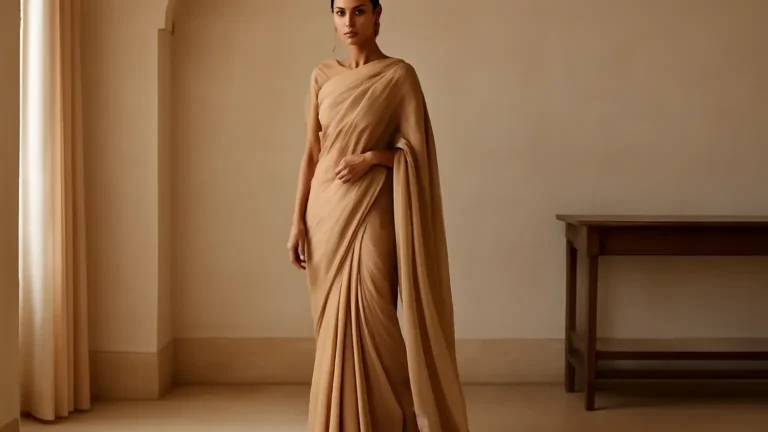
Saree styling for Banarasi sarees works best when the outfit has one clear focal point: let the weave lead, then keep the blouse, pleats, pallu and jewellery controlled. This guide is for anyone wearing a Banarasi silk saree to a wedding, festive gathering or formal celebration who wants a polished silhouette without stiffness or extra layers. The key decision is simple: choose structure where you need support and restraint where the fabric already has visual weight.
Banarasi silk is beautiful because it already carries texture, sheen and pattern. The styling challenge is not making it look richer; it is giving that richness enough space to read clearly. A crowded blouse, oversized jewellery and a loosely arranged pallu can make even an expensive saree appear heavy.
The most flattering approach combines a firm but comfortable base, moderate pleats, a deliberate pallu and accessories scaled to the zari. Before dressing, identify the saree’s strongest feature. It may be the border, an all-over jaal pattern, a contrast pallu or the glow of antique gold zari. Build the rest of the look around that feature rather than competing with it.
Start with the right base and blouse structure
A smooth foundation makes a bigger difference than adding more styling products. Wear a well-fitted petticoat or saree shapewear that follows the waist and hips without digging in. Saree shapewear can help the lower drape fall smoothly, but it should not be so tight that it restricts walking or creates visible lines. A cotton or satin petticoat can work well when its waistband sits securely and its length is close to the saree’s finished fall.
For the blouse, a structured blouse is usually more effective than a heavily embellished one. It should support the bust, sit flat at the shoulders and finish cleanly at the waist. Princess seams, a square neckline, a modest boat neck or a softly curved sweetheart neckline can all work, depending on your proportions and comfort. Avoid too many raised elements such as padded cups, thick tassels, heavy embroidery and a high collar together.
Choosing a Banarasi saree blouse design
The best Banarasi saree blouse design responds to the saree rather than repeating every detail. With a broad zari border, try a plain silk blouse in a border colour. With a simpler saree, a small motif, woven texture or restrained embroidery can add interest. A raw silk blouse provides shape, while a matching Banarasi blouse creates a continuous formal look. For a lighter wedding guest saree styling approach, a matte blouse can reduce the overall shine.
Short sleeves, elbow-length sleeves and clean sleeveless cuts can all be elegant. Elbow-length sleeves often give a traditional saree a composed finish without adding visual width. If the saree has an ornate pallu, keep the blouse back and sleeve details quieter. If the pallu is plain, a considered blouse neckline can become the focal point.
Control the lower drape with measured pleats
Saree pleat setting determines whether Banarasi silk looks graceful or bulky. Instead of making many narrow pleats, create fewer, medium-width pleats that line up from the waist to the floor. Very narrow pleats can make a stiff silk saree stand away from the body; very wide pleats may lose definition and become difficult to secure.
- Make sure the saree is worn at a consistent height around the waist.
- Bring the fabric around once and check the hem before forming the front pleats.
- Use five to seven pleats as a starting point, adjusting for the saree width and your body frame.
- Align the lower edges on a flat surface or while standing straight.
- Press the pleats with your hands rather than creating sharp, bulky folds with excessive starch.
- Secure the pleat bundle just below the waistband, then tuck it firmly without pulling the fabric tight.
For especially weighty silk, slightly narrower pleats at the top and a controlled fan near the hem can help the fabric fall naturally. Do not force every fold into a razor-sharp line if the zari catches or the weave resists. A neat, soft pleat is more comfortable and often looks more luxurious than a stiff stack.
Use pallu draping to create vertical balance
Pallu draping should direct the eye vertically instead of adding a broad block across the torso. A neat shoulder fall is generally the easiest choice for daytime events and busy celebrations. Pleat the pallu in medium sections, align the border and place it over the shoulder so the front edge falls around the hip or slightly below it.
For an elegant formal finish, allow the pallu to fall open after securing the shoulder pleats. This displays the weave while keeping the shoulder controlled. If the pallu is very ornate, keep it narrower across the chest and avoid wrapping it twice around the upper body. A single clean line usually looks more polished.
Those seeking Banarasi saree draping ideas can also try a front-pallu arrangement, but it needs careful proportion. Keep the front pleats slim, place the pallu securely over one shoulder and make sure the border does not sit directly at the widest point of the torso. This drape suits a reception or evening event when the pallu design deserves attention, but it may require more movement checks.
Scale jewellery to the weave
Jewellery should echo one quality of the saree, such as its gold tone, traditional character or formal shine. It does not need to match every motif. If the Banarasi has a broad zari border, choose either statement jewellery at the neck or prominent earrings, not both at maximum size.
For a classic look, medium jhumkas with slim bangles and a small ring can be enough. A necklace works well when the blouse neckline leaves clear space. With a high neck or detailed collar, skip the necklace and let earrings frame the face. Lightweight saree accessories such as a delicate chain, small studs, a compact potli bag or a single bangle are useful when the saree itself is elaborate.
Statement jewellery is most effective when the rest of the outfit becomes quieter. A large choker, long earrings and a layered waist chain can create visual congestion, particularly with a bridal Banarasi saree look. For bridal dressing, choose one main jewellery family—temple, kundan, pearls or antique gold—and repeat it thoughtfully instead of stacking unrelated pieces.
Choose footwear for height, grip and comfort
Banarasi saree footwear should provide enough height to keep the hem just above the floor, but comfort matters more than dramatic elevation. A low block heel, kitten heel or stable wedge is easier to walk in than a narrow stiletto, especially when the saree is heavy. Wear the footwear before finalising the pleat length so the hem does not drag or expose the ankles too much.
Match the footwear’s finish to the outfit without making it another focal point. Metallic sandals, embellished juttis or simple block heels can work, depending on the event. Check the sole for grip before a wedding or outdoor function. If you will stand for long periods, carry comfortable flats for travel or the later part of the event, but make sure the height difference will not cause the hem to touch the ground.
Practical saree pinning techniques for a secure finish
Good saree pinning techniques should stabilise the fabric without leaving a visible cluster of pins. Use small safety pins with smooth closures and test them on an inner fold first. Place one pin horizontally at the waistband to secure the pleat bundle. For the pallu, pin through the inner layers near the shoulder seam rather than directly through the most visible zari line.
Two or three well-placed pins are often enough. Add a discreet pin at the side waist if the saree shifts while walking, and use fashion tape only on clean, dry skin or compatible blouse fabric. Do not pin so tightly that the pallu pulls at the neckline. After dressing, sit, climb a few steps, raise your arms and walk normally. Any pulling, tripping or gaping should be corrected before leaving.
Common mistakes that add unnecessary bulk
- Repeating the border everywhere: A heavily bordered blouse, border-heavy jewellery and a broad waist belt can overwhelm the saree.
- Using too much fabric at the shoulder: A double-wrapped pallu often hides the blouse and broadens the upper body.
- Over-starching the silk: Excess stiffness prevents the saree from following the body naturally.
- Ignoring the petticoat: A loose or gathered base makes the pleats appear uneven and adds volume under the saree.
- Choosing accessories without considering scale: Large earrings, a choker and layered bangles may compete with a dense woven pattern.
- Skipping a movement test: A drape that looks good while standing still may loosen during sitting, dancing or travelling.
How to style a Banarasi saree for different occasions
For a daytime puja or family gathering, choose a controlled shoulder pallu, a plain or lightly textured blouse, modest earrings and flat embellished footwear. For a wedding guest look, a contrast blouse, medium-sized earrings and a block heel can provide enough occasion detail without making the saree feel overloaded.
For a reception, an open pallu, a clean structured blouse and one strong jewellery piece create a more polished finish. Brides can add a veil, layered necklaces or a waist ornament, but each addition should be checked against the pallu and blouse neckline. If several bridal elements are non-negotiable, simplify the blouse surface and keep the pleats particularly neat.
A simple final checklist
Before stepping out, check five points: the blouse lies flat, the pleat bundle is centred, the pallu border falls evenly, the hem clears the floor and the jewellery leaves enough breathing room around the face and neckline. Sit down once and walk for a minute. If the saree remains secure without constant adjustment, the styling is ready.
The most successful saree styling for Banarasi sarees is not about adding more tradition or shine. It is about giving the weave a clean frame: supportive structure at the base, measured pleats, a purposeful pallu, proportionate jewellery and dependable footwear. That balance lets the silk remain the star while keeping you comfortable through the event.
Products that may help with this routine
Choose only what fits your skin, hair or personal needs. Use the links below to view current options on Amazon India.
Frequently Asked Questions
How do you style a Banarasi saree without looking bulky?
Use a well-fitted petticoat, a structured but minimally embellished blouse, five to seven medium-width pleats and a single controlled pallu. Balance a rich weave with either statement earrings or a necklace, rather than both at maximum size.
What are the best Banarasi saree draping ideas for a wedding guest?
A neatly pleated shoulder pallu is versatile and secure. For an evening wedding, an open pallu with a narrow shoulder fold can display the zari, while a plain blouse and moderate jewellery prevent the look from becoming crowded.
How can I reduce bulk in a Banarasi saree?
Avoid excessive starch, double-wrapping the pallu and very wide front pleats. Choose a smooth base, keep the blouse surface clean, use only essential pins and let the pallu fall in one controlled layer.
Which blouse works with a heavy Banarasi saree?
A fitted structured blouse in raw silk, matte silk or a quiet matching fabric works well. Choose a simple neckline and restrained sleeve detail when the saree has a broad zari border or ornate pallu.
What is the best footwear for a Banarasi saree?
A stable block heel, kitten heel or low wedge is usually practical. Select a height that keeps the hem off the floor, and prioritise grip and walking comfort for long ceremonies.