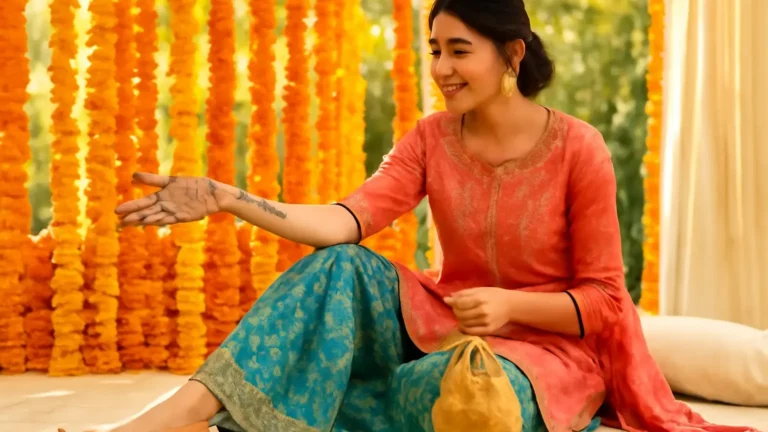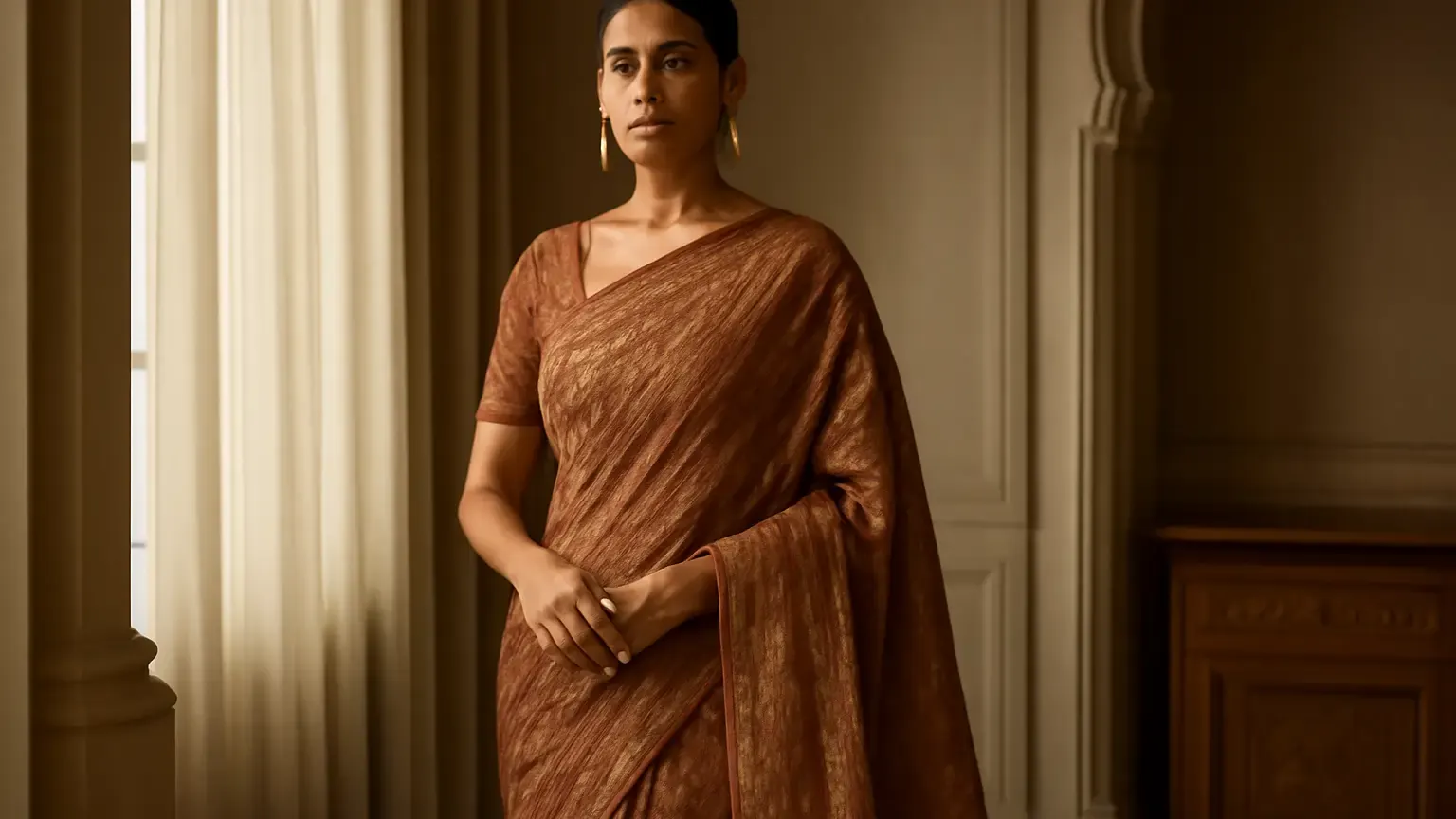
Saree Styling for Heavy Pallus is about controlling visual weight, not hiding the saree. This guide is for anyone wearing zari, brocade, sequins or layered embroidery and wanting a cleaner silhouette. Start with medium-width front pleats, place the pallu where its border frames rather than cuts across the body, choose a proportionate blouse, secure the shoulder fold and keep jewellery selective. These decisions let the statement drape lead without overwhelming your height, frame or occasion.
A heavy pallu can be the most beautiful part of a saree—and the easiest part to get wrong. Dense zari, woven motifs, velvet borders, mirror work or layered tassels add visual and physical weight. If the front pleats are too narrow, the shoulder fabric is allowed to spread, or the blouse competes with the pallu, the entire outfit can look crowded.
The aim of heavy pallu saree styling is not to make an embellished saree look plain. It is to create a clear order: the face and blouse frame the look, the pleats organise the lower half, and the pallu becomes the statement layer. The right choices depend on the saree fabric, your height, your shoulder width, the blouse design and whether you are dressing for a daytime event or a formal evening.
Begin with the saree silhouette
Before choosing jewellery or experimenting with draping, assess where the saree carries its volume. A narrow woven border behaves differently from a broad zari pallu, while a soft georgette with sequins sits differently from a firm Kanjeevaram silk saree. Look at three things: the pallu’s stiffness, the border width and how much embroidery continues into the body of the saree.
- Firm silk and brocade: Use deliberate folds and secure them well. These fabrics hold shape but can create bulk at the waist and shoulder.
- Soft chiffon, georgette or crepe: They allow a flatter shoulder drape, but embellishment can make the pallu slide or twist.
- Long, broad pallus: Usually need controlled pleating or a neat open fall so the border does not dominate the torso.
- Shorter embellished pallus: Often look better with a compact shoulder fold rather than excessive spreading.
This initial check helps you decide whether to pleat the pallu, wear it open, or reduce its spread with discreet pins. It also prevents a common mistake: copying a drape seen on a lightweight saree when your fabric needs more structure.
Set the front pleats before adjusting the pallu
Broad saree pleats are usually more flattering with a visually strong pallu because they create a stable, uncluttered base. Very thin pleats can make the lower half appear busy, particularly when the saree has a large border or contrast motifs. However, overly broad pleats can add width around the waist and may make a stiff silk saree difficult to tuck securely.
As a practical starting point, make five to seven even pleats, each roughly the width of three to four fingers, then adjust according to the saree fabric and your frame. The pleats should fall straight from the waist to the floor without fanning out. Check them from the front and side before fixing them.
- Wear a well-fitted petticoat or underskirt that does not loosen at the waist.
- Keep the pleat stack centred or slightly toward your preferred side, depending on how the pallu is worn.
- Align the border at the hem so it does not twist as you walk.
- Use one discreet pin inside the pleat stack if the fabric is slippery, then tuck it firmly at the waist.
The key decision is comfort: if broad pleats prevent you from walking naturally, reduce their width slightly rather than forcing a rigid silhouette. Good saree silhouette balance should still allow easy movement.
Choose pallu placement for your frame
Pallu placement changes the apparent width and length of the upper body. A pallu worn close to the neck can make the look feel compact and formal, while a pallu spread widely over the arm creates drama but may visually broaden the shoulders. Neither is universally better; the choice should respond to the saree and your proportions.
For a narrower shoulder line
Let the pallu fall slightly away from the neck and create a clean vertical line down the side. A moderate spread over the forearm can add balance without making the shoulders look weighed down. Avoid piling every fold directly across the collarbone.
For a broader shoulder line
Keep the shoulder fold compact and allow more fabric to fall vertically. A neat pleated pallu can soften the upper body, especially when the blouse has sleeves or a high neckline. Do not use a very wide open fan if the pallu is already stiff and heavily bordered.
For petite frames
Control the length and depth of the pallu. A fold that ends around the hip or upper thigh is often easier to manage than a very long, loose fall. Keep the border visible, but avoid multiple horizontal layers across the torso.
A useful test is to stand in natural light and take a full-length photograph. If your eye goes immediately to the pallu border and cannot travel to the face, reduce the spread, sharpen the folds or simplify another element.
Match the blouse to the pallu’s visual weight
Blouse proportion is one of the most important decisions in embellished saree styling. A heavy pallu does not automatically require a plain blouse, but the blouse should have a clear relationship with the saree rather than introducing a second competing focal point.
- Heavily woven silk pallu: Try a clean blouse in a matching, tonal or thoughtfully contrasting shade. Minimal embroidery and a well-defined neckline keep the outfit composed.
- Sequinned or crystal-work pallu: A matte blouse can provide relief. If you choose shine, repeat only one element such as the border colour or a small motif.
- Broad contrast border: Use the blouse to echo one colour from the border instead of adding another contrast.
- Soft, fluid saree: A structured blouse can add shape, while a very stiff blouse paired with a rigid pallu may feel overly formal.
Lightweight blouse fabrics such as satin, silk blends or refined crepe can reduce visual density when the saree is already ornate. The blouse should still be lined and fitted securely; lightweight does not mean flimsy. Sleeve length also matters. Elbow-length or three-quarter sleeves can provide balance when the pallu is broad, while very small cap sleeves may make a large shoulder drape seem more dominant.
Use pinning as a styling tool, not an afterthought
Good saree pinning techniques preserve the drape while preventing the pallu from swallowing the shoulder. First, arrange the pallu in the final width you want to wear. Then place pins from the inside so they support the fabric without creating visible bumps.
For a pleated pallu, pin the folds near the shoulder and add a second pin lower down if the fabric is slippery. For an open pallu, secure the top at the shoulder and use a hidden pin near the waist or blouse side seam to limit sideways movement. Anti-slip saree pins or small safety pins with protective closures can help with silk blends and embellished fabrics, but test them on an inner seam or spare fabric first.
Do not pin through dense zari, delicate sequins or a visible embroidered motif if it can be avoided. Excessive pinning can pull the fabric, damage threads or make the pallu look stiff. Sit, raise one arm and take a few steps after pinning. If the drape pulls at the neck or opens across the chest, reposition it before leaving home.
Scale jewellery to the statement pallu
Statement saree jewellery works best when it supports the pallu’s mood instead of repeating every detail. If the pallu has heavy gold zari, choose one strong jewellery direction: substantial earrings, a necklace, or bangles with a ring. Wearing all three at maximum scale can make the upper half look crowded.
A broad neckline may take a short necklace, while a high or embellished neckline often needs only earrings and perhaps a bracelet. Temple jewellery suits traditional silk and zari, but it does not have to be matched with a large necklace, oversized waist belt and stacked bangles. For a contemporary sequin saree, sculptural earrings or a clean cuff may provide better contrast than layered traditional pieces.
Keep occasion-appropriate saree accessories in mind. A wedding ceremony can support richer gold, a bolder bindi and a more decorative hair arrangement. For a daytime reception, reduce shine and choose a lighter bag. A small potli or compact clutch should not compete with the pallu’s border, and footwear should be selected before finalising the hem length.
How to style the look for different occasions
Daytime functions
Choose a controlled shoulder drape, a matte or lightly textured blouse and restrained jewellery. Soft colours, a smaller bindi and minimal metallic layering help the pallu remain elegant rather than overwhelming. This is also the easiest setting for a partially open pallu that moves naturally.
Wedding ceremonies
Use the saree’s traditional details confidently, but create one visual pause. That pause might be a plain blouse, a compact pallu fold or simpler earrings. If the pallu has a prominent border, coordinate the blouse and accessories with that border rather than adding more colour.
Evening receptions
Controlled shine can work beautifully. A sleek blouse, defined pleats and a shoulder fold held close to the body allow sequins or metallic thread to catch the light. Keep the hair shape clean if the pallu already has tassels, stones or a dramatic border.
Common mistakes to avoid
- Making the pallu too wide: More fabric does not always mean more drama. It can hide the blouse and make the upper body appear broad.
- Using tiny front pleats: Fine pleats can compete with an ornate border and look untidy after movement.
- Ignoring the blouse neckline: A highly embellished neckline beside a heavy pallu creates two competing focal points.
- Pinning only at the shoulder: A heavy pallu may shift at the waist or arm, especially when walking.
- Matching every accessory: Repeating zari in the necklace, belt, bag and shoes can remove contrast and lightness.
- Skipping the movement test: A drape that looks perfect while standing may pull, open or drag when you sit.
A simple final fitting routine
Allow at least 20 minutes for the final fitting. Put on the blouse, footwear and intended jewellery before making the last pallu adjustments. Check the front pleats, then look at the shoulder line from the side. Walk, sit, lift your arms and turn once. If the pallu moves too much, reduce its width or add a hidden support pin. If the outfit feels visually top-heavy, simplify the necklace or open the shoulder fold slightly.
The best result is a drape that looks intentional from every angle and remains comfortable through the event. Saree Styling for Heavy Pallus comes down to proportion: medium, even pleats; deliberate pallu placement; a blouse that provides either continuity or contrast; secure but invisible pinning; and jewellery scaled to the saree’s strongest detail.
Takeaway: Let one element lead. When the pallu is the statement, organise everything around it rather than adding more statements. That balance makes a richly embellished saree feel polished, wearable and distinctly yours.
Products that may help with this routine
Choose only what fits your skin, hair or personal needs. Use the links below to view current options on Amazon India.
Frequently Asked Questions
How do I balance a heavy pallu saree?
Use medium-width, even front pleats, keep the shoulder fold controlled, choose a blouse with a clean proportion and limit jewellery to one or two strong pieces. The pallu should frame the body rather than spread across the entire upper half.
What blouse works with a heavy pallu saree?
A well-fitted blouse in a tonal, border-matched or thoughtfully contrasting shade works best. Choose a simpler neckline when the pallu is highly embellished, and consider a matte or lightweight fabric to create visual relief.
How wide should saree pleats be for an embellished pallu?
Start with pleats about three to four fingers wide and adjust to the fabric, border and your frame. Five to seven even pleats often create a balanced base, but the final width should allow comfortable walking and a straight fall.
How do I pin a heavy saree pallu?
Arrange the pallu at its final width, pin the shoulder fold from the inside and add a discreet lower pin near the waist or blouse side seam if the fabric shifts. Avoid pinning through visible zari, sequins or delicate embroidery.
Which jewellery suits a statement pallu?
Choose one main jewellery focus, such as substantial earrings, a necklace or stacked bangles. Match the mood or one colour from the pallu rather than repeating every embellishment across the accessories.
Can I wear a heavy pallu saree to a daytime function?
Yes. Keep the shoulder drape compact, choose restrained jewellery and pair the saree with a matte or lightly textured blouse. Softer colours and fewer metallic layers make an ornate pallu feel more suitable for daytime.