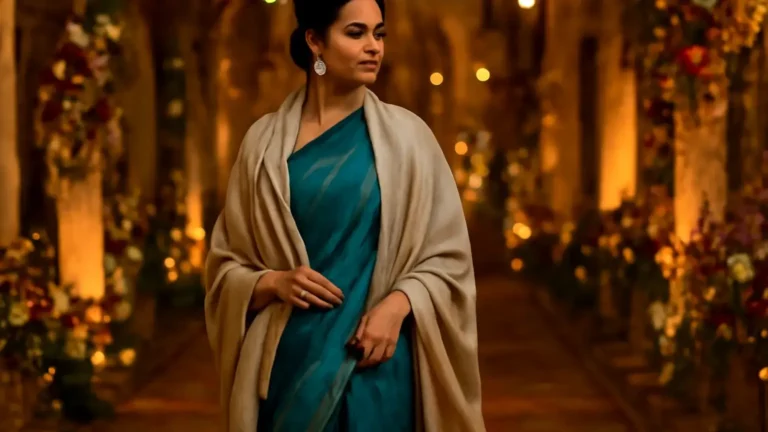
Saree styling for winter weddings works best when warmth is built into the layers rather than added as an afterthought. This guide is for wedding guests and hosts who want a polished Indian look without freezing between venues. Choose a lined or full-sleeve blouse, a warmer underskirt, secure pleats, a strategically placed shawl and covered footwear—then keep the pallu, neckline and jewellery visible for a graceful finish.
Winter weddings create a useful styling challenge: the saree needs to look fluid and festive, but the outfit also has to handle cool evenings, draughty banquet halls and time spent outdoors. The answer is not simply to add a bulky cardigan over the drape. Good winter wedding saree styling distributes warmth across the blouse, underskirt, accessories and footwear while protecting the saree’s shape.
1. Start with the right blouse sleeves and fabric
The blouse provides the most visible warmth, so it should be chosen according to the venue, time of day and fabric of the saree. For an outdoor pheras ceremony or a late-evening reception, full sleeve saree blouse designs in velvet, brocade, raw silk or a medium-weight satin are practical. They cover the arms without making the outfit look seasonal in a casual way.
For a daytime wedding, elbow-length or three-quarter winter saree blouse sleeves can be enough, especially when the saree is silk and the pallu covers one shoulder. A fitted sleeve usually looks neater than a loose sleeve because it does not catch on pleats or bunch under a shawl.
- Cool daytime event: choose elbow-length sleeves and a breathable silk or cotton-silk lining.
- Cold evening event: choose three-quarter or full sleeves with a smooth inner lining.
- Very cold outdoor ceremony: consider a high neckline, full sleeves and a shawl, but keep the neckline proportionate to your jewellery.
A velvet blouse for winter adds visual richness to a plain silk saree, but velvet can feel warm indoors and may create friction against delicate fabrics. Test the blouse with the saree before the event. If the saree is lightweight organza or chiffon, a structured silk blouse may provide warmth with less drag.
2. Select a warmer petticoat without losing the drape
The petticoat affects both insulation and the fall of the saree. A thin, slippery underskirt may make the outfit feel cold and cause the pleats to shift. A thermal petticoat or a lined underskirt can add comfort, particularly for outdoor ceremonies, but it should remain close to the body and end at a practical length.
When comparing a wool blend petticoat with a regular satin or cotton saree underskirt, consider the saree fabric. Wool blends are useful in genuinely cold weather, while cotton or jersey-lined versions may be more comfortable in a heated venue. The petticoat should not be so thick that it changes the saree’s silhouette or makes the waist tie visible beneath thin fabric.
How to fit the underskirt
- Wear the petticoat at your natural waist, where the saree will be secured.
- Check that it allows a full walking stride and does not pull across the knees.
- Pin or secure the waistband firmly, but leave enough comfort for sitting.
- Do a complete trial with the saree at least one day before the wedding.
A flared petticoat can help a stiff Banarasi or brocade saree hold its shape, while a straighter underskirt is often better for a soft silk or georgette drape. Warmth is useful only if the lower layers let the pleats open naturally.
3. Build the pleats for movement and warmth
Cold-weather dressing often involves extra layers, which can make front pleats loosen or spread. Begin with a smooth petticoat and use an anti-slip saree belt if you need more security during walking, dancing or moving between venues. The belt should sit under the saree and should not be so tight that it creates a visible ridge.
For reliable saree pleat setting, make the pleats on a flat surface, align the lower edges and press them lightly with your hands before pinning. Use a discreet pin at the waist and another inside the pallu near the shoulder. Avoid over-pinning delicate silk, organza or embellished fabrics, as repeated pinholes can damage the weave.
Keep the pleats moderately narrow rather than excessively thin. Narrow pleats may look precise at first but can open when a shawl is added or when you sit. A compact, even group of pleats gives the saree room to move while maintaining a clean front line.
4. Layer the blouse, not the pallu
Saree blouse layering works best when the added layer is thin, fitted and invisible beneath the saree. A seamless thermal camisole, a close-fitting long-sleeve inner or a lightweight high-neck base can help in colder settings. Choose a neckline that follows the blouse so the inner layer does not peek out unexpectedly.
For a sleeveless blouse, a fine inner with sleeves can work if its colour blends with the blouse and there is enough room at the armhole. Do not force a thick knit under a fitted blouse: it can flatten the bust area, create folds at the armhole and make the saree sit unevenly.
Another option is a tailored blouse with an attached lining or light thermal lining. This keeps insulation in one garment and preserves the saree’s clean line. If you are commissioning a blouse, tell the tailor whether you will wear a shawl and how much jewellery you plan to use. A slightly higher armhole, smooth lining and secure hooks can make the whole outfit more comfortable.
5. Place the shawl where it adds warmth without hiding the look
Saree shawl draping should protect the back, arms or shoulders while leaving the main styling details visible. A soft wool, cashmere-blend or pashmina-style shawl can be folded lengthwise and placed over both shoulders for a formal, symmetrical finish. This works particularly well with a simple pallu and statement earrings.
For a more traditional silhouette, place the shawl over the left shoulder and let it fall behind the elbow, keeping the saree pallu visible in front. Pin the shawl lightly at the shoulder if you will be walking outdoors. At the mandap or during photographs, you can remove the pin and allow the shawl to sit more naturally.
- Need back warmth: wear the shawl over both shoulders and keep the pallu in front.
- Want to show the blouse: fold the shawl narrowly and place it around the elbows.
- Wearing heavy jewellery: avoid a bulky fold near the neck; keep the collarbone and necklace visible.
Match the shawl by tone rather than demanding an exact colour match. A muted jewel tone can complement a bright saree, while a neutral shawl is easier to reuse. Avoid very fuzzy textures with heavily embellished sarees because the fibres may catch on sequins or zari.
6. Choose footwear that is warm, stable and saree-friendly
Warm wedding footwear does not have to mean sacrificing elegance. Closed-toe block heels, embroidered mojaris, velvet flats and low wedges offer more coverage than delicate open sandals. They are especially sensible for lawns, uneven paths and cold stone floors.
Match the hem to the actual shoes you will wear. Put on the footwear during the final drape trial and check that the saree clears the ground without revealing too much ankle. A small block heel can improve the fall of the saree, but a very high heel may become uncomfortable when the petticoat and extra layers restrict movement.
For a winter reception, select shoes with a cushioned insole and enough room for comfortable socks or hosiery if required. Keep the footwear’s decoration refined: a metallic border, embroidery or velvet texture can connect it to the blouse without competing with the saree.
How to style a saree in winter: a practical getting-ready order
If you are deciding how to style a saree in winter, follow this order to prevent warm layers from disturbing the drape:
- Wear the base layer, blouse and petticoat before applying body makeup or jewellery.
- Put on the exact footwear and set the saree length.
- Make and secure the front pleats, then arrange the pallu.
- Add the shawl and walk, sit and raise both arms to test comfort.
- Attach earrings, necklace and bangles only after the fabric placement is final.
- Carry one or two spare safety pins and a small fabric-safe pin pouch.
This routine protects jewellery visibility because the shawl is arranged before necklaces and earrings are fixed. It also prevents a common mistake: placing a bulky wrap over the pallu and then discovering that the border, blouse neckline or necklace has disappeared in photographs.
Common winter saree styling mistakes to avoid
Do not choose every warm option at once. A velvet blouse, thick thermal layer, wool petticoat and heavy shawl may be uncomfortable inside a crowded hall. Select two primary warmth layers and keep the remaining pieces light.
Do not tie the petticoat too loosely in the hope of comfort; the saree can drag and the pleats may shift. Conversely, an overly tight waistband can make sitting difficult. Avoid wearing a new blouse or untested shoes on the wedding day, since stiffness and friction are harder to solve once you are dressed.
Finally, consider the ceremony setting. A heated hotel ballroom calls for lighter layering than an open-air venue. Your best combination may be a three-quarter-sleeve silk blouse, a smooth lined petticoat, secure pleats and a shawl carried separately until needed.
Concise takeaway
Effective saree styling for winter weddings is about controlled layering: use sleeve length and blouse lining for the upper body, choose a suitable thermal or lined petticoat, secure the pleats, place the shawl around—not over—the key details, and finish with stable closed-toe footwear. The most polished outfit is the one that keeps you warm while allowing the pallu, pleats and jewellery to remain part of the look.
Products that may help with this routine
Choose only what fits your skin, hair or personal needs. Use the links below to view current options on Amazon India.
Frequently Asked Questions
How do you style a saree in winter for a wedding?
Use a lined or full-sleeve blouse, a smooth thermal or lined petticoat, secure the pleats with discreet pins, and carry a shawl that can cover the shoulders without hiding the pallu. Finish with closed-toe heels, wedges or embellished mojaris for better warmth and stability.
What blouse sleeves are best for a winter wedding saree?
Three-quarter or full sleeves are usually the most practical for a cold evening. Choose the sleeve length based on the venue, and select velvet, brocade, raw silk or lined satin when extra warmth is needed. Elbow-length sleeves can be enough for a daytime or heated indoor event.
How do you wear a shawl with a saree at a winter wedding?
Fold the shawl lengthwise and place it over both shoulders for balanced coverage, or wear it over one shoulder with the saree pallu visible in front. Pin it lightly for outdoor movement, and keep bulky folds away from the necklace and blouse neckline.
Which petticoat is warmest under a saree?
A close-fitting thermal or wool-blend petticoat generally offers more warmth than a thin satin underskirt. However, the best choice depends on the saree fabric and venue. It should allow walking and sitting comfortably without adding visible bulk or changing the drape.
What footwear should you wear with a saree in winter?
Closed-toe block heels, low wedges, velvet flats and embroidered mojaris are practical choices. They provide more coverage and stability than open sandals. Always set the saree hem while wearing the exact shoes planned for the wedding.
How can you layer under a saree without adding bulk?
Choose a thin seamless thermal camisole or fitted inner layer, and use a blouse with a smooth lining. Avoid thick knits under a close-fitting blouse because they can create folds at the armholes and disturb the saree’s fall.