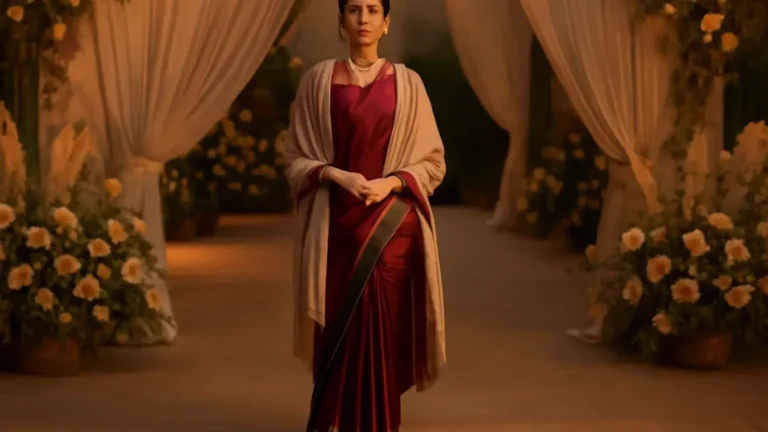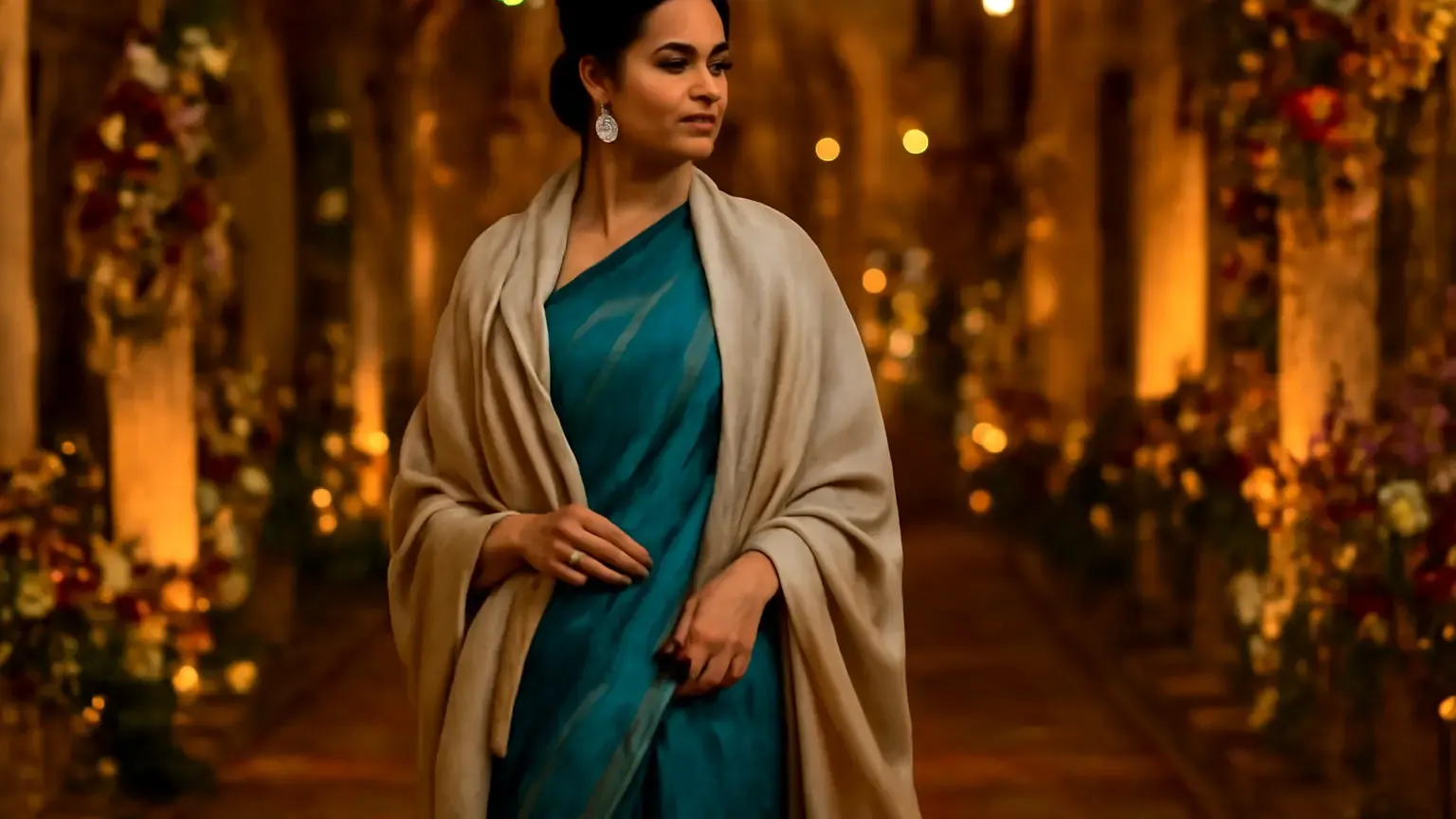
Festive fashion for winter weddings works best when warmth is planned as part of the outfit, not added at the last minute. For wedding guests attending a mehendi, sangeet, pheras or reception in India, choose one substantial layer, keep the base silhouette visible and let jewellery follow the neckline. A velvet jacket, elegant shawl or fluid cape can protect comfort while preserving proportion, movement and the celebratory finish your outfit needs.
Winter weddings make dressing more interesting—and slightly more technical. A heavily embellished lehenga may look perfect indoors but feel impractical during an outdoor sangeet. A delicate saree can lose its drape under a bulky wrap, while an oversized jacket may hide the waistline and overwhelm smaller frames. The aim is not simply to add warmth; it is to choose layers that work with the outfit’s shape, fabric and occasion.
Start with the ceremony, venue and movement
The same outfit will not work equally well for a daytime haldi, a breezy lawn mehendi and a late-night reception. Before selecting a layer, consider three details: how long you will be outside, whether you will sit on a low platform or move between groups, and how much dancing or walking the event involves.
- Daytime functions: Choose lighter silk, brocade, cotton-silk or embroidered organza layers in cheerful colour. You usually need visual polish more than maximum insulation.
- Evening ceremonies: Velvet, wool-silk blends, quilted textures and lined jackets offer more warmth. Select a layer that will not catch on jewellery or drag while walking.
- Formal receptions: A structured cape, long jacket or refined stole can make a simpler base look occasion-ready without adding another heavily decorated garment.
For anyone searching for what to wear to a winter wedding in India, the practical answer is a breathable base, one intentional outer layer and footwear that can handle the venue. Avoid building warmth through several loose pieces; they can shift, bunch and disturb the drape.
Match the layer to the base silhouette
Good layering for Indian weddings preserves a visible line from shoulder to hem. If the base is voluminous, keep the top layer more controlled. If the base is sleek, you can introduce a little movement or volume above it.
Lehenga or sharara
A cropped jacket, short cape or fitted velvet bolero works well with a flared skirt because it defines the upper body without adding bulk at the hem. A long, open jacket can also be elegant, but it should end at a deliberate point—around the knee or below the widest part of the skirt—rather than stopping awkwardly at the hip.
For how to layer a lehenga for a winter wedding, first secure the dupatta and then try the layer over it. If the jacket compresses the dupatta into a thick ridge, use a lighter one-sided drape or remove the dupatta and let the jacket provide the formal finish.
Saree
With a saree, the eye needs a clean vertical fall. A short cape worn over the blouse, a narrow shawl placed across the shoulders or a long open jacket can all work. Avoid a thick wrap tied tightly at the waist, which can obscure pleats and make the torso appear wider.
Silk saree styling benefits from contrast: pair a smooth silk base with a matte velvet jacket, or a textured brocade saree with a simpler wool-silk shawl. Keep the pallu visible if it carries the main embroidery.
Anarkali or straight kurta set
A longline ethnic jacket creates a graceful column over an anarkali, while a shorter jacket gives a straight kurta more definition. Side slits are useful because they protect stride and prevent the outer layer from pulling when you sit or climb stairs.
Choose between a shawl, cape and jacket
These pieces create different proportions and levels of control. The best option depends on how much structure and movement you want.
| Layer | Best for | Effect on the outfit | Watch out for |
|---|---|---|---|
| Shawl | Sarees, simple suits and seated ceremonies | Soft, graceful and adaptable | Slipping, covering the blouse or bunching at the elbows |
| Cape | Lehengas, gowns and modern festive sets | Creates shoulder presence and movement | Wide arm openings catching on bags or bangles |
| Jacket | Lehengas, anarkalis and straight silhouettes | Defines the torso and adds structure | Too much stiffness or embroidery competing with the base |
Shawls for wedding outfits are the most flexible choice, especially when you want to remove a layer indoors. Fold a large shawl into a clean rectangle for a tailored effect, or let it fall naturally over one shoulder for a softer look. Pin it discreetly near the shoulder if you expect to dance or greet guests.
Wedding capes are useful when you want coverage without hiding the waistband or skirt embroidery. Choose a cape with a smooth arm opening and test it while lifting your arms. A cape that looks elegant when still but restricts movement is not a successful event layer.
Ethnic jackets for women can be the most practical option for outdoor venues because they stay in place. Look for lining that glides over the base rather than catching on sequins, and check that the closure does not press against heavy necklace layers.
Use fabric weight strategically
Fabric should be judged by warmth, drape and friction—not weight alone. Velvet is warm and rich, but a thick velvet jacket over a full lehenga can feel visually dense. Brocade adds structure and festive texture, while silk offers a fluid fall but may need a warmer layer underneath. Pashmina-style wraps are light and insulating, although their softness can make them slide from satin or glossy silk.
When comparing the best fabrics for winter wedding outfits, use this simple order of priorities:
- Base layer: Choose breathable silk, crepe, georgette or a comfortable lining. If you need extra warmth, a thin neutral thermal layer should remain invisible at the neckline and sleeves.
- Decorative layer: Add velvet, brocade, jacquard or embroidered silk where it improves the silhouette and occasion value.
- Outer wrap: Keep it removable, soft enough to fold and large enough to cover the shoulders without swallowing the outfit.
Warmth also depends on coverage. A full-sleeve wedding blouse may remove the need for a heavy top layer, especially when made in velvet, silk or lined brocade. If the blouse is already ornate, choose a plain cape or shawl so the look does not become visually crowded.
Balance jewellery with the neckline and layer
Layering changes the amount of skin and fabric around the face, neck and shoulders, so jewellery should be edited after the outer piece is chosen. A high-neck jacket usually needs earrings, a maang tikka or a statement ring more than a large necklace. With an open cape or deep blouse, a necklace can fill the space—but it should not collide with the cape edge.
For bridal guest jewellery, select one focal area:
- Statement earrings with a high neckline or embellished jacket.
- A necklace with a plain blouse, open cape or low neckline.
- Bangles and rings when sleeves or a shawl already create visual weight near the face.
Try the complete look with the shawl or jacket on. Jewellery that seems balanced without the layer may become too busy once a border, collar or embroidered shoulder is added. The same rule applies to bags: a small structured clutch is easier to manage than a shoulder strap that cuts across a cape or pallu.
Protect movement, sleeves and footwear
Movement is a design test, not an afterthought. Sit down, raise both arms, turn sideways and take several steps before finalising the outfit. Check whether the sleeve pulls at the underarm, whether the jacket opens over the bust, and whether the hem catches on your footwear.
For winter wedding footwear, select a stable block heel, embellished jutti or dressy closed-toe shoe according to the venue. Outdoor lawns, uneven stone and long standing periods call for grip and support. A slightly shorter hem is often more elegant than a floor-skimming one that gathers dust or causes repeated adjustments.
Sleeve choices also affect proportion. Fitted sleeves keep a voluminous layer neat; softly gathered sleeves can balance a slim cape but may look crowded under a narrow jacket. If you want statement sleeves, use a cape or sleeveless outer layer with enough arm room rather than forcing them under a tight coat.
Common winter wedding styling mistakes
- Adding warmth at the last minute: A random cardigan or bulky coat can break the intended proportions. Plan the outer layer with the base outfit.
- Matching every surface: A velvet blouse, velvet jacket and velvet clutch may look heavy together. Mix texture and allow one fabric to lead.
- Ignoring the back: Wedding guests are photographed from every angle. Check how the layer sits over the pallu, dupatta and hairstyle.
- Overloading the neckline: A high collar, choker, necklace and dupatta border compete for the same space. Remove one element.
- Choosing beauty over function: If you cannot lift your arms, sit comfortably or walk safely, the layer needs alteration or replacement.
A simple final fitting routine
Lay out the complete outfit, including innerwear, base garment, dupatta, jewellery, bag and footwear. Put it on in that order, then add the shawl, cape or jacket. Photograph the front and side views in natural light. Next, walk for five minutes, sit on a chair, use your phone and practise a few dance movements.
Make one edit before leaving: remove the least useful accessory. A polished winter look usually needs fewer competing elements because the layer already adds colour, texture and shape. Keep a small safety kit with pins, fashion tape, a spare earring back and a foldable wrap if the temperature may drop.
Takeaway
The most successful festive fashion for winter weddings treats warmth, proportion and movement as one styling decision. Choose the ceremony-appropriate fabric, match the layer to the base silhouette, keep jewellery focused and test the outfit in motion. A shawl should stay graceful, a cape should allow your arms to move and a jacket should define rather than conceal. That is how a practical layer becomes part of the festive look.
Products that may help with this routine
Choose only what fits your skin, hair or personal needs. Use the links below to view current options on Amazon India.
Frequently Asked Questions
What to wear to a winter wedding in India?
Wear a breathable festive base such as a saree, lehenga or anarkali, then add one intentional layer: a velvet jacket, lined cape or shawl. Choose stable footwear and keep jewellery focused around one area.
How do I layer a lehenga for a winter wedding?
Try a cropped jacket, fitted bolero, short cape or long open jacket over the complete lehenga and dupatta. Keep the upper layer controlled if the skirt is full, and test arm movement before wearing it to the event.
What are the best fabrics for winter wedding outfits?
Velvet, brocade, jacquard, lined silk and wool-silk blends provide useful warmth and festive texture. Balance heavier fabrics with a fluid base so the outfit does not look bulky.
Can I wear a shawl with a saree to a wedding?
Yes. Drape a narrow shawl across the shoulders, fold a larger one into a clean rectangle or pin it lightly near one shoulder. Keep the saree pleats and pallu visible, and avoid a thick fold at the waist.
How should I style a cape with an Indian outfit?
Wear a cape over a lehenga, gown, saree or slim festive set when you want shoulder coverage without hiding the waist or hem. Check the arm openings, keep the neckline uncluttered and choose jewellery that does not catch on the edge.