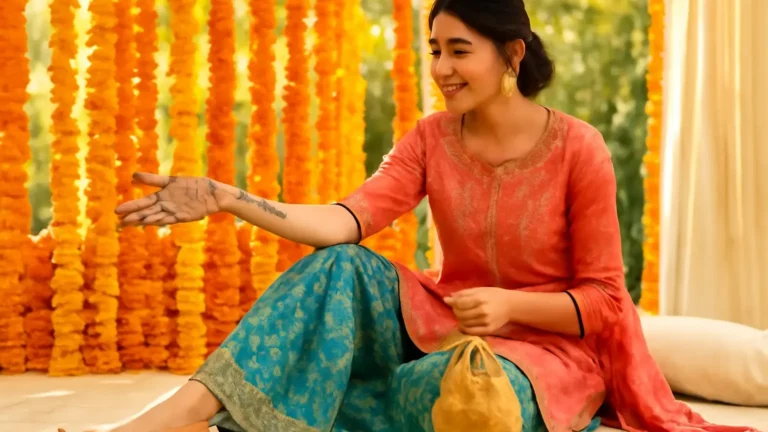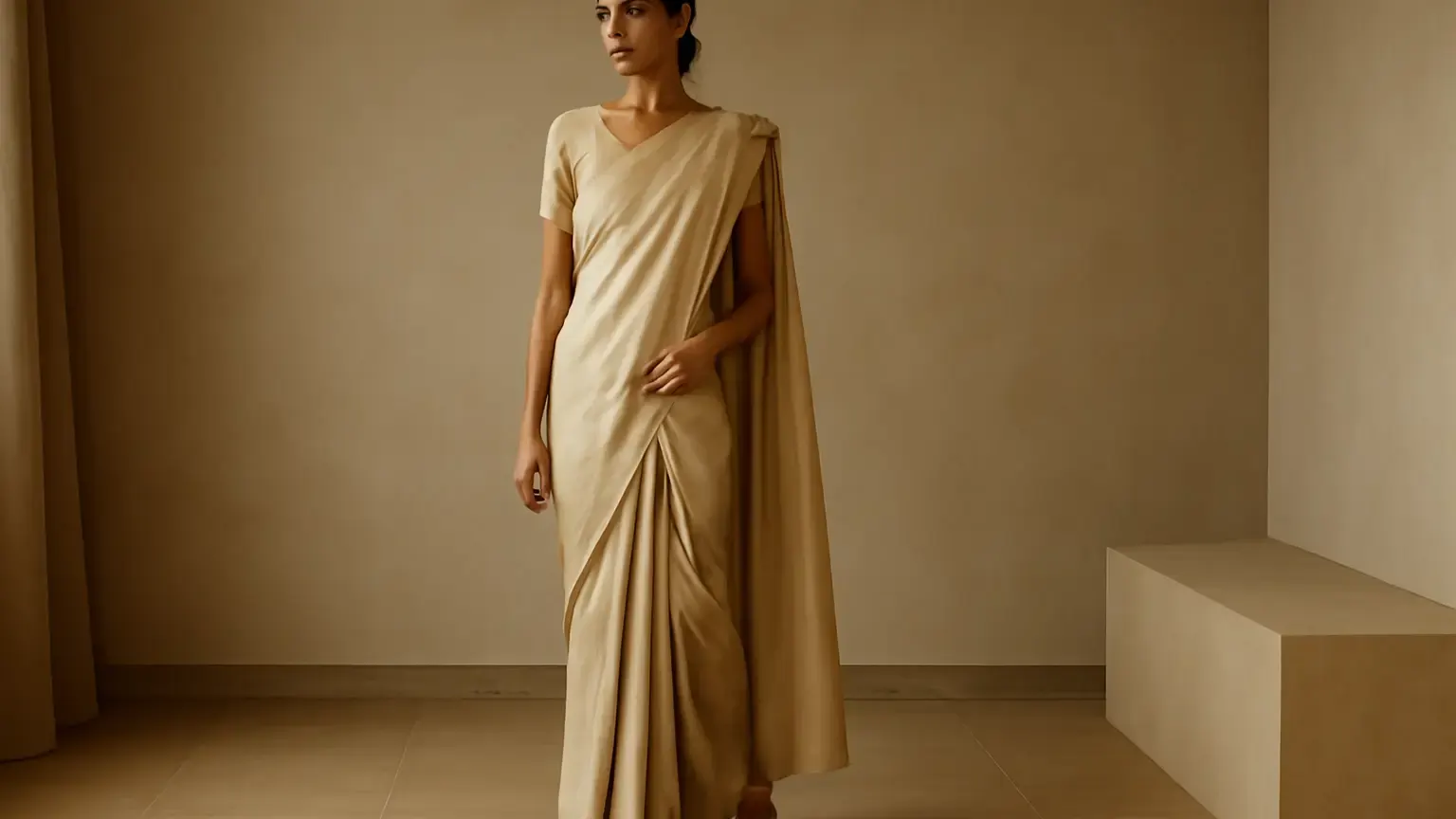
Saree styling for petite women works best when every line points upward: choose a fluid, lightweight fabric, a narrow or tonal border, a well-fitted blouse and a vertical pallu. This guide is for shorter women who want a longer, balanced silhouette without hiding their frame under heavy fabric. It also covers pleat control, blouse proportions and comfortable footwear, so the final look feels elegant rather than overworked.
What creates a longer silhouette in a saree?
A saree does not need to be plain, heavily fitted or restricted to one colour to suit a petite frame. The most useful principle is visual continuity: fewer abrupt horizontal breaks allow the eye to travel from the shoulder to the hem. Fabric fall, border scale, blouse length, pallu direction and footwear all influence that effect.
For petite women, balance matters more than trying to look dramatically taller. A saree that follows the body without clinging, with controlled pleats and a proportionate blouse, usually looks more polished than an oversized drape with elaborate volume. This is the foundation of petite saree styling India can adapt across cottons, silks, georgettes, chiffons and festive blends.
Choose the right fabric and print scale
Prioritise fluidity over stiffness
Lightweight sarees for petite women are often easier to manage because they create less bulk at the waist and around the hips. Georgette, chiffon, crepe, lightweight satin blends, soft cotton and fine silk blends can give a clean fall when properly secured. Their movement creates a continuous line instead of a wide, boxy outline.
Stiffer fabrics are not off-limits. Kanjeevaram, Banarasi, handloom cotton and brocade can look beautiful on a petite frame, especially for weddings and traditional events. The decision is about scale and construction: choose a lighter weave, avoid excessive layering, and keep the pleats narrow and evenly pressed. If the saree has a naturally firm body, a close-fitting underskirt and careful pinning become especially important.
Keep prints proportional
Small print sarees, delicate checks, fine stripes and restrained motifs generally support a compact frame without overwhelming it. Medium prints can also work if the base colour is calm and the blouse does not introduce another competing pattern. Very large motifs placed across the torso may visually widen the body or interrupt the length of the saree.
A useful test is to hold the folded saree against your shoulder and waist. If one motif covers most of the visible torso, it may need a simpler blouse and a less elaborate pallu. If the saree is detailed throughout, keep jewellery and hair relatively streamlined.
Use borders to control width
Narrow border sarees are a reliable choice when your aim is a longer, lighter-looking silhouette. A border around 1–2 inches can define the hem without creating a strong horizontal band. Tonal borders, fine metallic edging and borders that closely match the saree body are particularly easy to style.
Wide borders can still suit petite women, but they need more careful placement. A broad contrast border at the hem and pallu can visually divide the body into sections. If you love a statement border, balance it with a plain blouse, a simple pallu display and fewer accessories. Wearing the saree slightly higher at the natural waist can also prevent the border from shortening the visible leg line.
Do not automatically reject a traditional saree because of its border. Instead, ask three questions: Is the border the main visual feature? Does the blouse repeat or compete with it? Can the pallu be arranged vertically rather than spread wide? These decisions matter more than the border alone.
Set the waist and pleats neatly
High-waisted saree draping can create a longer lower-body line when the saree sits securely at, or just above, the natural waist. Avoid pulling it so high that the blouse becomes awkwardly short or the torso looks compressed. The right height is the point where the pleats fall cleanly and the blouse-to-saree ratio feels intentional.
Neat saree pleats are one of the simplest ways to reduce bulk. Before draping, make sure the underskirt is firm but comfortable and that its drawstring is tied flat. Create five to seven even pleats, depending on the saree and your comfort, and keep the pleat width consistent. Pressing or lightly steaming the pleats before pinning can help them hold their direction during an event.
- Tuck the first round smoothly, without leaving loose fabric at the waist.
- Keep the pleats centred or slightly to one side according to the regional drape.
- Pin from the inside so the front remains clean.
- Check the hem while standing straight; it should skim the floor without dragging.
- Walk, sit and climb a few steps before making final adjustments.
Very tight pleats can make the saree look stiff, while loose pleats add unnecessary volume. The goal is controlled movement, not a rigid column.
Choose a blouse that supports your proportions
The blouse should create a smooth transition between your upper body and the saree. A cropped blouse with saree can work well when it finishes near the natural waist and is not so short that it creates an extra horizontal line. A blouse that is too long may cover the waist definition and make the torso look compressed; one that is too short may feel unbalanced with a heavy saree.
For the neckline, a modest V-neck, sweetheart shape or gently open square neckline can add vertical direction. A high neckline can also look elegant, especially with a slim silhouette and a clean saree border, but avoid adding too much volume at the shoulders if the saree already has a dramatic pallu.
Sleeve proportions matter too. Elbow-length or neatly fitted short sleeves often look balanced, while very puffy sleeves can broaden the upper body. This is not a rule against statement sleeves; simply pair them with a calmer saree body and a restrained pallu. A blouse in a similar colour to the saree creates a monochrome saree outfit effect, which is especially useful when you want uninterrupted length.
Place the pallu to create vertical movement
A vertical pallu drape is usually more lengthening than a wide, fan-shaped display. Bring the pallu over the shoulder with enough length to fall below the hip, then arrange the pleats so they drop in a tidy column. Letting the pallu fall too short can make the upper body look crowded; letting it trail excessively can add weight and require repeated adjustment.
For a classic pinned pallu, keep the shoulder pleats narrow and aligned. If you prefer an open pallu, avoid spreading it across the widest part of the torso. A narrower fall, with one clean edge visible, keeps the eye moving downward. On a saree with a heavy pallu, show only enough detail to make it feel intentional rather than layering it over the front.
When draping a printed or striped saree, use the direction of the design to your advantage. Vertical stripes, linear motifs and a clearly falling pallu reinforce height. Strong horizontal motifs are best kept away from the widest part of the body.
Finish with comfortable, proportionate footwear
Comfortable saree footwear should be chosen before the final hem is set. A low block heel, platform sandal or stable wedge can add height while keeping the foot supported. Even a small lift of 1–2 inches can improve the fall of the saree and prevent the hem from pooling, but only if you can walk confidently.
Match the footwear to the occasion and surface. For a wedding, a stable block heel may be practical; for a long festive day, padded flats with a slight lift can be more comfortable. Avoid selecting very tall, narrow heels solely for height if they change your posture or make the pleats drag. Good posture creates a more convincing lengthening effect than an uncomfortable shoe.
Common saree styling mistakes to avoid
- Too much volume at once: A stiff saree, padded underskirt, wide border and dramatic sleeves can overwhelm a petite frame when combined.
- Unplanned contrast: A sharply contrasting blouse, border and pallu create multiple horizontal breaks. Keep at least two elements visually connected.
- Low, loose draping: A saree that slips below the natural waist can shorten the leg line and make the pleats look untidy.
- Overlong pallu: Excess fabric around the ankle or floor makes the outfit appear heavier and can be unsafe on stairs.
- Ignoring movement: A drape that looks perfect while standing may restrict sitting, walking or lifting the arms. Test it before leaving home.
A simple styling formula for petite frames
For an everyday or semi-formal look, start with a fluid saree in a small or low-contrast print, a narrow border and a blouse in a related colour. Drape it at the natural waist, make even front pleats and pin a vertical pallu. Finish with simple earrings and supportive footwear.
For a festive look, choose a silk or handloom saree with one statement feature: either a rich border, an ornate pallu or an embroidered blouse. Keep the remaining elements clean. This decision rule preserves personality without adding visual bulk.
For a formal evening look, a monochrome palette, fluid fabric and a fitted blouse can create a sleek line. Add texture through jewellery or a subtle sheen rather than combining several large motifs. These saree draping tips for petite women are flexible because they focus on proportion, not restrictive rules.
Quick takeaway
The strongest saree styling for petite women combines a fluid fabric, proportionate print, narrow or coordinated border, well-set waist, tidy pleats, a vertical pallu and stable footwear. Statement details are welcome when they are edited: choose one focal point, then let the rest of the drape create length and balance.
Products that may help with this routine
Choose only what fits your skin, hair or personal needs. Use the links below to view current options on Amazon India.
Frequently Asked Questions
How to wear a saree to look taller if you are petite?
Drape the saree at or slightly above the natural waist, use neat narrow pleats, choose a fluid fabric and keep the pallu falling vertically. A low block heel or stable wedge can refine the hemline without compromising comfort.
Which saree fabric is best for short height women?
Fluid, lightweight fabrics such as georgette, chiffon, crepe, soft cotton and fine silk blends are usually easy to manage because they create less bulk. Lightweight versions of traditional silks and handlooms can also work with controlled pleats.
What border width suits petite women in sarees?
A narrow border of about 1–2 inches or a border close in colour to the saree usually maintains visual length. Wider borders can work when the blouse and pallu are kept simple and the overall contrast is controlled.
How should a petite woman place the saree pallu?
Keep the pallu pleated and relatively narrow so it falls in a vertical column. Avoid spreading it widely across the torso, and choose a length that falls below the hip without trailing near the floor.
What is the best blouse length for petite women wearing sarees?
A blouse that finishes near the natural waist generally preserves waist definition and keeps the proportions balanced. The exact length depends on your torso, saree border and preferred coverage, so test the blouse with the final drape.