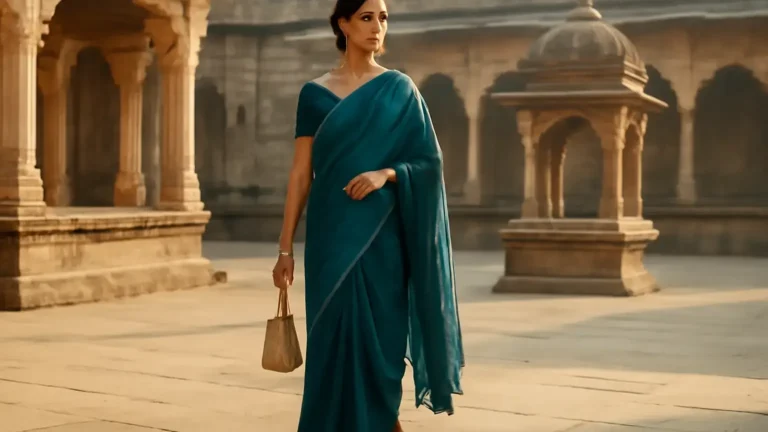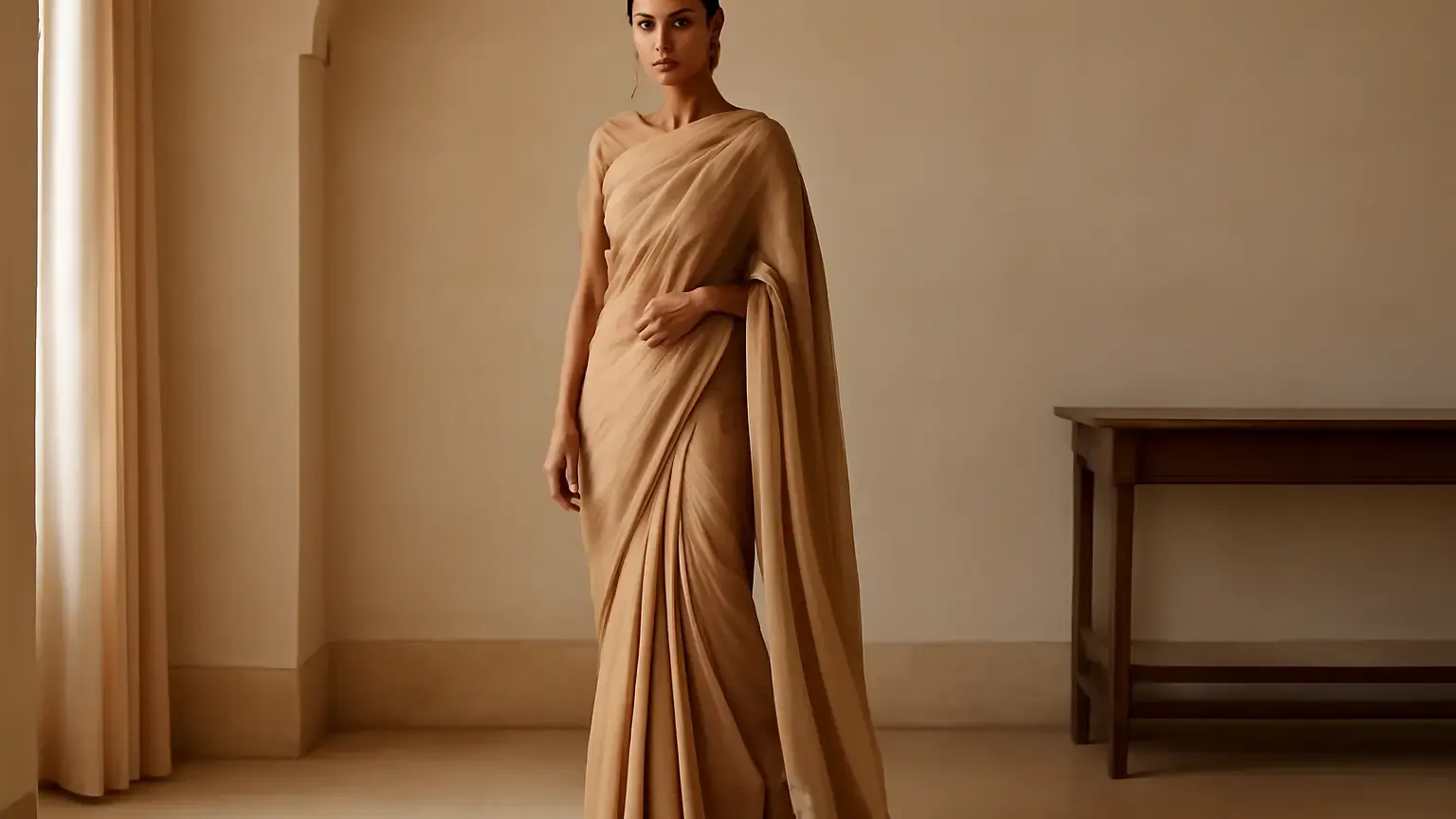
Saree styling for petite frames is less about looking taller and more about making every proportion feel intentional. For petite women choosing a festive or everyday drape, the most useful decisions are a manageable fabric scale, slim pleats, a clean high-waisted tuck, controlled pallu placement, a well-measured blouse, streamlined footwear and jewellery that does not overpower the outfit. These seven adjustments create a balanced, uninterrupted line while keeping your height and natural frame fully visible.
A petite frame does not need to be hidden under extra fabric or altered to fit a single idea of elegance. The aim is simply to make the saree, blouse, accessories and footwear work as one composition. When one element is very broad, heavy or low-slung, it can visually interrupt the outfit. When the elements share a scale, the drape looks polished and comfortable.
1. Choose fabric and border scale before choosing colour
The first decision in saree styling for petite frames is fabric behaviour. Lightweight sarees such as soft cotton, georgette, chiffon, crepe, satin blends or fine silk generally create a cleaner fall than very stiff, bulky or heavily layered fabrics. This does not mean petite women must avoid brocade, tissue or rich silk. It means the saree should be assessed for how much volume it adds at the waist and across the front.
For saree fabric for short women, look for a fall that settles close to the body without clinging uncomfortably. A medium or narrow border often keeps the outline visible. Very wide contrast borders can divide the body into strong horizontal sections, especially when they sit low on the hem or cross the torso. If you love a broad border, balance it with a simpler blouse and a less crowded pallu.
- For daytime: choose breathable cotton, linen blends or fluid viscose with a restrained border.
- For occasions: consider lightweight silk, georgette or crepe with concentrated embroidery rather than decoration across every surface.
- For a statement saree: let either the border, blouse or jewellery lead; using all three at maximum scale can make the outfit feel busy.
2. Keep pleats narrow, even and high-waisted
Narrow saree pleats do not mean tiny or rigid pleats. They mean a controlled group that sits neatly from the waist to the floor without spreading dramatically at the hip. Before pinning, measure the pleat bundle against your body. It should be wide enough to show the fabric and fall, but not so broad that it becomes the first thing people notice.
A high-waisted saree drape, with the waistband sitting securely near your natural waist, can make the lower half of the saree feel longer. Avoid tucking so low that the fabric gathers at the hips and pulls the pallu downward. Stand straight while making the first tuck, then walk, sit and climb a step to check that the pleats stay in place.
A simple pleat routine
- Secure the underskirt or saree shapewear at a comfortable, stable height.
- Make five to seven medium-narrow pleats, depending on the saree’s thickness.
- Align the lower edges before pinning; uneven hems visually shorten the line.
- Tuck the bundle firmly, then check the front and side views.
For saree draping for petite women, neatness matters more than chasing a fixed number of pleats. A heavier silk may need fewer pleats, while a soft chiffon may need a slightly fuller bundle to prevent transparency or collapse.
3. Use pallu placement to maintain a vertical line
Pallu placement has a strong effect on the perceived shape of the outfit. A pallu that falls straight from the shoulder, with moderate width and a clean edge, supports a vertical saree drape. If the pallu is spread very wide across the chest or repeatedly wrapped around the neck, it can create a broad horizontal block.
For an open pallu, pin it at the shoulder so the outer edge falls close to the side of the body rather than far away from it. Keep the front layer light enough to show the blouse neckline and waist. If you prefer a pleated pallu, make the pleats slim and even, then set them slightly toward the centre or just inside the shoulder line.
The best pallu placement also depends on the blouse neckline and the saree border. A busy blouse may benefit from a more open, simpler pallu. A plain blouse can support a decorative pallu, provided its width does not overwhelm the shoulder. Try both options in front of a full-length mirror; small changes of two or three centimetres can alter the balance.
4. Measure the blouse length, not just the size
Blouse length for petite women is a proportion decision rather than a universal measurement. A very long blouse can reduce the visible length of the saree above the waist, while an extremely short blouse may feel disconnected from a low or broad waistband. The right length depends on your rise, torso, saree tuck and comfort while moving.
As a practical starting point, try a blouse hem that meets the saree tuck cleanly without leaving a large gap. A high-waisted saree can support a slightly shorter, structured blouse. A low or relaxed drape usually works better with a blouse that offers a little more coverage. The hem should not ride up when you lift your arms or sit.
- A softly square or V neckline can introduce length through the centre of the torso.
- One uninterrupted blouse colour can reduce visual breaks.
- Strategic darts and a firm shoulder fit create shape without excessive padding.
5. Select sleeves that frame the shoulder without adding bulk
Sleeve styles for petite women should be chosen with the saree’s border and pallu in mind. A clean short sleeve, a narrow three-quarter sleeve or a fitted elbow-length sleeve can frame the arm neatly. The most flattering option is the one that ends at a deliberate point rather than cutting across the widest part of the upper arm or competing with a broad shoulder border.
If the saree is ornate, keep the sleeve surface relatively calm. If the saree is plain, a textured sleeve or modest embroidery can add interest without adding width everywhere. Puff sleeves, dramatic ruffles and oversized cuffs can work beautifully as fashion choices, but they should be balanced with a simpler pallu and less bulky jewellery.
Check the armhole and sleeve opening before the event. A sleeve that digs in can pull the blouse upward and disturb the saree’s proportions throughout the day.
6. Treat footwear as part of the drape
Saree footwear should be selected before the final hem is stitched or the saree is pinned. A modest pointed-toe heel, block heel, wedge or platform can add ease and lift while keeping the saree safely above the floor. The goal is not maximum height; it is a stable shoe that allows the fabric to skim rather than pool.
Choose a heel you can walk and sit in confidently. A petite frame does not require stilettos, and an unstable shoe can make the whole drape look tense. For weddings or long ceremonies, a supportive block heel is often more practical than a very narrow heel. Nude, metallic or saree-matched footwear can reduce a strong visual break at the ankle, while a contrasting shoe can be used deliberately when the rest of the outfit is simple.
Fit the hem correctly
Wear the exact footwear during alterations. The front pleats should clear the floor, while the back hem should not drag. Recheck the length after adding a petticoat, shapewear or any extra layer because these can change the saree’s fall.
7. Scale jewellery to the saree and neckline
Proportionate saree jewellery does not mean wearing only delicate pieces. It means deciding where the eye should rest. If the saree has a strong border and the blouse has a detailed neckline, choose one main jewellery focus: earrings, necklace, bangles or a waist detail. Several large elements can make a petite frame look visually crowded, even when each piece is attractive on its own.
Long earrings can create a downward line when the neckline is open. A long necklace can work with a simple blouse, while a choker may suit a higher neckline and a more formal silk saree. Keep the pallu border visible if it is a key design feature; avoid covering it with multiple layered necklaces or an oversized brooch.
For monochrome saree styling, jewellery in one metal family can maintain continuity. With a printed or multicoloured saree, repeat one small colour from the fabric rather than introducing several unrelated tones. The most useful test is a full-length photograph: if the jewellery is seen before the saree, reduce or relocate one piece.
How to style sarees for short height without losing personal style
There is no single formula for how to style sarees for short height because body proportions, taste, occasion and comfort all matter. Use the following preparation sequence when you are trying a new drape:
- Lay out the complete outfit. Include blouse, saree, underskirt, footwear and jewellery before judging the balance.
- Set the waist. Decide whether a natural or slightly higher tuck feels secure and comfortable.
- Control one large feature. If the saree is voluminous, simplify the blouse; if the blouse is dramatic, keep the pallu narrow and clean.
- Pin only after movement tests. Walk, sit, raise your arms and turn sideways. The drape must work beyond a still photograph.
- Take front and side photographs. Look for dragging hems, sloping pleats, a low waistband or a pallu that spreads too far.
Common proportion mistakes to avoid
Many saree draping tips focus on making a petite wearer appear taller, but comfort and individuality should remain central. Avoid these common issues instead:
- Over-tightening the drape: a rigid saree restricts movement and creates pulling lines.
- Using too much fabric at the waist: bulky layers can hide the intended waistline.
- Ignoring the side view: a front view may look neat while the pallu or pleats project at the hip.
- Matching every element exactly: a coordinated outfit can still have contrast in texture or metal for interest.
- Choosing height over stability: shoes that hurt will affect posture and the way the saree falls.
A concise proportion checklist
Before leaving home, check five points: Is the fabric’s volume comfortable? Are the pleats even and high enough? Does the pallu fall close to the body? Does the blouse stay in place during movement? Can you walk naturally in the chosen saree footwear? If the answer is yes, the outfit is likely balanced regardless of your exact height.
The most successful saree styling for petite frames does not disguise a petite body. It edits the relationship between fabric, waist, shoulder, hem and accessories so that every part receives room to be seen. Start with the drape, adjust the scale, and keep the final choices true to your personal style.
Products that may help with this routine
Choose only what fits your skin, hair or personal needs. Use the links below to view current options on Amazon India.
Frequently Asked Questions
How should I style a saree for short height?
Start with a fluid fabric, a secure high-waisted tuck, narrow even pleats, a controlled pallu and a hem adjusted to your chosen footwear. Balance a statement saree with a simpler blouse or jewellery.
Which saree fabric is best for petite women?
Lightweight or fluid fabrics such as georgette, chiffon, crepe, soft cotton and fine silk often create a neat fall. Richer fabrics can also work when their bulk, border width and layering are controlled.
How wide should saree pleats be for a petite frame?
Use medium-narrow, even pleats that show the fabric without creating a broad block at the hip. The ideal width depends on the saree thickness, so check the front and side views after tucking.
How should I place the pallu on a petite body?
Pin the pallu at the shoulder so it falls close to the body, with moderate width and a clean edge. Avoid spreading it so widely that it covers the blouse and creates a strong horizontal line.
What blouse length suits petite women?
A blouse hem that meets the saree tuck cleanly is a useful starting point. A slightly shorter structured blouse can suit a high-waisted drape, while a lower drape may need more coverage for comfort and stability.
Which footwear makes you look taller in a saree?
A stable pointed-toe heel, block heel, wedge or platform can add lift and help the saree skim the floor. The best choice is one you can walk and sit in naturally, with the hem altered to match it.