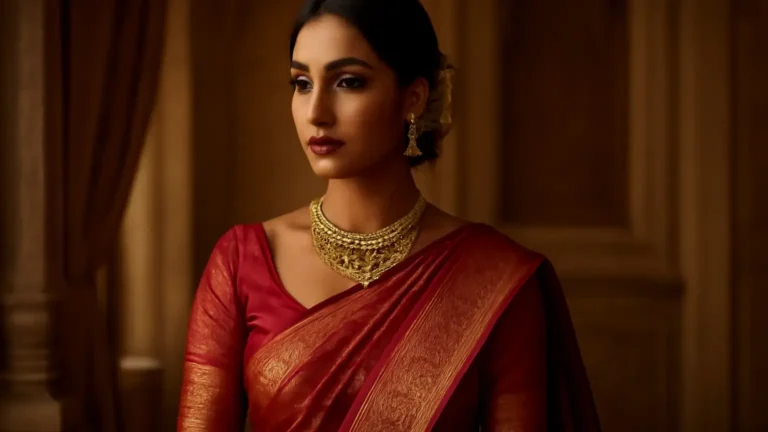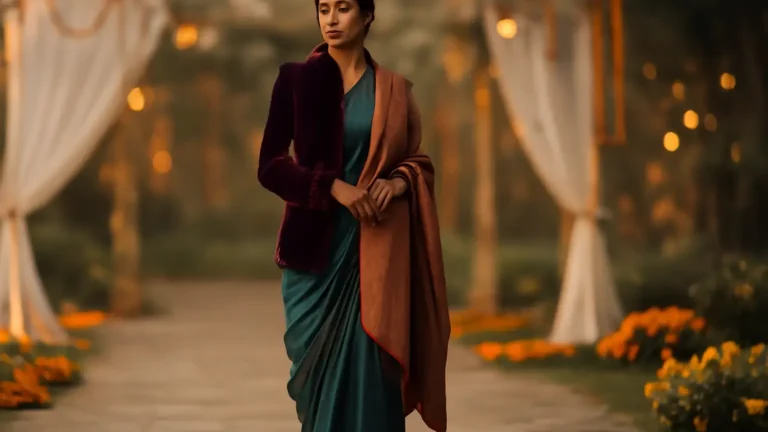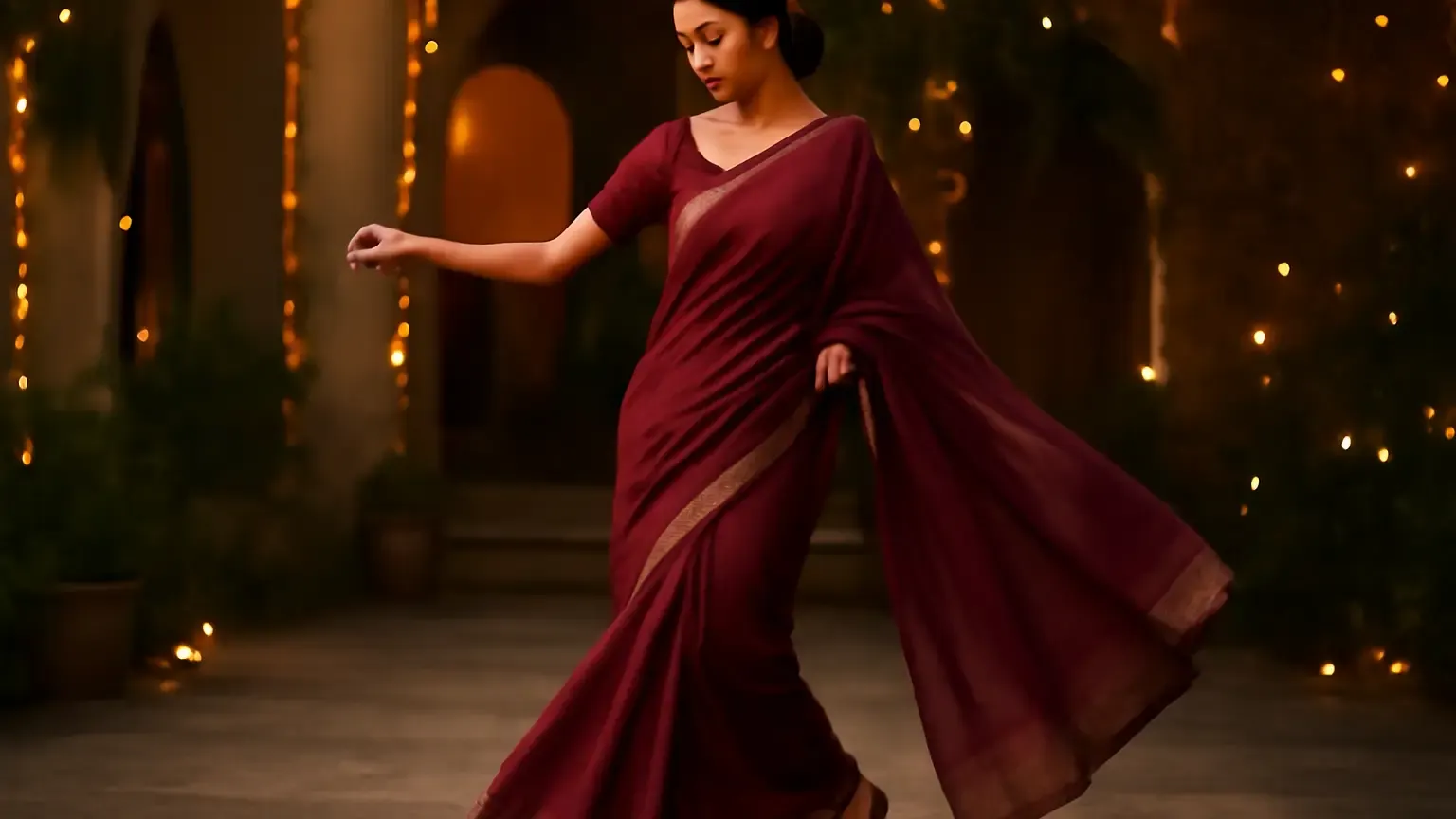
Festive fashion for humid evenings works best when you balance visual richness with airflow: choose cotton-silk, chanderi, mulmul or light georgette, keep heavy work away from sweat-prone areas, and pair the outfit with a supportive blouse and stable footwear. This guide is for anyone attending Indian celebrations, weddings or pujas in warm, sticky weather and wants to look dressed up without fabric clinging, jewellery feeling heavy or a long evening becoming uncomfortable.
Warm evenings can make festive dressing surprisingly difficult. A look that feels elegant in an air-conditioned room may become restrictive outdoors, especially when the fabric has a dense synthetic lining, the blouse has little ventilation or the dupatta is heavily worked. The answer is not to abandon colour, shine or tradition. It is to edit where weight, texture and layering appear.
1. Begin with breathable festive fabrics
The fabric closest to your skin has the greatest effect on comfort. For what to wear to a festive event in humid weather, start with textiles that allow some air movement and do not trap moisture against the body.
- Cotton-silk: A polished choice for sarees and suits, with more structure and sheen than everyday cotton.
- Chanderi: Light and festive-looking, particularly effective for sarees, dupattas and kurta sets.
- Mulmul cotton: Soft and airy, best when the outfit is elevated with a dressy border, jewellery or detailed blouse.
- Light georgette: Fluid and easy to drape, though the lining should still be checked for breathability.
- Linen blends: Useful for contemporary festive separates because they feel less dense than heavily coated fabrics.
Pure silk, velvet and thick brocade can still work for a short indoor event, but they demand more careful styling. Avoid assuming that a natural-looking outer fabric guarantees comfort: a heavy polyester lining can cancel out its benefit. Before buying, rub a small section between your fingers, check whether it feels coated, and inspect the inside seams.
2. Place embellishment where it lifts the look, not the temperature
Festive dressing does not require equal decoration across every panel. Concentrated detail often looks more intentional and feels lighter. Choose a plain or lightly textured body with a decorated border, neckline, sleeve edge or hem.
This approach is especially helpful for lightweight lehenga styling. A skirt with a narrow sequin border and a clean, airy flare can look more modern than a fully covered skirt. Similarly, a saree with a statement pallu allows you to keep the pleats and waist area relatively unencumbered. If you prefer metallic work, select small sequins, thread embroidery or spaced motifs instead of thick stones packed closely together.
Keep dense embellishment away from the underarms, waistband and back of the knees. These are high-contact areas where friction and trapped warmth become noticeable first. An embellished blouse can remain comfortable when the work is limited to the front panel or sleeves and the sides are made from a smooth, lighter fabric.
3. Choose a blouse for ventilation and support
A blouse can decide whether a festive outfit feels wearable for six hours. For sweat-friendly blouse designs, prioritise a secure fit without excessive compression. A blouse that is too tight creates heat and makes even a breathable saree feel clingy.
- Try a lined front with a lighter or unlined back if modesty and structure are needed.
- Consider a wider shoulder strap, elbow-length sleeve or a modest square neckline for better support.
- Use small covered buttons, side openings or a back panel only if they sit comfortably when you move.
- Choose a moisture-wicking camisole when the blouse fabric is sheer, scratchy or loosely woven.
For a lehenga, a structured crop blouse with a little ease at the ribcage is often more comfortable than a very tight corset shape. For a saree, a blouse with a stable shoulder and a well-finished armhole reduces repeated adjusting. Have the outfit trialled with the exact bra, camisole and drape you plan to wear; festive tailoring can feel different after several hours.
4. Make the drape do the cooling
A practical drape creates air gaps and reduces the need to keep touching the outfit. A saree pallu can be pinned at the shoulder with enough looseness to fall naturally rather than being wrapped tightly around the torso. If you like a pleated pallu, keep the pleats broad and light instead of adding multiple layers.
Organza dupatta styling can work well for a salwar suit or sharara because the fabric gives a dressed-up finish without the density of a heavily woven stole. Wear it over one shoulder or secure it diagonally with discreet pins so that both hands remain free. Avoid stacking a dupatta, jacket and long stole simply because each piece is attractive separately. In humidity, one breathable layer usually looks cleaner than three competing layers.
When selecting festive co-ord sets, look for a relaxed shirt, tunic or short jacket over a wide-leg trouser or fluid skirt. This gives the visual polish of coordinated dressing while allowing movement around the waist and legs.
5. Build comfort into jewellery, makeup and bags
Accessories should add focus without creating pressure points. For lightweight jewellery for weddings and other long celebrations, choose one main piece: sculptural earrings, a slim choker or stacked bangles. If statement earrings are the highlight, skip a heavy necklace and keep the neckline open. Check earring backs before leaving; soft silicone backs can feel more comfortable than sharp metal edges during extended wear.
A small potli or compact shoulder bag is useful, but it should not force you to hold your outfit up all night. A crossbody with a short, soft strap can be more practical for an outdoor venue. Keep essentials such as tissues, safety pins, blotting paper and a small comb in a pouch rather than loose in the bag.
For humidity-proof makeup, use a thin layer of moisturiser, allow it to settle, and apply makeup in light layers. Waterproof or long-wear eye products may help at a festive event, but comfort still matters: avoid applying excessive powder, which can look heavy as the evening progresses. Touch up the T-zone rather than repeatedly adding base.
6. Finish with footwear that can handle the venue
Beautiful clothing loses its appeal when footwear causes pain before dinner. Comfortable festive footwear for long celebrations should have a secure strap, a stable heel or a cushioned flat sole. Block heels and embellished juttis are often easier to manage than very thin stilettos, especially on lawns, uneven paving or crowded dance floors.
Wear the shoes briefly at home before the event. Test sitting, climbing stairs and walking at a normal pace. If the shoe rubs in one place, add a discreet comfort pad or change the style; do not wait until the celebration to discover the problem. Keep the hem clear of the ground so it does not collect moisture or become a trip hazard.
A simple decision guide for humid-weather festive dressing
Use the venue and duration to edit the outfit:
- Outdoor puja or daytime-to-evening event: Choose cotton-silk, chanderi or mulmul, minimal lining, a light dupatta and flat or low-heel footwear.
- Wedding reception with indoor cooling: Use a breathable base with one richer element, such as a decorated blouse, metallic border or statement earrings.
- Dance-heavy celebration: Select a secure blouse, fluid skirt or pre-pleated saree, low footwear and a bag that leaves both hands free.
- Formal dinner: A clean saree or lightweight lehenga with concentrated embellishment can look refined without a dense, full-surface finish.
As a final test, sit for ten minutes in the complete outfit. Walk, lift your arms, bend slightly and check whether the lining twists or the waistband digs in. If you feel hot or restricted before leaving home, the outfit is unlikely to become more comfortable later.
Common mistakes to avoid
The most frequent mistake is judging comfort by the outer fabric alone. Always inspect the lining, padding and seam finish. Another is choosing a loose outfit with no support: extra fabric does not automatically mean airflow if several layers are wrapped tightly around the body. Heavy jewellery, a slippery drape and brand-new shoes can also create small irritations that become exhausting over a long evening.
Do not rely on emergency fixes such as repeatedly re-pinning a slipping pallu or carrying a jacket that you may never use. Prepare the drape, test the blouse and pack a few practical accessories before the event. If your skin develops persistent or severe irritation from a fabric or product, stop using the suspected item and seek advice from a dermatologist.
Takeaway
The best festive fashion for humid evenings combines one breathable base, one deliberate statement detail and accessories chosen for movement. Select airy textiles, keep embellishment away from high-friction zones, allow the blouse and drape to breathe, and test footwear before the celebration. You can look richly dressed without making every part of the outfit heavy.
Products that may help with this routine
Choose only what fits your skin, hair or personal needs. Use the links below to view current options on Amazon India.
Frequently Asked Questions
What to wear to a festive event in humid weather?
Choose cotton-silk, chanderi, mulmul cotton, linen blends or light georgette, then pair the outfit with a breathable lining, a supportive blouse and stable footwear. Keep embellishment concentrated on the border, neckline or pallu rather than across the whole outfit.
What are the best fabrics for festive outfits in hot weather?
Cotton-silk, chanderi, mulmul cotton, light georgette and linen blends are useful starting points. Check the lining as well, because a dense synthetic inner layer can make an otherwise airy outfit feel hot.
How do you style a lehenga for a warm evening?
Choose a lighter skirt with spaced motifs or a narrow embellished border, pair it with a blouse that has slight ease at the ribcage, and use a single light dupatta. Stable footwear and minimal heavy layering make the look easier to wear.
What blouse should you wear in humid weather?
Look for a well-fitted blouse that supports without compressing, with breathable panels, comfortable armholes and a lining only where needed. Wider straps, secure shoulders and a moisture-wicking camisole can improve comfort.
How can you prevent clothes from clinging in humidity?
Use breathable textiles, avoid overly tight layers, inspect the lining, leave some ease at the waist and choose a drape with air space. A light anti-chafing product may help some people, but patch-test any new product and discontinue it if irritation occurs.
What footwear is comfortable for long festive celebrations?
Choose broken-in juttis, cushioned flats, block heels or low heels with secure straps. Test the shoes at home and match them to the venue, especially if you will walk on grass, uneven paving or a dance floor.