festive fashion for women over 40 works best when polish is balanced with ease: choose breathable fabric, a secure drape or relaxed kurta set, jewellery that adds light rather than weight, and shoes you can stand in. This guide is for women dressing for long October pujas, family gatherings, weddings and dinners. The practical outcome is a graceful outfit that stays comfortable through heat, travel, sitting, photographs and several hours on your feet.
What makes a festive outfit comfortable for a long day?
A successful festive look has to do more than photograph well. It should let you move between the car, prayer space, dining table and dance floor without constant adjusting. For women over 40, the most useful decisions are usually fabric weight, waist comfort, sleeve ease, drape security and footwear support.
- Start with breathability: Cotton silk, chanderi, light linen blends, soft crepe and airy viscose can feel more manageable than dense brocade during warm October afternoons. A fully synthetic fabric may look glossy but can feel less comfortable when worn for hours.
- Plan for movement: Check that you can lift your arms, sit cross-legged if needed and walk up steps. A slightly relaxed kurta or a saree pleated with enough room is more elegant than an outfit that needs repeated correction.
- Keep the visual focus deliberate: If the saree is richly woven, choose simpler jewellery. If the outfit is plain, let earrings, a dupatta border or a textured shoe supply the festive detail.
- Secure the essentials: Use a well-fitted blouse, a discreet saree pin and a petticoat or shapewear layer that does not dig in. Comfort and structure can coexist.
This approach is especially useful for October wedding guest outfits, when an event may begin in warm daylight and continue into a cooler but still busy evening.
Choose the right saree for long festive events
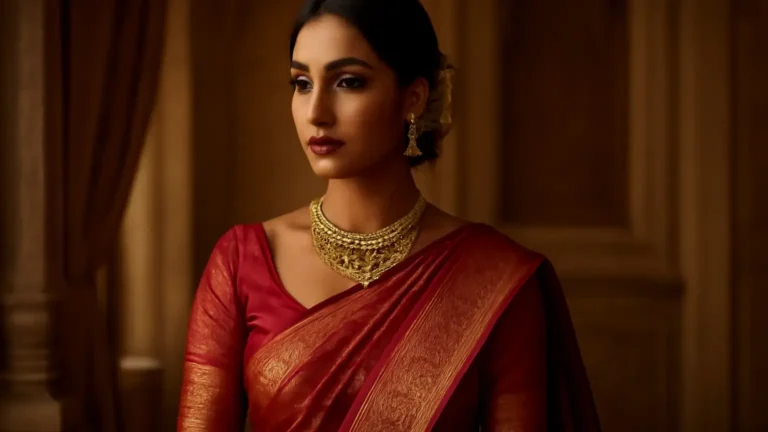
Sarees remain one of the most adaptable choices in Indian festive wear over 40 because the same drape can look traditional, modern or understated depending on the blouse, jewellery and footwear. For long events, fabric and construction matter more than the level of embellishment.
Breathable saree options
Breathable festive sarees in cotton silk, chanderi, silk blends or light georgette offer a useful middle ground between occasion dressing and ease. Chanderi and tissue can look luminous without the weight of a heavily embroidered silk, while a soft crepe or georgette may fall smoothly and need less fussing. If you prefer natural fibres, check the weave and lining, as a dense fabric can still feel warm.
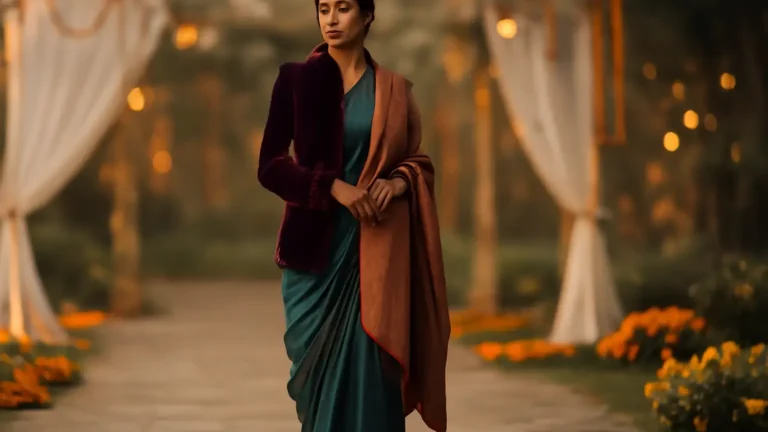
For a daytime puja, try a muted jewel tone, ivory with a coloured border, or a warm neutral with antique-gold jewellery. For an evening reception, deeper shades such as wine, teal, plum or forest green can create presence without requiring a heavily decorated blouse.
Make the drape work harder
Saree draping for long events should prioritise a stable waist and an accessible pallu. Pre-pleat the saree at home, use a few hidden pins and keep the pallu at a length that will not trail underfoot. A front-pallu drape can feel formal, while a neat shoulder drape gives the hands more freedom for greeting guests and carrying a small bag.
Choose a blouse with sleeves if that makes you feel more secure. Three-quarter sleeves, elbow-length sleeves and a softly structured short sleeve all work well. When selecting flattering blouse necklines over 40, consider a modest V, square, boat or softly rounded neckline according to your comfort and the saree border. The best neckline is one that sits neatly without pulling when you move.
When a kurta set or separates are the better choice
Comfortable kurta sets are practical for events involving travel, family hosting or frequent sitting. A straight kurta with tapered trousers looks clean and composed; an A-line or gently flared kurta creates movement; and an anarkali works when you want more occasion drama without managing a saree.
Look for breathable linings, side slits that allow walking and waistbands that lie flat. If the kurta has heavy embroidery around the neckline, balance it with a lighter dupatta. If the garment is plain, choose a dupatta with a narrow zari edge, a printed stole or a brooch rather than adding several competing details.
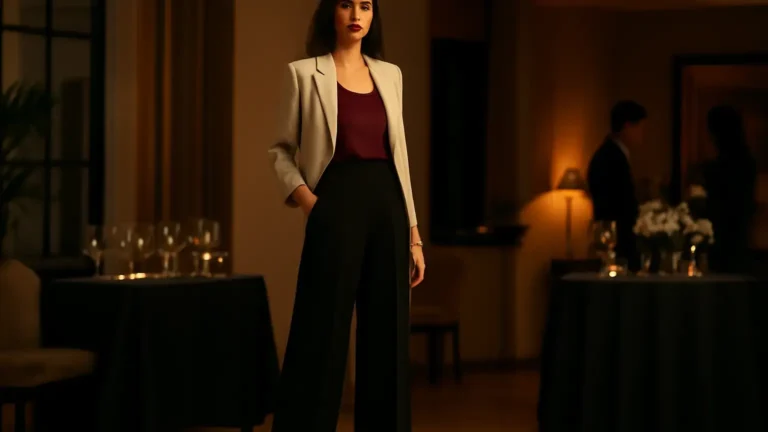
Festive separates for women make it easier to adapt an outfit to the weather. Pair a silk-blend tunic with wide-leg trousers, a brocade skirt with a simple blouse, or a long jacket with a plain kurta and cigarette pants. These combinations are particularly helpful if you want to remove a layer later in the evening. For petite-friendly festive styling, keep the colour column relatively continuous and avoid a very long jacket over a contrasting skirt, which can visually shorten the frame.
Build colour and jewellery with restraint
The easiest way to look polished is to limit the outfit to two or three intentional colour notes. Useful outfit colour combinations for mature skin include terracotta with cream, emerald with antique gold, dusty rose with wine, cobalt with ivory, and bronze with deep teal. These are starting points, not rules: fabric finish and personal preference should guide the final choice.
Jewellery should support the face rather than compete with it. Lightweight festive jewellery is often more practical than a complete heavy set. Try one focal piece—a pair of chandbalis, a layered chain, a cuff or a bold ring—and keep the remaining pieces fine. If the blouse has a high neckline or ornate embroidery, earrings may be enough. With a simple neckline, a short necklace or pendant can create balance.
For long celebrations, check the weight of earrings before leaving home. Heavy pieces can become uncomfortable after several hours, especially when combined with a saree pin, hair accessories and a structured bag. A small jewellery pouch is useful if you want to change from daytime studs to evening earrings without carrying an entire collection.
Choose supportive footwear before you choose the hemline
Supportive footwear for sarees does not have to look clinical or casual. A low block heel, cushioned jutti, embellished flat, supportive sandal or dressy slip-on can work, provided it stays secure and gives your feet enough room. Wear the actual shoes during the fitting so the saree or trouser hem is set at the correct length.
For a saree, a two-inch block heel may offer height without the instability of a narrow stiletto. For a kurta set, a pointed flat or low wedge can lengthen the line while remaining easier to walk in. Avoid wearing completely new footwear to a wedding or festival; test it indoors first and carry discreet blister protection if you are prone to rubbing.
Keep a small pair of foldable flats only as a backup, not as a substitute for a well-planned primary shoe. A shoe that slips at the heel or pinches across the toes can affect posture and enjoyment throughout the event.
Finish the look for warmth, photographs and travel
Festive layering for warm weather should be removable and lightweight. A sheer dupatta, short structured jacket, fine shawl or compact stole is more practical than a thick outer layer for most October gatherings. Carry the layer in a breathable fabric bag so it does not crush the rest of your outfit.
For low-maintenance festive makeup, focus on a comfortable base, softly defined eyes, a water-resistant liner if you use one, and a lip colour that can be reapplied easily. Blotting paper or a small powder compact is more useful than repeatedly adding heavy product. Keep skincare simple on the day: use products you already know suit you, allow sunscreen to settle, and avoid experimenting with a new active or strongly fragranced product before an important event.
Hair can be equally practical. A low bun, soft braid or half-up style keeps the face clear and reduces the need to restyle after travel. If you prefer open hair, use a light clip or pin so it does not repeatedly catch on earrings or the saree border.
A simple preparation routine for the event day
- Lay out every component the night before: outfit, inner layer, footwear, jewellery, bag, pins and any wrap. This reveals missing pieces before the morning becomes rushed.
- Try the complete outfit once: Sit, walk, raise your arms and take a few photographs. Check whether the pallu, dupatta or hem needs adjustment.
- Pack a small repair kit: Include safety pins, fashion tape, a hair tie, tissues, a compact mirror and a few pain-free comfort items you normally use.
- Dress in the correct order: Apply makeup before wearing a delicate blouse or pale kurta where possible. Put on the footwear before finalising the saree length.
- Keep one element easy: If the outfit is elaborate, choose simple hair and jewellery. If the saree is minimal, add one clear festive accent.
Common mistakes to avoid
Buying an outfit only for its embroidery is a common mistake. Dense work can become tiring, catch on bags and feel warm when worn for several hours. Another is choosing a blouse or kurta that is technically the right size but restrictive across the shoulders. Always assess sitting comfort, not just the standing mirror view.
It is also easy to over-accessorise. A heavily bordered saree, ornate blouse, large necklace and statement earrings may each be attractive alone but visually compete together. Select a hierarchy: clothing first, one jewellery focal point second, and supporting details last.
Finally, do not leave footwear until the end. Shoes affect the hem, posture and confidence of the entire look. A polished outfit that allows steady walking will always serve you better than a dramatic one that makes every step cautious.
Takeaway
The most effective festive fashion for women over 40 combines breathable fabric, a secure silhouette, considered colour, light jewellery and footwear that supports real movement. Whether you choose a saree, kurta set or separates, test the complete look before the event and remove anything that creates friction. Elegance for a long October celebration is not about wearing more; it is about choosing every element with purpose.
Products that may help with this routine
Choose only what fits your skin, hair or personal needs. Use the links below to view current options on Amazon India.
Frequently Asked Questions
What should I wear to a long October festive event over 40?
Choose a breathable saree, relaxed kurta set or coordinated separates with a secure fit, lightweight jewellery and supportive footwear. Add a removable dupatta or fine stole if the evening becomes cooler.
What are the best breathable saree fabrics for women over 40?
Cotton silk, chanderi, light linen blends, soft crepe, georgette and lighter silk blends can work well for long events. Check the weave, lining and embellishment because fabric density affects comfort.
How do I style a kurta set for an Indian festive event?
Pair a well-cut kurta set with one polished accent such as an embroidered dupatta, statement earrings, a brooch or dressy footwear. Keep the remaining accessories simple so the outfit looks intentional.
What is comfortable footwear to wear with a saree?
Low block heels, cushioned juttis, embellished flats, supportive sandals and low wedges are practical options. Wear them during the saree fitting so the hem falls at the right length.
What jewellery looks elegant with festive outfits over 40?
Choose one focal piece, such as chandbalis, a short necklace, a cuff or a bold ring, and keep the rest lighter. The jewellery should balance the neckline and outfit detail rather than compete with it.
How can I keep festive makeup fresh in warm weather?
Use a comfortable base, allow sunscreen and skincare to settle, and carry tissues, blotting paper or a small compact for touch-ups. Avoid trying unfamiliar products immediately before an important event.