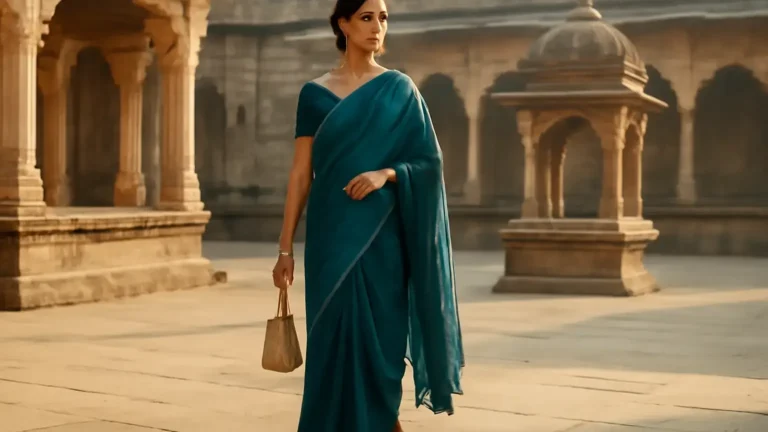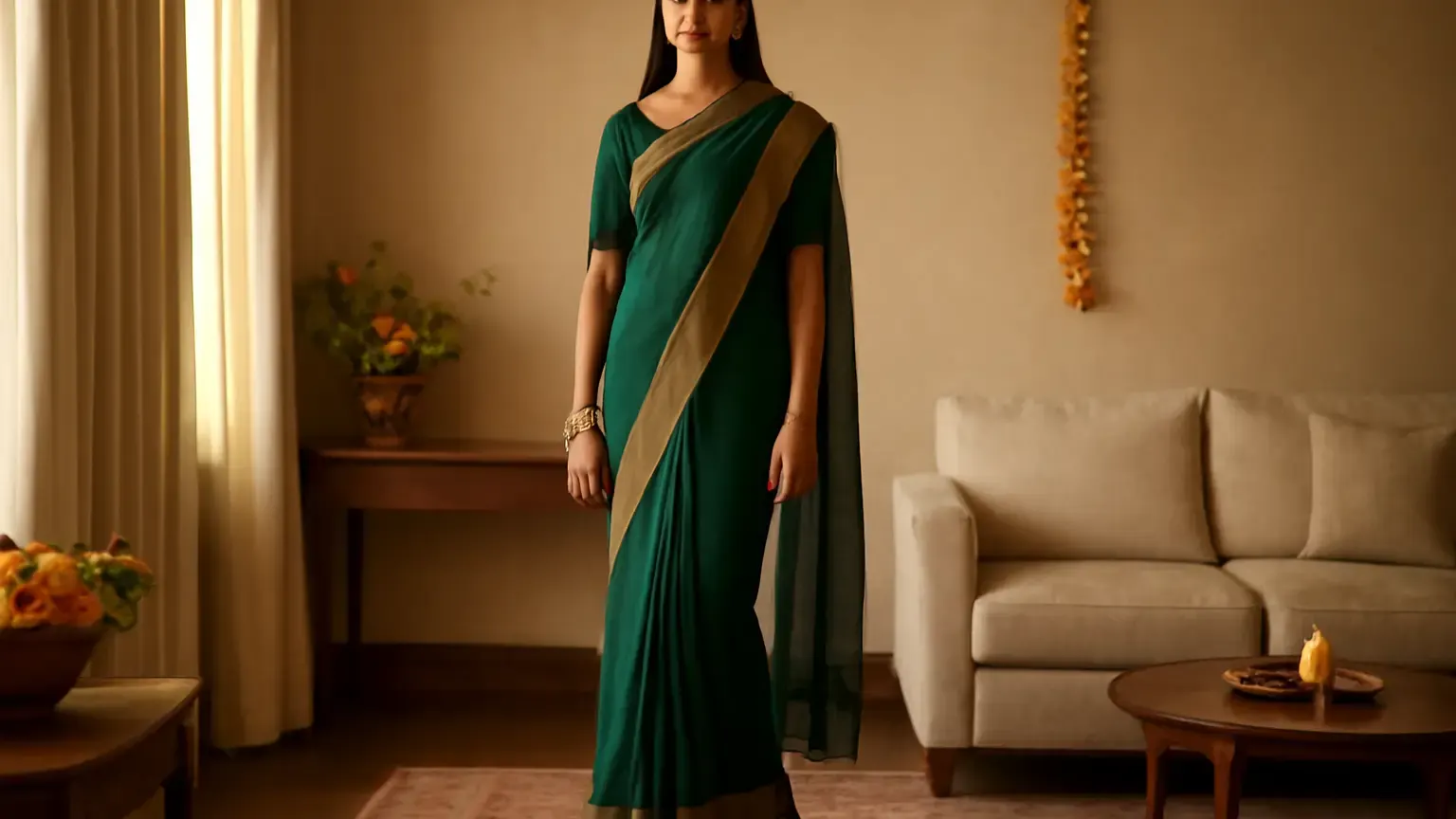
Festive fashion for tall women works best when length is balanced with width, texture and a clear waist point. This guide is for tall women dressing for weddings, puja and festive gatherings who want Indian outfits to look intentional rather than overwhelming. The most useful choices are a well-placed saree border, a considered kurta hem, a proportionate blouse, controlled dupatta volume and footwear that complements—not exaggerates—the frame.
A tall frame gives you plenty of room to showcase rich textiles, long lines and dramatic festive details. The challenge is not to make yourself look shorter; it is to create visual balance so that the outfit, rather than only the wearer’s height, gets attention. In practice, this means combining vertical elements such as a graceful saree drape or long kurta with horizontal or diagonal details such as borders, waist definition, layered jewellery or a thoughtfully placed dupatta.
There is no single rule for every tall woman. A lean frame, a broad shoulder line, a long torso and a fuller hip line will each respond differently to the same outfit. Use the seven looks below as starting points, then adjust the fabric, hemline and styling according to your comfort and the occasion.
1. The saree with a defined waist and visible border
A saree is one of the most adaptable choices in festive fashion for tall women, especially when its proportions are deliberately visible. Choose a saree with a medium or wide border rather than a very narrow finish that disappears against a long frame. The border need not be heavy; a woven zari edge, contrast stripe or textured band can create a useful horizontal break.
For saree draping for tall women, start with a firm, comfortable tuck at the natural waist. Keep the pleats even and allow the pallu to fall from the shoulder without extending so far that it hides the blouse and border. A neatly arranged open pallu adds width across the upper body, while a pleated pallu gives a more tailored effect. Silk, tissue, organza and lightweight brocade all work, but a very stiff fabric may add bulk if the pleats are not secured well.
- Use a contrasting or clearly visible border for visual balance.
- Keep the pallu length generous but controlled.
- Choose a blouse with enough coverage to create a deliberate waist-to-shoulder ratio.
2. The saree with a longer blouse for modern proportion
A cropped blouse can look striking, but it is not the only option. A slightly longer blouse—ending around the high hip or just above the widest part of the hip—can visually connect the upper body to the saree. This is especially useful if you have a long torso or prefer more coverage. The aim is not a tunic-like blouse; it should still be shaped at the bust and waist.
Choosing the blouse line
When considering blouse length and fit, focus on where the hem ends. A hem that stops at an awkward, widest point can make the outfit look interrupted. A clean straight hem, a gentle curved edge or a structured peplum-inspired finish can work better. Boat, square and modest V necklines can all suit a tall frame; choose according to your shoulder width and the amount of jewellery you plan to wear.
This look pairs well with a plain saree and an embroidered blouse for a reception, or with a handloom saree and a textured blouse for a family celebration. Keep the blouse and border from competing for attention: if both are ornate, use quieter jewellery and a restrained pallu.
3. The long kurta set with a deliberate hemline
The right kurta length for tall women depends on both your torso and the bottom you choose. A calf-length straight kurta can look polished with cigarette trousers, while an ankle-length A-line kurta can work with a narrow churidar or a matching palazzo. The most important factor is a deliberate relationship between kurta hem and bottom hem, not a random extra length.
For a balanced festive look, try a long kurta with side slits and a visible trouser line. A contrasting hem border can stop the eye at the lower edge and add interest without making the outfit busy. If the kurta is heavily embroidered, choose a simpler bottom. If the kurta is plain, a brocade trouser, printed dupatta or statement earrings can provide dimension.
Very short kurtas may emphasise a long torso, while an excessively long, loose kurta can hide your shape and feel visually heavy. A tailored shoulder, comfortable sleeve and a gentle waist shape often make more difference than adding extra embellishment.
4. The anarkali with controlled flare
An anarkali is a strong choice for wedding guest ethnic wear because it uses length elegantly while offering movement. Look for a flare that begins around the waist or slightly below the bust, depending on your preferred fit. The flare should open smoothly rather than gather into too many stiff layers, which can add unnecessary volume.
A tall frame can carry a longer anarkali, but the finishing details still matter. A contrast yoke, embroidered waist panel or horizontal hem border helps divide the length. If the dress has a low-contrast monochrome palette, introduce scale through earrings, a structured potli or a dupatta with a defined edge.
For a formal evening event, velvet accents or measured metallic embroidery can add depth. For a daytime celebration, cotton silk, chanderi or another breathable fabric may be more comfortable. Check that the hem clears the floor when worn with your chosen footwear; festive elegance should not depend on constantly lifting the outfit.
5. The high-waisted lehenga with a proportionate choli
A high-waisted lehenga can create a clear waist and make the outfit look composed on a tall frame. The phrase “high-waisted” should not mean uncomfortably high. The waistband can sit at your natural waist or slightly above it, while the choli ends at a point that feels secure and balanced.
If the skirt has a broad border, keep the choli relatively clean or repeat only a small part of the border detail. A blouse with sleeves, a square neckline or an asymmetric drape can introduce width across the upper body. If you prefer a cropped choli, use a dupatta placed across the torso rather than allowing it to hang as one uninterrupted vertical line.
For a wedding, a full skirt with measured volume creates movement without requiring excessive layers. For a puja or smaller gathering, choose a lighter skirt, fewer embellishments and a comfortable blouse. The best festive outfits for tall women for weddings are not necessarily the most elaborate; they are the ones where the skirt, choli and dupatta appear to belong to the same visual composition.
6. The kurta with a cross-body dupatta drape
Dupatta placement can change the perceived proportion of an outfit more quickly than adding jewellery. If you are wearing a long straight kurta, try a cross-body drape from one shoulder to the opposite hip. It introduces a diagonal line and breaks up an uninterrupted vertical silhouette. This is particularly useful when the kurta and bottom are the same colour.
How to style a dupatta for a tall frame
When deciding how to style a dupatta for a tall frame, first consider the fabric. A soft chiffon or georgette dupatta can be pinned neatly for a slimmer look, while a cotton, silk or brocade dupatta can create stronger structure. Avoid excessive loose volume around the neck if the kurta already has a high collar or substantial embroidery.
- For a long vertical outfit, use a diagonal or cross-body placement.
- For a narrow-shouldered frame, let the dupatta open across the shoulders.
- For a broad-shouldered frame, keep the upper fold flatter and allow more fabric to fall below the elbow.
- Show the kurta border or sleeve detail instead of covering every decorative area.
7. The festive co-ord with statement accessories
A tailored ethnic co-ord—such as a kurta with matching trousers, a short jacket and a straight skirt, or a tunic with wide-leg pants—offers an easy route to proportion dressing. The separate pieces allow you to adjust the length and fit more precisely than a one-piece outfit. This can be useful if your torso and legs need different styling choices.
Use a shorter jacket over a longline kurta to create a waist-level break, or pair a longer jacket with a simple inner layer for a layered festive look. A strong sleeve, contrast piping or a broad waistband can add structure. Because co-ords may already create a graphic silhouette, choose one focal accessory rather than stacking every festive detail together.
Statement jewellery for tall women can be scaled confidently: long earrings, a substantial cuff, a layered necklace or a larger bindi may all work. Balance is more important than size. If the neckline is ornate, choose earrings; if the neckline is open and simple, a necklace can anchor the upper half.
Footwear, borders and finishing details
Festive footwear for women should support the outfit’s shape and the event’s practical demands. Block heels, embellished juttis, low wedges and dressy flats can all work with ethnic wear. If the outfit already has a strong vertical line, a contrasting shoe or a metallic finish can create a small visual break. For outdoor puja visits or long wedding functions, prioritise secure straps, cushioning and a heel height you can walk in comfortably.
Borders are useful proportion tools, but placement matters. A border at the saree hem draws attention downwards; a border on the blouse sleeve adds width around the upper body; a dupatta edge frames the body without changing the base silhouette. Repeating the same border in three places can look overly matched, so usually choose one dominant border and one subtle echo.
How to choose the right look for the occasion
For a puja, choose breathable fabric, secure draping and moderate embellishment. A cotton silk saree, straight kurta set or light anarkali is easy to sit and move in. For a wedding, you can add richer textiles, a wider border, layered jewellery or a more structured blouse. For an intimate festive gathering, a co-ord, a printed saree or a simple kurta with a distinctive dupatta can feel dressed without looking overworked.
Before finalising the outfit, do a five-minute movement check. Sit on a chair, raise your arms, walk up a few steps and check the hem in the footwear you will actually wear. Pin the pallu or dupatta only after testing these movements. This routine catches practical problems that a mirror may not show.
Common proportion mistakes to avoid
- Unplanned excess length: More fabric does not automatically make an outfit more elegant. Hem and drape should be intentional.
- Too many competing borders: Saree, blouse, dupatta and footwear borders can divide the outfit into distracting bands.
- Ignoring the waist: Even a loose outfit benefits from a visible tuck, seam, belt-like panel or controlled drape.
- Oversized accessories everywhere: Choose one or two scaled pieces and let the rest support them.
- Buying before checking alterations: Tall proportions may need extra sleeve, kurta or blouse length, so ask about seam allowance before purchase.
Concise takeaway
The most reliable approach to festive fashion for tall women is to balance length with width, texture and a clear point of focus. Start with the occasion, choose a silhouette that gives you comfortable movement, then refine the look through border width, blouse length, dupatta direction and footwear. A tall frame can carry statement dressing beautifully; the goal is simply to make every line look intentional.
Products that may help with this routine
Choose only what fits your skin, hair or personal needs. Use the links below to view current options on Amazon India.
Frequently Asked Questions
What saree drape suits tall women?
A neat saree with an even front pleat, a visible medium or wide border and a controlled open or pleated pallu usually creates balanced proportions. A firm waist tuck and a blouse with considered coverage can help define the silhouette.
What is the best kurta length for tall women?
The best kurta length depends on the bottom: a calf-length straight kurta works well with narrow trousers, while an ankle-length A-line kurta can suit a churidar or streamlined palazzo. Choose a deliberate hem rather than extra length without structure.
How should you style a dupatta for a tall frame?
Try a cross-body drape to add a diagonal break to a long silhouette, or open the dupatta across the shoulders if you want more width. Keep the fabric controlled enough to show the kurta, blouse or waist detail.
What blouse length is best with a saree?
A blouse ending at the natural waist is versatile, while a slightly longer blouse ending at the high hip can suit a long torso or a preference for more coverage. Avoid a hem that stops at the widest part of the hip unless that is the intended design.
What are good festive outfits for tall women for weddings?
A bordered saree, controlled-flare anarkali, high-waisted lehenga or tailored kurta set can all work for weddings. Choose one main focal detail—such as a blouse, border, dupatta or jewellery—so the overall look remains balanced.
What Indian ethnic wear for tall women works well for puja?
Breathable sarees, cotton-silk kurta sets, light anarkalis and simple co-ords are practical for puja. Prioritise comfortable footwear, secure draping and fabrics that allow easy sitting and movement.