Karwa Chauth outfits do not have to mean a heavily embroidered lehenga. For women spending long hours in festive dress, the best choice is a breathable saree, soft suit, sharara or coordinated set that stays comfortable from daytime preparations through puja and moonrise. This guide compares seven lightweight looks by fabric, movement, ritual timing and accessory balance, so you can choose an outfit that feels celebratory without becoming tiring.
How to choose Karwa Chauth outfits by ritual timing
Karwa Chauth dressing has a longer timeline than an ordinary festive evening. You may begin with sargi, spend the day moving between home tasks and getting ready, attend an evening puja, and remain dressed until moonrise. That makes comfort a practical styling priority rather than an afterthought.
Start by asking three questions: Will you be indoors or travelling between homes? Do you need easy movement for puja preparations? Will you be wearing the outfit for several hours without a meal? The answers help narrow down fabric, waist fit, sleeve length and jewellery weight.
- For daytime comfort: choose breathable ethnic fabrics, a flexible waistband and minimal layering.
- For evening puja: add colour, texture or one polished jewellery focal point.
- For moonrise photographs: use a defined drape, neat hair accessories or a contrasting dupatta to add finish.
A fasting-friendly outfit should not feel restrictive around the waist, chest or arms. Avoid scratchy seams, heavy underskirts and footwear that becomes uncomfortable after standing for a long time.
7 lightweight Karwa Chauth outfit ideas
1. A soft silk-blend or georgette saree
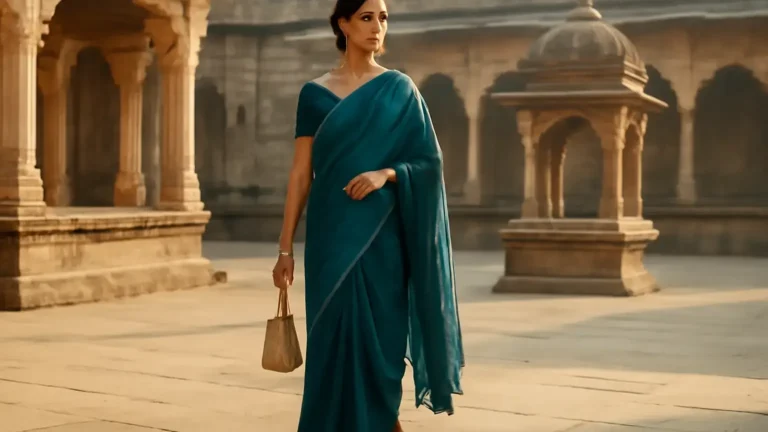
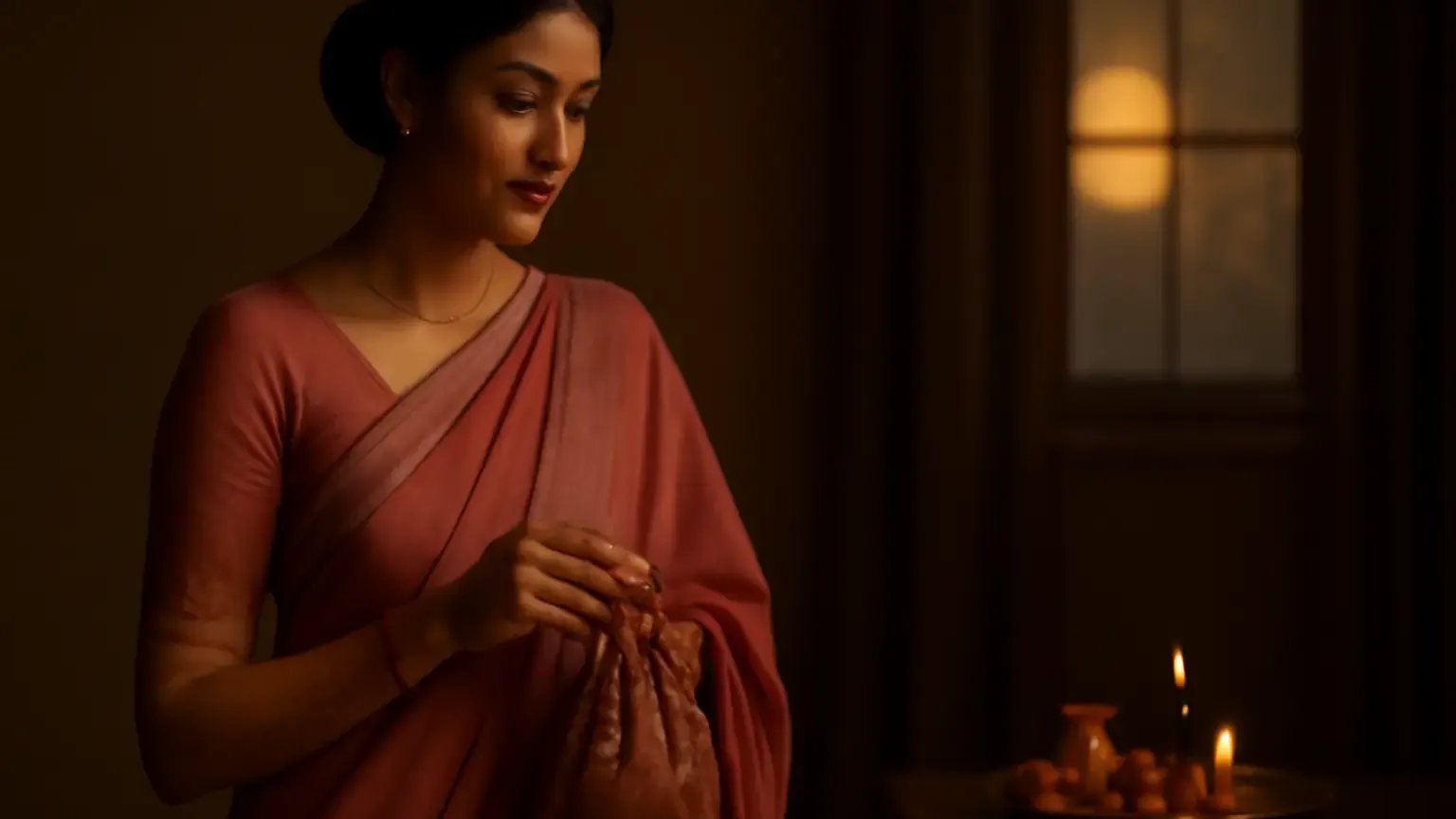
A Karwa Chauth saree offers traditional polish while allowing you to control the amount of embroidery. Choose a silk-blend, crepe or georgette drape with a modest border instead of dense work across the entire body. Jewel tones such as wine, deep pink, rust and emerald photograph well, while peach, rose and ivory create a gentler festive colour palette.
For comfort, pin the pleats securely and keep the pallu light. A fitted blouse with supportive construction is useful, but it should not dig into the shoulders or ribs. Small jhumkas, a slim bangle stack and a compact potli bag are enough to complete the look.
2. A breathable anarkali suit
An anarkali suit is a dependable choice when you want a graceful silhouette without managing a saree. Look for cotton-silk, rayon, modal or lightweight georgette, depending on the season and the amount of structure you prefer. A gently flared hem moves well during household rituals, while a shorter lining can prevent the dress from feeling bulky.
Choose a dupatta with a narrow border and style it over one shoulder or in a loose front drape. If your anarkali already has zari, mirror work or a printed yoke, skip a large necklace and use earrings instead. This keeps the upper body from feeling crowded.
3. A coordinated kurta and palazzo set
For women who prioritise ease, a coordinated kurta and palazzo set is one of the most practical Karwa Chauth dress ideas. The matching colour story looks considered, but the separate pieces offer more flexibility than a single heavily embellished garment. A straight kurta with a flared palazzo works well for puja, sitting cross-legged and moving around the home.
Try a printed cotton-silk set with a lightly embellished neckline, or pair a solid kurta with a brocade or tissue dupatta. Keep the fit relaxed without making it shapeless. A defined cuff, contrast piping or a slim waist tie can provide structure without adding weight.
4. A sharara set with a short kurta
A sharara set gives festive volume while keeping the upper body relatively light. The wide-leg silhouette looks especially effective with a short kurta or peplum-style top and a sheer dupatta. Choose soft georgette, crepe or a fluid satin blend, and avoid very stiff layers that can become cumbersome while sitting or walking.
This look suits an evening puja or a family gathering when you want more drama than a simple suit. Balance the flare with one statement jewellery piece: either chandbalis, a choker or a decorated maang tikka. Wearing all three can make the outfit feel visually heavy.
5. A lightweight lehenga with a simple blouse
You can still wear a lehenga without choosing a bridal-style one. A lightweight lehenga in raw silk, georgette, crepe or cotton-silk with a lightly worked skirt gives the festive effect without a dense can-can or multiple stiff layers. Keep the blouse clean and let the dupatta provide the main detail.
This is a good option if you want a more formal look for photographs. Check the waistband while sitting and walking before the event. A side zip with a little ease, a soft lining and a dupatta that can be pinned securely will make the outfit more manageable from puja to moonrise.
6. A pre-draped saree or saree-inspired set
A pre-draped saree provides the visual impact of a saree with fewer pleating and pinning concerns. It can be particularly useful if you are helping with preparations or moving between indoor and outdoor spaces. Select a version with a flexible waist and a detachable or adjustable drape rather than one that feels tightly engineered.
Keep the blouse and drape in the same tonal family for a streamlined result. A narrow waist belt can define the silhouette, but it should be comfortable enough to wear while seated. Pair the look with a small clutch or potli instead of a large shoulder bag that may disturb the pleats.
7. A kurta, gharara and dupatta combination
A gharara offers a traditional shape with a little more movement than a fitted skirt. Pair it with a straight kurta in a breathable fabric and a lightweight dupatta. This combination suits women looking for comfortable traditional outfits that still feel special for family photographs and the evening ritual.
For a modern finish, use tonal embroidery, a contrast hem or a printed dupatta rather than multiple competing embellishments. Flat juttis or low block heels are more practical than narrow stilettos when the outfit will be worn for several hours.
Fabric and fit decisions that make festive dressing easier
Fabric affects comfort as much as silhouette. Cotton-silk and modal can feel easier during warm weather, while georgette and crepe offer fluid movement. Organza creates a crisp, dressed-up effect but may need a soft lining and careful draping. Brocade is beautiful for a blouse, border or dupatta, though using it across the whole outfit can add stiffness and weight.
Before the event, sit on a chair, climb a few steps and raise your arms while wearing the complete outfit. This simple test reveals whether the waistband, sleeve or hem will become irritating. Also check that safety pins do not press against the skin and that the dupatta does not repeatedly slide near a diya or flame.
Colour can provide richness without extra embroidery. A red or pink base with antique-gold accents feels classic; maroon with blush creates contrast; green with rose-gold details looks festive without being overly traditional. If your outfit is bright, choose quieter accessories. If the outfit is simple, let earrings, bangles and mehendi add the celebratory detail.
Accessory balance: finish the look without overloading it
Accessories should support the outfit’s strongest feature. A saree with a decorated border may need only earrings and bangles. A plain kurta set can carry a more visible necklace or embroidered dupatta. This one-feature rule keeps lightweight festive wear looking intentional.
- With a saree: choose earrings, a bangle stack or a delicate necklace; not necessarily all three.
- With a sharara: use chandbalis or a maang tikka to balance the volume below.
- With a simple suit: add a statement jewellery piece or a textured dupatta.
- With mehendi: leave some wrist space so the design remains visible instead of hiding it under dense bangles.
Keep makeup and hair equally wearable. A low bun, braid or softly pinned waves are less distracting during a long ritual than a style that needs constant adjustment. If you wear a maang tikka, secure it before the final outfit check so it does not pull at the hairline.
Common styling mistakes to avoid
The most common mistake is choosing an outfit only for its photograph and not for its full wearing time. Dense embroidery, tight shapewear and multiple underskirts can quickly become uncomfortable. Another is buying a new pair of high heels for the occasion; unfamiliar footwear is risky when you may be standing or walking after several hours.
Do not leave alterations until the morning of Karwa Chauth. Try the outfit with its blouse, lining, footwear, jewellery and dupatta at least once. Keep spare pins, a small fashion tape strip and comfortable flats nearby. If you are fasting, avoid making the outfit so restrictive that you cannot sit, breathe comfortably or move naturally.
A simple decision guide
Choose the saree if you want classic elegance and are comfortable with draping. Choose the anarkali or kurta-palazzo set if movement and ease matter most. Pick the sharara or gharara for festive volume without a full lehenga. Select the lightweight lehenga when photographs and a more formal silhouette are the priority. A pre-draped saree is ideal when you want traditional impact with less styling time.
The best Karwa Chauth outfits are the ones that respect both the ritual and the person wearing them. One breathable fabric, one clear focal detail and secure, comfortable footwear usually create a more polished result than several heavy elements competing at once.
Takeaway
For an outfit that lasts from preparations to moonrise, prioritise a comfortable fit, breathable ethnic fabrics and a silhouette suited to your movement. A well-draped saree, anarkali, sharara, coordinated set or lightweight lehenga can all look festive when the accessories are balanced. Among these Karwa Chauth outfits, the right choice is the one that lets you participate fully while still feeling beautifully dressed.
Products that may help with this routine
Choose only what fits your skin, hair or personal needs. Use the links below to view current options on Amazon India.
Frequently Asked Questions
What to wear for Karwa Chauth fasting?
Choose a relaxed saree, anarkali, kurta-palazzo set or soft sharara in a breathable fabric. Avoid tight waistbands, scratchy lining, heavy underskirts and uncomfortable footwear because the outfit may be worn from daytime preparations through moonrise.
What is the best lightweight Karwa Chauth outfit?
The best option depends on your routine. A cotton-silk or georgette saree is elegant, an anarkali is easy to move in, and a coordinated kurta set is especially practical for household preparations. A lightweight lehenga works well when photographs and formal styling are the priority.
What to wear for Karwa Chauth puja at home?
A comfortable saree, anarkali, sharara set or kurta with a festive dupatta works well for puja at home. Choose a secure drape, low or flat footwear and one main accessory so you can sit and move comfortably.
How do you style a saree for Karwa Chauth?
Use a fluid saree such as georgette, crepe or a light silk blend, pin the pleats and pallu securely, and pair it with one jewellery focal point. A neat bun or braid, a small bindi and a compact potli can complete the look without adding bulk.
Are shararas comfortable for a long Karwa Chauth celebration?
They can be, especially when made from fluid georgette, crepe or satin blends with a flexible waistband. Check the fit while sitting and walking, and choose a lightweight dupatta so the outfit remains manageable during puja and family activities.
What are comfortable Karwa Chauth outfits for women who dislike heavy lehengas?
Good alternatives include a soft saree, anarkali suit, kurta-palazzo set, sharara, gharara or pre-draped saree. These provide festive colour and detail with less bulk, particularly when paired with breathable fabric and restrained accessories.