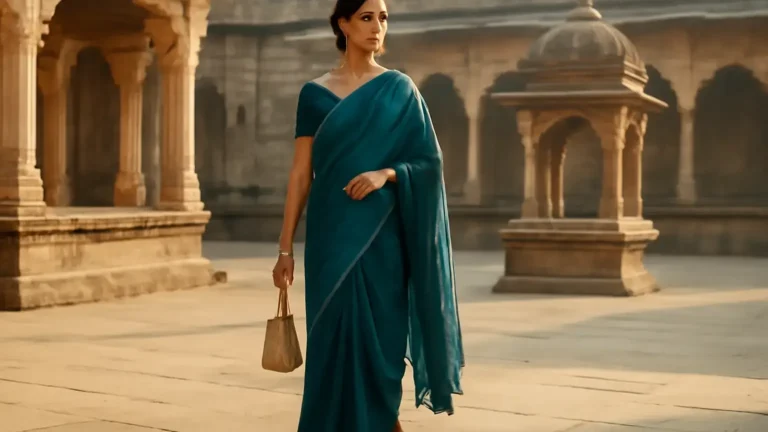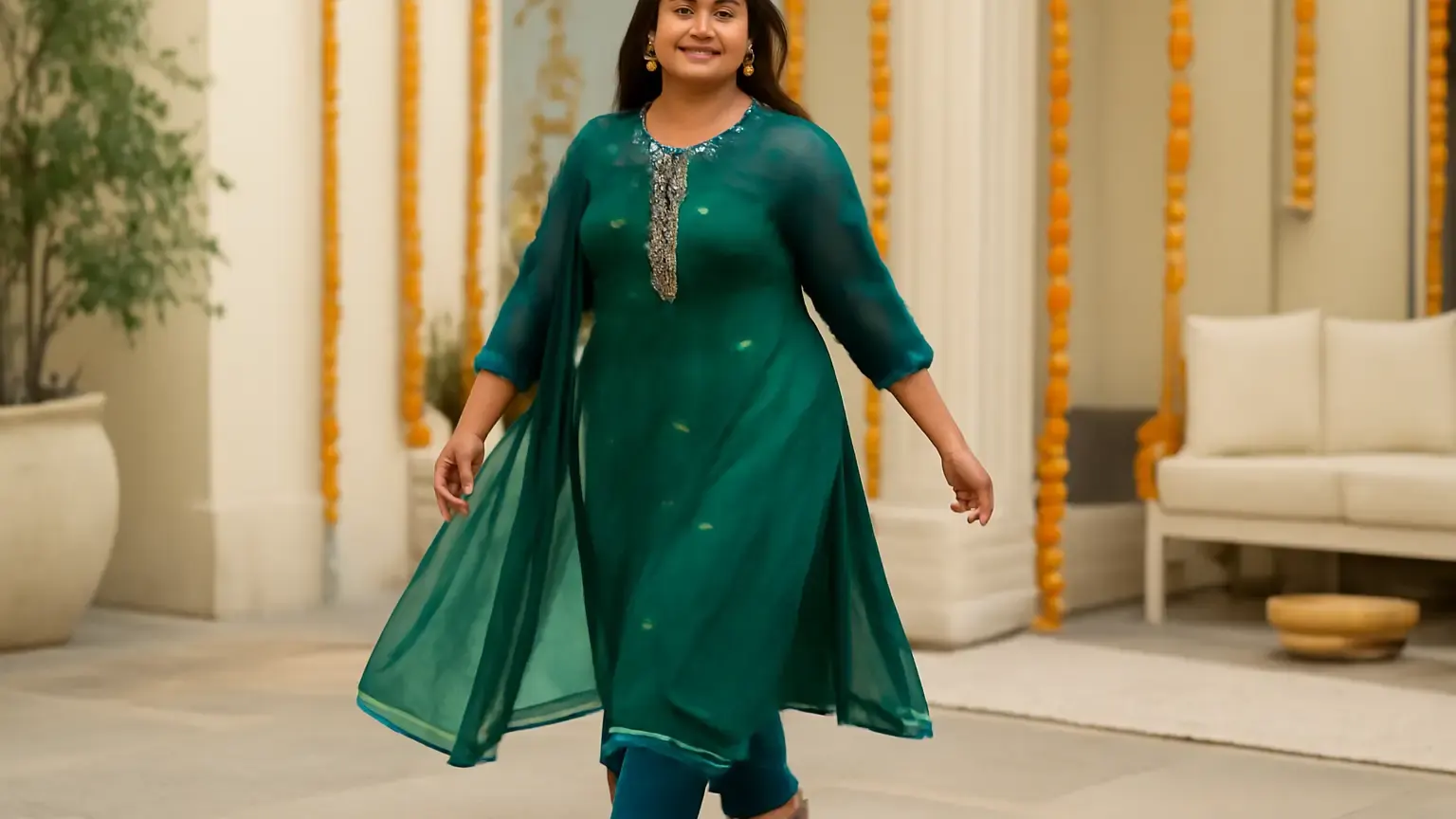
Festive fashion for plus size women should make movement easy, not turn every celebration into an outfit adjustment exercise. For women attending pujas, family lunches, garba nights and Indian weddings, the most reliable choices are breathable fabrics, fluid silhouettes, secure drapes, supportive footwear and one deliberate jewellery focal point. These seven looks show how to balance structure and ease, whether you prefer a kurta, saree, Anarkali, sharara or a coordinated separates look.
Indian celebrations often involve more movement than a standard outfit photo suggests: sitting on the floor, walking between ceremonies, greeting relatives, dancing, travelling and eating comfortably. A festive outfit needs to hold its shape through all of that. The right fit is not simply about choosing a larger size; it is about locating comfort, airflow and visual balance in the design.
How to choose movement-friendly festive fashion for plus size women
Start with the occasion and the amount of walking involved. A home puja may suit a soft cotton-silk kurta set, while a wedding reception can support a more embellished Anarkali or saree. Next, check four points before buying or tailoring:
- Ease: You should be able to sit, raise your arms and take a full step without the fabric pulling across the bust, hips or upper arms.
- Breathability: Cotton silk, mulmul, viscose blends, crepe and lightweight georgette are generally more comfortable than dense synthetic layers in warm venues. Always check the actual fabric composition and lining.
- Anchor points: A well-placed waistband, inner tie, belt, blouse closure or pinned dupatta prevents constant readjustment.
- Visual balance: If the outfit is heavily embellished, keep the silhouette clean. If the shape is simple, use colour, earrings or a dupatta border for interest.
Fit should follow your body rather than a number on a label. Compare garment measurements with a comfortable outfit you already own, and allow extra room where you need to sit or move.
Seven festive looks designed for comfort and occasion dressing
1. A-line kurta set with straight pants
An A-line kurta gently widens from the bust or waist, creating an easy line over the stomach and hips without looking oversized. Pair it with straight pants or relaxed cigarette trousers rather than a very narrow leg. A side slit can improve walking comfort, while a V, scoop or softly squared neckline adds definition without requiring a plunging cut.
For daytime pujas, choose cotton silk, printed viscose or a breathable woven fabric. For an evening event, look for a restrained metallic border or tone-on-tone embroidery. Three-quarter sleeves are a practical choice because they provide coverage while keeping the wrists free for bangles and making hand movement easier.
2. Anarkali with a stable inner layer
An Anarkali suit works well when you want festive volume without a separate lehenga waistband. The flare should begin at a comfortable point and should not be so full that it catches on chairs or steps. A lighter skirt and a smooth inner lining reduce bulk.
Wear it with a neatly fitted churidar, cigarette pant or wide-leg trouser depending on the flare. If the Anarkali has a low neckline, use a well-fitted camisole or stitched modesty panel. A dupatta can be worn over one shoulder and secured at the opposite side with a discreet pin, leaving both hands available for greeting guests and carrying a phone.
3. Saree with a comfort-first drape
Good plus size saree styling depends more on drape placement than on trying to hide the body. Choose a saree that glides rather than clings. Cotton silk, lightweight crepe, satin-faced viscose and fluid georgette can work well, provided the lining is not scratchy or overly warm.
For a secure saree drape for comfort, wear a supportive blouse with enough coverage at the underarm and back, then set the waist pleats flat rather than making them excessively narrow. The pallu can fall from the shoulder with a gentle front pleat and one hidden pin. If you prefer greater stability, use a saree belt under the pallu or a stitched pre-draped saree, but check that the waistband does not dig in when seated.
4. Coordinated sharara or palazzo set
A sharara or palazzo set gives the festive effect of a lehenga with less restriction around the knees. Select a top that skims rather than grips, and consider a longer kurta, short peplum or tunic according to where you like the outfit to finish. A wide leg should fall cleanly from the hip; excessive gathers can add unnecessary weight and make stairs difficult.
For a family function, pair a solid top with a printed bottom. For a sangeet or reception, reverse the balance with a lightly embellished top and a calmer trouser. An elastic-back waistband or side zip with a small amount of ease is often more comfortable than a stiff, tightly fitted waistband.
5. One-colour lehenga with a practical dupatta
If you want to wear a lehenga, a monochrome or low-contrast combination can create a polished vertical flow. Look for a skirt with a flexible waistband and enough hem clearance for your footwear. The blouse should support the bust without compressing it, and the armhole should allow you to lift your arms comfortably.
For layering for Indian weddings, choose one manageable dupatta instead of stacking multiple heavy layers. A shoulder drape pinned to the blouse, or a front-free cape-style layer, lets you dance and move through a crowded venue. Avoid a very long trailing hem unless the event has controlled seating and clear floors.
6. Long jacket over a simple kurta set
A lightweight long jacket is an efficient way to add occasion detail without covering your base outfit in heavy embroidery. Wear it over a plain kurta and trouser set, a camisole with palazzos or a column dress. The jacket should hang open or close with one comfortable fastening; too many buttons can pull across the bust.
This look suits women who want arm coverage or prefer not to style a dupatta. Choose a jacket with side slits for stride and movement. Embroidered borders, woven motifs or a contrasting lining provide interest while keeping the underlying outfit breathable.
7. Kurta with a pre-draped skirt or dhoti-style bottom
A kurta paired with a softly pleated skirt or dhoti-style bottom is a useful contemporary option for festive lunches and smaller celebrations. The top can provide coverage through the hip, while the lower half allows a wider range of movement than a narrow skirt. Check that the pleats do not open awkwardly when sitting and that the waistband remains secure.
Keep the upper half visually simple if the bottom has strong volume. A narrow border, sculptural earrings or a bright dupatta is enough to make the outfit feel celebratory.
Fabric, sleeve and drape decisions that improve comfort
The best breathable festive fabrics for plus size women depend on the venue, season and your personal tolerance for warmth. Cotton blends and cotton silk are useful for daytime events. Viscose and modal blends can offer fluidity, while lightweight georgette and crepe work for draped layers. Silk blends may feel luxurious but can still become warm when heavily lined, so inspect the inside of the garment rather than judging only the outer fabric.
Sleeves should support the activity. Three-quarter sleeves are versatile for meals, rituals and bangles. Elbow-length sleeves offer coverage with less fabric at the wrist. Flutter or balloon sleeves can look beautiful, but check that they do not catch in food, diyas or bags. If you prefer sleeveless styles, a breathable jacket or dupatta can provide optional coverage instead of forcing you into a hot inner layer.
Place volume intentionally. A flared hem creates movement, while a structured neckline or border can frame the face. If you want waist definition, try a seam, tie or narrow belt placed where it feels comfortable rather than tightening the whole garment. Definition should come from construction, not compression.
Footwear and jewellery: keep the balance practical
Comfortable festive footwear should be selected before the final hem is fixed. For long ceremonies, choose cushioned flats, low block heels, embellished juttis or supportive kolhapuri-style sandals. If you prefer heels, a stable block heel is generally easier to walk in than a narrow high heel. Test the shoes indoors with the outfit and check that the hem does not catch under the sole.
Jewellery works best when it has one clear focal point. Choose statement earrings with a simpler necklace, or a necklace with smaller earrings. If the blouse or dupatta already has a high-shine border, a pair of jhumkas and bangles may be enough. Keep heavy pieces away from areas where they rub against a neckline or catch in the hair. A secure clasp matters as much as the design.
Colour and styling formulas that are easy to repeat
Festive colour combinations do not need to be complicated. Try one of these formulas:
- Monochrome plus metallic: emerald with antique gold, plum with muted silver or rust with soft gold.
- Neutral base plus bright accent: ivory, beige or charcoal with fuchsia, saffron, teal or cobalt.
- Two related shades: rose and wine, coral and orange or powder blue and deep blue.
Use the brightest shade near the face if you want the outfit to feel lively, or place it in the dupatta and shoes for a quieter base. Metallic details can be concentrated in the border, earrings or footwear rather than spread across every layer.
Common mistakes to avoid before the celebration
- Buying for the size label alone: Shoulder, bust, hip and garment length measurements are more useful than a standardised label.
- Choosing stiff fabric for all-day wear: Dense brocade can be beautiful, but use it selectively in a border, blouse or jacket.
- Leaving the drape trial until the event: Sit, walk, climb a few steps and raise your arms after pinning the saree or dupatta.
- Overloading every element: A heavy outfit, large necklace, dramatic earrings and high heels may compete for attention and reduce comfort.
- Ignoring finishing details: Scratchy seams, loose hooks, an exposed petticoat or an unstable waistband can spoil an otherwise excellent look.
A simple final fitting routine
Try the complete outfit at least once with its actual innerwear, jewellery and footwear. Sit for five minutes, walk across the room, turn, lift both arms and check the outfit from the back. Keep fashion tape, two safety pins, a small hair tie and blister plasters in your bag if the event is long. These small preparations are especially helpful for sarees, dupattas and layered looks.
The most successful festive wear for plus size women is clothing that lets you participate fully in the celebration. Choose a silhouette that gives you room, a fabric that suits the weather, a drape that stays put and accessories that finish rather than burden the look. That is the practical foundation of festive fashion for plus size women: confidence created by comfort, not by constant adjustment.
Products that may help with this routine
Choose only what fits your skin, hair or personal needs. Use the links below to view current options on Amazon India.
Frequently Asked Questions
What to wear to an Indian wedding if you are plus size?
Choose an A-line kurta set, fluid Anarkali, coordinated sharara, comfortable saree or relaxed lehenga with a stable waistband. Prioritise breathable fabric, easy arm movement and footwear you can walk in for several hours.
What are the best breathable festive fabrics for plus size women?
Cotton silk, cotton blends, viscose, modal blends, lightweight georgette and fluid crepe can work well, depending on the weather and lining. Check the fabric composition and avoid dense, heavily layered construction for warm venues.
How do you drape a saree comfortably for a wedding?
Use a supportive blouse, set flat waist pleats, keep the pallu secure with discreet pins and choose a saree that glides rather than clings. A saree belt or pre-draped style can add stability if the waistband feels comfortable.
Which sleeves are best for plus size festive wear?
Three-quarter and elbow-length sleeves are versatile because they provide coverage while keeping the wrists free. Flutter or balloon sleeves can work too, but check that they do not catch on food, bags or ritual items.
What footwear is comfortable for plus size festive outfits?
Cushioned flats, embellished juttis, supportive sandals and low block heels are practical options. Test the shoes with the finished hem and select a pair that feels stable while walking and standing.
How should jewellery be styled with a plus size festive outfit?
Choose one focal point, such as statement earrings or a necklace, and keep the remaining pieces lighter. Match the jewellery’s visual weight to the outfit’s embroidery and check that clasps or edges do not rub or catch.