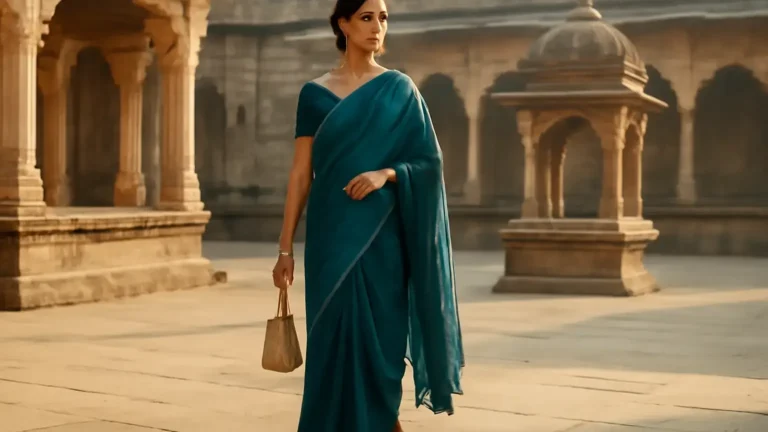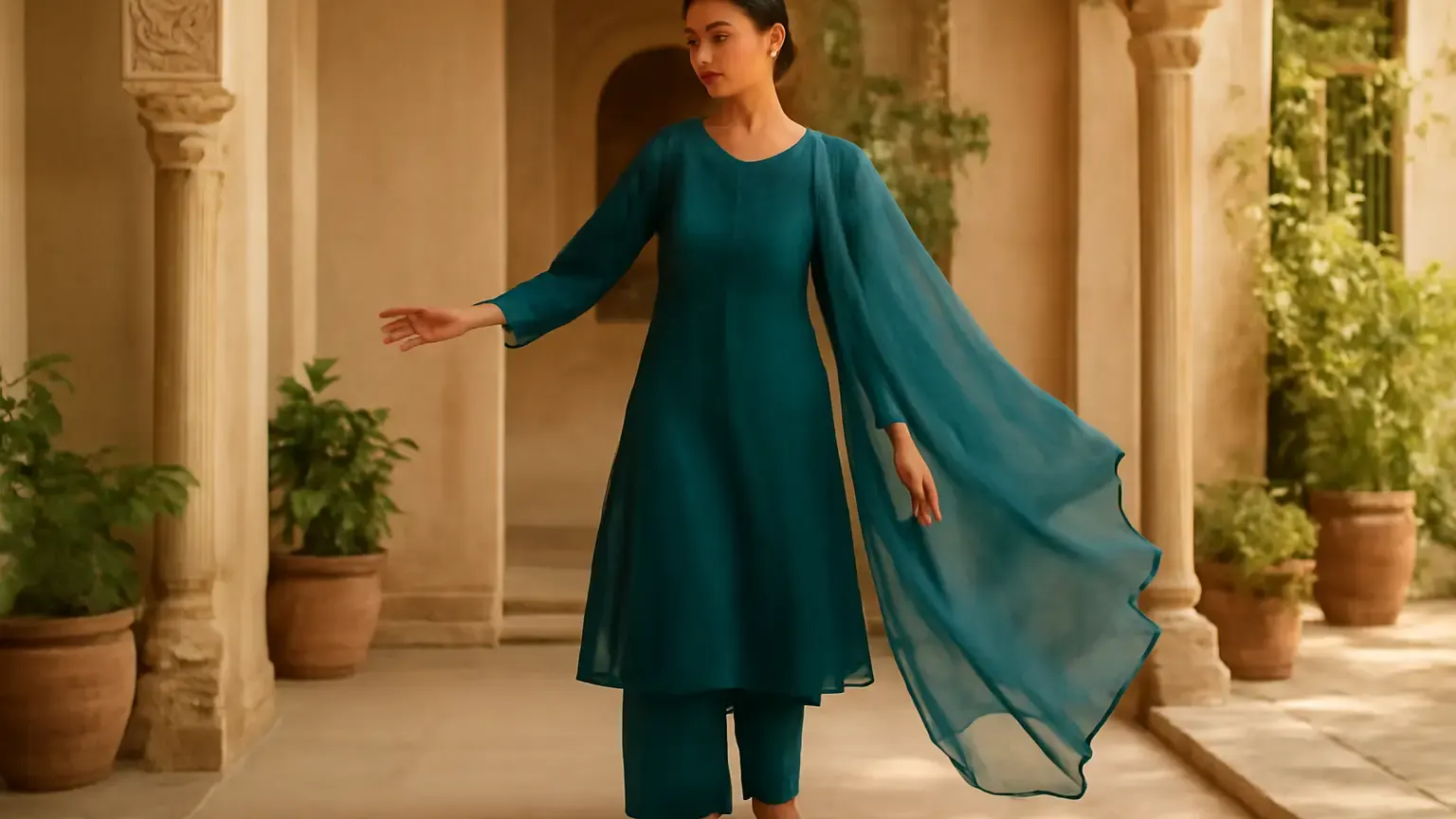
Indian festive fashion works hardest when one outfit can handle heat, movement, family photographs and a second wear. This guide is for women in India choosing festive clothing for Diwali, puja, weddings or office celebrations, especially in warm or humid cities. The practical answer is to prioritise breathable bases—cotton, cotton-silk, linen blends and fluid separates—then change the dupatta, jewellery, footwear or drape to create a fresh look.
Festive dressing in India does not have to mean a heavily embroidered, difficult-to-repeat ensemble. The most useful wardrobe is built around a few adaptable silhouettes that look celebratory without trapping heat or restricting movement. Think of the base garment as a canvas: breathable fabric provides comfort, while colour, accessories and styling create the occasion-appropriate finish.
How to choose breathable festive wear
Start with the event, weather and amount of movement rather than buying for embellishment alone. A daytime puja usually benefits from a lighter colour and airy weave, while an evening celebration can take deeper tones, metallic details or a more dramatic accessory. In coastal and tropical cities, humid weather clothing should allow air circulation and avoid too many synthetic layers.
- Check the fibre content: cotton, cotton-silk, linen blends, viscose and soft silk blends generally feel easier in warmth than thick polyester-heavy fabrics. Always consider the lining too; a synthetic inner layer can make an otherwise light outfit feel hot.
- Prioritise movement: side slits, wide-leg trousers, fluid skirts and relaxed sleeves are more practical for sitting on the floor, travelling or greeting guests.
- Use decoration strategically: embroidery on the neckline, border or sleeves gives a festive effect without covering the entire garment in weight.
- Plan the second wear: before purchasing, imagine the top with jeans, the bottom with a plain kurta, or the saree with a different blouse.
A good rule is to select one visual focal point—an embroidered neckline, bright dupatta, sculptural earring or metallic border—and keep the rest comfortable and clean.
Six repeatable Indian festive outfits
These six formulas cover different levels of dressing, from a simple family gathering to a polished evening event. They are deliberately modular, so you can refresh the same base without looking as though you wore an identical outfit twice.
1. Straight cotton kurta with wide-leg trousers
A straight cotton kurta set is one of the easiest foundations for Indian festive outfits. Choose a jewel tone, warm ivory, marigold, rose or deep green, and look for subtle details such as threadwork, a contrast placket or a neat printed border. Wide-leg trousers improve ventilation and feel less restrictive than a narrow churidar.
For the first wear, add a lightweight dupatta in a contrasting colour and small gold-toned earrings. For the repeat, remove the dupatta, add a sleeveless waistcoat or wear the kurta over straight jeans. Change from embellished juttis to flat sandals to shift the mood from festive to relaxed.
2. Short kurta, palazzo and statement dupatta
This formula suits women who want a festive kurta set with more movement and a visible accessory moment. A short or mid-length kurta works well with a fluid palazzo, while a printed, woven or lightly embellished dupatta supplies colour. Keep the kurta relatively simple if the dupatta has a strong border.
For daytime, try cotton or mulmul with a soft printed drape. At night, switch to a tissue-like or chanderi-inspired layer, statement earrings and a compact potli bag. The same palazzo can later be worn with a plain shirt or tunic, making the set more useful beyond the festive calendar.
3. Indian co-ord sets with festive accessories
Indian co-ord sets are a practical choice when you want a polished outfit without coordinating several unrelated pieces. Look for a breathable shirt-and-trouser, tunic-and-skirt or kurta-and-pant pairing in a tonal print or textured fabric. A consistent colour makes the outfit look intentional, while separate pieces increase rewear options.
Style the co-ord with a slim metallic belt or a long necklace for an evening event. On its next outing, separate the pieces: wear the top with neutral trousers, or style the trousers with a white shirt and one festive accessory. Avoid overly specific all-over motifs if maximum versatility is the goal.
4. Cotton-silk saree with a comfortable blouse fit
A cotton silk saree offers the visual richness of silk with a lighter, more approachable feel for many daytime celebrations. Choose a manageable border rather than a very heavy zari design if you will be walking, travelling or sitting for long periods. Pre-pleating at home can reduce last-minute fuss.
The blouse deserves as much attention as the saree. A comfortable blouse fit means enough room at the armhole and bust, secure but non-digging straps or sleeves, and a neckline that lets you move naturally. Wear the saree with a simple blouse and delicate jewellery first; later, change to a contrast blouse, belt the drape, or pair the blouse with a plain skirt or tailored trousers.
5. Lightweight fusion festive separates
Fusion festive separates are ideal for office parties, gallery events or celebrations where a conventional salwar suit may feel too formal. Try a flowing skirt with a structured crop-length kurta, a draped top with straight trousers, or a longline jacket over a camisole and wide-leg pants. Select one Indian element—a woven border, block print, brocade panel or handwork detail—so the outfit still feels connected to the occasion.
Keep the first styling refined with tonal jewellery and festive footwear. For a repeat, use the jacket over a plain dress or wear the skirt with a tucked-in shirt. This approach also helps bridge Indian festive fashion with a contemporary work wardrobe.
6. Relaxed anarkali or tiered kurta with flat footwear
A lightly flared anarkali or tiered kurta creates movement without the density of a fully embellished occasion suit. Choose a soft, breathable base and look for a flare that does not drag or catch on steps. This is a comfortable option for family gatherings where you want a more traditional silhouette.
Use a narrow dupatta and earrings for a neat daytime look. For an evening repeat, add a dramatic cuff, brighter lip colour or an embroidered jacket rather than piling on every accessory. Flat juttis, kolhapuris or cushioned sandals make the outfit more practical than delicate heels when the event involves standing.
Comparison: which formula fits your celebration?
| Look | Best for | Breathability | Most useful repeat change |
|---|---|---|---|
| Cotton kurta and trousers | Daytime puja or family lunch | High | Replace dupatta with a waistcoat |
| Palazzo and statement dupatta | Colourful gatherings | High | Wear the palazzo with a plain top |
| Indian co-ord set | Office or modern festive events | Medium to high | Split the set into separates |
| Cotton-silk saree | Traditional daytime celebrations | Medium to high | Change blouse or drape |
| Fusion separates | Parties and creative venues | Medium to high | Pair one piece with western basics |
| Relaxed anarkali | Family functions and dinners | Medium | Add a jacket or new jewellery |
How to make one outfit look different next time
Successful repeat outfit styling is less about disguising the garment and more about changing the visual balance. Use this four-part rotation:
- Change the top layer: swap a dupatta for a cropped jacket, cape, waistcoat or belt. A different border can alter the entire colour story.
- Change the jewellery scale: move from delicate studs to chandbalis, or from a necklace to stacked bangles. Jewellery layering works best when one area is dominant and the others stay restrained.
- Change the footwear and bag: juttis create a traditional finish, while kolhapuris or clean flat sandals feel more relaxed. A potli, envelope clutch or small crossbody also shifts the occasion level.
- Change the drape or tuck: wear a shirt untucked, belt a saree, switch from a shoulder drape to a neck wrap, or style a jacket open rather than closed.
Photographs also look different when the colour balance changes. Pair a bright base with neutrals on the first wear, then use a related jewel tone or metallic accent on the second. This creates variety without buying a complete new outfit.
Common mistakes that reduce comfort and rewear
- Buying only for surface shine: a beautiful finish cannot compensate for a scratchy lining, heavy sleeves or poor ventilation.
- Ignoring the back and armholes: tight armholes make even a loose silhouette uncomfortable. Test sitting, reaching and lifting your arms before keeping the garment.
- Overmatching every piece: a matching blouse, dupatta, bag and jewellery set can make future styling difficult. Leave at least one element neutral.
- Choosing impractical festive footwear: new or rigid shoes can distract from the event. Break them in at home, or carry a comfortable backup.
- Skipping garment care: follow the care label, air garments before storage, and avoid leaving sweat or food marks untreated. Proper garment care extends the life of breathable fabrics and embroidered details.
A simple buying checklist
Before checkout, ask five questions: Can I wear this for at least four hours? Does the fabric suit the local weather? Can I style it with two existing pieces? Is the embellishment secure and easy to maintain? Will it work with my usual festive footwear? If the answer is yes to most of these, the garment is more likely to become a repeatable wardrobe favourite rather than a one-event purchase.
For warm regions, prioritise unlined or lightly lined silhouettes where appropriate, but do not sacrifice opacity or support. For cooler evenings, add a breathable layer instead of selecting a heavy base. A well-cut cotton kurta can be more comfortable than a loose but poorly finished synthetic dress.
Takeaway
The strongest Indian festive fashion wardrobe combines breathable foundations with changeable finishing pieces. Choose a cotton kurta, co-ord, cotton-silk saree, fusion separates or relaxed anarkali according to the event, then refresh it through the dupatta, blouse, jewellery, footwear or drape. Comfort is not a compromise: it is what makes an outfit easier to wear, repeat and enjoy.
Products that may help with this routine
Choose only what fits your skin, hair or personal needs. Use the links below to view current options on Amazon India.
Frequently Asked Questions
What are the best breathable Indian festive outfits for humid weather?
Cotton kurtas, cotton-silk sarees, fluid palazzos, linen-blend separates and lightly lined co-ord sets are strong options for humid weather. Choose relaxed fits, breathable inner layers and limited heavy embroidery.
How do you repeat festive outfits without looking repetitive?
Change one or two high-visibility elements, such as the dupatta, blouse, jewellery scale, footwear or drape. You can also split a co-ord set or pair a festive kurta with jeans or neutral trousers.
What should I wear to a daytime Diwali celebration in India?
A breathable cotton kurta set, a light cotton-silk saree or a palazzo-and-dupatta combination works well. Choose lighter colours, flat footwear and restrained jewellery for comfort in daytime heat.
How do you style a cotton silk saree for a festive event?
Pair it with a well-fitting blouse, comfortable sandals and one focal accessory such as statement earrings or a belt. For a second look, change the blouse, jewellery or drape rather than replacing the saree.
Are Indian co-ord sets suitable for festive occasions?
Yes. Choose textured fabric, a thoughtful print, a festive border or subtle metallic detail, then elevate the set with jewellery and polished footwear. The separates can be reworn individually later.