festive fashion for family gatherings works best when polish is built around movement, weather and hours of wear. This guide is for women dressing for pujas, family lunches, house visits and larger celebrations in India. Choose breathable fabrics, a relaxed but shaped silhouette, low-fuss layers, supportive ethnic footwear and jewellery that will not snag or weigh you down. The result is an outfit that photographs beautifully, survives sitting on the floor or travelling between homes, and still feels comfortable by dessert.
Family celebrations rarely follow a short, predictable schedule. A morning puja can lead to lunch, photographs, errands and an evening visit to relatives. The most successful outfit is therefore not simply the most embellished one. It is a considered combination of fabric, fit, coverage, footwear and accessories that remains presentable through changing temperatures and long periods of sitting or standing.
Start with the function, weather and movement
Before choosing a colour or trend, note three practical details: where the gathering is taking place, how long you will be there and how much walking is involved. A home celebration may call for a softer silhouette and footwear that is easy to remove. A restaurant lunch allows a more structured look, while an outdoor evening event may need a layer for cool air.
For family lunch outfits, light colours, breathable materials and a washable dupatta are usually more useful than heavy surface work. For a larger celebration or wedding guest dressing, add one dressier element—such as a brocade jacket, embroidered neckline or silk-blend dupatta—rather than making every part of the outfit ornate.
Choose breathable festive fabrics first
Fabric controls comfort more than decoration does. Good breathable festive fabrics for Indian weather include cotton silk, chanderi, mulmul, soft viscose and linen blends. They allow some airflow while retaining enough structure for a polished appearance. Cotton-silk kurta sets are useful for daytime events; chanderi adds a light sheen without the weight of dense velvet; and a fine linen blend can work well when the setting is relaxed.
Look for wrinkle-resistant fabrics when travel, long car rides or repeated sitting are involved. A small amount of creasing is normal, especially with natural fibres, so the goal is not a perfectly rigid garment. Instead, choose fabrics that recover neatly and keep a handheld steamer or a clean iron available before leaving.
Fabric checks before buying
- Hold the material near a light source to assess whether it needs a lining.
- Check that the lining is smooth and not warmer or rougher than the outer fabric.
- Rub a hidden seam gently against your skin to detect scratchy metallic thread.
- Confirm care instructions if the outfit will be worn for several celebrations.
Build easy-care ethnic wear around one hero piece
Easy-care ethnic wear is easiest to create when one item carries the visual interest. This could be a printed kurta, a textured dupatta, a jewel-tone skirt or a lightly embellished blouse. Keep the other pieces quieter so the outfit looks intentional without demanding delicate handling.
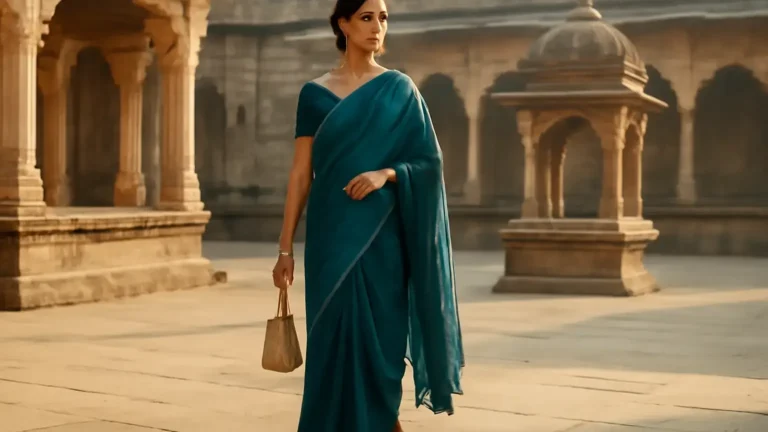
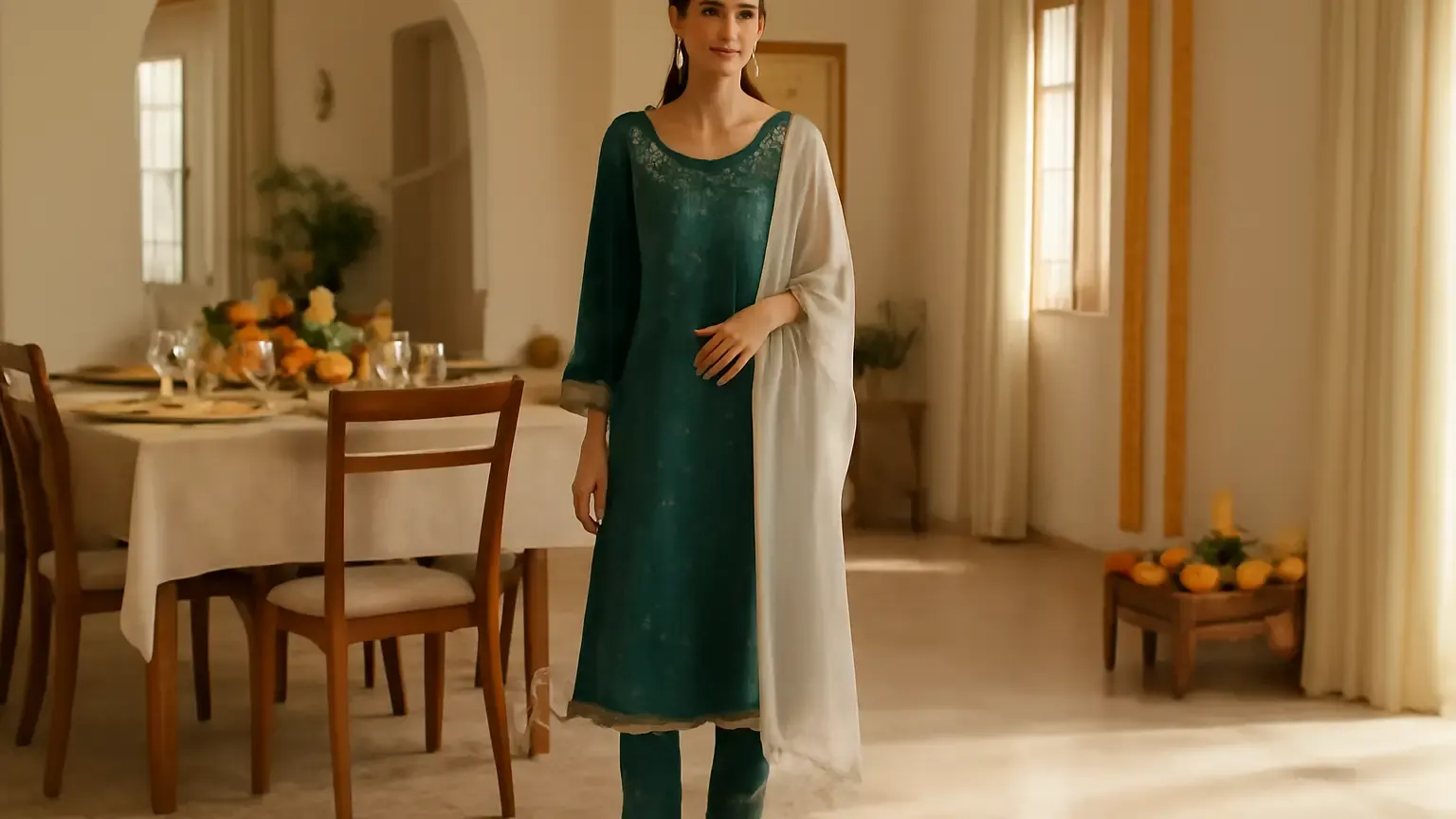
A practical formula is a straight or slightly flared kurta with tapered trousers, a contrasting dupatta and small earrings. Another is a solid anarkali with a printed stole and simple sandals. For a saree, choose a manageable drape in a lighter fabric, secure the pleats properly and pair it with a blouse that allows comfortable arm movement.
When planning kurta set styling, consider proportions. A longer kurta balances slim trousers, while a shorter kurta works with a flowing palazzo or a straight skirt. If the set already has a strong print, repeat one colour in the dupatta or earrings rather than adding another competing pattern.
Use festive layering for comfort and flexibility
Festive layering is useful in homes with strong air-conditioning, open terraces and evenings that become cooler after sunset. A light jacket, sheer stole, cropped cape or longline shrug can make a simple base outfit look occasion-ready. Choose layers that sit comfortably over the shoulders and do not catch on bangles, chair arms or handbags.
Keep the layer removable. This matters when moving between a warm outdoor entrance and a cool indoor dining area. A dupatta with a soft border is often more versatile than a heavily embellished one because it can be folded, pinned or draped over one shoulder without creating bulk.
For a coordinated festive outfit colour palette, start with two main colours and one small accent. Examples include ivory with rose pink and antique gold, teal with cream and silver, or marigold with burgundy and muted gold. This method helps mixed separates look like a complete outfit and makes re-wearing easier.
Make footwear a planned part of the look
Comfortable ethnic footwear should be selected before the final hem is altered. A slightly cushioned jutti, flat sandal, low block heel or supportive wedge can work better than a thin, rigid sole when the event involves standing. Try the footwear with the actual outfit and walk for several minutes at home before the occasion.
For comfortable footwear for ethnic outfits, check three things: whether the toe area allows natural movement, whether the strap rubs, and whether the sole offers enough grip. Break in new footwear gradually rather than wearing it for the first time at a family function. If you carry a small backup pair, choose one that complements the outfit instead of treating it as an afterthought.
Match the footwear formality to the garment. Embellished flats suit a dressy kurta, while a clean leather-look sandal may be better with a linen-blend set. Avoid a very high heel simply to make a hemline work; adjusting the hem or choosing a lower heel usually produces a more relaxed, confident walk.
Keep jewellery light, secure and proportionate
Lightweight jewellery is especially practical for extended gatherings. Small jhumkas, medium hoops, a slim chain, a single cuff or a short necklace can provide enough finish without pulling at the ears or catching in the dupatta. If the neckline is ornate, skip a necklace and let the earrings do the work.
Check closures before leaving and avoid long, loose chains when children may hug you or when the outfit has a delicate weave. Jewellery should also suit the scale of the print: a small floral kurta can take textured earrings, while a large motif may look cleaner with smooth metal accents. A compact potli or structured crossbody keeps essentials close without forcing you to carry a large handbag throughout the event.
Choose comfortable blouse design and reliable grooming
A saree or skirt outfit becomes much easier to wear when the blouse is designed for movement. A comfortable blouse design can include wider shoulder coverage, a supportive neckline, breathable lining and sleeves that do not pull when you lift your arms. Test the sitting position, not just the standing fit, and check that the hook or zip does not press into your back.
Keep beauty practical too. For all-day makeup, use a light base where needed, set areas prone to shine and carry blotting tissue, lip colour and a small comb. Secure hair with a style that tolerates humidity and hugs. Avoid trying an unfamiliar skincare or makeup product on the day of the event, particularly if your skin is sensitive.
A simple preparation routine
- Two or three days before: try on every component, including footwear, undergarments, jewellery and the bag.
- The day before: steam or press the outfit, inspect seams and pre-pack safety pins, fashion tape and a few tissues.
- On the day: dress in the correct order so the finished hairstyle and makeup do not brush against the outfit.
- Before leaving: sit, walk, raise both arms and check that the neckline, hem and dupatta stay secure.
- During the gathering: remove a warm layer when needed, drink water and change into the backup footwear before discomfort becomes distracting.
Common mistakes that make festive outfits uncomfortable
- Choosing decoration over fabric: dense embroidery can feel hot and heavy for a daytime function.
- Ignoring the lining: a breathable outer fabric may still become uncomfortable if lined with a stiff synthetic material.
- Wearing untested shoes: blisters and slipping can undermine even a beautifully styled outfit.
- Over-accessorising: multiple long necklaces, large earrings and stacked bangles can snag and create weight.
- Skipping movement checks: a fitted sleeve or narrow skirt may look good standing still but restrict normal gestures.
- Carrying a difficult dupatta: very heavy borders slide, catch and require constant adjustment.
Quick decision guide for family celebrations
Choose a cotton-silk or viscose kurta set when you want an easy, reusable daytime option. Pick a saree in a light silk blend when photographs and tradition matter but you still need manageable weight. Select a skirt or palazzo combination when you expect more walking and want freedom around the legs. Add a removable layer for air-conditioned venues or evening events.
The best outfit is the one that matches the event’s formality without asking you to monitor it constantly. In that sense, festive fashion for family gatherings is less about buying a complete new wardrobe and more about balancing breathable construction, thoughtful accessories and dependable movement.
Takeaway
For polished family-occasion dressing in India, begin with the climate and schedule, choose a breathable fabric, build around one statement element and test the full outfit while sitting and walking. Supportive footwear, lightweight jewellery and an easy removable layer will make the look more useful—and more enjoyable—over a long celebration.
Products that may help with this routine
Choose only what fits your skin, hair or personal needs. Use the links below to view current options on Amazon India.
Frequently Asked Questions
What is the best festive fashion for family gatherings in India?
A breathable kurta set, light saree or relaxed skirt-and-top combination is a dependable choice. Add one dressy element, comfortable ethnic footwear and a removable layer suited to the venue and weather.
What are comfortable festive outfits for women for long family functions?
Choose cotton-silk, chanderi, mulmul, viscose or linen-blend outfits with room to sit and move. Pair them with low block heels or cushioned flats, lightweight jewellery and a dupatta that stays secure.
What should I wear to a family gathering in India?
For a daytime home or lunch gathering, try a printed kurta with trousers, a light saree or a coordinated palazzo set. For an evening celebration, add a textured dupatta, jacket or subtle embellishment.
Which breathable festive outfits work well for Indian weather?
Cotton-silk kurta sets, chanderi separates, soft viscose and linen-blend outfits are practical starting points. Check the lining as well, because a heavy synthetic lining can reduce breathability.
How do I style a kurta set for a family function?
Balance the silhouette: pair a longer kurta with slim trousers or a shorter kurta with palazzos. Add a contrasting dupatta, medium earrings and footwear that matches the formality without restricting movement.
What is comfortable footwear for ethnic outfits?
Cushioned juttis, supportive flat sandals, low block heels and stable wedges can work well. Test the pair at home, check for rubbing and make sure the sole has adequate grip.