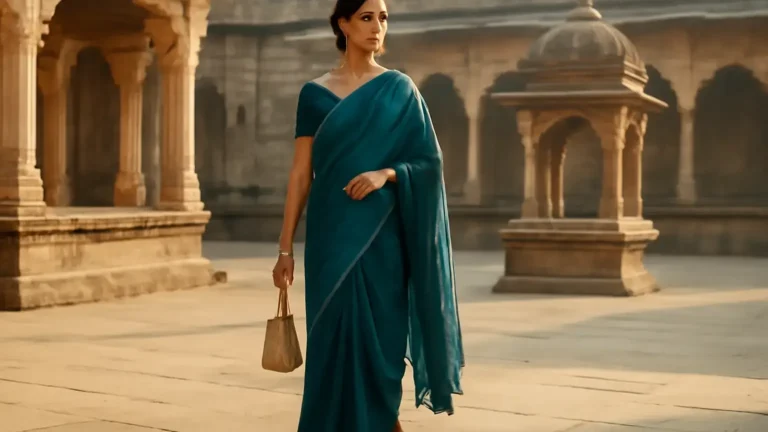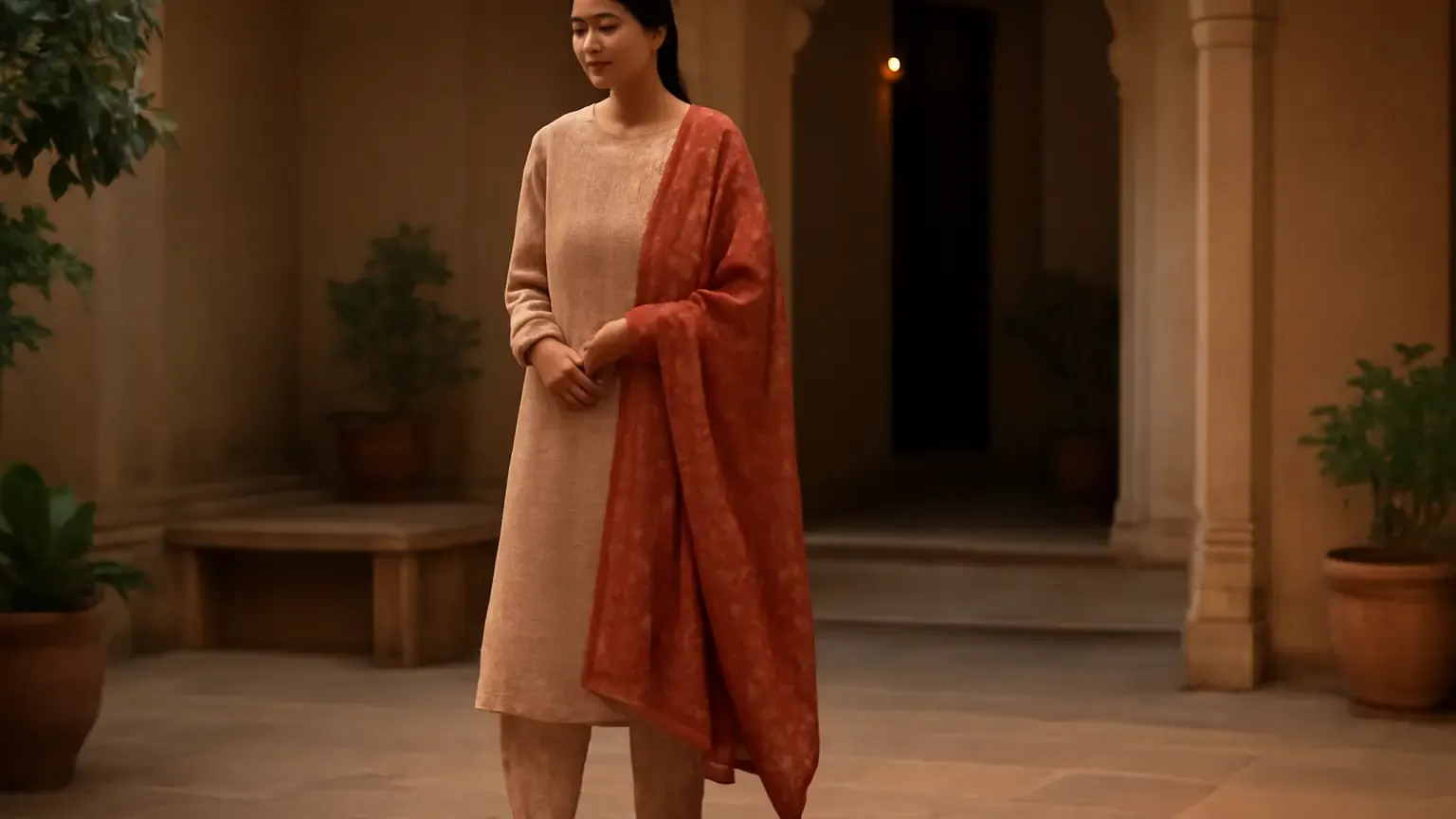
October ethnic wear for women works best when it balances airy fabric, movement and one polished festive detail. This guide is for women dressing for Indian celebrations, family gatherings and office-to-festival plans during warm afternoons and cooler evenings. Choose cotton, linen or light silk blends as your base, then add a versatile dupatta, jewellery or short layer after sunset instead of relying on a heavy outfit all day.
What makes October ethnic wear comfortable?
October can be difficult to dress for across India because the weather is not uniform. North Indian afternoons may still feel hot, while evenings can turn noticeably cooler. Coastal cities often remain humid, and festive venues may be crowded or poorly ventilated. The most useful approach is to build an outfit around cooling fabrics for Indian wear, a non-restrictive silhouette and removable details.
Look for cotton, mulmul, linen, Chanderi, cotton-silk blends and lightweight viscose when you need airflow. These fabrics are generally more comfortable than dense polyester or heavily layered velvet during a long daytime event. However, fabric alone does not decide comfort. A tight sleeve, thick lining, scratchy embellishment or very heavy dupatta can make an otherwise breathable outfit feel warm.
- For daytime: choose pale or mid-tone colours, relaxed fits and minimal lining.
- For a long event: prioritise easy arm movement, secure necklines and footwear you can stand in.
- For evening: carry one light layer or a richer accessory rather than changing the entire outfit.
Best silhouettes for warm afternoons
Kurta sets for reliable ease
Breathable cotton kurta sets are a practical starting point for October because the kurta, trousers and dupatta can be styled together or separately. Choose straight, A-line or gently flared cuts with side slits that allow movement. Cigarette pants look polished, while wide-leg trousers and palazzos offer more airflow. A three-quarter sleeve is useful in the afternoon, but avoid very close armholes if you expect to travel or sit for several hours.
For a festive finish, add a cotton silk dupatta with a narrow border, small earrings and metallic flats. This combination looks considered without turning a simple set into a heavy occasion outfit. For office-to-family plans, keep the daytime jewellery restrained and swap in a bolder pair of earrings after work.
Salwar suits and easy Anarkalis
Comfortable salwar suits suit women who want coverage and flexibility. A cotton salwar, a lightly flared kurta or a short kurti with a flowing bottom can accommodate sitting, walking and eating more easily than a very fitted garment. Anarkalis work well when the flare is light and the fabric is not stiff. Check where the gathers begin: excessive volume at the waist can add bulk and heat.
A printed suit with tonal embroidery is especially useful for daytime festivities. It can be made more formal with a slim belt, a structured potli or a dupatta draped over one shoulder. Keep the number of decorative elements limited so the look remains breathable and easy to manage.
Sarees and lehengas without the heavy feeling
How to approach linen and light sarees
Linen saree styling is suitable for October festivals when the saree is soft enough to drape comfortably and the blouse is not overly padded or restrictive. A linen-cotton saree with a contrasting blouse looks elegant for a puja, lunch or cultural event. Pre-pleating the saree can reduce last-minute adjustment, especially if you will be moving between home, transport and a venue.
Use a breathable cotton lining in the petticoat or choose a well-fitted underskirt that does not cling. Keep the pallu secure with a discreet pin at the shoulder, then add a small brooch or lightweight belt if you need extra structure. Avoid stacking many necklaces with a textured saree; one distinctive accessory often looks cleaner.
Choosing a lighter lehenga
A lightweight festive lehenga can work for evening celebrations, provided the skirt has a manageable flare and the embellishment is concentrated rather than spread across multiple dense layers. Cotton-silk, georgette or light organza blends may feel more comfortable than thick brocade, though the lining and waistband still need checking. Sit down, walk up steps and turn before committing to the outfit.
For a warm afternoon ceremony, choose a short or three-quarter sleeve blouse with a breathable lining. For a cooler night, add a sheer or cotton-silk dupatta instead of a second underskirt. If the lehenga already has shine or embroidery, keep the blouse and jewellery visually simpler.
Chanderi, cotton-silk and other fabric decisions
Chanderi ethnic wear offers a festive appearance with a relatively light hand feel, making it useful when you want sheen without dense embellishment. It can be styled as a saree, kurta set or dupatta. Because some Chanderi weaves can feel delicate, check care instructions and avoid carrying rough bags that may catch the fabric.
Cotton-silk gives more lustre than everyday cotton while usually remaining easier to wear than a heavy silk outfit. Linen brings a naturally relaxed texture but may crease, so it is best for an intentionally easy look rather than a perfectly smooth one. Soft viscose can drape well, but comfort varies by weave and lining. When shopping, read the fibre composition, inspect the inside seams and consider where you will wear the outfit rather than choosing by colour alone.
Day-to-night ethnic styling that takes five minutes
Good day-to-night ethnic styling is based on a small, portable change. Start with a comfortable base outfit and pack one or two finishing pieces in a pouch.
- Begin with the base: wear a breathable kurta set, saree or light suit in a colour that works in natural and indoor light.
- Change the accent: replace small studs with chandbalis, a delicate chain with a collar necklace, or a plain dupatta with a bordered one.
- Add a light layer: a cropped jacket, fine shawl or extra dupatta is useful for air-conditioned halls and cooler outdoor evenings.
- Refresh the finish: blot facial shine if needed, smooth the dupatta and use a small amount of fragrance rather than layering multiple products.
For festive jewellery ideas, choose one focal point: earrings, a bangle stack, a brooch or a necklace. Mixing every statement piece can make an airy outfit feel visually and physically crowded. If your clothing is richly woven, let the fabric provide most of the occasion detail.
Footwear and practical finishing details
Ethnic footwear for women should be selected according to the venue, not only the outfit. Cushioned juttis, low block heels, embellished flats and supportive sandals can all work, but test the pair before a long function. New footwear and thin, slippery soles are poor choices for standing, dancing or walking across uneven outdoor areas.
Check the outfit’s practical details before leaving home. Secure a slippery saree pallu, carry safety pins, test whether the sleeves interfere with bangles and make sure the hem will not catch under your footwear. A small fabric-friendly stain-removal wipe and a compact comb can be more useful than carrying several extra accessories.
For sweat-friendly ethnic outfits, breathable underlayers matter too. Choose comfortable, well-fitting innerwear and avoid adding a thick camisole under an already lined garment. If the event is outdoors, carry a handkerchief or absorbent face towel and plan short breaks in shade or a ventilated space.
Common October styling mistakes to avoid
- Choosing a heavy outfit for a daytime event: festive does not have to mean multiple dense layers.
- Ignoring the lining: a breathable outer fabric can still feel uncomfortable if the inner layer is synthetic and close-fitting.
- Overlooking the commute: a delicate saree or long flare may be impractical if you are travelling by public transport or walking.
- Using a new accessory without testing it: rough embroidery, tight bangles or sharp brooches can irritate skin over several hours.
- Assuming all of India cools at the same time: check the local forecast and venue conditions, particularly in coastal or humid cities.
A simple decision guide
Choose a cotton or cotton-blend kurta set when you need the most reliable all-day comfort. Pick linen or Chanderi when you want a refined saree or kurta look with visual texture. Select a lightweight lehenga for a more formal evening, but inspect the lining and waistband first. Add a cotton-silk dupatta, jewellery or a light layer when you need to shift the outfit from afternoon simplicity to evening festivity.
The best October ethnic wear for women is not necessarily the most elaborate option. It is the outfit that stays breathable in the heat, moves easily through the event and gains its evening polish from one thoughtful layer or accessory.
Products that may help with this routine
Choose only what fits your skin, hair or personal needs. Use the links below to view current options on Amazon India.
Frequently Asked Questions
What are the best breathable ethnic outfits for October in India?
Cotton kurta sets, cotton-blend salwar suits, light linen sarees and Chanderi outfits are dependable choices. Select relaxed silhouettes, breathable linings and lighter layers based on your city’s October weather and the venue.
How can I style a cotton kurta set from day to night?
Wear it with simple earrings and flats during the day, then add a bordered cotton-silk dupatta, statement earrings and a low block heel or embellished flat for the evening.
Is linen saree styling suitable for October festivals?
Yes, particularly for daytime or early-evening events. Choose a soft linen-cotton weave, a comfortable blouse and secure pleats so the saree remains easy to manage while moving.
What should I wear to stay comfortable at an October Diwali event?
Choose a breathable kurta set, light salwar suit or airy saree with minimal dense embroidery. Carry a removable dupatta or fine layer for cooler evenings and wear tested, cushioned footwear.
How do I choose ethnic footwear for women for long festive events?
Match the footwear to the walking and standing involved. Look for cushioning, stable soles and a familiar fit; test new juttis or heels before wearing them to a long function.