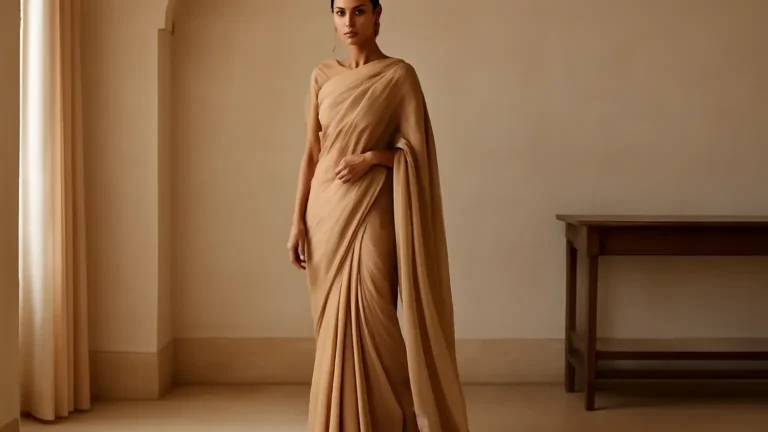
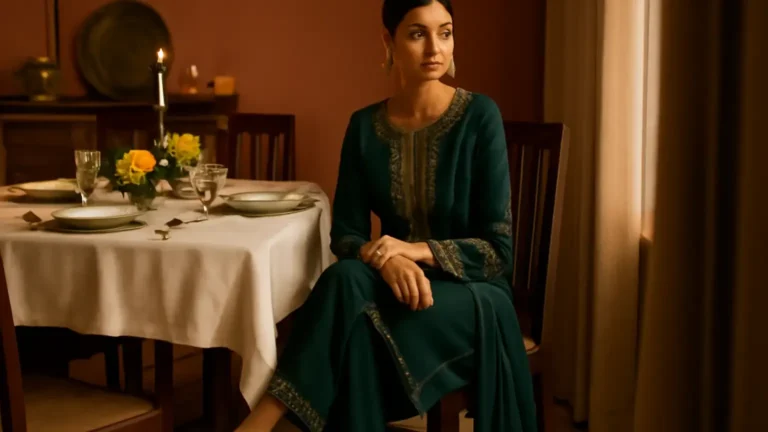
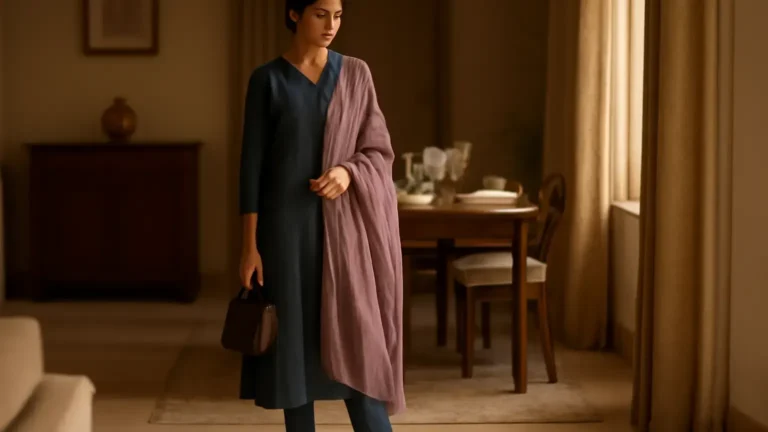
October wedding guest dresses India work best when they balance festive polish with ventilation. For guests attending a daytime ceremony followed by an evening reception, choose a breathable midi, wrap dress or fluid maxi in cotton silk, linen blend or light georgette; then shift the look with jewellery, a compact layer and dressier footwear. This guide is for anyone navigating Indian October heat, humidity, air-conditioned halls and changing dress codes without carrying a completely different outfit.
October weddings in India can be surprisingly varied. A morning pheras ceremony may feel warm in direct sunlight, while a banquet hall or open-air reception can become cooler after sunset. The most reliable outfit is therefore not simply the most embellished one: it is a dress with airflow, comfortable movement and enough structure to look occasion-ready.
Start with the venue, ceremony time and wedding guest dress code India
Before choosing a silhouette, check three details on the invitation: when the event begins, where it is being held and whether it is a ceremony, sangeet, cocktail evening or reception. These details determine how much coverage, shine and formality your outfit needs.
- Morning or early afternoon ceremony: Look for daytime wedding outfits in fresh colours, matte textures and breathable shapes. A printed midi, cotton-silk shirt dress or softly draped maxi can look festive without trapping heat.
- Late afternoon transition: Choose a dress that can take accessories well. A simple base in a rich colour works with minimal jewellery in daylight and more sparkle later.
- Evening reception: Evening reception dresses can be more glamorous, with satin accents, subtle sequins, metallic accessories or a deeper October wedding colour palette.
- Outdoor lawn or heritage venue: Consider uneven ground, insects, dust and temperature changes. A midi or ankle-length style is often easier to manage than a long train or very wide hem.
If the invitation specifies traditional attire, a Western-style dress may need a more festive treatment. Add Indian jewellery, a dupatta-like stole or embellished footwear, but avoid making the outfit so layered that it loses its breathability.
Choose breathable fabrics for Indian weddings
Fabric affects comfort more than colour or trend. The best breathable fabrics for Indian weddings allow some air movement, do not cling heavily when you perspire and remain presentable after hours of sitting, walking and dancing.
Reliable fabric choices
- Cotton silk: A polished option for guests who want the comfort of cotton with a slightly dressier finish. It suits structured midis, shirt dresses and gathered skirts.
- Linen blends: Linen blend dresses are cooler than many synthetic fabrics and look especially good in relaxed tailoring. A cotton, viscose or silk blend can reduce the severe creasing associated with pure linen.
- Light georgette or crepe: These fabrics create movement and work well for wrap dresses and festive maxi dresses. Choose a lined version so the garment is not transparent in strong light.
- Chanderi or lightweight silk blends: These provide a distinctly Indian festive finish without the weight of heavily woven brocade. They are useful for an elevated daytime event.
- Viscose or modal blends: Their fluid drape suits humid conditions, though a lining and good-quality construction are important for opacity and shape.
Use caution with thick polyester satin, dense velvet and heavily layered net for daytime functions. They may photograph beautifully but can feel uncomfortable in warm weather. If you love shine, use it in a panel, border, clutch or shoes rather than covering the entire dress.
Dress shapes that stay comfortable from day to night
The most versatile October wedding guest dress ideas have room at the waist, a practical hem and enough visual interest to stand alone before accessories are added.
Wrap and faux-wrap dresses
A wrap silhouette adjusts easily after a meal and creates a defined waist without restrictive tailoring. It is particularly useful for guests who want a flexible fit. Select a secure inner snap or wear a discreet camisole if the neckline may shift while dancing.
Breathable midi dresses
A midi with short, elbow-length or softly puffed sleeves is a dependable choice for a daytime ceremony. It allows easier movement than a floor-length hem and works with flats, block heels or dressy sandals. Choose a printed or textured fabric if the cut is simple.
Festive maxi dresses
Festive maxi dresses suit evening receptions and formal venues, but look for a fluid skirt rather than multiple heavy layers. A side slit, open neckline or defined waist can improve airflow. For outdoor events, check that the hem does not drag and that you can climb stairs comfortably.
Shirt dresses and column shapes
A cotton-silk shirt dress brings a contemporary finish to a daytime function. A column dress in crepe or a light silk blend looks more formal, especially with a cropped jacket and statement earrings. Both styles benefit from a breathable lining and a little ease through the hips.
Build an October wedding colour palette
October gives you room to move between late-monsoon freshness and the richer shades associated with the Indian wedding season. For day, consider ivory with a colourful print, powder blue, pistachio, peach, marigold or soft pink. For evening, emerald, wine, sapphire, plum, rust and deep teal create depth without requiring heavy embellishment.
Guests should avoid wearing white if the family has requested traditional restrictions, and it is sensible to check whether red, bright bridal pink or a particular colour is reserved for the bride. When the dress code is unclear, a jewel-toned or botanical print is usually festive without looking bridal.
Print scale also matters. A small or medium print disguises minor creasing and feels relaxed in daylight. Solid colours look more refined at night, but they need texture through pleats, draping, embroidery or jewellery to avoid appearing like officewear.
Make the day-to-night transition with three changes
You do not need a complete change of clothes to make one dress work across a long wedding schedule. Pack a small transition kit and alter the styling in stages.
- Change the jewellery: Wear small hoops or studs for the ceremony, then add chandelier earrings, a cuff or layered necklaces for the reception. Keep the rest restrained so the look does not become visually crowded.
- Add lightweight layering: Carry a silk stole, fine shawl, cropped jacket or unlined long vest. Lightweight layering protects against air-conditioning and evening breezes without making a warm venue unbearable.
- Upgrade the footwear and bag: Start with comfortable wedding heels, embellished flats or low block sandals. If the event becomes more formal, switch to a higher block heel or metallic sandal. A small clutch can replace a practical daytime crossbody.
A useful rule is to keep one item practical and one item glamorous. For example, pair a breathable dress and supportive shoes with dramatic earrings; or wear a simple dress with an embellished clutch and polished heels.
Accessories that support humidity-friendly fashion
Humidity-friendly fashion is not only about fabric. Accessories can either keep you comfortable or add unnecessary weight. Choose jewellery that sits securely and does not repeatedly catch in hair or sleeves. A structured mini bag keeps essentials organised, while a silk scarf can protect the neckline from perspiration and add colour.
For hair, a low bun, braid or half-up style can feel more manageable than fully loose hair during a crowded outdoor event. Keep blotting tissues, a small comb, safety pins and fashion tape in your bag. These are practical additions, especially when a wrap tie, hem or neckline needs a quick adjustment.
Makeup should follow the same principle: use a comfortable base, set areas that become shiny and carry your lip colour for a simple evening refresh. Avoid testing an unfamiliar product immediately before the wedding, particularly if your skin is sensitive or prone to reacting.
Common mistakes to avoid
- Choosing appearance over mobility: Sit, walk and raise your arms before keeping a dress. A beautiful outfit is not useful if you cannot dance or manage stairs.
- Ignoring transparency: Strong daylight can reveal more than indoor lighting. Check the dress near a window and select suitable lining or a slip.
- Over-layering for a temperature change: One breathable outer layer is generally more practical than several heavy pieces.
- Wearing new shoes for the first time: Break them in at home and carry blister protection. Outdoor venues often involve more walking than expected.
- Forgetting the event sequence: A heavily embellished dress may be excessive for a quiet daytime ceremony, while a plain cotton sundress may look underdressed at a formal reception.
A simple decision guide before you buy
Ask these questions before placing an order or taking a dress to the tailor:
- Will the fabric feel comfortable for at least four hours in possible heat?
- Can I sit, walk and dance without adjusting the neckline or hem constantly?
- Does the colour suit the ceremony time and respect any family-specific preferences?
- Can the dress become more formal with jewellery, a layer or a shoe change?
- Will it work with a supportive bra, suitable lining and practical undergarments?
If the answer is yes to most of these questions, you have likely found a better investment than a highly ornate dress that only works for one photograph.
Takeaway
The strongest October wedding guest dresses India recommendations are breathable, easy to move in and adaptable after sunset. Start with the venue and dress code, select cotton silk, linen blends, light georgette or another comfortable fabric, then use jewellery, layering and footwear to shift from ceremony to reception. The result should feel festive in photographs and manageable in real Indian October weather.
Products that may help with this routine
Choose only what fits your skin, hair or personal needs. Use the links below to view current options on Amazon India.
Frequently Asked Questions
What should I wear to an October wedding in India?
Choose a breathable midi, wrap dress or fluid maxi in cotton silk, a linen blend, light georgette or a silk blend. Match the formality to the venue, then carry a lightweight stole or jacket for cooler evenings.
What are the best fabrics for October wedding guest dresses?
Cotton silk, linen blends, light georgette, viscose blends, chanderi and lightweight silk blends are practical choices. They offer better airflow and movement than thick velvet or heavily layered synthetic fabrics.
How do I dress for an Indian wedding in changing temperatures?
Wear a breathable base dress and pack one light layer, such as a silk stole, fine shawl or cropped jacket. Use jewellery and a footwear change to make the same outfit feel more formal at night.
Are maxi dresses suitable for Indian wedding guests?
Yes, if the maxi is fluid, lined and easy to walk in. Look for a manageable hem, a little waist ease and details such as a side slit or open neckline that improve movement and airflow.
What colours should wedding guests wear in October?
Daytime options include peach, pistachio, powder blue, marigold and botanical prints. For evening, emerald, wine, sapphire, rust and deep teal work well, subject to any family request about bridal colours.
What footwear is comfortable for Indian wedding guests?
Low block heels, embellished flats, supportive sandals and cushioned wedges are practical choices. Break in new shoes beforehand and consider the venue surface before choosing a narrow heel.