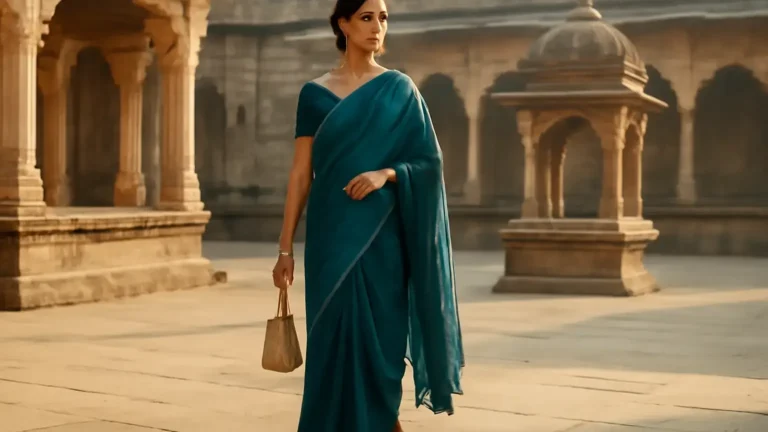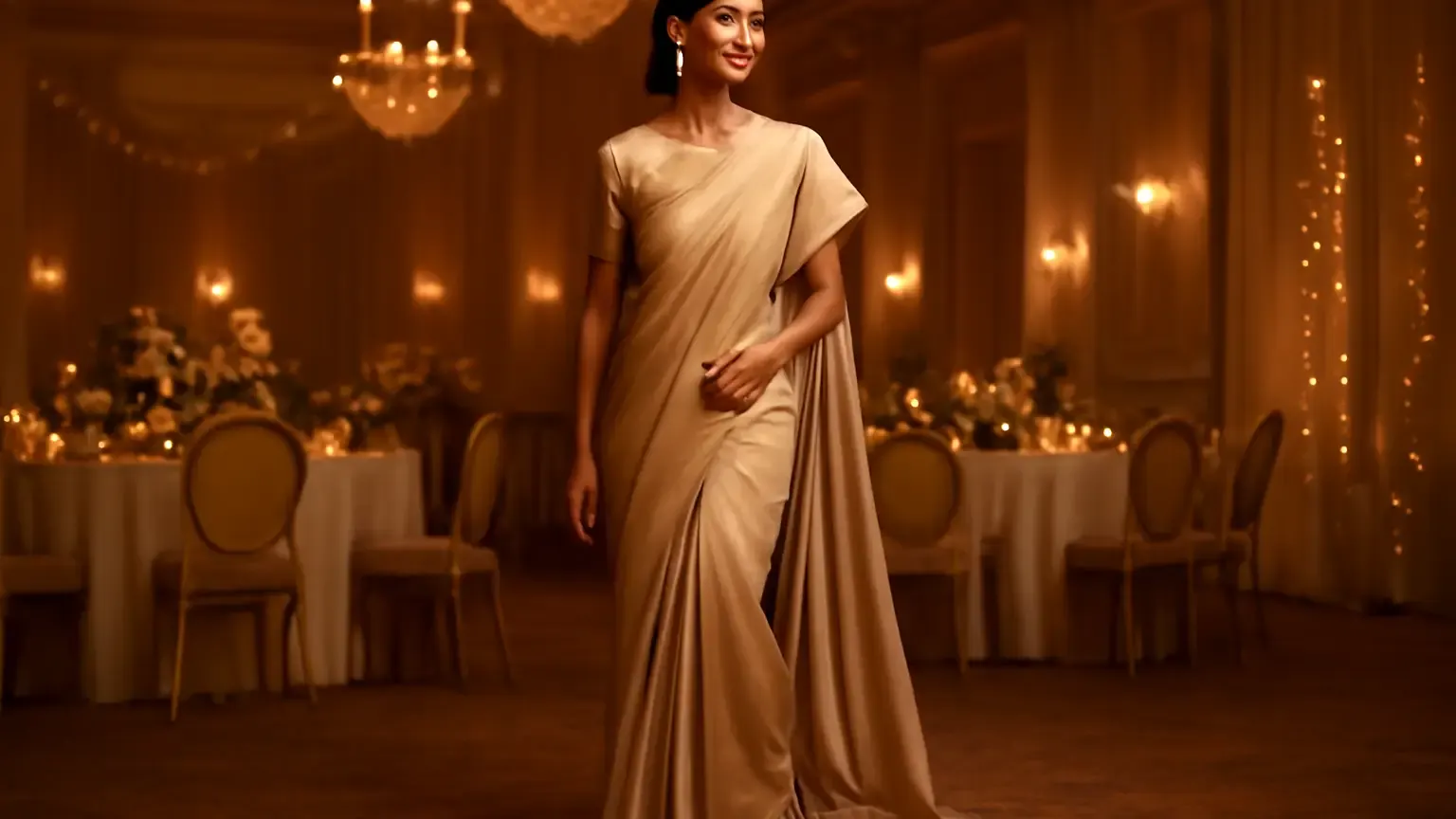
Saree styling for wedding receptions becomes easier when you choose the look around the fabric, venue and amount of movement you expect. This guide is for guests who want polish without spending the evening adjusting pleats. Choose silk or structured drapes for a formal ballroom, lighter georgette or pre-stitched styles for dancing and walking, then balance the blouse, footwear and jewellery so the outfit feels elegant and genuinely wearable.
Start with the reception setting
A reception usually allows more shine and structure than a daytime wedding ceremony, but the right outfit still depends on the venue. A hotel ballroom can support rich silk, velvet accents or a sequinned border. An outdoor lawn, beachside venue or crowded banquet hall calls for fabrics that move easily and footwear that will not sink or catch.
Before choosing your reception saree outfit, check the invitation, start time and likely temperature. Evening events suit deeper jewel tones, metallic accents and polished drapes, while a day-to-evening celebration may look better in a fresh pastel, ivory-toned contrast or muted floral print. Avoid matching the bride’s signature colours too closely unless the dress code specifically calls for it.
- Formal ballroom: Choose silk, satin, velvet details or a clean pre-pleated drape with refined jewellery.
- Garden or open-air venue: Choose georgette, chiffon or organza with secure pleats and practical block heels.
- Dance-friendly celebration: Choose a lightweight saree, shorter pallu and a blouse that supports comfortable arm movement.
1. The polished silk look for a formal reception
A silk saree is a strong choice when the reception is traditional, grand or held in an upscale indoor venue. Banarasi silk, tissue silk and lighter silk blends offer different levels of weight and shine. A heavier weave looks regal but may need a firm underskirt and professional pleat setting; a silk blend gives a similar dressy impression with less bulk.
How to style it
- Pair a rich saree with a fitted blouse in a related shade rather than introducing too many competing colours.
- Try a high round neck, square neck or modest boat neck for a composed silhouette.
- Keep the pallu broad and neatly pinned at the shoulder, allowing enough length for natural walking.
- Finish with one dominant jewellery feature, such as jhumkas, a choker or a long necklace.
For a balanced wedding reception saree look, keep the blouse detailing proportional to the saree border. A heavily embroidered blouse and an elaborate woven saree can look crowded together. If the saree already has strong zari, choose a simpler blouse with texture or a small sleeve detail instead.
2. The light, flowing look for movement
If you expect to greet guests, climb stairs or dance, a lightweight saree drape is usually more comfortable than a stiff, heavily embellished style. Georgette, chiffon and soft crepe skim the body and settle well after sitting, provided the pleats are secured properly. They are also useful for guests who dislike the rigid feel of a tightly tucked saree.
Comfort-first draping routine
- Wear the footwear you will use at the event before taking the final waist measurement.
- Set the underskirt or shapewear firmly, but make sure you can sit and breathe comfortably.
- Keep the front pleats narrow and even, then secure them with a concealed pin at the waistband.
- Pin the pallu at the shoulder and add a second discreet pin near the bust if the fabric slides.
- Walk, sit and raise both arms before leaving home; adjust any pulling around the waist or shoulder.
This approach works especially well for comfortable saree draping at large receptions. A pre-stitched saree can be another practical option, particularly when you want a consistent hemline. It may offer less flexibility in pallu placement, so check the fit while wearing your intended blouse and shoes.
3. The sequinned evening look with controlled shine
Sequins can look elegant at an evening reception when the rest of the outfit is edited. A soft sequin saree in charcoal, wine, midnight blue, champagne or dusty rose creates light-catching movement without requiring a heavily decorated blouse. Satin, net or georgette bases give different effects: satin looks sleek, while georgette feels softer and more forgiving around the waist.
For sequin saree styling, select a blouse with a clean neckline and limited embellishment. A solid velvet blouse can add depth, while a matte crepe blouse prevents the outfit from looking overly reflective. Avoid combining a sequin saree, crystal blouse, oversized necklace and glittery footwear; choose two areas of shine and let the rest support them.
- Use slim drop earrings or sculptural studs when the blouse has a high neckline.
- Choose a small metallic potli or clutch rather than a large embellished handbag.
- Secure the pallu well, since sequinned edges can catch on bangles, rings or chair arms.
- Wear a smooth inner layer if the sequin surface feels abrasive against the skin.
4. The modern blouse-led look
Sometimes the blouse is the easiest way to make a familiar saree feel reception-ready. This is useful if you already own a plain chiffon, organza or silk saree and want a more current finish. A sculpted corset-inspired blouse, an asymmetric neckline, a dramatic sleeve or a back detail can change the mood without adding another elaborate layer.
Choosing the blouse intelligently
When comparing saree blouse designs for reception, begin with support and movement, not just the neckline. A blouse should stay in place when you lift your arms, sit down and carry a phone. Wide shoulder straps, a well-fitted bust and a secure closure are often more useful than a delicate but restrictive design.
- For a plain saree: Use texture, embroidery or a contrasting colour on the blouse.
- For an ornate saree: Choose a solid blouse with a clean finish.
- For broad borders: A simpler neckline usually keeps the upper half balanced.
- For long events: Prefer breathable lining and sleeves that do not pinch under the arm.
Keep the drape straightforward if the blouse is the focal point. A standard pleat-front drape with a neatly arranged pallu lets the cut and finish remain visible.
5. The comfortable contemporary look for long celebrations
For a reception that runs for several hours, the most attractive outfit is one you can wear without constant corrections. Choose a soft saree, a supportive blouse and a secure drape, then build personality through colour and accessories. Organza can look crisp and modern, but it may need more pinning; crepe and georgette generally offer easier movement.
A belt can define the waist and hold the saree in place, but it should not compress your breathing or make sitting uncomfortable. A cropped jacket or sheer cape can provide coverage in air-conditioned venues, while a sleeveless blouse may be more comfortable in a warm, crowded hall. These choices should support your actual plans rather than imitate a look that restricts you.
Footwear and accessories that work
The best saree footwear pairing keeps the hem just above the floor and gives you stable footing. Block heels, embellished flats and low wedges are safer choices than very thin stilettos if you expect uneven flooring or extended standing. Put on the final footwear before the saree is pinned so the length remains correct.
For saree accessories for wedding events, use a simple balance rule: statement earrings with a bare neckline, a necklace with smaller earrings, or stacked bangles with a restrained ring selection. Carry a compact potli or shoulder bag that leaves your hands free for greetings and photographs. Keep safety pins, a small fashion tape strip and a spare earring back in the bag for quick repairs.
How to refine the final look before leaving
Use this short fitting check one to two hours before the event:
- Check the hem: Walk across the room and make sure the fabric does not drag or cover the front of your shoes.
- Test the pleats: Sit on a chair, stand up and walk several steps. Re-pin only where the fabric shifts.
- Check the blouse: Move both arms forward and overhead. If the neckline or sleeves pull, change the fit before adding jewellery.
- Review the shine: In indoor light, check whether the saree, blouse and accessories compete for attention.
- Pack the essentials: Carry pins, a small comb, blotting sheets, lipstick or lip colour, and a discreet stain-removal wipe.
Common mistakes include choosing a heel after the saree has been hemmed, using too many visible pins, wearing heavy jewellery with an already ornate border, and ignoring the venue surface. Another frequent issue is tying the saree too tightly at the waist. A secure drape should still allow comfortable breathing, sitting and walking.
Quick decision guide
| Priority | Best direction | Key details |
|---|---|---|
| Formal, traditional finish | Silk saree | Structured blouse, neat pallu, one main jewellery piece |
| Ease of movement | Georgette or crepe | Light pleats, secure pins, block heels |
| Evening glamour | Sequin saree | Matte blouse, edited accessories, compact bag |
| Fashion-led update | Plain saree with statement blouse | Simple drape, supportive fit, minimal necklace |
| Long celebration | Soft or pre-stitched saree | Breathable lining, comfortable footwear, repair kit |
Takeaway
The strongest saree styling for wedding receptions matches the fabric and drape to the venue, then treats comfort as part of the finish. Choose silk for formal richness, a fluid fabric for movement, sequins for controlled evening shine, a statement blouse for a modern update, or a practical contemporary drape for a long celebration. Secure the pleats, set the hem to your footwear and edit the accessories so the final look feels polished from the first photograph to the last dance.
Products that may help with this routine
Choose only what fits your skin, hair or personal needs. Use the links below to view current options on Amazon India.
Frequently Asked Questions
What saree is best for a wedding reception?
The best saree depends on the venue and your movement needs. Silk works well for formal indoor receptions, while georgette, crepe or a pre-stitched saree is usually easier for dancing, walking and long celebrations.
How do you style a saree for a wedding reception?
Choose the fabric according to the venue, pair it with a supportive blouse, set the pleats to your actual footwear, pin the pallu securely and balance the jewellery around one main feature.
What are comfortable saree draping ideas for a reception?
Use a lightweight georgette, chiffon or crepe saree, keep the pleats even rather than overly tight, secure the waistband and pallu discreetly, and test sitting and walking before leaving home.
Which blouse should you wear with a reception saree?
A blouse should complement the saree’s level of detail and allow arm movement. Choose a textured or embroidered blouse with a plain saree, or a clean solid blouse with a heavily woven or sequinned saree.
How should you accessorise a saree for an evening reception?
Select one dominant element such as statement earrings, a necklace or stacked bangles. Pair it with a compact potli or clutch and avoid combining several highly reflective pieces.
What footwear is best to wear with a saree at a wedding?
Block heels, low wedges or embellished flats are practical choices because they provide stability. Wear the final footwear while setting the saree hem so the fabric does not drag.