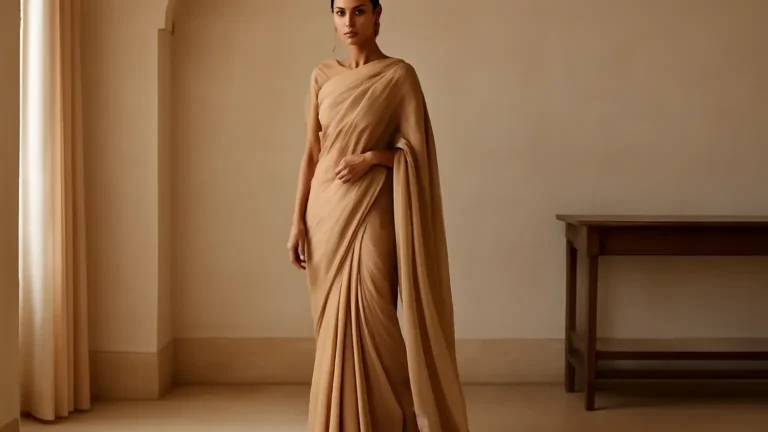
Saree styling for broad shoulders is easiest when you balance visual width rather than hide your shape. This guide is for anyone who wants a more proportionate, comfortable drape—whether you wear crisp cotton, fluid georgette or a festive silk saree. Start with an open or softly rounded neckline, choose sleeves that do not add bulk, keep pleats neat, and let the pallu create a relaxed vertical line. Jewellery and fabric can then refine the result without limiting personal preference.
Broad shoulders are not a styling problem to correct; they are simply one proportion to consider when building a saree outfit. The most flattering result usually comes from distributing visual interest across the whole look instead of concentrating it at the shoulders. Neckline shape, sleeve finish, pallu width, pleat placement and jewellery all make a difference.
There is no single “correct” drape for every body. A formal silk saree may need more structure, while a soft cotton or georgette can create movement with less effort. Use these six adjustments as a flexible framework, then keep the choices that feel natural when you sit, walk, pin the pallu and move your arms.
1. Choose an open neckline with a clean shape
The blouse neckline is one of the quickest ways to influence the upper-body proportion. V-necks, gently scooped U-necks and modest sweetheart necklines introduce an open vertical or curved line, which can make the shoulder area feel less visually concentrated. A keyhole neckline can work too, provided the cut-out is not so large that it becomes the only focal point.
For necklines for broad shoulders, pay attention to width as well as depth. A very wide boat neck can extend the horizontal line, while a narrow, shallow V may look restrictive or overly sharp. A medium-width neckline that follows your natural shape often feels more balanced. If you prefer a higher neckline, use a vertical blouse seam, a long pendant or a plain front panel to prevent the upper half from appearing crowded.
2. Select sleeves that frame, rather than enlarge, the shoulder
In saree blouse sleeve length, the most useful principle is to avoid stopping exactly at the widest point of the upper arm if that makes the shoulder line look broader. Sleeves that finish slightly above or below that point can create a cleaner outline. Elbow-length and three-quarter sleeves are often easy to style because they add a vertical finish and provide comfortable coverage.
Soft, close-fitting short sleeves can also work, especially in a fluid fabric. Avoid unnecessary shoulder gathers, puff sleeves, bulky padding and stiff cap sleeves if your aim is to reduce emphasis on width. However, this is not a ban on volume: a small gathered sleeve may suit a romantic cotton saree or a vintage-inspired look. The deciding factors are where the volume sits and whether the blouse still allows comfortable arm movement.
3. Use a wide, relaxed pallu to create balance
A narrow pallu can leave the blouse and shoulder area highly exposed, while a broad, well-arranged pallu distributes colour and texture across the torso. In wide pallu saree draping, spread the fabric enough to create coverage without turning it into a stiff panel. The ideal width depends on the saree, your height and how easily you can move.
For a balanced finish, pleat the pallu neatly, place it over the shoulder and allow it to fall in a long, uninterrupted line. A casually open pallu can soften a structured blouse, while a carefully pleated pallu suits a formal occasion. Avoid pinning it so tightly that it pulls across the chest or makes the shoulder seam sit awkwardly. Comfort is a visual benefit too: fabric that drapes naturally looks more graceful than fabric that is constantly being adjusted.
How to decide the pallu width
- Choose medium to wide coverage for a formal look or a blouse with embellishment at the shoulder.
- Keep it lighter and more fluid when wearing a thick silk, heavy border or structured blouse.
- Check the fall while walking; the pallu should not pull the neckline sideways or bunch near the waist.
4. Place front pleats neatly and slightly define the waist
Good saree pleat placement creates a central vertical column, which helps the outfit look intentional and balanced. Make an even set of front pleats, keep their lower edges aligned and place them so they fall from the natural waist without spreading unpredictably. Very wide, uneven pleats can add visual bulk around the middle, while extremely narrow pleats may look fussy in a heavier saree.
A tidy waist tuck gives the eye a point of structure below the shoulders. This does not mean wearing a tight saree. Use a secure but comfortable underskirt, check that you can sit and walk easily, and position the tuck where the fabric lies smoothly. A slim belt can add definition to a contemporary drape, but it is optional; a clean pleat line can achieve the same effect.
5. Build vertical movement through fabric and drape
A vertical drape saree is not a separate traditional draping style. It simply means arranging the fabric so that the eye travels up and down rather than across the shoulders. Long pallu lines, narrow border placement, front pleats and an uncluttered blouse can all contribute to this effect.
Fabric changes the way that line behaves. Lightweight saree fabrics such as georgette, crepe and soft cotton often fall close to the body and create fluid movement. Linen can look beautifully streamlined when pressed and pleated carefully, while crisp organza or raw silk holds a more architectural shape. A broad horizontal border may add width, so balance it with a simpler blouse or a pallu that falls vertically. On the other hand, a dramatic border can be part of the look you want—personal preference should guide the final decision.
6. Balance jewellery instead of stacking it near the shoulders
Jewellery should support the saree’s proportions, not compete with the blouse. For shoulder balancing jewellery, long earrings, a pendant chain or a necklace that forms a gentle vertical drop can draw attention towards the centre. If the blouse already has a high neckline, collar, embroidery or statement sleeves, choose one focal jewellery piece rather than adding several short layers.
Statement earrings with saree outfits can look especially effective when the neckline is simple. Select a length and weight that you can wear comfortably; very heavy earrings can pull on the earlobe and distract from the drape. If you love chokers or broad necklaces, keep the pallu fluid and the blouse relatively clean. Balance is about the complete composition, not about avoiding bold accessories.
Match the technique to the saree fabric
The same drape behaves differently in different materials, so fabric should be part of the styling decision:
- Soft cotton: Use moderate pleats and a pallu with enough width to prevent the saree from looking boxy. A breathable blouse makes long wear easier.
- Georgette or crepe: These fabrics create a close, fluid fall. Secure the pallu well and avoid overloading the look with heavy shoulder jewellery.
- Silk: Crisp pleats and a structured blouse suit the fabric. If the border is wide, keep the neckline and sleeves visually simple.
- Linen: Press it thoroughly and use a firm tuck. Its natural texture works well with clean, unfussy styling.
- Organza: Because it holds shape, a softer neckline and controlled pallu can prevent the upper body from appearing too angular.
A practical fitting and draping routine
- Test the blouse first. Raise both arms, sit down and check that the armhole, shoulder seam and neckline remain comfortable.
- Set the base. Wear a secure underskirt and place the waistband where the saree can sit without digging in.
- Make the front pleats. Keep them even, aligned and centred before tucking them securely.
- Arrange the pallu. Try a medium or wide spread, then walk a few steps to check its movement.
- Add accessories last. This lets you see whether the blouse and pallu already provide enough visual interest.
- Do a comfort check. Sit, reach forward and turn sideways. A beautiful drape should remain wearable beyond the first photograph.
Common saree styling mistakes to avoid
Some choices can unintentionally make the upper half look heavier or make the saree difficult to wear. These include stiff shoulder padding without balancing the lower drape, sleeves that pinch at the armhole, a pallu pinned so narrowly that it pulls across the shoulder, and very busy embellishment placed only along the sleeve cap or shoulder seam.
Another common mistake is copying a drape designed for a different fabric. A sharply pleated method that works for silk may look bulky in linen, while a loose pallu that suits georgette may slip on a smooth silk. Take a few minutes to test the outfit in natural movement. Also avoid sizing down the blouse to “hold” the saree in place; correct saree blouse fit is safer, more comfortable and usually more flattering.
Quick takeaway
The most adaptable approach to saree styling for broad shoulders is to combine an open or softly shaped neckline, sleeves that do not add unwanted bulk, a relaxed pallu, even front pleats and jewellery that creates some vertical movement. Then adjust for fabric, occasion and comfort. Broad shoulders can carry dramatic silk, delicate organza, everyday cotton and modern minimal styling—the goal is not to disguise them, but to make the whole saree feel proportionate and effortless.
Products that may help with this routine
Choose only what fits your skin, hair or personal needs. Use the links below to view current options on Amazon India.
Frequently Asked Questions
How do you drape a saree for broad shoulders?
Use a medium-to-wide pallu, arrange the front pleats in a neat central column and let the pallu fall in a relaxed vertical line. Avoid pinning it so tightly that it pulls across the shoulders. The best drape also allows easy walking, sitting and arm movement.
Which blouse neckline suits broad shoulders with a saree?
A medium-width V-neck, softly rounded U-neck or modest sweetheart neckline can open the upper body and create balance. Very wide boat necks may emphasise the horizontal shoulder line, while a simple high neck can work when paired with vertical seams or a long pendant.
What sleeve length is best for broad shoulders in a saree?
Elbow-length and three-quarter sleeves are versatile choices because they create a clean vertical finish. Soft short sleeves can also work. The key is to avoid unnecessary shoulder volume and a sleeve hem that makes the upper arm look wider than intended.
How wide should the pallu be for broad shoulders?
A medium-to-wide pallu usually distributes colour and texture more evenly than a very narrow one. Choose the width according to the saree’s weight and your comfort; a heavy silk may need a controlled spread, while a fluid georgette can support a softer, broader fall.
Which saree fabrics are comfortable for broad shoulders?
Comfort depends more on the full fit than on shoulder width, but soft cotton, georgette, crepe and well-draped linen are often easy to move in. Silk and organza can also be comfortable when the blouse fits properly and the pallu is secured without excess weight.