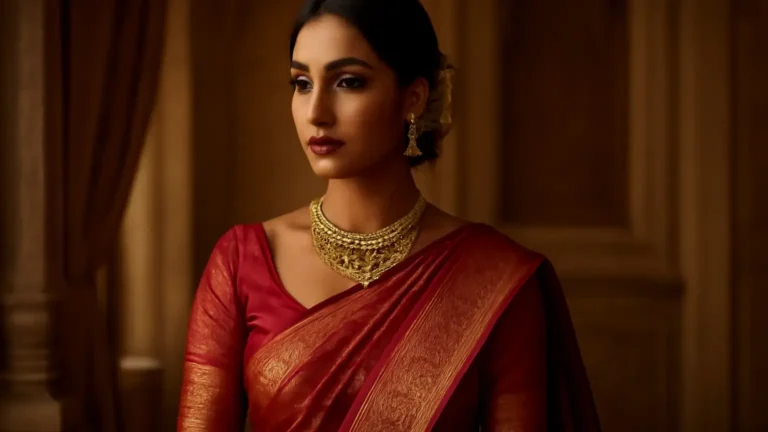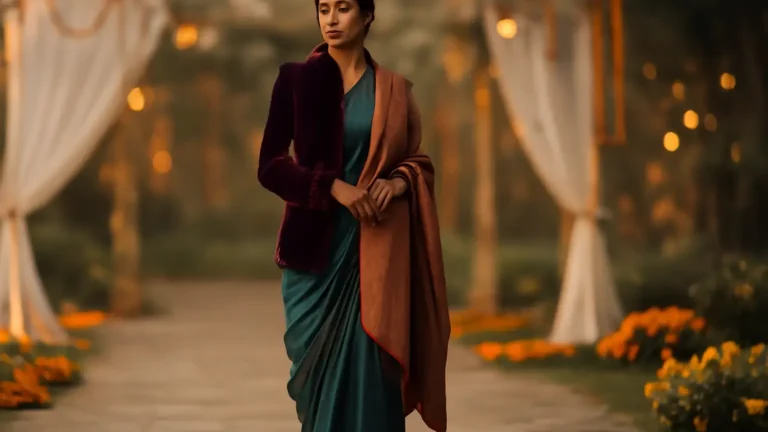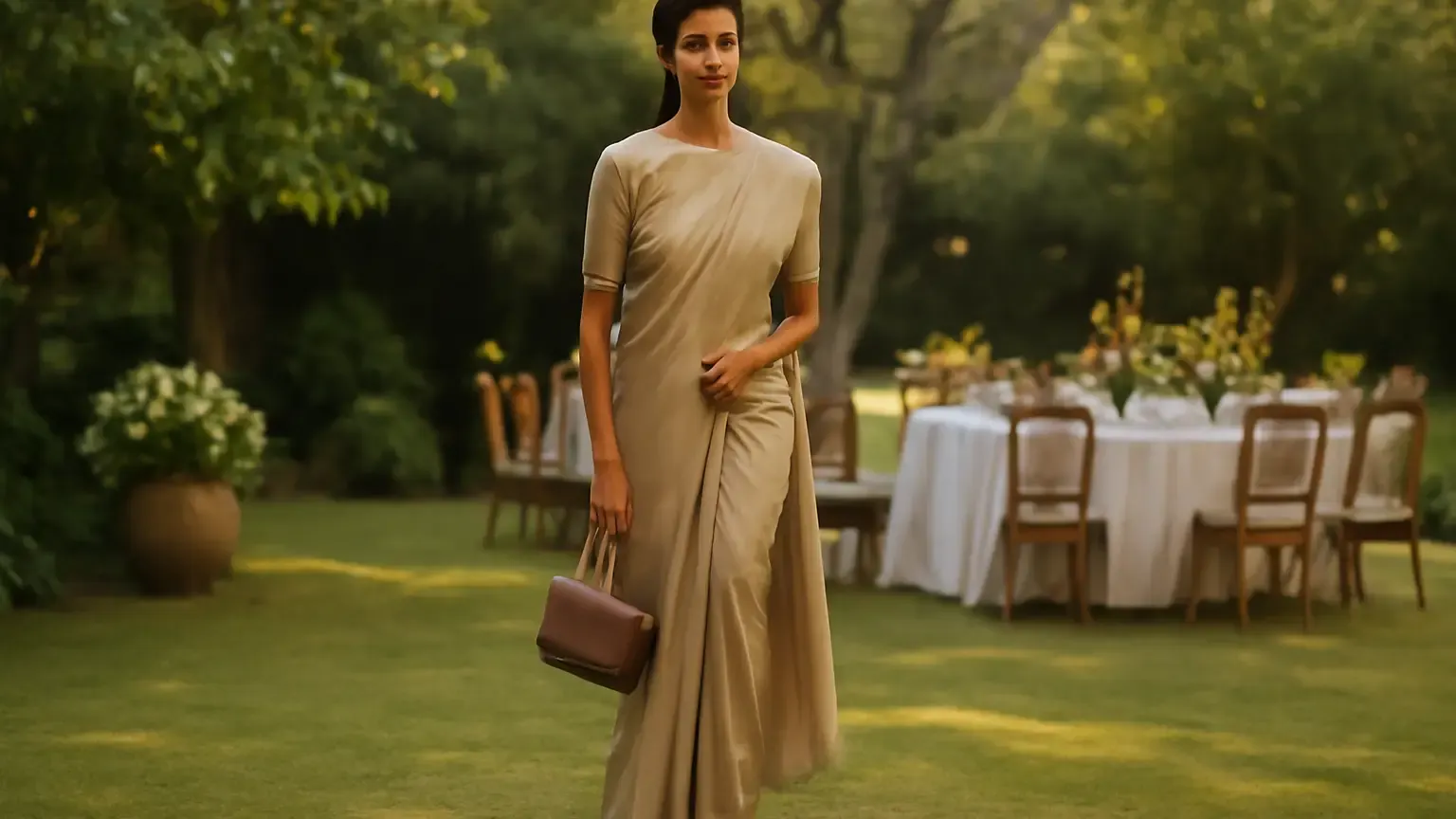
Saree styling for outdoor events works best when comfort is planned before jewellery and draping details. This guide is for anyone attending an Indian wedding, haldi, reception or festive gathering in heat, humidity, grass or uneven ground. Choose a breathable, manageable fabric; anchor the pleats and pallu; then finish with a comfortable blouse, stable footwear and a weather-aware bag or accessory. These six fixes help your saree stay polished without constant adjusting.
An outdoor celebration changes the practical demands of a saree. A look that feels effortless in an air-conditioned banquet hall may become heavy in the heat, catch on a chair, drag through damp grass or loosen during a long walk between the venue and the car. Good styling is therefore not only about colour, drape or embellishment. It is also about movement, ventilation, grip and quick adjustments.
1. Choose the fabric for the venue and forecast
The first decision in comfortable saree draping for outdoor events is fabric. For a summer daytime function, look for breathable saree fabrics such as cotton silk, linen blends, soft cotton, light crepe or a fluid viscose weave. These allow more airflow than dense velvet, heavily layered brocade or thick satin. A light georgette can also work well for evening events because it falls close to the body and is easier to manage in a breeze.
Match the saree to the setting
- Hot, sunny venues: Choose a lighter colour, a breathable weave and moderate embellishment. A lining or petticoat should not be so thick that it traps heat.
- Windy terraces or beachside spaces: A fluid saree with a slightly heavier border is often easier to control than very light organza. Avoid an extremely loose pallu.
- Garden lawns: Choose a practical length and avoid a fragile hem that will repeatedly touch grass or gravel.
- Humid evenings: Soft crepe, georgette or a light silk blend may feel less clingy than a crisp synthetic fabric.
For the best saree fabric for outdoor summer functions, prioritise breathability and ease of movement over a dramatic, stiff silhouette. If you love a heavier saree, reserve it for a shorter event or choose lighter jewellery and a simpler drape to balance the weight.
2. Build secure saree pleats before you leave
Neat pleats are not just a finishing detail: they create the foundation of the drape. Wear the petticoat or saree shapewear firmly at the waist, but not so tightly that breathing or sitting becomes uncomfortable. Tuck the saree at a height that lets the hem clear the ground by a small margin when you walk.
Make secure saree pleats by aligning the folds on a flat surface, pressing them with your hands and tucking them evenly into the waistband. Place one discreet safety pin horizontally through the pleats and waistband. If the fabric is delicate, pin through the stronger inner area rather than the visible border. A short strip of anti-slip saree tape inside the waistband can add grip, but test it on a hidden section first and remove it gently.
Walk, sit and take a few steps up and down before finalising the tuck. If the pleats pull across the waist, loosen the tuck slightly. If they fan out, reduce the number of pleats or anchor them higher. This small rehearsal is one of the easiest ways to prevent repeated adjustments during the function.
3. Pin the pallu for movement, not just appearance
The pallu is usually the part most affected by wind, crowds and arm movement. To learn how to pin pallu for an outdoor event, first decide whether you need a free-flowing or fully secured finish. A relaxed pallu may look graceful for photographs, but a pinned pallu is more practical for walking, greeting guests and eating outdoors.
- Make a clean pallu fold and place one pin near the shoulder seam of the blouse.
- Add a second pin lower down, close to the side seam or underarm area, so the fabric does not swing forward.
- Use pins with smooth closures and hide them between layers. Check that they do not touch the skin while you move.
- For a slippery fabric, use saree pallu pins with a small fabric fold rather than pinning a single thin layer.
A brooch can provide additional weight, but do not rely on a heavy ornament alone. It can pull the blouse fabric or create an uncomfortable pressure point. Before leaving, raise both arms, turn your shoulders and sit down once. The pallu should stay in place without restricting your range of motion.
4. Make the blouse comfortable for the full duration
A beautiful blouse is not a comfortable blouse if the armhole cuts in, the neckline needs constant fixing or the sleeves become restrictive. A comfortable blouse fit includes enough ease across the bust and back, a secure but non-digging strap or sleeve, and seams that do not rub during repeated movement.
For an outdoor wedding saree look, consider breathable lining, lighter padding and sleeves that allow you to lift your arms. A broad sleeve hem may feel better than a tight elastic edge in warm weather. If the blouse has a deep back or delicate tie, secure the tie ends so they do not snag on chairs or jewellery.
Try the complete outfit at home for at least 20 minutes. Sit on a firm chair, walk, bend slightly and carry the bag you intend to use. This reveals pressure points that are easy to miss while standing in front of a mirror. Do not make a last-minute alteration without testing the finished seam against your skin.
5. Select footwear for the ground, not only the outfit
The right supportive footwear for sarees should match the venue surface and the amount of walking involved. Thin stilettos can sink into grass, catch between paving stones or make uneven paths tiring. A block heel, low wedge, dressy flat or cushioned sandal generally offers better stability for outdoor functions.
When choosing what footwear to wear with a saree for a wedding, wear the shoes during the final hemming or draping trial. The saree should skim the top of the foot without trailing. If you change from flats to heels after the saree has been set, the length and pleat fall may change.
Carry a pair that you can comfortably wear for the expected duration, not merely for photographs. Soft insoles or discreet blister protection may help if they suit your feet, but test them before the event. Avoid brand-new footwear on the day itself, especially when the venue involves a lawn, stairs or a long walk from parking.
6. Finish with a practical bag and weather-ready accessories
Saree-friendly bags should hold essentials without forcing you to manage a slippery clutch while gathering the pallu. A small crossbody with a refined chain, a wristlet or a compact shoulder bag keeps both hands available. If you prefer a clutch, choose one with a secure closure and enough space for your phone, cards, tissues, safety pins and a small touch-up item.
Weatherproof accessories do not need to look utilitarian. For summer saree styling, add sunglasses for the journey, a breathable hair accessory and a light stole only if the evening may turn cool. Keep blotting tissues, a small comb and spare pins in a zip pouch. For monsoon saree styling, choose a shorter practical hem, avoid suede footwear and carry a compact umbrella or a thin waterproof cover for the bag. A transparent rain layer can protect the saree while travelling, but remove it once you reach a dry area to prevent trapped moisture.
Do not overload the outfit with accessories that can snag. Long tassels, very sharp brooches and loose bangles may catch on chair arms or pallu folds. One secure statement element is usually more useful than several pieces that need monitoring.
A simple outdoor saree check before leaving home
- Walk for five minutes in the full outfit, including footwear and bag.
- Check that the hem clears the floor and that the pleats do not open at the knee.
- Raise your arms and sit down to test the blouse and pallu pins.
- Stand near a fan or open window briefly if wind is expected, then reinforce any loose fold.
- Pack two safety pins, tissues and a small amount of the same anti-slip product used during draping.
Common mistakes include choosing a fabric solely for photographs, setting the saree before trying the shoes, pinning the pallu to delicate jewellery and wearing a blouse that has never been tested for sitting. Correcting these details early gives you more freedom to enjoy the event.
Quick takeaway
The most reliable saree styling for outdoor events starts with a breathable, venue-appropriate fabric and ends with tested movement. Secure the pleats, pin the pallu at two points, check the comfortable blouse fit, choose stable footwear and carry only useful weather-ready essentials. The result is a saree that looks elegant in photographs and remains manageable from arrival to the final goodbye.
Products that may help with this routine
Choose only what fits your skin, hair or personal needs. Use the links below to view current options on Amazon India.
Frequently Asked Questions
How do you keep saree pleats in place outdoors?
Create even pleats, tuck them into a comfortably firm waistband and anchor them with a discreet safety pin through the pleats and waistband. Anti-slip saree tape can add grip after a patch test. Walk and sit in the outfit before leaving.
What is the best saree fabric for outdoor summer functions?
Light cotton silk, linen blends, soft cotton, fluid viscose, light crepe and breathable georgette are practical choices. Select the final fabric according to humidity, wind, walking distance and the amount of embellishment.
How should you pin a pallu for an outdoor event?
Fold the pallu neatly and secure it near the shoulder seam, then add a second concealed pin lower down near the side seam or underarm area. Use a small fabric fold for slippery sarees and test arm movement before leaving.
What footwear should you wear with a saree for a wedding?
Choose footwear according to the ground and walking distance. Block heels, low wedges, cushioned sandals and dressy flats are usually more stable than thin stilettos on lawns, gravel or uneven paths. Set the saree length while wearing the chosen shoes.
How do you style a saree for a monsoon function?
Use a manageable saree length, avoid footwear that absorbs water, protect the bag and carry a compact umbrella or waterproof cover. Pin the pallu securely and avoid fragile embellishments that may be damaged by rain or dampness.
How can you make a saree blouse comfortable all day?
Choose enough ease at the bust and back, check the armhole and sleeve edges, and test the blouse by walking, sitting and raising your arms. Breathable lining and lighter padding can improve comfort in warm outdoor settings.