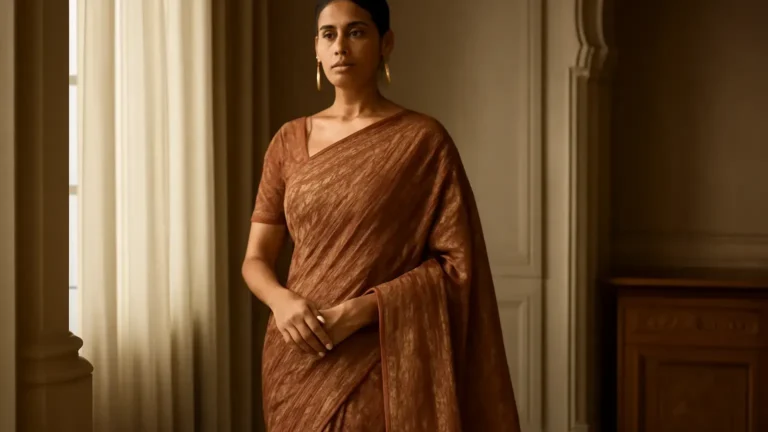
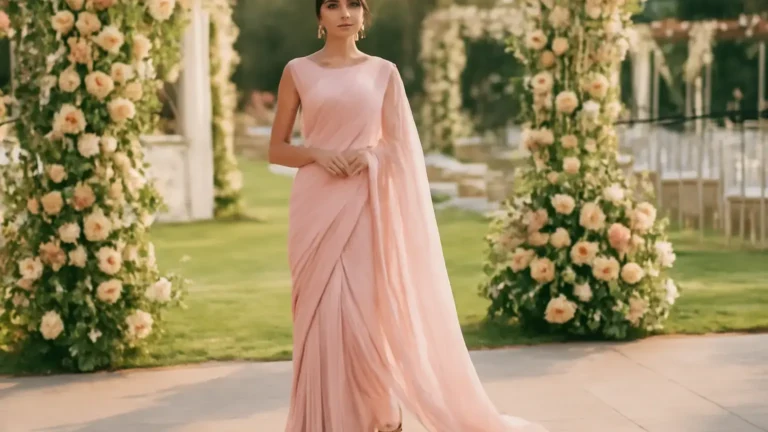
saree styling for wedding receptions works best when the drape, blouse, jewellery and shoes share one clear level of formality. This guide is for wedding guests who want a polished look without spending the evening adjusting pleats or managing a heavy pallu. Choose from five combinations—from a structured silk drape to an easy pre-stitched saree—and use the comfort checks to decide what suits the venue, weather, body proportions and amount of movement planned.
How to choose a reception saree look
A wedding reception usually calls for more polish than a daytime ceremony, but it does not require every element to be dramatic. Begin with one focal point: the fabric, the blouse, or the jewellery. Let the remaining pieces support it. This creates a considered outfit and prevents the common problem of a richly worked saree competing with an equally ornate blouse, necklace and bag.
Use the venue as a practical filter. An indoor ballroom can handle satin, sequins and metallic details, while an outdoor or warm-weather reception may be more comfortable in silk blends, crepe, georgette or a lighter organza saree. Also consider how much you will walk, greet guests or dance. A look that photographs beautifully should still allow secure movement.
- For a formal evening: choose deeper colours, a controlled pallu and refined metallic accents.
- For a daytime reception: choose luminous fabrics, softer colour contrast and lighter jewellery.
- For frequent movement: prioritise a secure waist, fixed draping pleats and low, stable heels.
1. Jewel-toned silk with a sculpted blouse
A rich silk saree drape in emerald, wine, midnight blue or plum gives an immediate formal effect. Keep the pallu narrow and neatly pinned over one shoulder so the weave remains visible rather than collapsing into bulk. A blouse with clean shoulders and a defined waist balances silk’s natural volume.
For saree blouse necklines, a high round neck, square neck or modest sweetheart shape works particularly well with a traditional silk. Match the blouse texture to the saree rather than automatically choosing a contrasting brocade. If the saree already has a broad border, let the blouse remain relatively quiet.
Finish with statement earrings and a small clutch bag. Skip a large necklace if the neckline and border are already visually strong. A low bun, smooth ponytail or side-parted waves will keep the upper half of the outfit uncluttered.
Comfort check
Silk can feel substantial after several hours. Wear a breathable lining, test the blouse while seated and secure the shoulder pallu with two discreet pins. A thin saree shapewear layer can offer a smoother base, but it should allow comfortable breathing, sitting and walking; it should never feel restrictive.
2. Pre-stitched saree with a minimal blouse
A pre-stitched saree is a practical choice when you want the visual language of a saree without repeatedly resetting the waist and pleats. Choose a version with a clean fall, a well-shaped pallu and enough length to sit neatly over your footwear. It is especially useful for guests travelling to the venue or attending a reception with dancing.
Pair a simple pre-stitched design with a fitted blouse in a solid shade. A one-shoulder, sleeveless or short-sleeved blouse can feel contemporary, provided the silhouette is balanced and the construction is secure. If the saree has shimmer, use matte accessories. If it is plain, a textured blouse or sculptural earrings can supply interest.
Keep the clutch bag small enough to carry comfortably under the arm. A box clutch suits a formal ballroom, while a compact potli works well for a more traditional setting. Choose one metallic tone across the bag, earrings and footwear instead of mixing several finishes without intention.
Comfort check
Try sitting, climbing stairs and lifting your arms before the event. Check that the pre-stitched waistband does not roll and that the pallu attachment does not pull at the shoulder. If alterations are needed, complete them several days before the reception rather than relying on emergency safety pins.
3. Lightweight organza with pearl or crystal accents
For a lighter, more luminous look, style an organza saree with a blouse that adds structure without adding excessive weight. A sleeveless blouse, cap sleeve or lightly embellished high neck can frame the transparent texture. Keep the colour story close—such as ivory with champagne, blush with rose gold, or powder blue with silver—for an elegant reception finish.
Organza rewards precision. Press the pleats, align the border and place the pallu so it falls in one clean line. Because the fabric can shift, use small pins at the shoulder and waist, hidden beneath the border where possible. Avoid overloading it with a large necklace and oversized earrings together.
For reception saree accessories, pearl studs, a slim bracelet and a metallic minaudière create a refined combination. Choose evening makeup for saree that complements rather than competes: softly defined eyes, a fresh base and a lip colour that echoes either the saree or blouse.
Comfort check
Light fabrics can cling in humidity. A smooth, well-fitting inner layer reduces static and makes movement easier. Before leaving, walk for five minutes indoors and check whether the hem catches under your feet. If it does, adjust the fall before adding accessories.
4. Monochrome drape with a saree belt
A monochrome saree and blouse create a long, streamlined line, while a saree belt gives the waist definition and helps hold the drape in place. This combination is particularly useful if you prefer a controlled silhouette or want to wear a lighter fabric without worrying about the pallu moving constantly.
Use the belt as a finishing detail, not as a separate focal point. A slim metallic belt works with a plain crepe or satin saree; a fabric belt in the same colour is subtler and often more comfortable. Keep the pallu moderately narrow and pleat it so the belt sits over a smooth section rather than over a thick bundle of fabric.
When the waist is defined, you can choose either long earrings or a short necklace. Avoid both if the blouse already has embroidery near the neckline. A structured mini bag and pointed shoes reinforce the clean geometry, while a softer clutch makes the look less formal.
Comfort check
Do not tighten the belt to compensate for loose draping. It should sit securely without pressing into the ribs when you sit. Test the outfit after a meal and while bending slightly; a reception look needs enough ease for ordinary movement.
5. Contemporary drape with bold earrings and low heels
For guests who want a modern result, start with a fluid crepe, satin or lightweight silk saree and use a contemporary pallu placement. You can pleat the pallu sharply over the shoulder, let it fall open from the elbow, or pin it diagonally for a cleaner line. Keep the blouse fitted but not overly tight, especially if it has an asymmetrical or deep neckline.
This is the strongest setting for bold earrings. Choose sculptural hoops, chandelier earrings or polished drop styles, then keep the neck bare or add only a delicate chain. A compact clutch in a contrasting jewel tone can add colour without interrupting the drape.
Footwear should support the silhouette and the venue. The best comfortable wedding footwear is not necessarily completely flat: a broad two-inch heel, cushioned block heel or embellished jutti may offer better stability than a narrow stiletto. Match the hem length to the shoes you will actually wear, not to a taller pair kept only for photographs.
Comfort check
Carry blister patches and, if practical, a foldable pair of flats for the journey home. Break in new footwear indoors first. Secure the lower pleats with a small hidden stitch or fashion tape only after checking that the adhesive is suitable for the fabric and does not leave residue.
Jewellery, bag and footwear: a quick coordination guide
When deciding what jewellery to wear with a saree for a wedding reception, look at the blouse neckline first. Open necklines can support a necklace; high or embellished necklines usually look better with earrings alone. Gold warms jewel tones and ivory, silver suits cool blues and greys, while rose gold bridges blush, mauve and champagne.
Your bag should hold the essentials without changing the saree’s balance. A long strap can catch on pleats, so a handheld clutch or small wristlet is often easier. If you choose a potli, keep the drawstring away from delicate embellishment.
For footwear, consider floor type, venue size and duration. Marble floors, grass and uneven outdoor paths each call for different soles and heel widths. Add a discreet anti-slip sole or cushioned insole if needed, but check that it does not alter the shoe height enough to expose the saree hem.
A reliable preparation routine before the reception
- Complete a full trial: wear the blouse, saree, jewellery and shoes together for at least 20 minutes.
- Check the drape from every angle: photograph the front, side and back while standing and sitting.
- Secure high-movement points: pin the shoulder, reinforce the waist and check the first pleat near the feet.
- Pack a small repair kit: include safety pins, fashion tape, a needle and thread, tissues and a spare earring back.
- Keep the beauty finish balanced: if the saree is ornate, choose a cleaner hairstyle and makeup; if the saree is simple, add definition through one accessory or the lip colour.
Common mistakes that make a reception saree look less polished
- Ignoring proportions: a bulky blouse with a heavy border can shorten the visual line. Choose one dominant area of volume.
- Using too many statement pieces: dramatic earrings, a necklace, a belt and a large brooch rarely need to appear together.
- Skipping the sitting test: a perfect standing drape may pull at the blouse or loosen at the waist once you sit.
- Choosing shoes last: the wrong heel changes the hem, pleat length and overall posture.
- Over-pinning delicate fabrics: excessive pins can mark organza or snag fine weaves. Place fewer pins strategically.
Takeaway: make one decision the hero
The most successful saree styling for wedding receptions has a clear hero: a lustrous silk drape, a modern blouse, an airy organza texture, a defined waist or a striking pair of earrings. Once that choice is made, keep the jewellery, bag and shoes supportive, then test the outfit for sitting, walking and dancing. Formal dressing feels refined when it looks intentional—and comfortable enough to forget about during the celebration.
Products that may help with this routine
Choose only what fits your skin, hair or personal needs. Use the links below to view current options on Amazon India.
Frequently Asked Questions
How to style a saree for reception?
Choose one focal point—such as a silk texture, sculpted blouse, statement earrings or a saree belt—and keep the other accessories controlled. Secure the pallu and pleats, coordinate the bag and shoes, and test the full outfit while sitting and walking.
What jewellery to wear with a saree for a wedding reception?
Match jewellery to the blouse neckline and saree’s level of embellishment. Wear statement earrings without a necklace when the neckline is high or detailed; use a necklace with a simpler open neckline. Keep the metal finish consistent across accessories.
How to keep saree pleats in place at a wedding?
Press and align the pleats, pin the upper section discreetly, and secure the waist and shoulder pallu. A fitted inner layer or suitable saree shapewear can create a stable base. Walk, sit and climb stairs during a trial run before the event.
Which footwear is comfortable with a saree?
A cushioned block heel, broad low heel, embellished jutti or supportive flat can work well. Choose according to the venue and walking distance, and set the saree hem while wearing the exact shoes planned for the reception.
Can a pre-stitched saree work for a formal reception?
Yes. Select one with a neat fall, a well-formed pallu and a polished fabric such as crepe, satin or silk blend. Pair it with a fitted blouse and restrained accessories, then check the waistband and movement before the event.