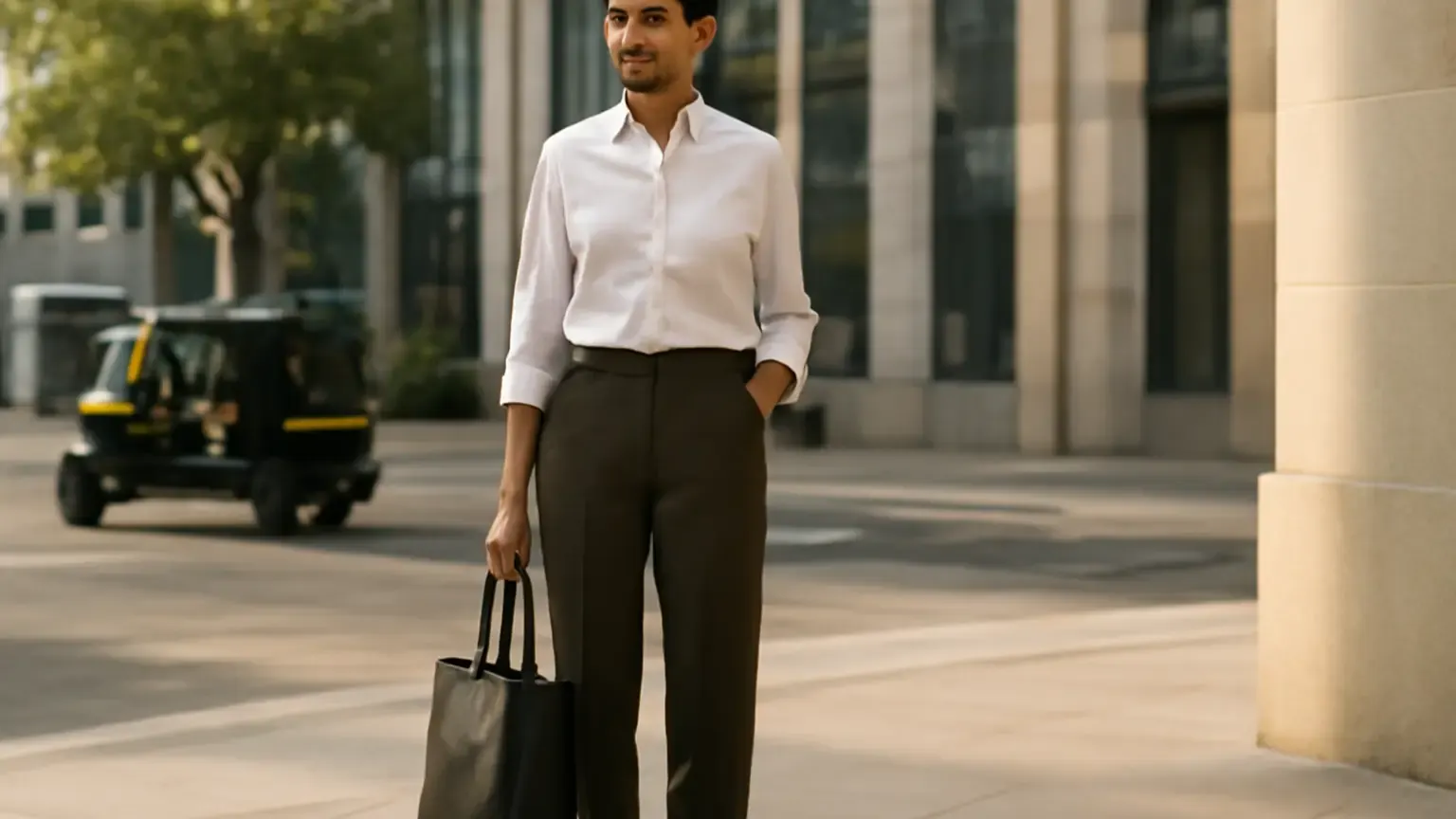
October workwear India works best when you dress for the journey as well as the desk. If you commute by metro, bus, auto-rickshaw or on foot, choose breathable cottons or linen blends, relaxed tailoring, one modest festive detail and shoes you can walk in. This guide is for Indian professionals managing warm afternoons, variable humidity and air-conditioned offices; its practical outcome is a polished outfit that still feels fresh when you arrive.
October sits between seasons in much of India. Mornings may feel manageable, afternoons can remain hot, and humidity varies sharply between cities. In Delhi, Bengaluru or Pune, an outfit may need to handle a warm commute followed by a cool office. In Mumbai, Kolkata, Chennai or other humid locations, airflow and moisture management become even more important.
The most reliable approach is not to build an entirely new wardrobe. Instead, combine breathable bases, easy silhouettes and small finishing details. A crisp cotton shirt with wide-leg trousers, a straight kurta with ankle-length pants, or a lightweight midi dress with a soft blazer can all look professional without trapping heat.
Start with the Indian office dress code
Before choosing colour or accessories, define how formal your workplace is. A consulting office, school, hospital, creative studio and co-working space may each interpret “office-ready” differently. Check whether your workplace expects covered shoulders, a certain hemline, closed shoes or conservative colours. The best Indian workwear for warm October respects those expectations while leaving enough room for movement and ventilation.
- Formal offices: Choose structured cotton shirts, tailored trousers, a simple sheath dress or a neatly pressed kurta set. Keep jewellery restrained and select closed-toe shoes.
- Business-casual offices: Try pleated trousers, a tucked-in knit-free cotton top, a midi skirt or a relaxed blazer over a sleeveless blouse, where permitted.
- Creative or flexible workplaces: Handloom shirts, tonal separates, printed cotton dresses and lightweight ethnic workwear can look considered without feeling corporate.
When in doubt, use one structured element. A defined shoulder, pressed trouser crease, neat collar or polished shoe can make a breathable outfit look intentional.
Build around breathable fabrics and forgiving silhouettes
Breathable cotton office wear is a dependable foundation for October, particularly when the fabric is loosely woven or cut away from the body. Cotton poplin gives a crisp appearance, cotton voile feels airy, and handloom cotton brings texture to otherwise simple outfits. Linen blends can also work well, especially when pure linen’s natural creasing feels too casual for your workplace.
Look for humidity-friendly work clothes with airflow rather than relying only on thinness. Very thin synthetic fabrics may cling or show moisture more visibly. On warm days, a slightly relaxed shirt, A-line kurta or wide-leg trouser often feels cooler than a tight garment made from a supposedly lightweight material.
Four reliable outfit formulas
- Cotton shirt and wide-leg trousers: Tuck a pale blue, white or soft striped shirt into high-rise trousers. Add a slim belt and loafers for a clean, adaptable look.
- Straight kurta and ankle-length pants: Choose a solid or restrained block print, then add a lightweight dupatta only if it will not interfere with your commute.
- Cotton midi dress and cropped layer: A modest neckline and midi hem keep the look office-appropriate. Carry a light overshirt or unlined jacket for strong air-conditioning.
- Monochrome co-ord: A matching cotton shirt and trouser set reduces morning decisions. Break it up with a contrasting bag, watch or small earrings.
Use relaxed tailoring without losing polish
Relaxed office tailoring is useful in warm weather because it creates space between fabric and skin. The key is proportion. Pair a loose shirt with a more defined trouser, or balance wide-leg trousers with a tucked or half-tucked top. If both pieces are oversized, add structure through a belt, a firm tote or a sharper shoe.
Choose unlined or half-lined blazers where your workplace allows them. A cotton-blend jacket, sleeveless waistcoat or soft overshirt can provide authority without the weight of a fully constructed wool-style blazer. Keep the layer in your work bag until you reach the office if the commute is hot.
Wrinkle-conscious dressing does not mean avoiding every crease. Cotton and linen naturally soften as the day progresses. Select patterns, textured weaves and darker neutrals when you want creases to be less noticeable. If you prefer a sharper finish, carry a small folding scarf to sit on during public transport and hang the garment as soon as you arrive.
Add modest festive details, not a complete costume change
October may bring festive lunches, pujas, team gatherings or family events after work. Modest festive workwear can remain practical when you add one or two details rather than layering heavily. Consider a jewel-toned kurta, a subtle zari border, pearl or metal studs, a printed scarf, or a woven handbag.
For a regular office day, pair a muted rust, emerald, marigold or deep pink top with neutral trousers. A simple cotton kurta with a small metallic detail can move from a meeting to an evening gathering. Avoid very elaborate dupattas, noisy bangles or long earrings if you have a crowded commute or spend the day at a computer.
Lightweight ethnic workwear is especially versatile when the cut is streamlined. Straight kurtas, short structured jackets and ankle-length cigarette pants are easier to sit, walk and travel in than voluminous layers. If your office is conservative, use colour and fabric texture for festive interest instead of a low neckline, sheer panel or dramatic sleeve.
Choose shoes for the commute first
The best commute-friendly work shoes should suit both the route and the dress code. A polished loafer, supportive ballet flat, low block heel or clean leather-style sneaker may be more practical than a delicate high heel. Test the pair on a normal walking route before making it your main office shoe; heat, friction and uneven pavements can change how comfortable footwear feels.
For a long public-transport commute, wear the most walkable pair and carry a more formal option only if necessary. Keep a compact pair of foldable flats in your work tote as a backup, but do not treat them as a substitute for a supportive everyday shoe. Breathable socks or no-show liners can help with friction, provided they stay secure.
Match the visual weight of your shoe to the outfit. Loafers ground wide-leg trousers, low block heels sharpen a straight kurta, and simple flats keep a printed dress balanced. In wet or unpredictable conditions, choose a pair that can be wiped clean and avoid fabrics that stain easily.
Plan office layering for October’s temperature changes
Office layering for October should be removable and compact. Air-conditioning can make a sleeveless top uncomfortable indoors, while a full jacket may be excessive outside. Keep one light layer at work: a cotton cardigan, thin overshirt, unlined blazer or soft stole.
Use a two-stage dressing plan:
- Wear the breathable base and practical shoes during the commute.
- On arrival, wash or sanitise your hands, refresh your face and neck if needed, then add the structured layer and accessories.
This simple change can make the same outfit look more formal without making the journey warmer. If you cycle or walk for a long distance, leave your blazer at the office and let the base outfit do the travelling.
Create a warm-commute refresh routine
A polished arrival depends as much on preparation as on clothing. Pack work tote essentials that solve small practical problems: a compact comb, tissues, handkerchief, hair ties or clips, a stain-removing pen, safety pins, a small water bottle and your office layer. Choose a tote with a secure closure and enough structure to keep clothes from becoming crushed.
For sweat-resistant workwear fabrics, prioritise breathable natural fibres or blends that dry reasonably well and do not cling. “Sweat-resistant” is not a guarantee that a garment will remain mark-free; colour, fit, lining and personal comfort all matter. Underlayers can help with coverage, but avoid adding a thick layer that traps heat.
At the office, use the washroom for a quick reset rather than applying strong fragrance over perspiration. Pat the skin dry, change into a fresh inner layer if your day is long, and hang your outer garment where air can reach it. If odour or excessive sweating remains persistent or concerning, speak with a qualified dermatologist or doctor rather than relying only on clothing changes.
Make desk-to-evening outfits easy to adapt
Desk-to-evening outfits work best when the base is simple. A cotton shirt and trousers can become dinner-ready with a brighter lip colour, small hoops and a compact shoulder bag. A solid kurta set can take on a festive feel with a silk-blend scarf or dressier earrings stored in your desk drawer.
Keep the transformation to three minutes: remove the commuter layer, change one accessory, tidy the hair and switch bags or shoes if required. Avoid carrying an entire second outfit unless the event genuinely demands it. A well-chosen base in navy, ivory, charcoal, olive, terracotta or chocolate gives you more combinations across the week.
Common October workwear mistakes to avoid
- Choosing pure appearance over airflow: A very fitted synthetic blouse may look sharp initially but feel uncomfortable after a humid commute.
- Wearing a heavy festive outfit all day: Save elaborate embroidery and multiple layers for events, not ordinary office hours.
- Ignoring the route: High heels, slippery soles and delicate fabrics are poor choices for long walks, crowded trains or two-wheeler travel.
- Overusing perfume: Warm weather amplifies fragrance, and strong scents may affect colleagues in enclosed spaces.
- Carrying no backup: A spare inner layer or scarf can rescue an outfit after an unexpectedly hot journey.
October workwear India: a practical takeaway
Good October workwear India is breathable, adaptable and appropriate for the full day—not merely attractive in a mirror before leaving home. Start with cotton, linen blends or airy handloom fabrics; use relaxed tailoring for movement; add one modest festive accent; and choose shoes that can manage your actual commute. Finish with a removable office layer and a small refresh kit. That formula keeps workwear polished across warm streets, cool offices and after-work plans.
Products that may help with this routine
Choose only what fits your skin, hair or personal needs. Use the links below to view current options on Amazon India.
Frequently Asked Questions
What to wear to work in October in India?
Choose breathable cotton or linen-blend separates, such as a cotton shirt with wide-leg trousers, a straight kurta with ankle-length pants, or a modest midi dress. Add a removable layer for air-conditioned offices and shoes suited to your commute.
What are the best breathable office outfits for Indian weather?
The most versatile options include cotton shirts with relaxed trousers, lightweight kurta sets, cotton midi dresses and tonal co-ords. Look for airflow, comfortable movement and fabrics that do not cling in humidity.
How do you style cotton workwear for a warm commute?
Keep the commute outfit relaxed and lightly layered. Wear a breathable cotton base, carry the blazer or festive scarf separately, and add structured accessories after arriving at the office.
What are comfortable formal shoes for an Indian office commute?
Polished loafers, supportive flats, low block heels and clean, office-appropriate sneakers can work well. Prioritise grip, cushioning, secure fit and the amount of walking in your daily route.
What are good October office outfits for humid cities?
Choose loose but polished silhouettes, airy cottons, linen blends, darker or patterned pieces that disguise minor creasing, and minimal layers. Keep a spare inner layer and avoid thick linings.
How can you keep office clothes fresh after commuting?
Carry tissues, a handkerchief, a spare inner layer and a compact comb. At work, pat skin dry, hang outer layers where air can reach them and refresh without masking perspiration with heavy fragrance.