Festive fashion for apple shaped women works best when comfort and proportion lead the outfit: choose an open or V neckline, gentle vertical lines, fluid fabrics and a hem that skims rather than clings. This guide is for women who carry more fullness around the midsection and want polished Indian occasion dressing without hiding their shape. The seven choices below help you decide between kurtas, saris, Anarkalis, trousers and layers with confidence.
Body-shape advice is a starting point, not a set of rules. An apple-shaped frame commonly has more fullness through the bust and midsection, with comparatively slimmer legs, arms or hips. The aim is not to disguise that shape; it is to create an outfit that feels easy to move in and distributes visual interest comfortably.
What creates balance in festive dressing?
Balanced dressing usually comes from three decisions: where the outfit draws the eye, how the fabric falls over the body, and where the hem ends. A neckline, sleeve detail or pair of earrings can guide attention upwards. A long seam, open jacket or uninterrupted colour can lengthen the line of the outfit. A softly skimming fabric prevents unwanted pulling around the stomach.
Before buying, sit, walk and raise your arms in the garment. Comfortable festive dressing matters as much as a flattering photograph, especially for long wedding ceremonies, family gatherings and puja celebrations.
7 styling choices for festive fashion for apple shaped women
1. Choose open necklines that create a vertical line
A V-neck kurta, a modest scoop neck or an open mandarin neckline can make the upper half feel less visually crowded. These shapes create a small vertical direction rather than a solid horizontal band across the chest. For more coverage, select a V-neck with a stitched modesty panel or wear a fine inner layer beneath it.
Necklines should still suit your comfort and the occasion. A deep neckline is not required. A medium V, a split neckline or an unbuttoned collar can deliver the same directional effect. If the kurta is simple, add statement earrings for festive wear to bring interest towards the face without relying on a tight neckline.
2. Select hems and lengths that skim the midsection
For many women, an A-line kurta that widens gently from the upper torso is an easy starting point. It should float over the stomach rather than balloon sharply. Mid-thigh, knee-length and calf-length kurtas can all work; the best choice depends on your height, footwear and the volume of your bottoms.
When pairing a longer kurta with trousers, keep the lower half relatively clean. An ankle-grazing straight pant or a streamlined palazzo can make the outfit look intentional. Avoid a hem that ends at the fullest part of the stomach if that placement makes you self-conscious, and avoid excessive gathers that add bulk without adding movement.
3. Use fluid fabrics with enough structure
Lightweight festive fabrics such as crepe, georgette, soft silk blends, modal and fluid cotton-silk can drape smoothly while remaining practical in an Indian climate. The right fabric should fall away from the body, not cling to every contour and not stand stiffly away from it.
Very thin fabric may need a well-fitted lining, while heavy brocade can feel restrictive when used across the entire torso. A useful compromise is a richer border, yoke or sleeve in a decorative fabric with a softer body. Check transparency, lining and ventilation before purchasing; these details affect how comfortable the outfit feels after several hours.
4. Build the lower half with clean, high-waisted proportions
High-waisted palazzo pants can sit smoothly under a kurta and create a longer leg line, provided the waistband lies flat rather than digging in. Straight trousers, cigarette pants or a softly flared sharara are alternatives. Choose the amount of volume according to the kurta: wide bottoms need a controlled top, while a straighter kurta can carry more movement below.
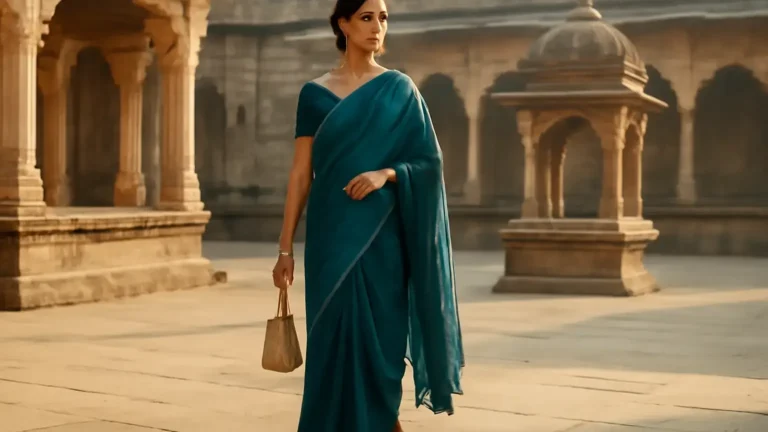
For a sari, try a supportive, comfortable underskirt or shapewear-free petticoat with a smooth waistband, then place the pleats neatly and keep the pallu long. A narrower pleat arrangement and a shoulder-secured pallu can prevent constant adjustment. Footwear with a small stable heel can help the sari fall cleanly, but it is not essential.
5. Add a long, open layer instead of a bulky wrap
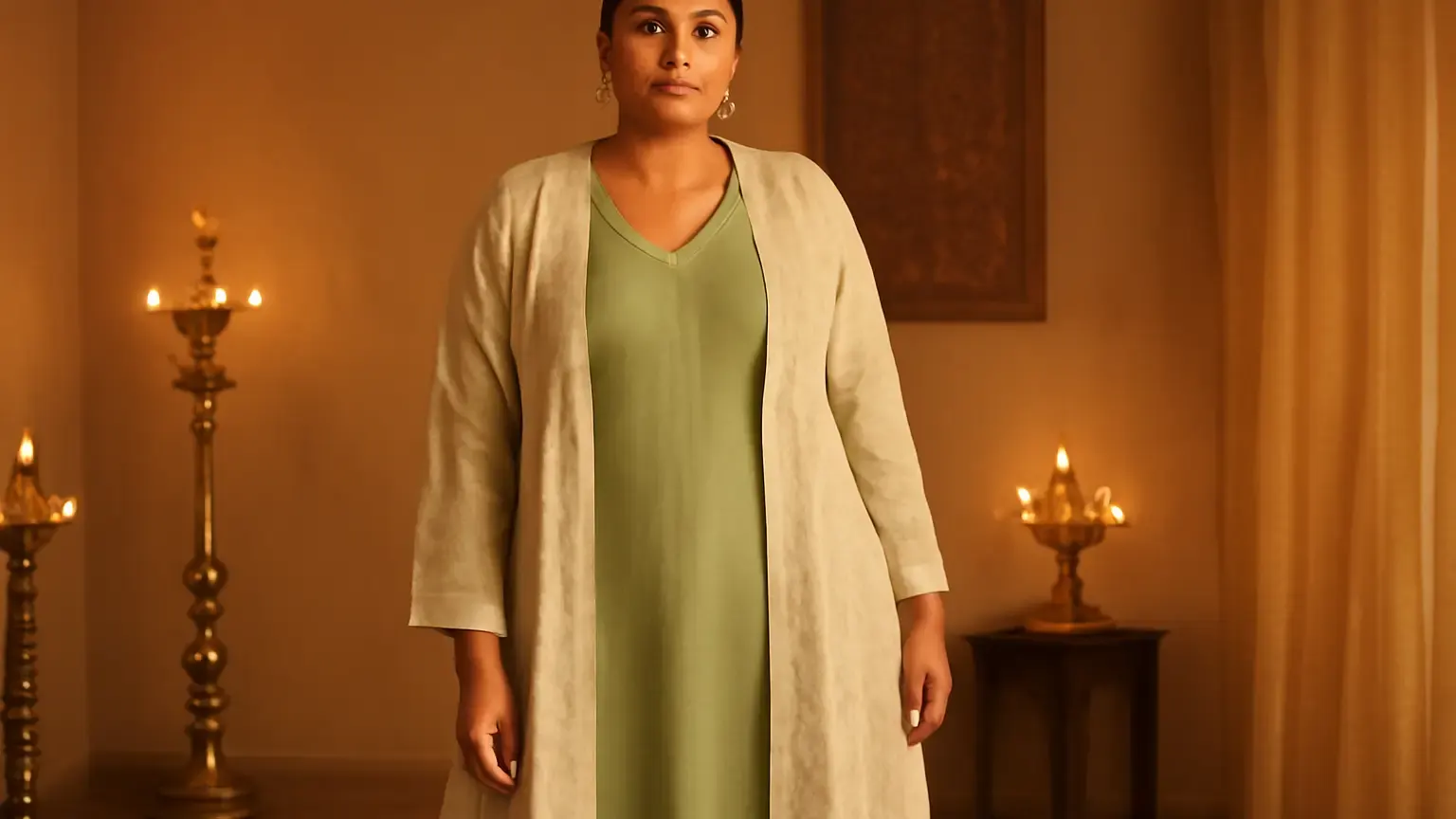
Longline festive jackets, open-front shrugs and lightly embellished kaftan-style overlays create two vertical edges that frame the body. They can be particularly useful when you want arm coverage or a polished third piece over a simple kurta set. Look for a layer that finishes below the widest point of the midsection and moves easily when you walk.
Keep the inner outfit relatively simple if the jacket is ornate. A straight kurta and trousers under an open jacket often look more balanced than several competing layers. For warmer events, choose an unlined sheer overlay or a lightweight tissue-style layer; for air-conditioned venues, a lined jacket can provide useful coverage.
6. Use colour placement and coordinated separates strategically
Monochrome ethnic outfits do not have to mean one flat colour. Combining close shades—such as ivory with beige, plum with rose or teal with a deeper green—keeps the eye moving along one uninterrupted column. This can be a helpful choice when you want a streamlined appearance without wearing black or very dark colours.
If you prefer contrast, place brighter detail near the neckline, dupatta border, sleeves or earrings rather than creating a sharp horizontal division across the stomach. A dupatta worn in a long, relaxed fall can add a vertical line. Pin it securely enough for movement, but avoid wrapping it tightly around the waist.
7. Choose structure where it supports, not constricts
Outfit structure can come from a shaped shoulder, a neat yoke, a wide sleeve cuff, a defined border or a carefully finished seam. These details make festive clothing look considered without requiring a body-hugging fit. An empire waist can work when the seam falls comfortably below the bust and the fabric flows from there; if it sits too high or gathers heavily, it may feel fussy.
For an Anarkali suit, look for a smooth upper bodice and measured flare rather than many stiff layers. The flare should begin at a comfortable point and spread evenly. A short kurti with a longer open jacket can also create structure without adding tightness across the midsection.
How to choose among popular festive silhouettes
For a daytime puja: try a breathable A-line kurta, straight pants and a lightweight dupatta. Keep jewellery moderate and choose sandals that allow standing comfortably.
For an Indian wedding: an Anarkali suit, coordinated kurta set or sari with a long pallu can feel celebratory. Look for lining, secure closures and fabrics that will not crease heavily during travel.
For a cocktail-style festive event: choose a fluid draped sari, a contemporary longline jacket or a column-like kurta with refined embellishment. One strong detail is usually more polished than decoration on every surface.
These are options, not restrictions. If you love a fitted blouse, cropped jacket or bold print, use it. The practical test is whether the garment stays comfortable and whether its proportions feel deliberate when viewed from the front, side and back.
Common styling mistakes to avoid
- Buying only oversized clothing: Extra fabric does not automatically create ease. Poorly placed volume can make the whole outfit look heavier.
- Using stiff fabric everywhere: Heavy textiles can add bulk and limit movement. Balance them with a fluid panel or softer bottom.
- Ignoring the waistband: A waistband that rolls, pinches or sits too low will affect both comfort and posture throughout the event.
- Overloading the centre: Large motifs, dense embroidery and layered tassels all across the midsection can compete for attention. Distribute embellishment instead.
- Choosing length without considering footwear: A trouser or sari hem that drags will undermine an otherwise elegant look. Try the complete outfit with the shoes you intend to wear.
A simple fitting routine before the occasion
- Try the outfit with the intended innerwear, footwear and jewellery.
- Check the shoulder seam, bust comfort and waistband before judging the silhouette.
- Sit for five minutes, walk up a few steps and lift your arms to test mobility.
- Photograph the outfit from the front and side in natural light. Look for pulling, transparent areas or an awkward hem.
- Make one alteration at a time—such as adjusting length, moving a hook or changing the dupatta drape—rather than replacing the entire look.
A tailor can often improve an outfit with small changes: releasing a tight waist, adding a side slit, refining the sleeve or securing a neckline. Alterations should improve movement, not force the garment into a shape it was never designed to hold.
Concise takeaway
The most reliable festive fashion for apple shaped women combines an open neckline, a gently skimming silhouette, fluid but opaque fabric, clean lower-half proportions and one long vertical layer or colour story. Start with comfort, then refine the outfit through hem placement, fabric weight and selective embellishment. Your best festive look is the one that lets you participate fully while feeling unmistakably like yourself.
FAQs
What should you wear to an Indian wedding with an apple body shape?
Choose a fluid Anarkali, a coordinated kurta set with straight or softly wide trousers, or a sari with a smooth waistband and a long pallu. Look for open necklines, comfortable lining and controlled embellishment rather than a very stiff or clingy fabric.
What are the best necklines for apple shaped women in ethnic wear?
Medium V-necks, scoop necks, split necklines and open collars can create a flattering vertical direction. The neckline should provide the coverage you prefer; it does not need to be deep to look balanced.
How do you style a kurta for an apple body shape?
Try an A-line or gently straight kurta with a smooth shoulder, a medium open neckline and a hem that skims the midsection. Pair it with straight trousers or high-waisted palazzos, then add a long dupatta or open jacket for vertical movement.
Which fabrics are flattering for apple shaped women?
Fluid, lightweight-to-medium fabrics such as soft silk blends, crepe, georgette, modal and cotton-silk often drape comfortably. Avoid choosing by name alone: check whether the fabric clings, stands stiffly, needs lining or remains breathable for the event.
Are Anarkali suits suitable for apple shaped women?
Yes. An Anarkali can work well when the upper bodice fits comfortably and the flare begins at a natural, non-restrictive point. Moderate flare and fluid fabric are usually easier to manage than many stiff, bulky layers.
Products that may help with this routine
Choose only what fits your skin, hair or personal needs. Use the links below to view current options on Amazon India.
Frequently Asked Questions
What should you wear to an Indian wedding with an apple body shape?
Choose a fluid Anarkali, a coordinated kurta set with straight or softly wide trousers, or a sari with a smooth waistband and a long pallu. Look for open necklines, comfortable lining and controlled embellishment rather than a very stiff or clingy fabric.
What are the best necklines for apple shaped women in ethnic wear?
Medium V-necks, scoop necks, split necklines and open collars can create a flattering vertical direction. The neckline should provide the coverage you prefer; it does not need to be deep to look balanced.
How do you style a kurta for an apple body shape?
Try an A-line or gently straight kurta with a smooth shoulder, a medium open neckline and a hem that skims the midsection. Pair it with straight trousers or high-waisted palazzos, then add a long dupatta or open jacket for vertical movement.
Which fabrics are flattering for apple shaped women?
Fluid, lightweight-to-medium fabrics such as soft silk blends, crepe, georgette, modal and cotton-silk often drape comfortably. Check whether the fabric clings, stands stiffly, needs lining or remains breathable for the event.
Are Anarkali suits suitable for apple shaped women?
Yes. An Anarkali can work well when the upper bodice fits comfortably and the flare begins at a natural, non-restrictive point. Moderate flare and fluid fabric are usually easier to manage than many stiff, bulky layers.