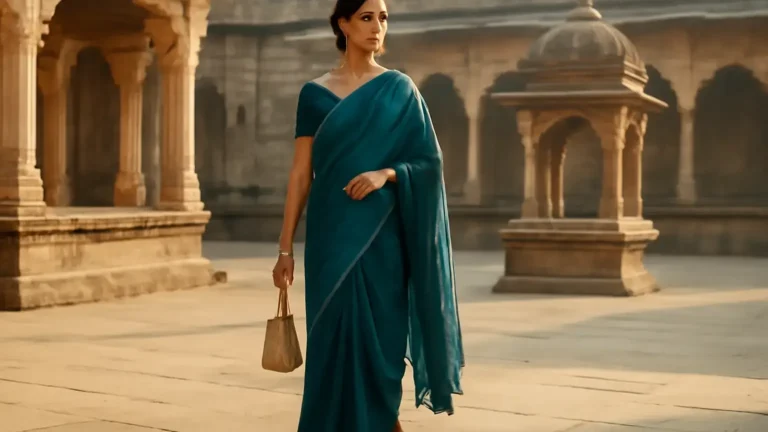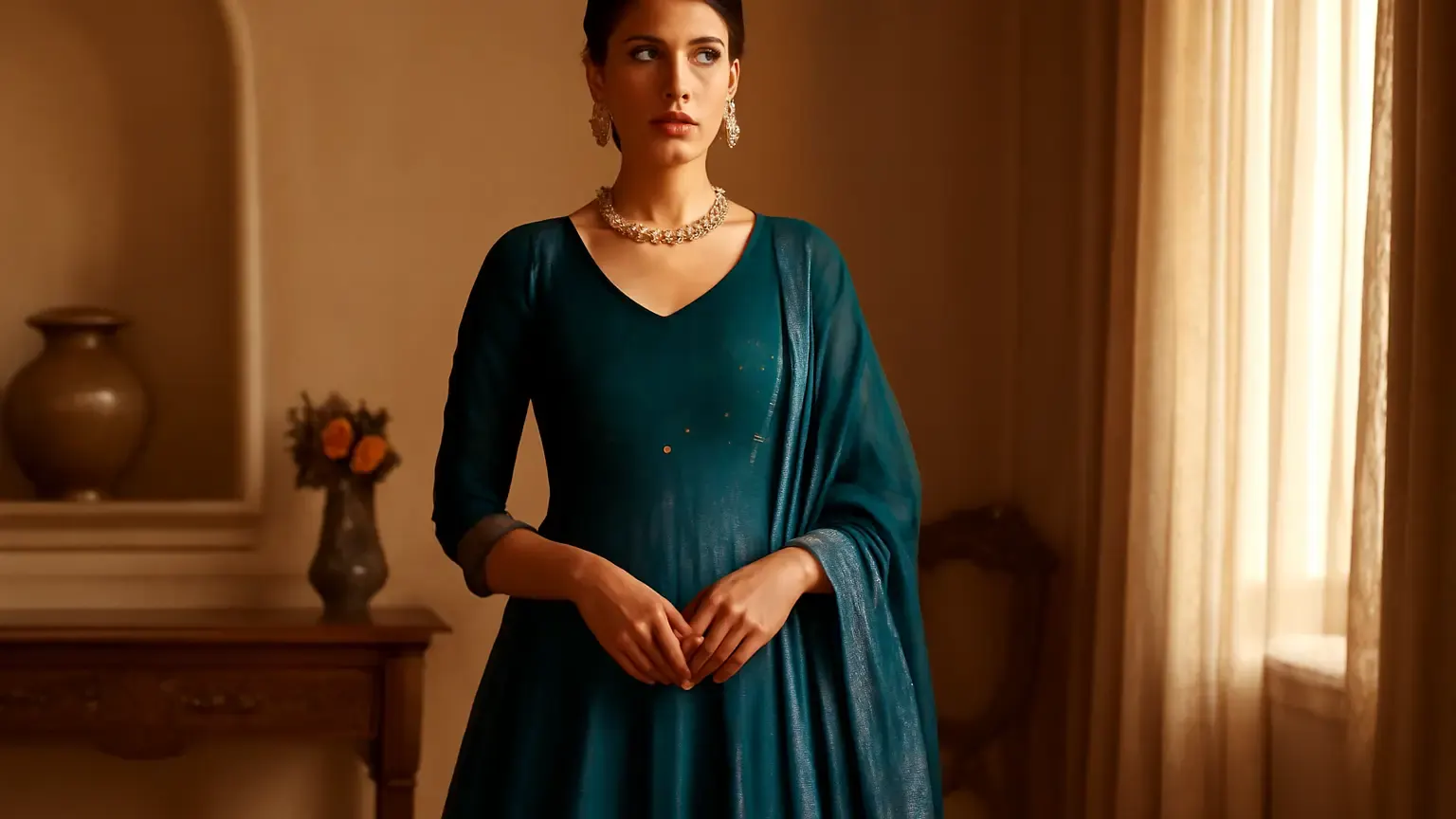
Festive fashion for pear shaped women is easiest when you create gentle emphasis above the waist and keep the lower half fluid rather than bulky. This guide is for women whose hips are fuller than their shoulders and want comfortable Indian outfits for weddings, Diwali, pujas or parties. Use open or broad necklines, considered sleeve details, hip-skimming hems, strategic colour placement and an intelligently arranged dupatta to balance kurtas, sarees and separates without hiding your shape.
There is no single rulebook for dressing a pear-shaped body. The useful aim is proportion: bring some visual interest to the shoulders and neckline, define the waist where you like, and let the fabric fall smoothly over the hips. Fit, movement and personal style matter more than trying to make one area look smaller.
Start with proportion, not size
Pear body shape styling works best when each part of an outfit has a clear job. A neckline, sleeve or earring can draw the eye upwards; a softly structured hem can skim the hip; and a long dupatta line can add height. These choices do not need to be dramatic. Even a contrast border placed near the neckline or a lightly embellished yoke can change the balance of a look.
Before shopping, check three points:
- Shoulder and bust fit: The garment should sit smoothly here without pulling at the armhole.
- Hip ease: Leave enough room to sit and walk. A tight lower half often creates more bulk through wrinkling.
- Visual direction: Vertical seams, long open layers and uninterrupted colour can make an outfit feel more streamlined.
Use these as decision criteria rather than strict body rules. If you love a fitted skirt, a bright lower half or a sleeveless blouse, styling can make it work.
Choose necklines and sleeves that add balance
Neckline for pear shape
A neckline for pear shape dressing can be open, broad or detailed. V-necks, scoop necks, sweetheart necklines, boat necks and modest square necks create space around the upper body. A decorated yoke, embroidered collar or contrast piping can also attract attention without adding width.
Very high, plain crew necks are not wrong, but they can look visually small when paired with a wide, heavily embellished lower half. If you prefer a closed neck, add interest with earrings, a layered necklace, textured fabric or a statement dupatta border.
Sleeves for pear shaped body proportions
The most useful sleeves for pear shaped body styling are those with a clean shoulder line or gentle detail. Try elbow-length sleeves, lightly puffed sleeves, gathered cuffs, embroidered sleeve hems or a structured cap sleeve. A sleeve that ends around the upper or mid-arm can look especially balanced; avoid a hem that cuts across the widest part of the arm if that makes you uncomfortable.
Keep volume controlled. Large ruffles at the shoulder can be festive, but they should be matched with a relatively calm lower half. In contrast, a heavily ornate sleeve and a broad hip border may compete for attention.
Find flattering kurta silhouettes
For many women, the most adaptable flattering kurta silhouettes are an A-line kurta, a gently flared anarkali, and a straight kurta with a fluid side fall. The right option depends on fabric, length and the amount of ease—not just the label on the garment.
A-line and anarkali kurtas
An A-line kurta follows the upper body and widens gradually from the waist or under-bust. It can skim the hips without clinging and works well for festive gatherings when made in crepe, georgette, silk blends or a soft cotton-silk. Look for a flare that begins high enough to move comfortably, but is not so full that it becomes bulky.
Anarkalis suit women who enjoy movement and a traditional festive finish. Keep the upper yoke defined, then let the skirt fall. A narrow border near the lower hem is usually easier to balance than several thick horizontal bands across the hip.
Straight kurtas
A straight kurta can be very flattering when it has side slits, a smooth drape and enough room at the hip. Choose a hem that finishes below the fullest hip point or falls to the calf, depending on the accompanying bottom. A straight kurta with a longer front panel, vertical embroidery or a matching bottom creates a continuous line.
For Indian ethnic wear for pear shape dressing, avoid assuming that every outfit must be loose. Excess fabric around the waist and hip can remove definition. A lightly shaped kurta with a comfortable lining often looks neater than an oversized style.
Style sarees through drape, blouse and border placement
Saree draping for pear shape dressing is primarily about where the fabric gathers and where the eye lands. Keep the pleats neat and moderately narrow at the front, then position the pallu so it falls in a long, clean line from the shoulder. A structured shoulder pleat or a softly spread open pallu can add presence to the upper body.
Blouse choices
A blouse design for pear shape dressing can use a boat, square, sweetheart or V-neck. Elbow-length sleeves, textured sleeves and small shoulder details add balance. If you prefer a sleeveless blouse, a wider shoulder strap generally gives a more anchored finish than a very thin strap.
Choose the blouse and saree together. A bright blouse with a quieter saree creates upper-body emphasis; a tonal blouse with a statement pallu looks more elongated. A blouse that ends at the natural waist, rather than at the widest point of the hip, can make the drape feel more intentional.
Fabric and border decisions
Light silks, crepes, georgettes and fluid satin blends tend to fall close to the body. Crisp cotton-silk, organza or tissue can add structure, but use stiffness thoughtfully around the hip. A broad horizontal border at the lower edge may draw attention there, while a slimmer border or vertical pallu detail distributes focus more evenly. This does not mean avoiding borders; it means deciding where you want the strongest detail.
Use colour placement and dupattas strategically
Colour placement in ethnic wear can balance an outfit without relying on darker colours. A lighter or brighter blouse, yoke, neckline, sleeve or pallu draws the eye upward. A tonal lower half creates continuity, while a two-tone kurta with a deeper side panel can suggest length. Monochrome dressing is another easy option, especially when the fabric has a visible weave or a delicate metallic finish.
For festive dupatta styling, try one of these arrangements:
- Shoulder-to-side fall: Pin one shoulder and let the dupatta fall in a long line along the side, keeping the front relatively clear.
- One-side open drape: Place most of the colour and embroidery near the shoulder, then allow the fabric to fall vertically rather than bunching it at the waist.
- Neck loop with controlled ends: Loop a lightweight dupatta once and keep both ends long and narrow. This suits a simple kurta when you want more upper-body detail.
- Soft front drape: For a saree-like effect over a kurta, spread the dupatta across the shoulder and secure it at the waist so it does not gather around the hips.
A very wide, stiff dupatta wrapped tightly around the lower body can add unintended volume. If the dupatta is heavily embroidered, let it remain the star and simplify the kurta or bottom.
Build separates that feel festive but easy
Separates are useful when you want repeatable Indian outfits rather than one-time occasion wear. A short festive kurti over a high-waisted, fluid bottom can work well when the upper half carries the print or embellishment. Alternatively, pair a longer tunic with a simple, tonal bottom and a defined neckline.
Palazzos, skirts and co-ords
Wide-leg palazzo pants can suit a pear-shaped frame when the fabric falls vertically and the waistband lies flat. Pair them with a kurta that ends around the upper thigh, or choose a longer straight tunic that creates one uninterrupted column. Very stiff palazzos with a short, wide top can make the lower half look broader, so consider proportion before choosing volume.
For festive co-ord sets, look for a shaped top, a longline jacket or a tonal print with vertical movement. A peplum can work if its flare begins above the fullest hip and finishes cleanly; a peplum ending directly across the hip may feel less comfortable. Long jackets, cape layers and open-front overlays are useful because they frame the body instead of adding a horizontal block.
A simple outfit formula for occasions
Use this five-step routine when getting dressed:
- Choose the base: Start with a saree, kurta set or separate that fits the shoulders and allows movement at the hips.
- Pick one upper-body focal point: This could be a neckline, sleeve, blouse, necklace, embroidery or bright dupatta.
- Keep the lower line calm: Use a fluid fabric, a tonal shade or a simple border if the top is detailed.
- Check the hem in motion: Walk, sit and lift your arms. The best festive look should remain comfortable beyond photographs.
- Edit accessories: Choose earrings or a necklace based on the neckline, then add footwear and a bag that do not interrupt the outfit’s line.
For a daytime puja, a cotton-silk A-line kurta with a light dupatta may feel polished and breathable. For a wedding reception, a fluid saree with a structured blouse and a clean pallu can provide more drama. For a family celebration, try a tonal co-ord with metallic earrings and one embellished layer.
Common styling mistakes to avoid
- Overloading every zone: Heavy neckline, wide sleeve, large hip border and a bulky dupatta can compete rather than balance.
- Ignoring fabric behaviour: Stiff cloth can stand away from the body, while clingy cloth may highlight every crease. Consider lining and fall before buying.
- Choosing only by trend: A popular crop length or exaggerated flare still needs to suit your height, comfort and occasion.
- Pinning the dupatta at the widest point: Move the gathering higher or let the fabric fall vertically when you want a cleaner silhouette.
- Using fit as a disguise: Oversized clothing can feel less balanced than a gently shaped, well-fitted garment.
Takeaway
The strongest festive fashion for pear shaped women combines upper-body interest with a smooth, comfortable lower line. Start with a flattering neckline or sleeve, select a kurta or blouse that fits the shoulders, control border and embellishment placement, and use the dupatta to create length rather than bulk. Whether you choose a saree, an A-line kurta, palazzos or a co-ord set, the best outfit is the one that lets you move confidently and still feels like your style.
Products that may help with this routine
Choose only what fits your skin, hair or personal needs. Use the links below to view current options on Amazon India.
Frequently Asked Questions
What neckline is best for pear shaped women in festive wear?
Open or gently broad necklines such as V-necks, scoop necks, boat necks, sweetheart necklines and square necks can add visual interest around the upper body. A detailed yoke or contrast piping works well too. Choose the neckline you feel comfortable wearing, and balance a high neck with earrings, texture or sleeve detail.
How should a pear shaped woman drape a saree?
Keep the front pleats neat and moderately narrow, then place the pallu so it creates a long line from the shoulder. A structured shoulder pleat or open pallu can add upper-body presence. Pair the drape with a well-fitted blouse and avoid gathering a stiff, heavily embellished pallu around the hips.
Which kurta style suits a pear shaped body?
An A-line kurta, gently flared anarkali or fluid straight kurta can suit a pear-shaped body. Look for good shoulder fit, comfortable hip ease and a hem that skims rather than grips the fullest hip point. Vertical embroidery, side slits and a tonal bottom can make the outfit feel more balanced.
Can pear shaped women wear palazzo pants with kurtas?
Yes. Choose wide-leg palazzo pants in a fluid fabric with a flat waistband, and pair them with a shaped kurta or longer straight tunic. Keep the top and bottom tonal when you want a longer line, or place the strongest print or embellishment on the upper half.
How can I style a dupatta for a pear shaped body?
Pin the dupatta at the shoulder and let it fall in a long vertical line, or use a controlled one-side drape. Keep bulky gathering away from the widest hip area. If the dupatta is heavily embellished, simplify the kurta and bottom so the overall look remains balanced.