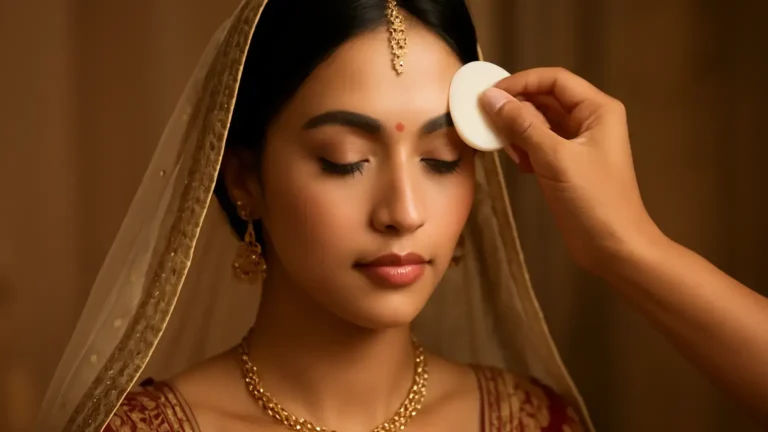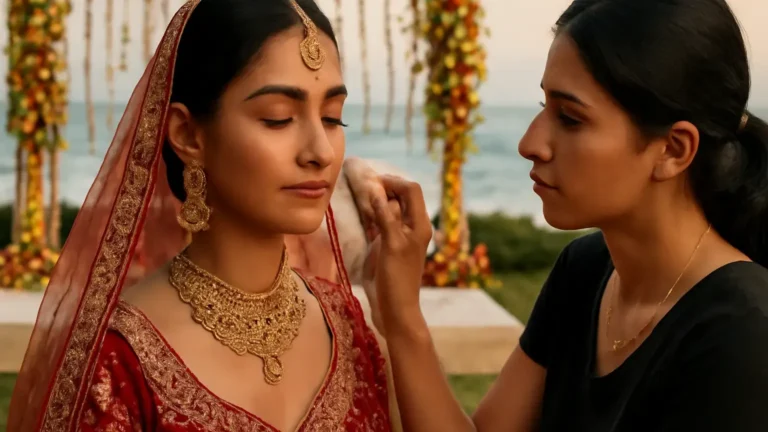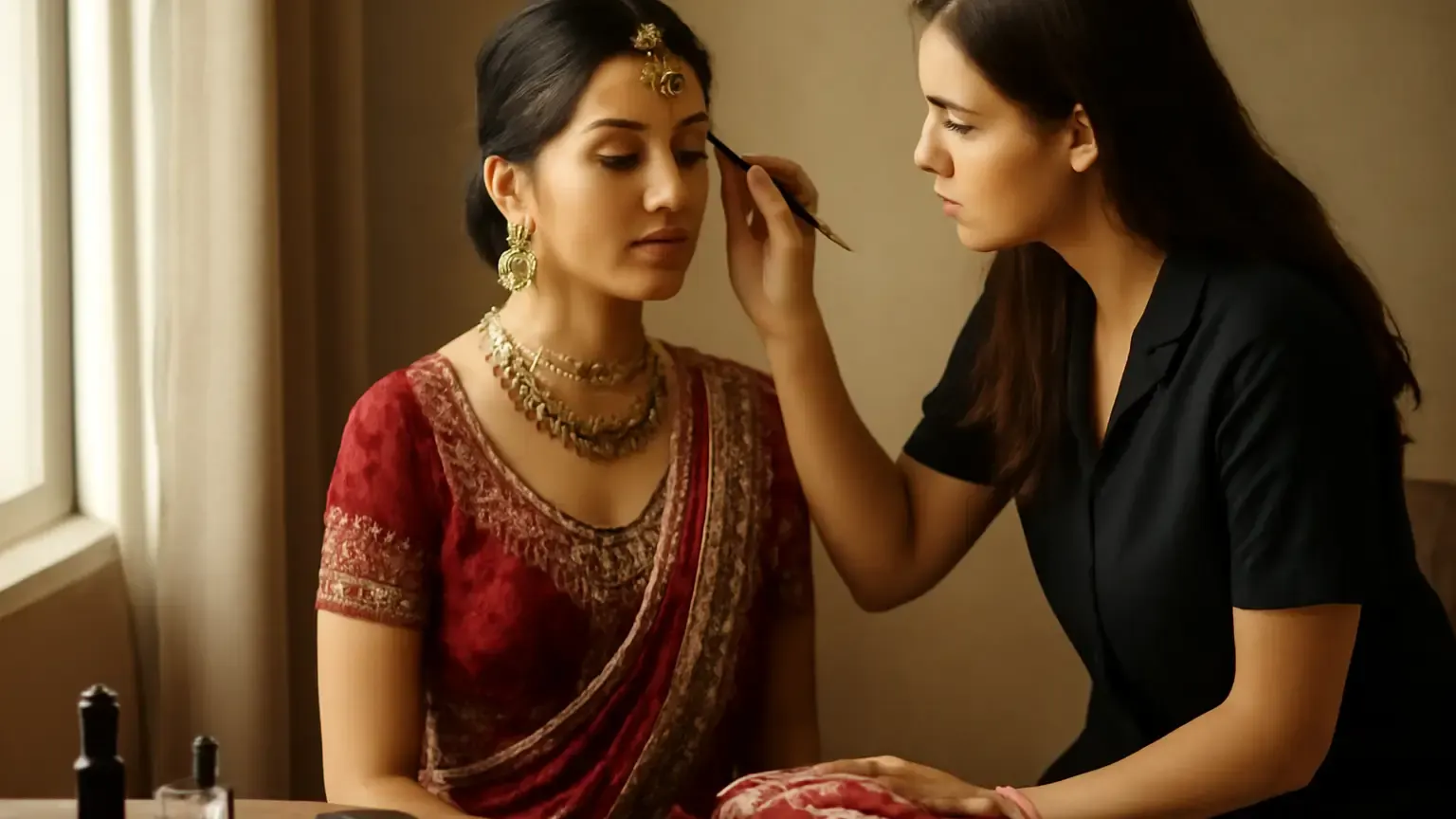
A bridal makeup trial checklist helps brides, family members and makeup artists test the look before an important Indian wedding day. Bring your outfit or jewellery references, check the base in daylight and photographs, and wear the makeup long enough to judge comfort and fading. The goal is not simply to look beautiful for one hour; it is to confirm the right products, techniques, accessories and touch-up plan for your ceremony, reception and photography schedule.
Why a bridal makeup trial matters
A trial is a working appointment, not just a preview. It gives you time to compare textures, adjust colours and identify practical issues before the wedding morning becomes rushed. A look that feels perfect under a salon’s warm lights may appear different in daylight, on a phone camera or under a photographer’s flash.
For an Indian wedding, the trial should also account for heat, humidity, multiple functions, heavy bridal jewellery, a dupatta or veil, and long hours between getting ready and the final rituals. A useful trial ends with clear decisions: the makeup style, product preferences, accessory placement and the person responsible for touch-ups.
Bridal makeup trial checklist: 10 details to test
1. Bring specific reference photos
Save two or three reference images that show details you genuinely like, such as skin finish, blush placement, lip depth or bridal eye makeup. Avoid presenting one photograph as an exact promise: lighting, face shape, skin texture and editing can differ substantially. Also share pictures of your usual makeup, outfits and jewellery so the artist can adapt the inspiration rather than copy it blindly.
During the bridal makeup artist consultation, explain what you do not want as clearly as what you do want. For example, you may prefer softly defined eyes instead of a very dark smoky look, or a radiant base instead of a heavily powdered finish.
2. Book at a useful point in the planning process
Schedule the makeup trial after you have a reasonably firm idea of your bridal outfit, blouse neckline, jewellery and hair direction. It should be early enough to change artists or products if the result is not right. As a general planning guide, arrange it several weeks to a few months before the wedding, depending on availability and the number of functions.
When comparing a makeup trial appointment, ask whether the fee is separate, what is included, how long the session lasts and whether a second trial costs extra. Makeup trial cost India can vary by city, artist experience, travel, products and the number of looks, so compare the scope of the service rather than price alone.
3. Arrive with prepared but familiar skin
Follow a simple skin prep for bridal makeup routine in the days before the appointment: cleanse gently, moisturise as usual and use sunscreen during the day. Do not introduce a strong peel, unfamiliar facial, scrub or active product immediately before the trial. A trial is meant to assess how makeup works with your normal skin, not how it sits after an unusually intensive treatment.
Arrive with clean skin unless the artist has given different instructions. Tell the artist about dryness, oiliness, sensitivity, recent procedures and any prescribed skincare you use. They can then choose a more suitable moisturiser, primer and base technique without making medical claims about your skin.
4. Confirm shade, undertone and base finish
Check the foundation along the jawline and look at it in more than one light source. A base can appear too yellow, grey, pink or orange when the undertone is mismatched. Ask to see the complexion after a short waiting period because some formulas change slightly as they settle or oxidise.
Discuss whether you prefer sheer, medium or fuller coverage and where coverage is actually needed. A long-wear foundation may be useful for a long ceremony, but longevity should not come at the expense of comfort or a mask-like appearance. Concealer, powder and cream products should work together rather than create unnecessary layers.
5. Test the makeup under realistic lighting
Bridal makeup lighting can change how colour, shine and texture appear. View the finished face beside a window in indirect daylight, under the venue’s likely indoor lighting if possible, and on a phone camera. Do not judge the look only in a mirror surrounded by warm bulbs.
Check the transition between face, ears, neck and visible chest area. Also ask the artist to avoid excessive flashback from products that may contain high levels of reflective powder if bright photography is expected. The aim is balanced skin that looks natural in person and dimensional in images.
6. Make a deliberate photography test
A bridal makeup photography test should include front-facing images, a few side angles, close-ups and photographs from a short distance. Use the phone or camera settings closest to the wedding photographer’s style, but treat the results as guidance rather than a guarantee. Look for uneven blending, white cast, harsh contour, disappearing blush or lipstick that looks much lighter than expected.
Ask the artist to photograph the look before and after a small adjustment, such as adding blush or softening the eye definition. This makes the decision more objective and helps you remember what changed. If possible, send the trial images to your photographer or stylist for practical feedback.
7. Test eye makeup, lashes and comfort
Wear the bridal eye makeup long enough to assess watering, heaviness, creasing and irritation. Check whether false lashes feel secure when you blink and whether they interfere with glasses, contact lenses or a veil. If you are not used to dramatic liner or lashes, ask for a balanced version before committing to maximum intensity.
Waterproof wedding makeup can be helpful around emotional ceremonies, but “waterproof” does not mean indestructible or comfortable for everyone. Ask how the artist plans to handle tears, sweat and humidity, and avoid rubbing the eyes during the day. Your eyes should feel comfortable enough for several hours of conversation and photography.
8. Complete an allergy and sensitivity check
A makeup allergy patch test is especially important if you have reacted to cosmetics before, have very sensitive skin or are trying unfamiliar adhesive, pigment or skincare. Ask the artist what products will be used and whether a small-area test can be completed in advance. A trial itself should not be the first moment you discover a serious reaction.
If you develop persistent burning, swelling, a spreading rash or another concerning reaction, remove the product carefully and seek medical advice. A dermatologist or doctor is the right person to assess ongoing or severe symptoms. Never rely on a wedding-day trial to diagnose a skin problem.
9. Add jewellery, veil and outfit details
Bring the blouse, dupatta, veil or jewellery when practical, or bring clear photographs and measurements. Test whether earrings catch in hair, whether the maang tikka sits comfortably, and whether a nath, nose pin or heavy necklace changes the balance of the makeup. Jewellery can reflect light onto the face and alter how much highlight or eye definition is needed.
A veil-friendly makeup look should remain visible around the eyes and cheeks without creating friction when fabric moves across the face. Check where the veil will be pinned and whether pins, flowers or hair accessories could disturb the base. This is also the right time to coordinate with the hairstylist if two artists will work together.
10. Simulate wear time and plan touch-ups
Keep the makeup on for several hours if your schedule allows. Eat, drink, talk and move around normally. Observe shine around the nose and forehead, lipstick fading, creasing under the eyes, lash lifting and any discomfort from jewellery. Your face should still look cohesive after normal activity, even if a few touch-ups are expected.
Ask for a written or photographed plan for the wedding makeup touch-up kit. It may include the lip colour or a close match, blotting paper, a small powder, cotton buds, tissues and any lash adhesive recommended by the artist. Decide who will carry it and whether an assistant will check your makeup between ceremonies. Touch-ups should refresh strategic areas, not add heavy layers repeatedly.
Questions to ask before confirming the artist
- Which products and tools will be used for the base, eyes and lips, and can sensitivities be accommodated?
- How will the look change for daylight, flash photography or an evening reception?
- How long will the complete application take, including hair, draping and final photographs?
- Will the artist stay for touch-ups, send an assistant or leave a recommended kit?
- What happens if the ceremony runs late or another function needs a different look?
- Which parts of the trial can be adjusted before the wedding, and when is the final confirmation due?
Common trial-day mistakes to avoid
- Testing only in salon lighting: always check daylight and photographs.
- Arriving with a brand-new skincare routine: unfamiliar products can obscure what is causing dryness or irritation.
- Choosing a look from one edited image: use several references and discuss the features you actually want.
- Skipping the outfit context: makeup that suits a pastel daytime outfit may need different intensity for a red silk lehenga and evening lights.
- Ignoring comfort: heaviness, tight lashes or itchy products can become major distractions during a long ceremony.
- Leaving touch-ups undefined: confirm who handles lipstick, shine and tears after the artist leaves.
Final takeaway
The best bridal makeup trial checklist tests performance as well as appearance. Confirm the shade in realistic light, photograph the face from several angles, wear the products for long enough to assess comfort, and include your jewellery, veil and ceremony conditions. Once the look, product plan and touch-up responsibilities are written down, the wedding morning becomes more predictable—and you can focus on the celebration rather than troubleshooting makeup.
Products that may help with this routine
Choose only what fits your skin, hair or personal needs. Use the links below to view current options on Amazon India.
Frequently Asked Questions
What to take to a bridal makeup trial?
Take your outfit or clear outfit photographs, jewellery, veil or dupatta details, preferred reference photos, skincare and allergy information, and any glasses or contact lenses you will use. Bring inspiration that shows specific features rather than relying on one edited image.
How early should you do a bridal makeup trial?
Book the trial several weeks to a few months before the wedding, depending on the artist’s availability and how many functions need looks. Schedule it after your outfit and jewellery direction is clear, but early enough to make changes or book another artist if needed.
What to ask a bridal makeup artist at trial?
Ask about the products, application time, shade matching, sensitivity precautions, photography finish, waterproof techniques, jewellery and veil coordination, touch-up support, assistant availability and the fee or policy for adjustments and additional trials.
How to test bridal makeup for photography?
Take front, side and close-up photographs in daylight and indoor lighting, using a phone or camera similar to the wedding setup. Check for white cast, uneven blending, disappearing blush, harsh contour and lipstick that looks different from the mirror result.
Can I do a makeup trial if I have sensitive skin?
Yes, but tell the artist about previous reactions and ask about a makeup allergy patch test before the appointment. Avoid introducing unfamiliar skincare immediately before the trial. Persistent, severe or concerning symptoms should be assessed by a dermatologist or doctor.
What should an Indian bride check during a wedding makeup trial?
An Indian bride should check the base in daylight and flash, compatibility with humidity and long ceremonies, visibility beside bridal jewellery, veil or dupatta placement, eye and lip comfort, and a practical touch-up plan between events.