Bridal makeup for humid weather works best when it is tested in the same heat, built in thin layers and touched up by blotting rather than piling on powder. This checklist is for brides marrying in coastal, monsoon or hot Indian conditions, as well as anyone whose base tends to separate or crease. Use the trial to choose textures and wear time, then follow a simple ceremony-day routine for a fresh, photograph-ready finish.
Humidity changes how makeup behaves: perspiration can loosen complexion products, facial oil can create shine, and moisture in the air can make powder feel heavy. The answer is not necessarily an ultra-matte face. A reliable bridal base balances controlled shine with enough flexibility for expressions, photographs and several hours of wear.
Start with a realistic bridal makeup trial
Schedule the trial at least a few weeks before the wedding, ideally at a similar time of day to the ceremony. If the event is outdoors, ask the makeup artist to test the look after exposure to heat, movement and natural light rather than judging it only in an air-conditioned room.
Bring the details that affect the decision
- Share the venue, ceremony duration, travel time, weather forecast range and whether the event is indoors or outdoors.
- Wear a neckline and jewellery style similar to the wedding outfit so the complexion, blush and lipstick balance can be assessed properly.
- Take photographs in daylight, warm indoor light and flash. A base that appears perfect in the mirror may look too pale, grey or shiny in photographs.
- Tell the artist about known sensitivities, recent facials, active skincare ingredients and any products that have previously caused irritation.
Ask the artist to record the shades, product textures and application order. You should also check the look after four to six hours. Separation around the nose, creasing under the eyes, fading on the lips and excess shine are useful trial findings, not failures. Adjust the routine before the wedding rather than adding more product on the day.
Prepare the skin without overloading it
Good skin prep for bridal makeup is comfortable, light and familiar. Introducing a strong exfoliant, peel or new facial close to the wedding can leave the skin reactive or flaky. Keep the pre-wedding routine consistent and discuss professional treatments with a qualified skin professional if you are unsure about timing.
A practical morning preparation sequence
- Cleanse gently, removing overnight oil without leaving the skin tight.
- Apply a lightweight hydrating layer if your skin needs it. Gel or fluid textures often feel more comfortable in hot weather than several rich creams.
- Use a small amount of moisturiser where the skin is dry. Do not skip hydration solely to prevent shine; dehydrated skin can make foundation catch on dry areas.
- Apply broad-spectrum sunscreen if the schedule includes daylight exposure, allowing it to settle before makeup. Follow the product directions and avoid testing a new formula on the wedding morning.
- Use a mattifying primer only where makeup usually breaks down, such as the sides of the nose, forehead or chin. Applying it across the entire face can make the base look flat or emphasise texture.
Oil-control skincare should be gentle and consistent, not aggressive. If persistent redness, itching, swelling or a painful breakout appears, seek advice from a dermatologist instead of trying to conceal a concerning reaction with extra makeup.
Build the complexion in thin, flexible layers
For humid conditions, thin application is usually more reliable than one thick layer. A makeup artist can mix or layer products to match the skin, but the principle remains the same: place coverage only where it is needed and allow each layer to settle.
Layering checklist
- Use a small amount of sweat-resistant foundation in the centre of the face first, then sheer it towards the perimeter.
- Choose a long-wear concealer for targeted correction rather than spreading a heavy coat under both eyes and over the whole face.
- Let foundation and concealer set briefly before powdering. Pressing too soon can move the base and create uneven coverage.
- Prefer cream blush in a thin layer when you want a natural, skin-like flush, then lightly reinforce it with a compatible powder blush if the trial shows that extra longevity is needed.
- Keep highlighter away from areas that become visibly oily. A soft sheen on the high points is easier to maintain than glitter across the forehead, nose or cheeks.
Humidity-proof makeup is not the same as a thick, completely matte mask. Your artist should consider the finish of the outfit, the photography style and your comfort. A lighter base may be the better choice for an outdoor daytime ceremony, while more strategic coverage can suit an evening reception with strong photography lighting.
Choose waterproof products selectively
Waterproof makeup products are most valuable where water, sweat or tears are likely to affect the look. Waterproof or water-resistant eye products can help with kajal, eyeliner and mascara, but “waterproof” does not mean that every layer of a complete face will stay unchanged through heat, rubbing and oil.
Prioritise water resistance for mascara, eyeliner and possibly brow products if you expect tears or a long ceremony. Test removal during the trial: a product that requires harsh rubbing may be uncomfortable around the eyes. For the base, focus on good skin preparation, compatible formulas, thin application and careful setting. Keep a gentle remover suitable for the products used, and never scrub sensitive areas to force makeup off.
Set strategically instead of powdering everything
Place translucent loose powder where movement and shine are most likely: around the nose, between the brows, under the eyes if needed and through the centre of the forehead. Use a puff to press a small amount into the skin or a soft brush for a lighter veil. Avoid repeatedly sweeping powder over cream blush and highlighter, which can dull colour and create a dry-looking surface.
A setting spray can help unify powder and complexion layers, but it should support—not replace—proper application. Spray according to the product directions from the recommended distance, allow it to dry, and avoid touching the face while it settles. During the trial, check whether the spray changes the finish, transfers to clothing or irritates your eyes.
Pack a ceremony-day touch-up kit
A small makeup touch-up kit is more useful than carrying every product used by the artist. Ask your artist or a trusted attendant to keep it accessible rather than leaving it in a hot car or a locked room.
- Blotting papers for lifting oil and perspiration without disturbing the base.
- A small amount of the exact foundation or concealer used, for local repairs only.
- The lip colour, lip liner and a small mirror.
- A clean cotton bud for tidying eyeliner or lipstick edges.
- A small powder puff or clean brush and a little translucent powder.
- Tissues, hand sanitiser and any hair or veil pins needed during outfit changes.
Do not decant products into unlabelled containers if you might confuse shades or formulas. Keep the kit away from direct sun, and avoid sharing eye or lip products.
Follow the correct touch-up order
- Step into shade or an air-conditioned room if possible. Give the skin a moment to cool before assessing the makeup.
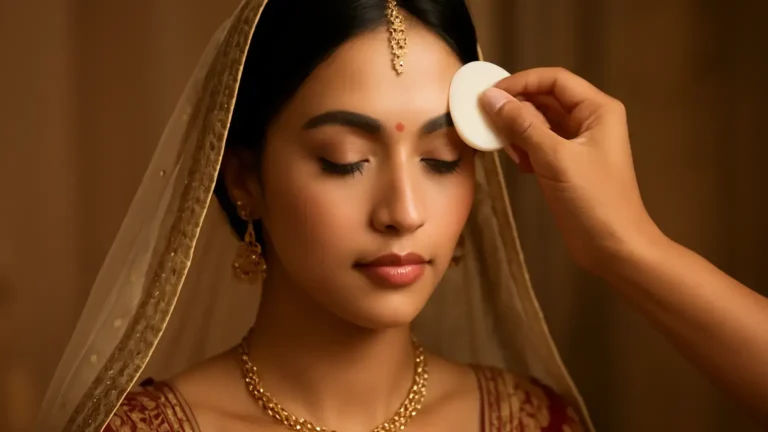
- Blot, do not wipe. Press a tissue or blotting paper on the forehead, nose and chin, lifting it straight off.
- Inspect before adding anything. If the base is intact, leave it alone.
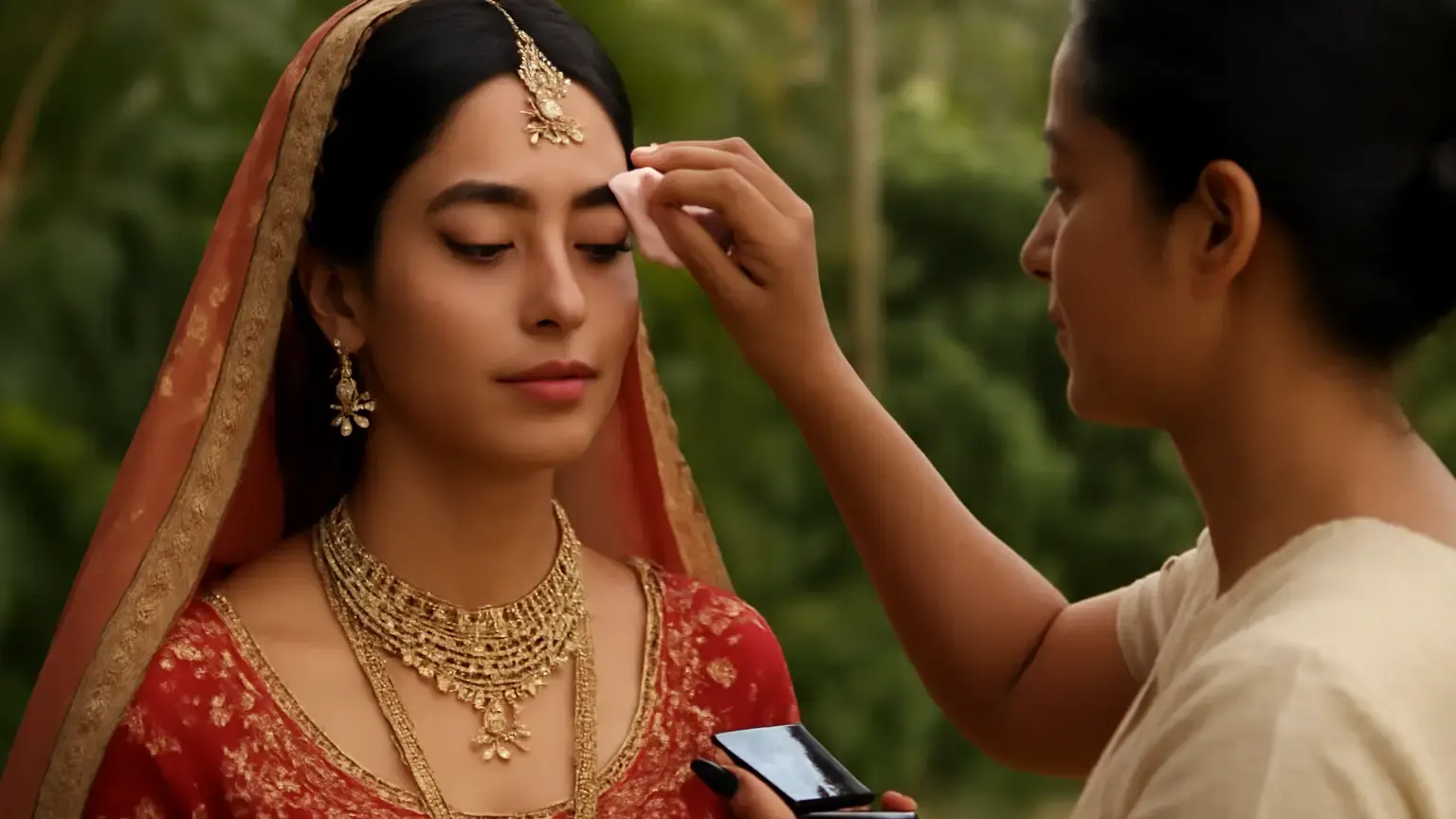
- Use a tiny amount of concealer or foundation only on separated areas, tapping the edges to blend.
- Press powder onto fresh shine, concentrating on the centre of the face. Avoid covering the whole face automatically.
- Refresh lips and clean any mascara or eyeliner that has transferred. Reapply blush or highlighter only if colour has genuinely faded.
For a long wedding day, schedule checks after travel, before the ceremony, after the main rituals and before portraits or the reception. A designated attendant can help you inspect the face without repeatedly touching it yourself.
Common mistakes to avoid
- Skipping the trial because the same makeup looked fine at a short event.
- Using a new facial, sunscreen or primer on the wedding morning.
- Applying several mattifying products everywhere, then adding more powder when shine appears.
- Rubbing sweat away with a tissue, which can remove foundation and irritate the skin.
- Choosing a foundation shade only under yellow indoor lighting.
- Assuming every waterproof formula is comfortable, transfer-proof or suitable for sensitive eyes.
- Leaving touch-ups until photographs begin instead of checking after heat, travel and ceremony movement.
Final takeaway
The strongest bridal makeup for humid weather plan is tested, breathable and specific: familiar skin preparation, targeted primer, thin complexion layers, selective waterproof products, controlled powder placement and blot-first touch-ups. Use the trial to decide what your skin actually needs, then keep the ceremony routine simple enough for you or an attendant to follow calmly.
Products that may help with this routine
Choose only what fits your skin, hair or personal needs. Use the links below to view current options on Amazon India.
Frequently Asked Questions
How should I prepare my skin for bridal makeup in humid weather?
Cleanse gently, use familiar lightweight hydration, moisturise dry areas and allow sunscreen to settle before makeup. Apply mattifying primer only to areas that usually become shiny, and avoid new treatments or products on the wedding morning.
What foundation is best for bridal makeup in Indian humidity?
Choose a foundation that matches your skin in daylight, offers the coverage you need and has performed well during a longer trial. A sweat-resistant, buildable formula applied in thin layers is often more dependable than a very heavy base.
How do I stop bridal makeup from melting in humidity?
Prepare the skin without overloading it, use targeted primer, apply thin layers, set the high-movement areas and blot perspiration before adding any powder. A realistic trial in similar heat is essential.
What should be in a bridal makeup touch-up kit?
Pack blotting papers, the lip colour and liner, a small mirror, a cotton bud, a little of the exact base product, a puff or brush, and a small amount of translucent powder.
Should I use waterproof makeup for a humid wedding?
Use water-resistant or waterproof formulas selectively for mascara, eyeliner and other areas likely to encounter tears or sweat. Test comfort and removal during the trial rather than assuming every waterproof product suits the whole face.