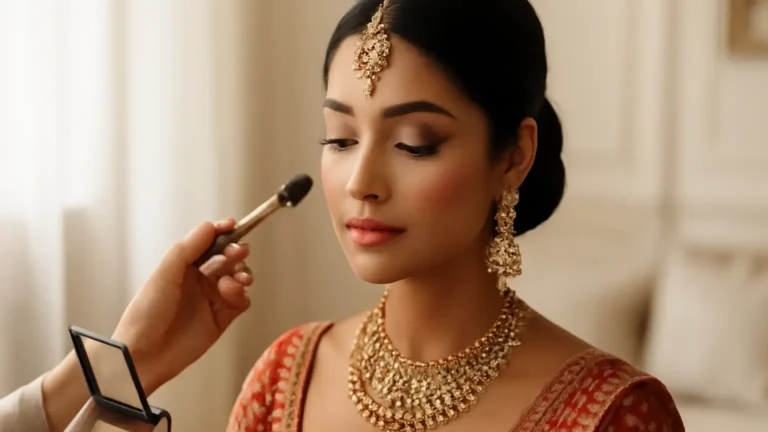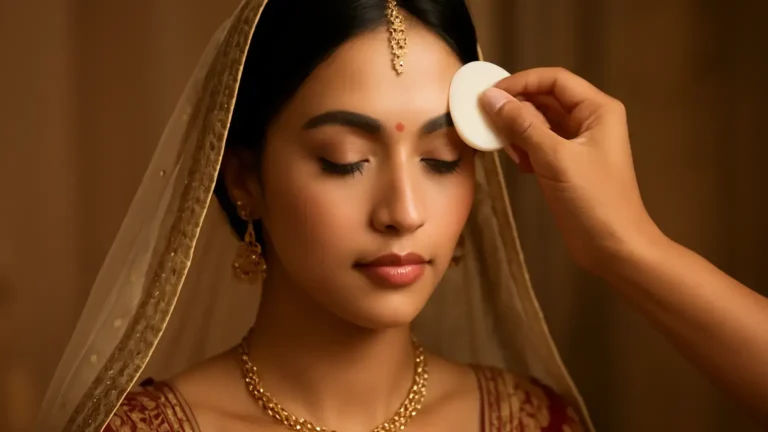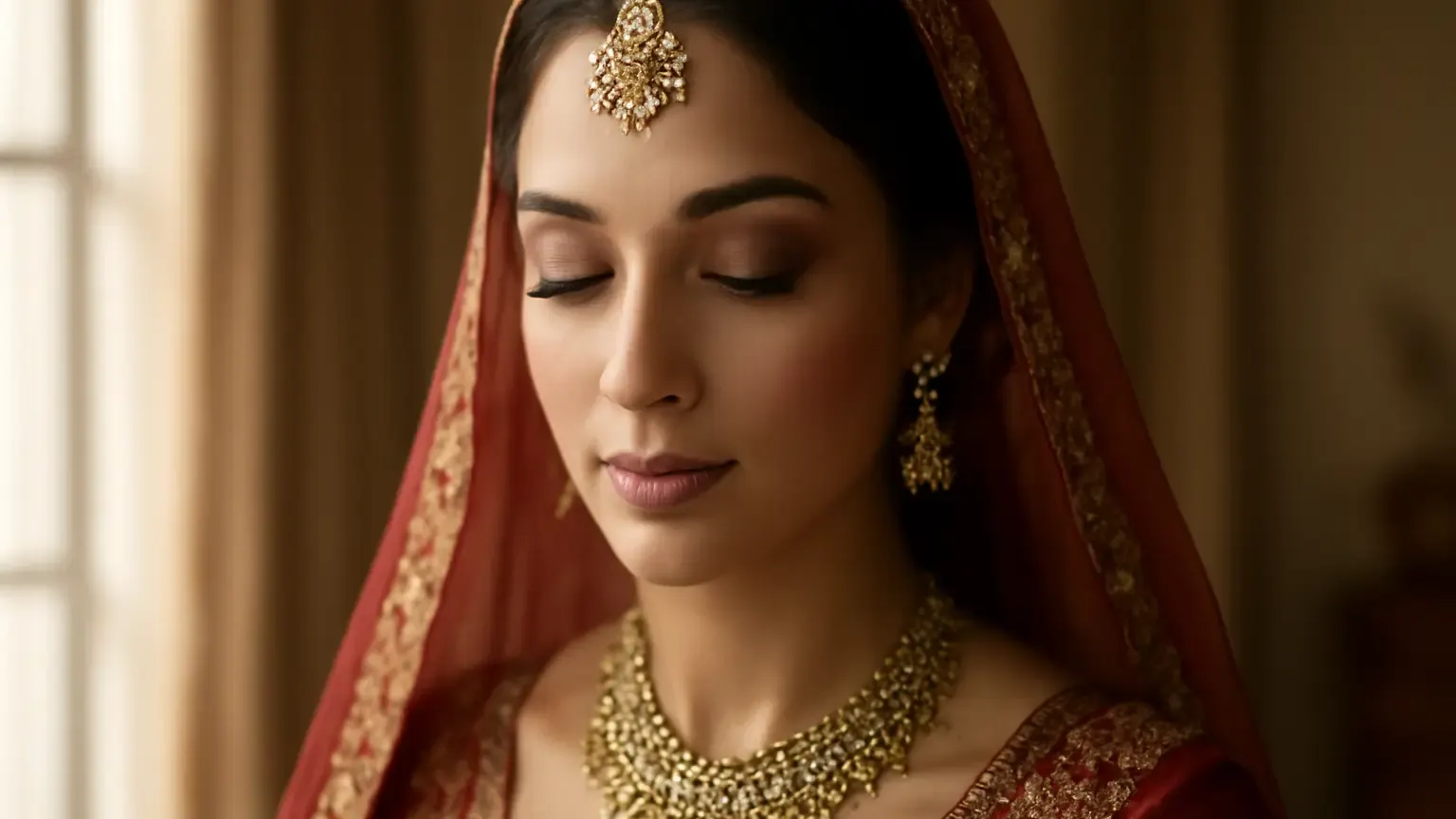
bridal makeup for intimate weddings should look polished at arm’s length, not overly filtered. This guide is for brides getting married at home, in a daylight venue or before a smaller guest list, where every conversation may become a close-up photograph. The key decision is to build a thin, well-prepped complexion with softly defined eyes, controlled glow, flattering blush and a transfer-resistant lip—then set only the areas that genuinely need staying power.
Intimate weddings create a different makeup brief from a large ballroom celebration. You may be photographed near windows, seated close to family, moving between indoor and outdoor spaces, and greeting guests who see your face from a short distance. That makes texture, blending and colour balance more important than heavy coverage.
Start with the light, venue and photography style
Before choosing a finish, identify where most photographs will happen. Direct daylight reveals excess powder, unblended contour and foundation that is too pale. Warm indoor bulbs can make yellow or peach products appear stronger, while phone cameras may sharpen visible texture.
Ask your photographer about flash, close-up portraits and video. For a home wedding, take a few trial photographs beside the main window at the likely ceremony time. A makeup style that looks softly luminous in person should still have enough controlled definition around the eyes, cheeks and lips to hold its shape on camera.
- Daylight: favour thin layers, careful concealing and a balanced satin or natural finish.
- Indoor lighting: check that the foundation, blush and lip colour do not become too yellow, grey or pale.
- Frequent close-ups: prioritise smooth preparation, precise blending and realistic skin texture over full coverage everywhere.
Build a natural bridal base makeup finish
A natural bridal base makeup routine is not necessarily bare or minimal. It means matching the amount of product to the areas that need it. Begin with moisturised skin, allow skincare to settle, then use a primer only where it serves a purpose—such as smoothing the T-zone, reducing slip around the nose or adding comfort to dry areas.
Use a thin foundation layer and add coverage selectively around redness, pigmentation or under-eye darkness. A small amount of concealer placed precisely usually photographs more gracefully than a thick layer across the whole face. Blend the jawline and check the shade on the face and neck in natural light.
For a dewy bridal makeup look, keep radiance on the high points of the face rather than across the nose, upper lip and forehead. If your skin becomes shiny quickly, choose a satin base and add glow with a subtle cream or liquid highlighter. If skin is dry, avoid piling powder over flaky areas; correct the finish through preparation and restrained setting.
Choose soft definition for eyes and brows
Bridal eye makeup for a small celebration should define the eyes without making the face look severe from close range. A softly blended neutral shadow, a slim liner or smudged lash line, curled lashes and a few individual lashes can provide more elegant structure than a very sharp, graphic look.
Make the eye look photograph-ready
- Use a matte or satin crease shade to create dimension without obvious edges.
- Keep shimmer finely milled and place it on the lid rather than heavily under the brow.
- Fill gaps in the brows with hair-like strokes and brush through so they do not appear blocky.
- Choose lashes that add length or gentle fullness while preserving the shape of your eyes.
- Check the look with eyes open, because close-up photos capture the expression you actually wear.
Waterproof mascara and a waterproof or long-wear liner are useful for emotional moments, but waterproof bridal makeup does not mean every product must be difficult to remove. Use water-resistant formulas where tears, sweat or humidity are likely, and remove them gently after the event.
Use blush and lip colour to keep the face alive
Small venues and daylight can make a face look flatter than expected in photographs. Bridal blush restores dimension and should be placed according to the effect you want: higher and softly swept for lift, or more centred on the cheeks for a fresh, youthful flush. Cream blush under a compatible powder blush can improve longevity, but use light layers so the colour remains diffused.
Choose a blush shade that relates to the lip colour and your undertone. Rose, peach, terracotta and muted berry shades can all work, but the final choice should be tested in the actual wedding light. Strong contour is rarely necessary for an intimate setting; softly warming the perimeter and adding subtle cheek definition is usually easier to see as real skin.
For bridal lip makeup, select a colour you can comfortably wear for several hours. Outline lightly to improve symmetry, fill the entire lip with pencil if appropriate, then apply lipstick in a thin layer. Blot, add a second layer and keep a matching touch-up product nearby. A creamy satin lip often looks more forgiving in close-ups than an extremely dry liquid matte formula, while gloss is best used sparingly if transfer is a concern.
Plan for heat, movement and long wear
Long-lasting bridal makeup depends on preparation, compatible formulas and sensible setting—not simply adding more product. For makeup for humid weather, keep skincare comfortable but not slippery, allow each layer to settle and powder only the areas that crease or shine. A fine setting spray can help unite the layers, but it cannot replace suitable base preparation.
At a home venue, keep blotting papers, cotton buds, lip colour, a small powder and a mirror in an accessible touch-up kit. Blot oil before powdering; repeatedly layering powder over moisture can create a heavy, uneven finish. If you expect outdoor photographs, consider sweat-resistant eye products, a secure hairstyle and a short pause in shade before the portrait session.
Should you choose airbrush bridal makeup?
Airbrush bridal makeup can provide a lightweight, even finish and may suit brides who prefer thin coverage that feels less creamy on the skin. Traditional liquid or cream makeup can be better when you need targeted correction, a particular luminous finish or more flexibility around dry patches. Neither method is automatically superior for close-ups. The artist’s shade matching, skin preparation, application technique and the formula’s compatibility with your skin matter more.
Make the bridal makeup trial practical
A bridal makeup trial should answer decisions, not just demonstrate a pretty look. Take reference images, but explain what you like about them—soft skin, lifted eyes, warm blush or a defined lip—because your features and venue may require a different translation.
- Arrive with clean, comfortable skin and mention any sensitivities or products that commonly irritate you.
- Wear a top in a colour close to your wedding outfit so the makeup is judged in context.
- Photograph the look in window light, indoor light and with flash if the photographer will use it.
- Check the base after several hours for creasing, separation, dryness and colour change.
- Test the lipstick with water, a snack and conversation if you are planning a long ceremony or reception.
If you are working with a bridal makeup artist, share the venue, start time, ceremony rituals, outfit colours and photography plan. Ask what touch-ups are included and whether the artist carries suitable options for humidity, tears and sensitive eye areas. Do not introduce an untested active skincare product, facial treatment or strong exfoliant immediately before the wedding.
Common mistakes to avoid in a small wedding
- Following a dramatic reference exactly: a look created for stage lighting may feel too strong in a living room or garden.
- Using too much highlighter: reflective particles can emphasise texture in close-up images.
- Skipping the neck check: a face-only foundation match can appear disconnected from the outfit.
- Over-powdering: this can reduce natural dimension and make the base look dry in daylight.
- Trying new skincare late: unfamiliar products can cause visible irritation or unpredictable texture.
- Ignoring the lip plan: even a beautiful base can look unfinished if the lipstick fades unevenly during greetings and meals.
A simple decision guide for your final look
Choose a natural satin base, softly defined eyes, diffused blush and a comfortable rose, peach, nude or berry lip if you want a refined result that works across home interiors and daylight. Choose more powder through the centre of the face and water-resistant eye products if humidity, tears or long outdoor hours are likely. Choose airbrush only if you prefer its feel and have confirmed the finish in your venue’s lighting.
The best bridal makeup for intimate weddings is not the heaviest or most invisible option. It is a balanced look that preserves your skin’s dimension, defines expressions for close-up photographs and remains comfortable while you spend the day interacting with people at close range.
Products that may help with this routine
Choose only what fits your skin, hair or personal needs. Use the links below to view current options on Amazon India.
Frequently Asked Questions
What is the best bridal makeup for an intimate wedding?
A thin, well-matched base with softly defined eyes, diffused blush, a comfortable long-wear lip and selective setting usually works best. Adjust the finish to the venue’s daylight, indoor lighting, humidity and photography style.
How do I make bridal makeup last in humid weather?
Use comfortable but non-slippery skin preparation, let each layer settle, choose water-resistant eye products and powder only areas that crease or become shiny. Carry blotting papers and lip colour for practical touch-ups.
Is airbrush bridal makeup better for close-up photos?
Not automatically. Airbrush can create a lightweight, even finish, while traditional liquid or cream makeup may offer better targeted coverage and flexibility. Shade matching, preparation, formula compatibility and application technique are more important than the method alone.
What makeup suits a small home wedding?
A natural satin complexion, controlled glow, softly blended eye definition, fresh blush and a defined but comfortable lip suit most home weddings. Test the look beside the main window and under the venue’s indoor lights.
How should I prepare my skin before bridal makeup?
Follow a familiar, gentle routine that leaves skin comfortable and moisturised, then allow products to settle before makeup. Avoid introducing strong exfoliants, unfamiliar treatments or new active skincare immediately before the wedding.