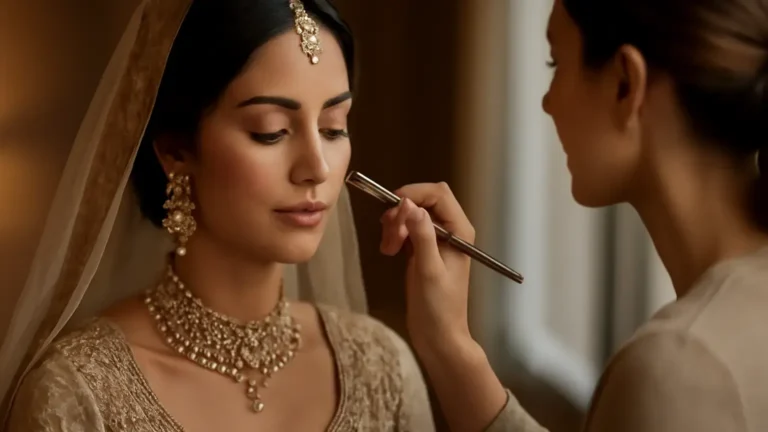
Bridal Makeup for Daytime Weddings works best when the complexion is built in thin, flexible layers rather than covered with a heavy mask. This guide is for brides getting married in India during a morning or afternoon ceremony, especially in bright outdoor light or humid weather. The practical goal is a fresh, skin-like base that resists shine, photographs evenly and can be refreshed quickly without becoming cakey.
Morning and afternoon ceremonies expose makeup to a different set of challenges than evening receptions. Direct sunlight can reveal an uneven undertone, excess powder and unblended texture. Heat, humidity, travel between venues and emotional moments can also make the base move faster than expected.
The solution is not necessarily more coverage or stronger contour. A reliable daytime bridal look comes from controlled preparation, a well-matched base, restrained powder and a touch-up plan that has been tested before the wedding.
Why daytime bridal makeup needs a lighter strategy
Artificial evening lighting can soften contrast, while natural daylight shows colour and texture more honestly. A foundation that appears perfectly matched indoors may look grey, orange or too pink near a window. Heavy layers can also settle around the nose, smile lines and under-eyelashes as the ceremony continues.
For day wedding bridal makeup India, consider the actual setting rather than choosing a look from a studio photograph. A shaded mandap, open lawn, beach venue and brightly lit banquet hall will each affect how the skin looks. Humidity may call for a more controlled finish, while dry air or air-conditioning may make excess powder look flat.
A daytime look does not have to be completely matte. The best finish is usually balanced: softly luminous on the high points, with controlled shine around the centre of the face.
Build the base with thin makeup layers
The most useful principle for a bridal makeup for morning wedding look is to apply only as much product as each area needs. Start with a clean, moisturised face and allow skincare to settle. If sunscreen is part of the bride’s regular routine, use a familiar formula that has already been tested under makeup. Avoid introducing a new SPF or active skincare product during the final days before the ceremony.
- Prepare selectively: Use moisturiser where the skin feels dry and a small amount of primer only where makeup tends to slip or shine.
- Correct only visible discolouration: A small amount of peach, orange or yellow corrector can be placed where needed, depending on the area and skin tone. Blend the edges carefully.
- Apply daytime foundation sparingly: Begin at the centre of the face and blend outward with a damp sponge or a suitable brush. Leave naturally even areas with minimal product.
- Layer concealer strategically: Choose a texture-friendly concealer for the under-eyes and blemishes. Tap it on rather than repeatedly dragging it across the skin.
- Pause before adding more: Let the complexion settle for a few minutes. Additional coverage is easier to place accurately after the first layer has melded with the skin.
Thin makeup layers are more forgiving when the bride smiles, speaks, sweats or moves between locations. They are also easier to repair because a small touch-up will not disturb a thick foundation film.
Undertone matching matters more in bright light
Undertone matching means choosing complexion products that suit the skin’s underlying tone, not simply its surface depth. Undertones are commonly described as warm, cool, neutral or olive, although real skin can sit between categories.
Test foundation along the jawline and check it in natural daylight. The right shade should blend into the face and neck without creating a visible stripe. Do not judge the colour immediately after application alone; allow time for possible oxidation, when a formula becomes deeper or warmer as it settles.
How to make a shade decision
- Compare two or three close shades on the jaw rather than the hand.
- Check the result near a window and, if possible, in the actual ceremony light.
- Look at the face, neck and exposed chest together when the outfit leaves more skin visible.
- Ask whether the formula is designed to change slightly after setting.
Bright-light makeup should look consistent from the forehead to the neck. If the bride has a professional artist, schedule the trial at a similar time of day to the ceremony. This makes colour and texture decisions more realistic than testing only under warm indoor bulbs.
Control texture without flattening the skin
Texture control is about reducing unwanted movement and shine, not erasing every natural pore. A thick layer of powder can make fine lines and dry patches more obvious, particularly in close-up photographs.
Use a small fluffy brush or puff to press powder around the sides of the nose, between the brows, under the eyes and along the chin. Keep the cheeks and high points lighter if the skin is comfortable there. A dewy bridal base can still look polished when the glow is intentional and the centre of the face remains controlled.
For cream blush, use a measured amount and blend it before applying a light veil of powder if extra durability is needed. Cream blush often gives a fresh effect in daylight, but very emollient formulas may shift in heat. A compatible powder blush can be placed over it for a longer-lasting result without applying a heavy complexion layer.
If a bride has visible dryness, the answer is usually better preparation and less powder, not repeatedly adding highlighter. If shine is the concern, blot first and powder only the area that needs it.
Choose soft definition for a natural daylight balance
Daylight can make strong contour, sharp brows and dark eye makeup appear more intense than expected. Soft definition usually photographs more naturally for the ceremony and leaves room for a stronger reception look later.
- Use a neutral or softly warm contour shade rather than a very orange bronzer.
- Blend cheek colour upward without placing all the product directly beneath the cheekbone.
- Keep brow edges defined but not overly block-like.
- Choose eye colours that complement the outfit while preserving visible skin and eye shape.
Waterproof eye makeup is sensible for emotional ceremonies, but waterproof does not mean indestructible. Apply it in controlled amounts, allow layers to set and avoid rubbing the eyes. A water-resistant pencil or mascara can be useful, while a dense, very dark eye may look severe in open sunlight.
For lips, a comfortable long-wear stain, liner and lipstick combination can reduce constant reapplication. The bride should still carry the exact lip products used, because food, drinks and ceremony rituals will affect wear.
Use setting products with intention
A bridal setting spray can help bind compatible layers and reduce a powdery appearance, but it cannot replace shade matching or careful application. Spray according to the product directions, keep the face relaxed while it dries and test the formula during the bridal trial.
For a humid venue, the makeup artist may combine targeted powder with setting spray. For a dry or air-conditioned venue, too much alcohol-heavy or mattifying product may feel uncomfortable. The finish should remain flexible rather than tight and visibly over-powdered.
Do not add a new setting product on the wedding morning simply because it promises extra hold. A trial should include the expected waiting time, photography, movement and at least one planned refresh.
Plan a practical touch-up routine
A makeup touch-up kit should solve specific problems rather than contain every product in the vanity. A trusted attendant, sibling or makeup artist can keep it accessible during the ceremony and between events.
- Blotting paper or a clean tissue for surface oil
- The bride’s lipstick, lip liner and a small mirror
- A small concealer or foundation sample for targeted repairs
- Pressed powder and a clean puff or compact brush
- Cotton buds for inner-corner or lower-lash corrections
- A few tissues, safety pins and any agreed personal essentials
A simple refresh sequence
- Press away oil or perspiration; do not wipe across the base.
- Check the nose, upper lip, under-eyes and chin first.
- Add a tiny amount of concealer only where coverage has lifted.
- Press, rather than sweep, a little powder on the centre of the face.
- Refresh lips and check blush or eye makeup before photographs.
For outdoor ceremonies, schedule one quick check before the main photographs instead of waiting until makeup visibly breaks down. This is especially helpful for brides wearing a veil, jewellery or a heavy dupatta that makes access to the face difficult.
Common daytime bridal makeup mistakes
- Testing only under yellow indoor light: This can hide an undertone mismatch that becomes obvious outdoors.
- Using one thick foundation layer everywhere: This increases the chance of creasing and patchy touch-ups.
- Over-powdering a dewy formula: It may remove dimension and emphasise dry texture.
- Trying several new products close to the wedding: It makes it harder to identify what affects comfort or appearance.
- Skipping the ceremony timing in the trial: A morning look may need different preparation from a late-afternoon look.
- Forgetting the neck and exposed chest: A face-only shade match can look disconnected from the rest of the bridal styling.
Who should choose this approach?
This method suits brides who want skin to remain recognisable, expect natural-light photography or will spend part of the ceremony outdoors. It is also useful for anyone moving from a morning pheras ceremony to an afternoon celebration, because the base can be refreshed and the definition intensified later.
Brides who prefer full coverage can still use the same principles: place fuller coverage only where needed, keep the edges thin and test how the formula behaves after several hours. If persistent irritation, swelling or a concerning reaction occurs, stop experimenting and seek advice from a qualified dermatologist or doctor rather than trying to conceal the problem with additional makeup.
Takeaway
Successful Bridal Makeup for Daytime Weddings is less about making the face completely matte and more about making every layer purposeful. Match the undertone in natural light, apply foundation and concealer selectively, control texture with targeted powder, keep definition soft and prepare a small touch-up plan. A realistic trial at the ceremony’s time of day is the best way to balance freshness, comfort and lasting wear.
Products that may help with this routine
Choose only what fits your skin, hair or personal needs. Use the links below to view current options on Amazon India.
Frequently Asked Questions
How do I keep bridal makeup fresh for a daytime wedding?
Use well-set skincare, apply foundation and concealer in thin layers, powder only high-shine areas and blot before adding more product. Test the full routine for several hours before the wedding and keep lipstick, pressed powder and a small concealer in the touch-up kit.
What foundation is best for a morning wedding in India?
Choose a foundation with a comfortable, buildable formula that matches the bride’s undertone in natural daylight. The best choice depends on skin type, humidity, venue and desired coverage, so test it during a daytime trial rather than selecting it from indoor lighting alone.
How can I match bridal makeup undertone in bright light?
Test two or three close shades along the jawline, then check them near a window or outdoors after allowing the formula to settle. The correct shade should blend into the face, neck and any exposed chest without a visible colour break.
Should I use setting spray for a day wedding?
You can use a compatible setting spray if it has been tested during the bridal trial. It may help layers look more blended, but it does not replace correct preparation, targeted powder or a well-matched foundation. Avoid introducing a new spray on the wedding day.
What should be in a bridal makeup touch-up kit?
Pack the exact lip products used, blotting paper or tissues, pressed powder, a clean puff or brush, a small concealer and cotton buds. Keep the kit with a trusted attendant who can access it between the ceremony and photographs.