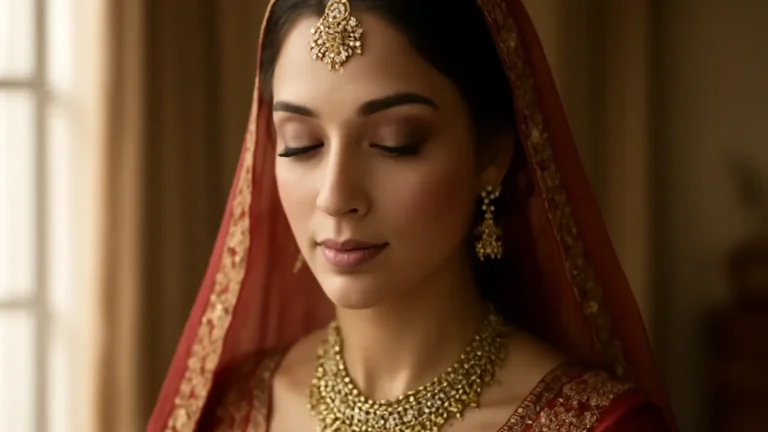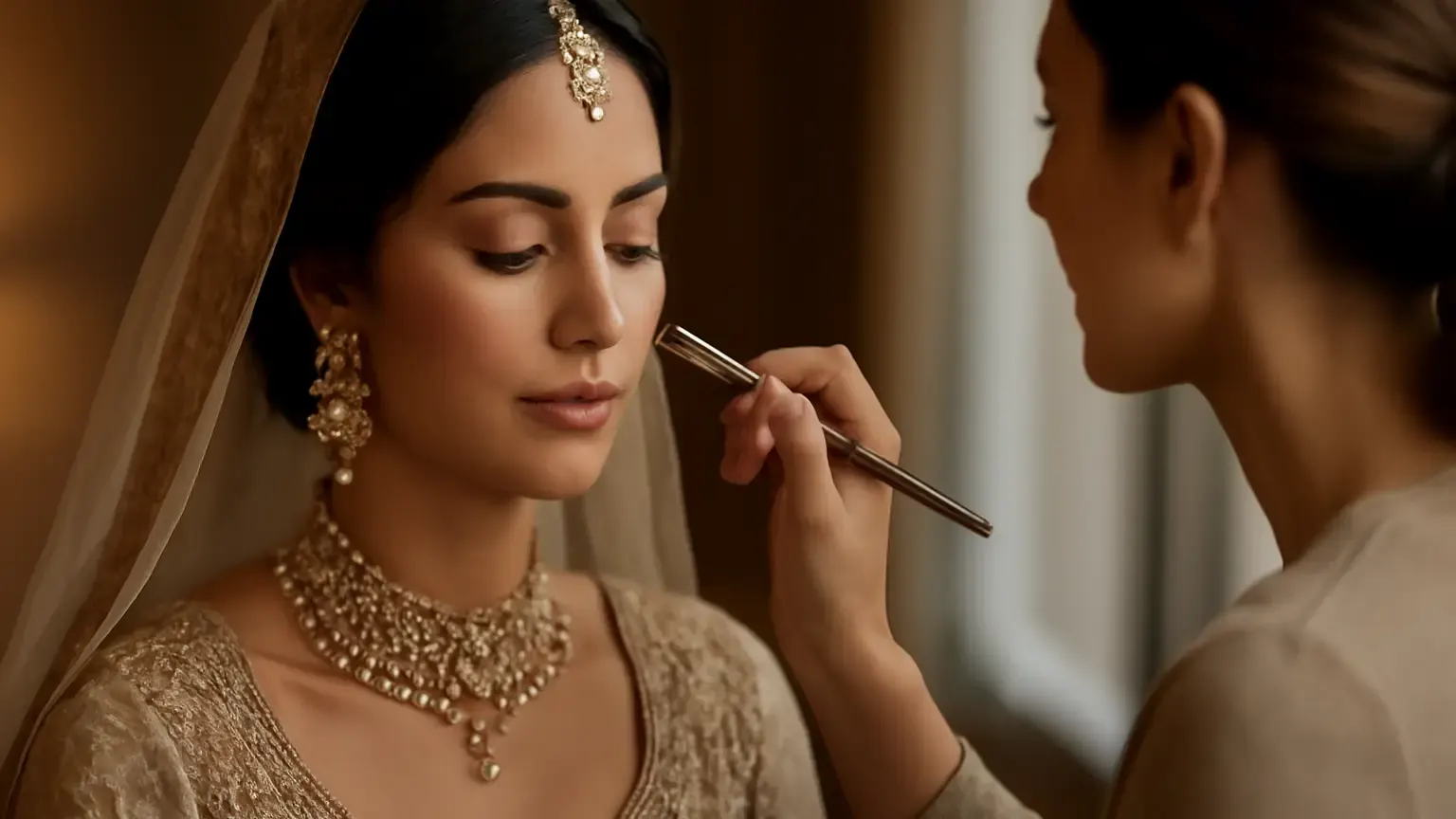
Bridal makeup for winter dry skin works best when coverage is adjusted by area, not layered heavily everywhere. This guide is for Indian brides facing tightness, flaking or a long indoor-outdoor wedding schedule. The practical answer is to prepare the skin gently, use a flexible hydrating base, add cream colour, powder only where transfer matters, and refresh dry areas with controlled touch-ups rather than repeatedly adding foundation.
Winter weddings can make a bridal base behave unpredictably. Cold air, indoor heating, long hours in makeup, travel between venues and frequent photographs may leave skin feeling tight while the makeup looks textured around the nose, mouth or under-eyes. The solution is not automatically a heavier foundation. A lasting bridal look depends on matching the amount of coverage and setting to each facial area.
Start with a winter skin preparation plan
The best winter skincare preparation for brides begins several days before the event, not with an aggressive facial on the wedding morning. Keep the routine familiar and calm. Use a gentle cleanser, apply a comfortable moisturiser, and avoid introducing strong exfoliants, peels or unfamiliar active products close to the ceremony. A new product can cause unexpected redness or sensitivity when there is little time to recover.
Wedding-morning preparation
- Cleanse lightly: Remove overnight oil and residue without scrubbing or using very hot water. Lukewarm water is usually more comfortable for dry-feeling skin.
- Layer hydration selectively: Apply a light hydrating layer if the skin normally tolerates it, followed by moisturiser. Give each layer a few minutes to settle.
- Seal the driest zones: If the cheeks or corners of the mouth feel particularly tight, use a small amount of a richer moisturiser there. Avoid leaving a visibly greasy film where makeup must adhere.
- Blot before primer: Press away excess slip with a clean tissue rather than rubbing. This helps a hydrating bridal primer sit evenly.
Primer should solve a specific problem. A hydrating primer can help makeup glide over comfortable skin, but it cannot repair active flaking instantly. If the skin is persistently cracked, painful, inflamed or unusually reactive, speak with a dermatologist before the wedding rather than trying multiple cosmetic fixes.
Choose coverage by facial area, not by one foundation rule
How much coverage should a bride wear on her wedding day? Enough to even the areas visible in person and photographs, while keeping natural movement on the parts that tend to crease or show texture. Most brides do not need the same thickness across the entire face.
| Area | Practical coverage approach | Why it works |
|---|---|---|
| Centre of face | Medium, buildable coverage in thin layers | Helps with redness and uneven tone without a mask-like finish |
| Cheeks | Light to medium coverage where texture is visible | Preserves a softer, more skin-like surface |
| Under-eyes | Thin corrector or concealer only where needed | Reduces creasing caused by excess product |
| Marks or blemishes | Localised concealer after the foundation layer | Adds coverage without thickening the whole base |
| Jawline and neck | Sheer, blended coverage matched to the face and outfit | Prevents a visible colour break |
This approach is especially useful for dry skin bridal makeup India because wedding lighting can vary from daylight to warm indoor bulbs and flash. A buildable bridal foundation allows the artist to add coverage only where photographs need it. Ask for a small amount to be pressed and blended first, then reassess after it settles.
Build a comfortable, flexible bridal base
A dewy foundation for dry skin should not simply look wet. The better goal is a flexible finish that reflects a little light while remaining even when the bride smiles, speaks and moves. Formula choice matters, but application technique matters just as much.
Application sequence
- Warm a small amount of foundation on the back of the hand.
- Press it over the centre of the face first, then spread outward in a thin layer.
- Use a damp makeup sponge or a suitable brush according to the artist’s preferred technique; pressing is often gentler than vigorous buffing on flaky zones.
- Wait briefly before deciding whether more coverage is needed.
- Spot-conceal only remaining areas rather than applying another full layer.
Which foundation is best for dry skin bridal makeup? The most suitable option is one that blends without catching on dry patches, remains comfortable over several hours, photographs evenly and matches the bride’s undertone. A finish described as hydrating or luminous is not automatically right for every person; very emollient formulas may move in areas that touch the dupatta or jewellery. Test the foundation during a bridal trial, including a few hours of wear and photographs in different light.
Add cream colour, then secure only the important areas
Cream blush for brides is useful because it adds life without requiring a thick powder layer. Apply it after the base and before targeted powder. Place the blush slightly higher on the cheeks if the bride wants a lifted appearance, but keep the placement natural for her face shape and wedding styling.
Cream contour for dry skin can define the cheekbones, forehead or jaw without making the surface look dusty. Use a small amount and soften the edges completely. If the artist prefers layering, a light cream product can be followed by a very small amount of powder colour in the same family. This can improve longevity without removing the comfortable finish.
Where powder belongs
Should you use powder on dry skin bridal makeup? Yes, but strategically. Powder is valuable where transfer, shine or creasing is likely; it does not need to cover the full face. Use a finely milled translucent powder with a small, controlled brush or puff on areas such as:
- the sides of the nose and around the nostrils;
- the centre of the forehead if it becomes shiny;
- the chin and upper lip where movement can cause transfer;
- the crease beneath the eyes, after removing any excess concealer;
- areas that will repeatedly touch a veil, collar, jewellery or dupatta.
This targeted powdering keeps the cheeks and other comfortable zones more flexible. Press rather than drag the powder, and check the result in natural light. Too much powder can exaggerate fine texture and make later touch-ups harder.
Make the look last through a long winter wedding timeline
How to make bridal makeup last on dry skin is partly a product question and partly a schedule question. Build in pauses so the skin is not constantly rubbed, dabbed or layered. The makeup artist should know when the bride will eat, travel, change outfits, sit under lights and take outdoor photographs.
A setting spray for dry skin can help unify powder and cream textures, but it should be misted evenly from a sensible distance rather than saturating the face. Allow it to dry naturally. Setting spray cannot replace skin preparation, and applying more of it is not always the answer when makeup begins to separate.
For a winter bridal makeup routine for flaky skin, keep the preparation simple and avoid trying to physically remove flakes immediately before foundation. Rubbing can create more redness and make the surface look uneven. A trained artist can often work around a small dry patch with thinner product, gentle pressing and localised concealer.
Plan an efficient bridal makeup touch-up kit
A useful bridal makeup touch-up kit is compact and designed for correction, not a complete second makeup application. Consider carrying:
- a clean sponge or cotton buds for lifting a displaced product;
- the concealer or foundation used for localised repairs;
- a small cream blush or lip-and-cheek colour if the artist approves it;
- a small powder compact for the nose, chin and upper lip only;
- lip colour, balm and a small mirror;
- tissues for pressing away moisture or excess product.
To repair a dry area, first press gently with a clean tissue. If the patch still looks uneven, use a tiny amount of moisturiser or the artist-approved complexion product on a fingertip or cotton bud, soften the edge and add minimal coverage. Do not repeatedly pile fresh foundation over a visibly separated patch.
Common mistakes to avoid
- Over-exfoliating before the wedding: Smoothness gained temporarily is not worth avoidable sensitivity close to the event.
- Using a very rich cream everywhere: Excess slip can make foundation move, especially around the nose and hairline.
- Choosing a shade only under salon lighting: Check the match in daylight and with flash photographs.
- Powdering the entire face automatically: This may reduce glow and emphasise texture on dry cheeks.
- Adding full-coverage foundation at every touch-up: Local repair generally looks fresher and feels more comfortable.
- Skipping a trial: A trial reveals how the base interacts with skincare, jewellery, clothing, weather and the planned wedding schedule.
A simple decision checklist for the bridal trial
Before finalising the look, discuss the climate, venue, ceremony length, photography style and outfit changes. Ask the artist to test the base on the actual skin rather than a hand. Review it after several hours, in daylight and in flash photographs. Notice whether the skin feels tight, whether the foundation gathers around the mouth, and whether the finish transfers to a tissue or collar.
Also decide which features need definition and which areas should remain sheer. A bride who wants a natural result may need more strategic concealing than foundation. Another bride may prefer fuller coverage through the centre of the face but a lighter finish on the cheeks. Flexible coverage accommodates both preferences.
Takeaway
The most reliable bridal makeup for winter dry skin combines calm preparation, a comfortable buildable base, cream colour and targeted powdering. Treat the face as several different surfaces: build coverage where tone needs evening, keep textured areas light, secure contact zones and refresh with small corrections. A well-tested plan will usually look more polished—and feel better—than applying the heaviest possible layer from the start.
Products that may help with this routine
Choose only what fits your skin, hair or personal needs. Use the links below to view current options on Amazon India.
Frequently Asked Questions
How do I prepare dry skin for winter bridal makeup?
Keep the routine gentle and familiar, moisturise well, allow skincare to settle, and avoid new exfoliants or strong treatments near the wedding. Use a hydrating bridal primer only after the moisturiser has absorbed, and discuss persistent irritation or cracking with a dermatologist.
Which foundation is best for dry skin bridal makeup?
Choose a comfortable, buildable formula that blends without catching on dry patches, matches the undertone and remains even in daylight and flash photographs. Test it during a bridal trial rather than choosing solely by a luminous or full-coverage label.
How can I make bridal makeup last on dry skin?
Prepare the skin without overloading it, apply thin layers, use cream colour, powder only transfer-prone areas and carry a small touch-up kit. Repair separated makeup by pressing and spot-correcting instead of repeatedly adding foundation.
Should you use powder on dry skin bridal makeup?
Yes, but use targeted powdering. Set the under-eyes, sides of the nose, chin, upper lip and any area that touches clothing or jewellery. Leaving comfortable cheek areas less powdered can preserve a more natural finish.
What should I carry in a dry skin bridal makeup touch-up kit?
Carry the approved concealer or foundation, lip colour, balm, tissues, cotton buds, a clean sponge, a small powder compact and a mirror. The kit should support small repairs rather than a full second application.